Jesus, Malibu, and the Immigrant

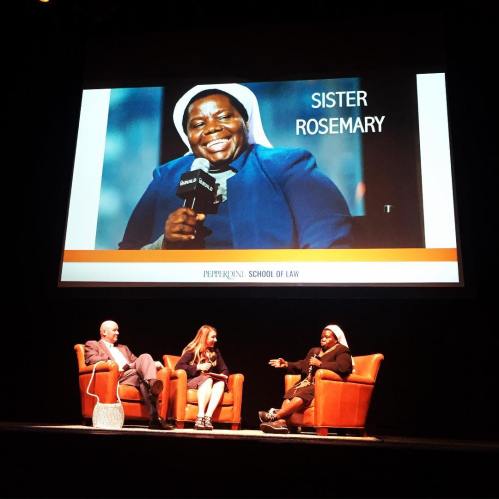
8592897_origOn Wednesday evening I will join several friends to present Jesus, Malibu, and the Immigrant at Pepperdine.  The event will focus on the Malibu Community Labor Exchange and discuss its work in the context of a Christian worldview of immigration and current political debates about immigration in the United States.  It should be a fascinating evening.
Speakers will include MCLE director Oscar Mondragon (a Malibu legend), Professors Cindy Miller-Perrin and Robin Perrin (Pepperdine legends), yours truly (a legend in my own mind), and Hollywood legend and MCLE supporter Martin Sheen.

I joined Mr. Sheen and several MCLE friends for lunch at Marmalade Café recently, and it was a delightful opportunity to hear entertaining stories from President Bartlet’s, um, I mean, Mr. Sheen’s fascinating life and to witness his heart for service as inspired by his deep faith.  I looked across the restaurant to see Pat Riley having lunch with friends and realized that I really do live in Malibu.

You should come to Elkins Auditorium at 7pm on Wednesday for the conversation.  In addition to Mr. Sheen, I guarantee that listening to Cesar Chavez’s old friend, Oscar Mondragon, is worth it every single time.

For my part, I will focus on my stunning realization that the Parable of the Rich Man and Lazarus is played out every day by those of us who live behind gates in Malibu and the workers who gather in hope waiting for opportunities at the Malibu Community Labor Exchange.  Today, I will simply leave the story as Jesus told it here for your consideration:

“There once was a rich man, expensively dressed in the latest fashions, wasting his days in conspicuous consumption. A poor man named Lazarus, covered with sores, had been dumped on his doorstep. All he lived for was to get a meal from scraps off the rich man’s table. His best friends were the dogs who came and licked his sores. Then he died, this poor man, and was taken up by the angels to the lap of Abraham. The rich man also died and was buried. In hell and in torment, he looked up and saw Abraham in the distance and Lazarus in his lap. He called out, ‘Father Abraham, mercy! Have mercy! Send Lazarus to dip his finger in water to cool my tongue. I’m in agony in this fire.’ But Abraham said, ‘Child, remember that in your lifetime you got the good things and Lazarus the bad things. It’s not like that here. Here he’s consoled and you’re tormented. Besides, in all these matters there is a huge chasm set between us so that no one can go from us to you even if he wanted to, nor can anyone cross over from you to us.’ The rich man said, ‘Then let me ask you, Father: Send him to the house of my father where I have five brothers, so he can tell them the score and warn them so they won’t end up here in this place of torment.’ Abraham answered, ‘They have Moses and the Prophets to tell them the score. Let them listen to them.’ ‘I know, Father Abraham,’ he said, ‘but they’re not listening. If someone came back to them from the dead, they would change their ways.’ Abraham replied, ‘If they won’t listen to Moses and the Prophets, they’re not going to be convinced by someone who rises from the dead.’” – Jesus (Luke 16: 19-31, MSG)

Kids Club

DCF 1.0

“The soul is healed by being with children.” — Fyodor Dostoyevsky

The idea for “kids club” emerged a very short thirteen years ago when my youngest daughter was in the second grade. The two of us were driving somewhere when she innocently asked if I might study the Bible with her sometime, which was crazy embarrassing since I was, in fact, a preacher. Yes, sweetie, that could be arranged. 

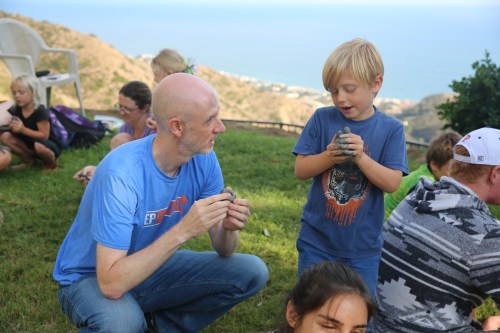
But before we even made it to wherever we were driving the innocent question had transformed into a fully-developed plan for a weekly kids club for elementary school children at our church where we not only studied the Bible but also went on adventures and hosted interesting guests. We went to the Ruskin Oak (pictured above). We wandered around an old cemetery. We went to the fire station where everyone got to blast the fire hose, and we hosted a police officer where everyone got cuffed and stuffed. We listened to sweet Ms. Josephine tell sobering stories of growing up black in Jim Crow Mississippi. It was inspiring and sweet and good.

Well, I’m a preacher again and am giving kids club another whirl. We recently launched Kids Club 2.0 with a short Bible study and a visit from amazing art students from Pepperdine, and the next week we hosted a brilliant plant physiological ecologist (look it up) who took us on a nature walk. It has been awesome. I am nearly overwhelmed by the indescribable wealth of potential guests at my disposal here in the heart of a university campus.

But possibly the biggest change from 1.0 to 2.0 is that we typically had 6-8 kids attend in Mississippi while we had triple that number at our first get-together in Malibu! That just triples the fun! (But thankfully I have a fantastic assistant/photographer this time around.)  

Dr. Seuss reminded us that a person is a person no matter how small, but those of us not directly responsible for such little persons may forget the great benefits that come from investing time in kids.  I know that I did.  But I’m sure glad to be back in the fun again.

It is easier to build strong children than to repair broken men.” — Frederick Douglass

4J5A2703

PC: Annie Little

#WavesUp

With XC Team Pictures

“[T]he task of the first half of life is to create a proper container for one’s life and answer the first essential questions: ‘What makes me significant?’ ‘How can I support myself?’ and ‘Who will go with me?’  The task of the second half of life is, quite simply, to find the actual contents that this container was meant to hold and deliver.  As Mary Oliver puts it, ‘What is it you plan to do with your one wild and precious life?’”

– Richard Rohr, Falling Upward: A Spirituality for the Two Halves of Life

Richard Rohr’s description of two halves of life in Falling Upward has me interested in emerging from the locker room for the second half.   We shall see.  Since the first half is so much about achievement and success, the transition is surely difficult to wrap my brain around.  It is much easier to try to be someone than to actually be someone.

As I struggled over the summer just to imagine such a thing, I tried to remember myself as a child before I boarded the train to Achievement Town.  What did I enjoy back then?  What did I love?  What made me smile?  What would I do just for the joy of it all?  Well, one of the primary answers was sports, so I made the calculated decision to be a huge Pepperdine Waves fan this year.

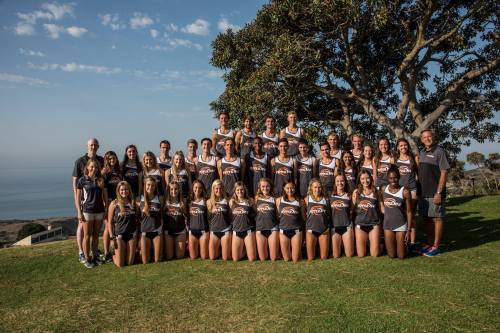
I haven’t been a very good Waves fan in recent years.  This is my third year to serve as volunteer chaplain for the cross country team (see proud team picture above), but I have been a sporadic fan at best for the other sports on campus.  My excuse was that I was just too busy, but “too busy” is undoubtedly the sort of thing you say when you are stuck in first half of life thinking.

The thought that got me was that if you had told “Little Al” that I/he would one day live on an amazing university campus with a fantastic NCAA Division I program fielding seventeen teams and would have open access to watch all of them in action, that would have sounded like heaven.  And I am too busy?  Give me a break.  Literally.

I am off to a great start so far.  I have been there in person to cheer on our cross country, soccer, volleyball, and water polo teams in the last few weeks – with many more teams to cheer on soon.  

Being a sports fan is surely not the point of or secret to life.  But for me, it just may be the secret to remind me not to be too busy to enjoy it.

#WavesUp

Waves of Memories

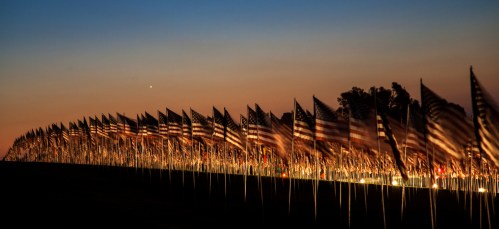
PepperdineUMemSunriseFlags1jpg-3376683_p9Our youngest daughter started middle school when we moved from Mississippi to Malibu in 2008 and needed certain shots to enroll in school, (make up your own jokes friends from Mississippi and California, but be nice!) so we went to a local urgent-care facility and waited. There in the waiting room I met a super-friendly Pepperdine student who was the incoming president of the College Republicans at Seaver College. He excitedly shared with me his plan to place a large American flag on the magnificent front lawn of Pepperdine University for every life lost in the terrorist attacks on September 11, 2001. He said it was going to be awesome. I was impressed by both his initiative and enthusiasm.

He delivered. The display was such a success that Pepperdine immediately latched on to the idea, and this year marks the tenth consecutive year for the breathtaking “waves of flags” display. 

Walking among the flags is an experience in and of itself, not to mention a photographer’s dream in the Age of Instagram, but my favorite thing to do is to watch the first responders and the veterans park their fire trucks and motorcycles on the iconic Pacific Coast Highway and walk up the hill to take in the experience.  They are far more inspiring to watch than the flags themselves.

In the early years, someone had the proper idea to place flags of other nations among the American flags to represent the correct nationalities of the victims of the attacks on that fateful day. After all, the attacks were acts of aggression against the entire world. International students and guests to campus are happy to find their flag and yet sobered by the reminder of the loss that flag represents. 

We still remember that terrible day. In a year or two, incoming college students will remind us that they were not alive in the fall of 2001, but as of today the flags are still flying and those of us who remember still share our stories. 

President Abraham Lincoln predicted that the world would soon forget what he said that historic Thursday afternoon in Gettysburg, Pennsylvania, but elementary school children still memorize his speech over 150 years later. Some things are simply unforgettable.

maxresdefault

Listen & Respond

20170830_harvey

We sang a cute little song in church when I was a child about rains coming down, floods coming up, and houses that went splat. The splat was easily the most fun part of the song, but when I experienced that reality as an adult it was far less entertaining. Victims of Hurricane Harvey are facing that same reality today.

My hurricane experience came at the same time of year as Harvey, and it was Labor Day weekend when the first large group of heroes arrived to give us hope. I suspect that has been the same experience for many in Texas. 

We only had a few negative encounters in the aftermath of the storm. Like a group bringing a personal photographer to document their own kindness. And like another insisting that we needed their massive clothing donation immediately even though we had no homes, much less closets. Oh, and every encounter with every level of government and insurance company was its own disaster.

But the biggest flood of all was the beautiful flood of kindness from individuals and churches from all over the world. It was overwhelming in the very best way, and it was our salvation. 

So I have two pieces of advice to share from personal experience:

First, although “news” is ever-changing by definition, remember that the needs will not go away quickly. Join in for the long haul. I love the first responders so much. And I have a unique respect for those who still came months later.

Second, give freely. Find an organization or individual that you trust, and then trust them. The victims know what they need. Listen first. Respond second. 

Losing everything in a hurricane is in retrospect, but only in retrospect, a strangely wonderful time in the history of our family due to the love that we witnessed and received. I pray that many in Texas will be able to look back with similar fondness someday.

Off & Running

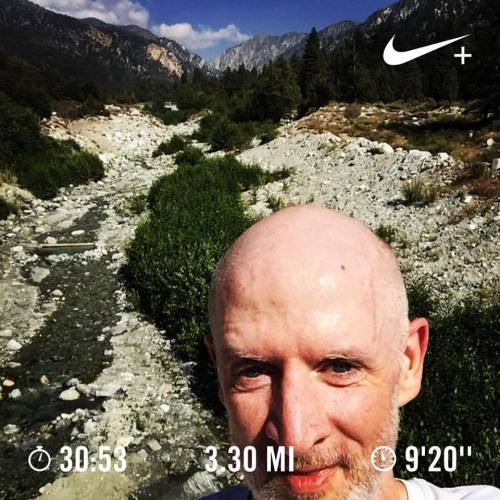
Running Forest FallsIt is a big day. My office sits in the heart of Pepperdine University’s main campus in Malibu, and today is the first day of classes for undergraduate students. Next door to my office is Pepperdine’s high-tech, newly-renovated Payson Library complete with a full-functioning Starbucks, and you can feel the highly-caffeinated energy in the air.
My youngest daughter attends a different university that runs on a different calendar, but because she is studying abroad in Spain this semester and her plane is scheduled to touch down right about now it feels like the first day for her, too. It simply feels like a big day at every turn in my world.

Last week had a different feel. I was honored to be invited to attend a retreat high in the San Bernardino Mountains with fifty or sixty rising Pepperdine sophomores as they prepared for a brand new year. It was such a tranquil setting. The view by day featured a beautiful lake and stunning views of the surrounding mountains, and the night featured actual bear sightings and a sky so full of stars that I had to remind myself that it was real.

But I decided to go for a run one afternoon because that is the sort of thing I do, and though stunning, I wouldn’t snag the word “tranquil” to describe it. For one, we were a mile above sea level, and let’s just say that my lungs noticed. For two, although the temperature was nowhere near extreme, maybe it seemed so hot because we were that much closer to the sun. And for three, there was nothing flat in sight. It surely wasn’t my easiest rave run.

We went on this retreat to get away and find focus for the year to come. Peace and tranquility are good for such things, but on reflection I think that difficult run was pretty good preparation, too. In fact, my major take-away on the retreat was that I need to remember how to choose to do without. And that run surely reminded me what it felt like to do without, oh, let’s say, air.

So here we go. The year ahead looks full and awesome and slightly terrifying, but good. I’m ready for it. Let’s run this race.

Hurry Up & Wait

hqdefault

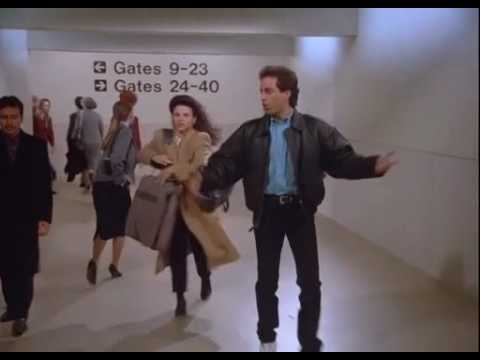
We knew prior to departure from LAX that we had a near impossible connection to make at DFW that was only made less likely when our flight left twenty minutes late. I was sure we would not and could not make it, and as we prepared for our final descent into Dallas I asked a flight attendant if he had any advice. He was kind and checked on our connecting flight and learned that it was (unfortunately, for once) on time, but he gave us the gate number and instructions on how best to race across the terminals.

I am a runner.  Let me loose.

The voice on the crackly airplane speaker asked everyone to show kindness and let those with tight connecting flights deplane first, and apparently 98% of the passengers on that particular flight had tight connecting flights. So we weren’t super quick getting off the plane.

I decided not to push the two elderly ladies waiting for wheelchairs out of the way, but when they created an opening, I was off. And we made it. Just in time. To what turned out to be the wrong gate.

Last-minute gate change? You have got to be kidding me.

So I was off to the races again. The voice on the loudspeaker declared that the doors to our (actual) gate would be closing momentarily and that every passenger should be on the aircraft. I ran even faster. Chariots of Fire music wafted through the airport. And we made it. For real this time. Barely. The last two to board.

We collapsed in our seats, breathing hard, and sweating, but happy to have made it in the nick of time. And then the captain announced over the intercom that there was a tiny lightbulb that needed changing and that maintenance was on its way, which took a good twenty minutes.

My sweet wife declared, “Hurry up and wait.”  Exactly.

That seems to be an accurate life mantra: Hurry up and wait. I long for some actual rhythm, but our mad dash through the airport only to wait on a maintenance crew is a pretty good descriptor of my days, weeks, months, and years. Hurry up and wait.

Distance runners do such a thing on purpose and call it interval training. It supposedly makes you better on those long runs. If that’s the case, I’m really going to be good at life someday.

Unarmed Truth & Unconditional Love

94d5a3c3a1397d1a4df25f54640503c2

Ralph Abernathy and Will Campbell grieve the assassination of Dr. Martin Luther King, Jr. in the Lorraine Motel (April 1968)

“I believe that unarmed truth and unconditional love will have the final word.” – Dr. Martin Luther King, Jr.

I was deep in the heart of rural Texas when the chaos in Charlottesville unfolded last weekend and found myself in a conversation with a couple of local police officers about other matters. I mentioned that they should visit us in California sometime and one offered a kind smile and said, “Nah, Californians don’t like Southern Republicans.” We laughed, but there is some measure of truth to his statement. And vice-versa, of course. There is plenty of not liking to go around these days.

I am a Christian, which unfortunately means many things to many people, but for me it means that I must love everyone. No exceptions. So I stand in opposition to hate in any form, which most assuredly includes all versions of white supremacy. And because I must love everyone then I am necessarily opposed to acts of violence. It is a package deal. Violence toward a loved one is unfathomable, so when you choose to love everyone it kind of takes the wind out of Violence’s sails.

“‘Don’t the Bible say we must love everybody?’ / ‘O, the Bible! To be sure, it says a great many such things; but, then, nobody ever thinks of doing them . . .'” – In Uncle Tom’s Cabin by Harriet Beecher Stowe

Will D. Campbell is a personal hero of mine who was an important leader in the Civil Rights Movement and a fierce advocate for the victims of deep racism. However, Campbell started to notice that many of his fellow activists used the same dehumanizing language  and tone toward the “segregationists” that segregationists used toward African-Americans. Since Campbell was a Christian, he took a stand against that, too.

“With the same love that is commanded to shower upon the innocent victim of his frustration and hostility, the church must love the racist. Moreover, the church is called to love those who use and exploit both the racists and their victims for personal wealth and political gain. The church must stand in love and judgment upon the victim, the victimized, and those, both black and white, who exploit both, for they are all the children of God.” – Will D. Campbell, in Race and Renewal of the Church (1962)

Some things in this country have improved in the half century since the milestone moments of the Civil Rights Movement while many others have quite obviously not. And the version of Christianity touted by “Brother Will” and Dr. King often appears unopened in the shrink-wrapped box.

But I remain hopeful. For I, too, believe that unarmed truth and unconditional love will someday have the final word.

Come Together

1853

“A few found what they came for, filling their pockets easily and heading home convinced that California was God’s apology for ousting Adam and Eve from the Garden. But the many more toiled in a decidedly post-Edenic state, with uncertain and often diminishing success.”

– H.W. Brands, The Age of Gold (Anchor Books, 2002) 194.

I’ve been reading a lot more since my latest career switcheroo, which has been a welcome change. One of the books in the feeding frenzy was a history book by H.W. Brands titled, The Age of Gold: The California Gold Rush and the New American Dream. For a transplanted Californian and former history teacher, it was a natural choice.

It was fascinating to read selected accounts of those intrepid souls who set off on terrifying journeys from all over the nation and all over the planet, all with their sights set on the part of the world that I now call home. Reading about the experiences on those seemingly interminable voyages and dangerous journeys…  I really can’t imagine, but Dr. Brands’s book helped me try. And certain facts about California that should have been obvious before—like the reason San Francisco is such a diverse city—make so much sense to me now.

But of course one of the transformative events in the history of this nation and one of the most astonishing accomplishments in American history emerged from these dangerous pilgrimages, and that was the completion of the transcontinental railroad.

On my recent travels I drove out to the historic location where the golden spike was driven that completed the grand project. Almost unbelievably, that epic dream began in 1863 when the nation was right in the middle of trying to kill itself by self-war. Two companies, the Central Pacific led by Leland Stanford and the Union Pacific led by Dr. Thomas Durant set out from Sacramento and Omaha respectively building track in the general direction of the other in a race for economic victory. The Central Pacific effort had to traverse the treacherous and snowy Sierra Madres—at time digging through solid granite at a pace of eight inches of progress a day—while the Union Pacific had its own challenges crossing the Great Plains while encountering the desperate Sioux and Cheyenne only to run into the Rocky Mountains.

Somehow, almost miraculously, these two companies met up north of Ogden, Utah, in just six years and had a little ceremony that rocked the world.

It was a lonely weekday morning at the Golden Spike National Historic Site when I visited, and it was quite surreal to be the only person standing at such an historic spot.

And, of course, I was filled with conflicting emotions about it all, given the materialistic fervor that produced the initial desire and drove the work along with the terrible treatment of particular peoples, including the very destruction of the ways of life of nations that were here first.  Still, it was impossible not to find some measure of respect in the simple fact that it was dreamed and accomplished.

But I think my favorite part is the metaphor of the very project that seems so foreign to our world today.  Imagine a world where competitors are positioned so that their very task is to see how fast they can come together as one.

That’s worth celebrating.


Big Dreams, Small Places

1889There is nothing quite like minor league baseball. Young and hopeful talent, goofy small-town promotions, and unsurpassed fan access all wrapped up in a classic sport.  On my recent stay in Ogden, Utah, I could not pass up the opportunity to see the hometown rookie league affiliate of the Los Angeles Dodgers in action, so I splurged the twelve bucks required for the best seat in the house and sat on the second row behind home plate in the middle of scouts with radar guns evaluating the 18-24 year old athletes on the field.  It was awesome.

Lindquist Field is reportedly the most picturesque venue in the league, and I cannot argue. The view from my high-priced seat featured the centerfield flagpole, which stood in front of the city’s Mormon temple, which stood in front of a gorgeous mountain range lit up by the evening sun.

It was clearly the minor leagues, however, complete with the civilization-insulting Chicken Dance, a corny hometown announcer, and a grounds crew consisting of a grown man dressed like Elvis and two unfortunate children dressed like a Dalmatian and some sort of hound dog. If I was the kid dressed like a hound dog sweeping the dirt, I would be crying all the time, too, simply from sheer embarrassment.

I ignored sound nutritional advice and downed a hot dog, nachos, and churro and root, root, rooted for the home team Ogden Raptors like I was a local. There was no shame in Ogden that evening since a couple of teenagers planted home runs over the sponsorship-laden wall en route to a 3-1 victory over the Grand Junction Rockies in exciting Pioneer League action.

I couldn’t help but think of my trip to Dodger Stadium earlier in the summer when I paid much more than twelve bucks to sit about as far away from home plate as one can manage and still be in the ballpark. The Dodgers are the hottest team in baseball this year and are the darling of a star-studded city, and not that long ago their crazy good all-star rookie Cody Bellinger was just a kid playing for the Ogden Raptors. As was their all-star closer Kenley Jansen. Even the legendary Dodger manager, Tommy Lasorda, once managed the Raptors, too.

The road to the big show always begins in much smaller places. To me, those small places where dreamers set their sights on the distant mountaintops are more fun than the actual object of their dreams.

1895