One of my sisters moved from Arkansas to Canada in the 1980s, and I recall being astounded by tales of winter weather in the North, particularly that schools never canceled and that children still went outside for recess. We in Arkansas, on the other hand, built snow days into the annual calendar!
That was forty years ago, and I have lived in Wisconsin long enough now to hear from all sides that winters were far worse then. But I have not lived in Wisconsin long enough to know very much, so I watched with interest when the forecast for yesterday featured wind chill lows in the negative thirties, numbers that had not been experienced here in several years. Our workplace chose not to cancel classes in spite of the forecast; however, in response to an idea proposed by the student government, we did assemble several faculty and staff members to drive students between upper and lower campus throughout the day. So I spent the first few hours of my Friday driving my SUV and offering rides. I loved it.
Many students turned me down, I assume by some because they weren’t intimidated by the bitter cold, others possibly because they found it as creepy as it felt for me for an old dude to lower his window and offer a ride! But many said yes and were grateful and fun, and it was great spending unanticipated time with such wonderful students.
My favorite story may have been Rocco, a fantastic young man who is student teaching this semester. I saw him bundled up and walking alone on the far side of a set of residence halls, and he jumped at the offer of a ride even though he was only headed to the other side of the set of residence halls. It didn’t take long to drive to his front door, and I joked that I could keep driving in circles if he wanted to warm up more. He instantly took me up on the offer, so I drove slowly in circles and got caught up on his student teaching this semester and shared stories of mine from forever ago.
What an unexpected gift.
This brought back a specific set of Mississippi memories.
The Mississippi Gulf Coast sees a lot of rain. Not steady, Seattle rain. Occasional, torrential downpours. I was asked to lead a church on the Mississippi Gulf Coast at the turn of the century and had the honor of doing so for a decade. Our church’s building had an awning on its back side, but at the time that area was used for storage and inaccessible by car. So on stormy Sunday mornings, churchgoers were simply going to get wet. I don’t remember who suggested it, probably my hero, Gene, but someone suggested that we purchase a nice set of golf umbrellas for those bad weather days. I have such lovely memories of gloomy, yucky days out in the driving rain with good people like Gene, Herman, and Joel, standing at the car door of elderly widows or families with children, joking and laughing as we escorted them into the safety of the building.
I do not like driving rain, and I know that spending those precious minutes before conducting a worship service in the driving rain with an umbrella is not recommended. But I know that somehow, miraculously, those turned out to be my favorite Sundays.
All this has me thinking today as an actual winter storm sweeps across the nation and all sorts of metaphorical storms terrorize our world: When rough weather arrives in your neighborhood, whether literally or otherwise, I suggest that you lean into it and look around for how to give someone a hand. It might not affect the weather, but in my experience it has produced unexpected smiles along with a special and unforgettable feeling that is beyond my capacity to describe
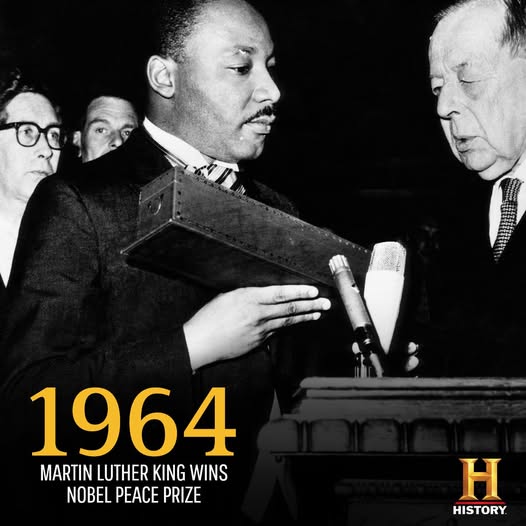
“Sooner or later all the people of the world will have to discover a way to live together in peace . . . If this is to be achieved, [humanity] must evolve for all human conflict a method which rejects revenge, aggression and retaliation. The foundation of such a method is love.” – Martin Luther King (Acceptance Speech, on the occasion of the award of the Nobel Peace Prize in Oslo, December 10, 1964)
On the eve of the 2024 presidential election, I referred to a comment stating that the outcome of the election would say more about the American people than the campaigns themselves, and I believe that turned out to be accurate. The year since the subsequent inauguration has exposed disturbing collective values. I do not in any way believe that this administration invented revenge, aggression, and retaliation, but it has unapologetically modeled those human inclinations (e.g., Comey; Greenland; flipping off an autoworker; respectively).
The strange recent peace prize headlines serve as a poignant case study on this eve of the holiday that honors Dr. King.
In late 1964, King traveled to Norway to accept the Nobel Peace Prize. He opened his speech by making it clear that he accepted the award on behalf of the Civil Rights Movement, not himself, and then wondered why the award was given “to a movement which is beleaguered and committed to unrelenting struggle; to a movement which has not won the very peace and brotherhood which is the essence of the Nobel Prize.”1 His conclusion was that the award was, in fact, “a profound recognition that nonviolence is the answer to the crucial political and moral question of our time – the need for man to overcome oppression and violence without resorting to violence and oppression.”
Later in King’s acceptance speech, in a passage that I feature at the beginning of this essay, he predicts that the world will eventually be forced to discover a way to live in peace, and that this elusive state will require a method of conflict resolution that “rejects revenge, aggression, and retaliation” — three popular methods that you spot easily simply by watching the daily news. Creative nonviolence is King’s answer, of course, and if you find that intriguing, don’t miss his next line: “The foundation of such a method is love.”
I know that peace and love is a tie-dyed t-shirt, but here is what I also know: Revenge has not proven to be a reliable pathway to true peace. Neither has aggression. Nor has retaliation. And I know it is a Beatles song, but I truly believe that not only is love our deepest need, but it is also the foundation for any desire we have for a world where peace and justice exist.
I always try and regularly fail to look at politics objectively. I began my professional life over thirty years ago teaching courses like history and civics, which then morphed into full-time ministry where I wrestled with theological approaches to complicated issues. My meandering life later wandered through law school, which added new layers to my way of thinking. Eventually I assembled my own framework for interpreting the world, and although that framework remains malleable, once assembled it has more or less hovered in the same general neighborhood.
All that to say, the annual Martin Luther King, Jr. holiday means more to me than a day off work (for some!) and a day to trot out one of his famous quotes. Instead, I identify with his fateful decision to adopt and promote creative nonviolence as the path to justice, and I arrived there through my admiration of Jesus, too.
It is incredibly difficult to love enemies. It is an outright radical concept, and it is practically impossible even to catch a glimpse of it on the national stage right now. And it does not surprise me that most find the concept ridiculous, if not repulsive. I just happen to believe, like Reverend King, that it is the secret sauce. More than a tie-dyed t-shirt, it is messy, painful, and can get a person killed. But, I believe, the secret sauce nonetheless.
So beyond the bizarre peace prize stories in recent headlines, for tomorrow’s holiday I look back to 1964 and say establish your own deeply-held interpretive framework for navigating this old world, but here’s a word for the framework espoused in Oslo by Reverend King that believes in the foundation of love for all people, even enemies. I have discovered that any love-inspired action that I achieve feels like a step in the right direction, and noticing even hints of that in our nation’s political discourse right now is a long shot.
This posture, of course, is antithetical to an American president that said earlier this month, “I can’t think of anybody in history that should get the Nobel Prize more than me.” ↩︎
I read twenty-six books in 2025, half nonfiction and half fiction, which is my preferred proportions. It is redundant to say that I read incredibly life-changing books this year, redundant in the best of ways. Here is my list from 2025:
NONFICTION:
Continental Reckoning by Elliott West (an incredible sweeping history of the American West written by my favorite college professor)
Demon of Unrest by Erik Larson (a history of the short time between Lincoln’s election and the beginning of the American Civil War; a timely gift from our friend, Flo, given the current political unrest in our nation)
Hope for Secondhand Suffering by Camille Block (a sweet gift from my friend, Jere, the proud father of the author; I learned more about my friend and his special love for his special son)
Troublemakers by Gary Yerkey (a personal and important account of the shift in the civil rights movement following the march from Selma to Montgomery, written by a Ripon College alum that lived American history)
How the Word is Passed by Clint Smith (a history of slavery in America; a powerful recommendation by my colleague, Jackie)
Hacking College by Ned Scott Laff & Scott Carlson (a really important book that I didn’t know I needed as I began advising first-year college students)
The Comfort Crisis by Michael Easter (recommended years ago by my friend, Sandi, and wow, such an important book for me personally, and if I can be so bold, for the world today)
Hail Mary: The Rise & Fall of the National Women’s Football League by Frankie de la Cretaz & Lyndsey D’Arcangelo (embarrassed not to have known of the NWFL but excited to add its story to my Sports Law course now!)
Relationship-Rich Education by Peter Felten & Leo Lambert (loved the premise then gifted it to my buddy, Autumn, in honor of her master’s degree in higher education)
Future Tense by Tracy Dennis-Tiwary (received this book at an NYC conference where the author was a featured speaker; on how anxiety can be good for you)
Moncrief: My Journey to the NBA by Sidney Moncrief with Myra McLarey (because Sid made moving from Arkansas to Wisconsin cool)
You Better Be Lightning by Andrea Gibson (oh my goodness, incredible poetry that captured my whole heart)
Run the Song by Ben Ratliff (combines running and music, but mostly music, and the music part was far above my understanding)
NOVELS:
Cannery Row by John Steinbeck (inspired to read this classic after visiting Monterey last Christmas)
Concrete Rose by Angie Thomas (a powerful story and a good recommendation from my friend, Ji’Mya)
Bloodchild by Octavia Butler (stumbled across this set of short stories; glad to discover Octavia Butler)
The Hornet’s Nest by Jimmy Carter (didn’t love the book, but love (and miss) the author)
1984 by George Orwell (should have been titled 2025)
The Great Gatsby by F. Scott Fitzgerald (inspired to read even before the White House ballroom project and the government shutdown)
Vineland by Thomas Pynchon (can you “not” love a book and still find it interesting? because I did with this bizarre novel, which also inspired the newly-released movie, One Battle After Another)
Parable of the Sower by Octavia Butler (so timely as we live in our own dystopian times)
Fahrenheit 451 by Ray Bradbury (how many timely dystopian novels are there?!?)
The Exchange by John Grisham (a sequel to The Firm; Grisham can always capture your attention)
The Death of Ivan Ilyich and Other Stories by Leo Tolstoy (picked this up at a library used book sale because I always wanted to read the Ilyich short story; so glad that I did)
Gilead by Marilynne Robinson (had always heard of Robinson’s work but had never read her; Gilead turned out to be my favorite novel this year)
The Memory of Old Jack by Wendell Berry (this book had not been checked out of our college library since 1988; Berry never disappoints)
My frequent critique of social media (and repeated reference to the dire predictions of Jacques Ellul) often feel justified when examining my Facebook feed, but I also try to admit the irony that I bemoan social media on social media, which just feels wrong.
As is typical, others say what I hope to say better, and I recently stumbled across a YouTube video from author John Green titled, Am I Cigarettes?
Green had the courage to ask whether the content he posts contributes to societal demise in a similar way that cigarettes served as a pathway to cancer. Am I cigarettes? he asked.
His brother took the bait and countered with a separate video and different metaphor, arguing that those that contribute content, including he and his brother, are more like food than cigarettes, with food possessing the potential to be good or bad, while cigarettes are always bad. As Green described to the New York Times, his brother argued, “We’re food, and there’s a lot of bad food, but hopefully we’re good food.”
I found their exchange interesting and now ask about my use of social media: Can I be broccoli?
Once upon a time in my twenties, in a decade far, far away, a biographical sketch of Abraham Lincoln argued that Lincoln had a “passion for distinction.” That phrase had a major impact on me because I thought that maybe I did, too. The author proposed that Lincoln used his personal passion for noble purposes, and I wondered at the time if others would look back at the life in front of me with similar positive reviews.
Now, playing the back nine of life, it seems rather obvious that no one is going to name the capital of Nebraska after me. And I figured out a long time ago that this was a good thing. I recently watched the new Charlie Sheen biopic and remembered that fame would have gone poorly for me, too.
I grew up naive. I guess everyone does to some extent, but I grew up extra naive. I was raised in a small town in a family with little money that kept to ourselves. My Dad was a provider but also a shelterer and reclusive. My Mom successfully taught me to be a good boy and raised me in a religious environment with the stated goal to protect us from a scary world. All that to say it took me a long, long time to grow up, to use that tired phrase, but as an adult, moving to new places, reading a lot of books, and the introduction of the internet combined to procure a long, slow education. My life turned out okay, and I cannot complain, but it is now abundantly clear that any acceleration that would have come with fame would have been disastrous.
So while the desire to produce something significant on a major scale still pokes its head up periodically, I now tend to play whack-a-mole with it more often than not. I may be a slow learner, but I want to remain a learner.
Which brings me back to my little blog and personal social media presence. What I write and share does not attract high-profile attention, and not only am I okay with that (now), what I do does not fit the popularity profile anyway.
But I hope it is good. I hope it is not part of the destructive side of social media. To return to the metaphor, if what I do is a bit of food, can it be broccoli? Something not very popular, but healthy?
Should I get to retire someday, I plan to have already done all the traveling that I want to do. Should I get to retire someday, my plan does not involve golf or fishing. Instead, should I get to retire someday, if my mind and health permits, I want to write.
And I have come to terms with the fact that it is not to write the great American novel or a blockbuster movie screenplay. If you can believe it, I am not even that invested in writing to be remembered. No, if I get the privilege of looking back and sharing my thoughts in written form, it would primarily be for my daughters, should they be interested, and whether they are or not, I want whatever I leave behind to be healthy and good.
In the meantime, for now at least, I plan to keep contributing to the produce aisle of the world and go to sleep at night hoping that my meager contributions produce more good than bad.
Although to be transparent, I’m not 100% convinced that the cigarettes idea is entirely wrong.
If we never deny / the inevitable end / of the story, / we will write it / more beautiful / while we’re alive.
– Andrea Gibson, from Time Piece, in You Better Be Lightning (page 21)
I saw clouds the specific color of antifreeze as I jogged into the woods this morning, which confirmed that despite the calendar, today is our first taste of winter. Temperature in the upper twenties, which equaled the wind’s miles per hour, so the math equation determined that it felt like thirteen outdoors. I went out overdressed but unashamed.
When we first considered Wisconsin, I heard that the people here tend to embrace the winter rather than simply endure it, which I later discovered to be true. Instead of hunkering down for survival, Wisconsinites engage in winter festivals, winter sports, and carry on age-old winter traditions. I like the entire idea, especially as I grow older.
I am fifty-five years old now and wondering how that happened. Age is relative, of course, but my parents passed in their seventies, so it isn’t crazy to guess about twenty years remaining in this hotel stay called life.
Until recently, I had generally been the youngest person in a room. I was a late-in-life child and the youngest in my family. My birthday fell so that I was always the youngest in my class, starting kindergarten at age four and college at seventeen, and I was still twenty-one when I became a high school coach and teacher.
I married at twenty-three and with it had the crazy-cool (but still crazy) opportunity to be a parent for the sweetest little seven-year-old, and to make it even more outrageous, a year or so later my wife and I became full-time “houseparents” for courageous teenagers overcoming troubled pasts. We were always the “young” parents for all of the people we have considered “our kids” regardless of where their lives started.
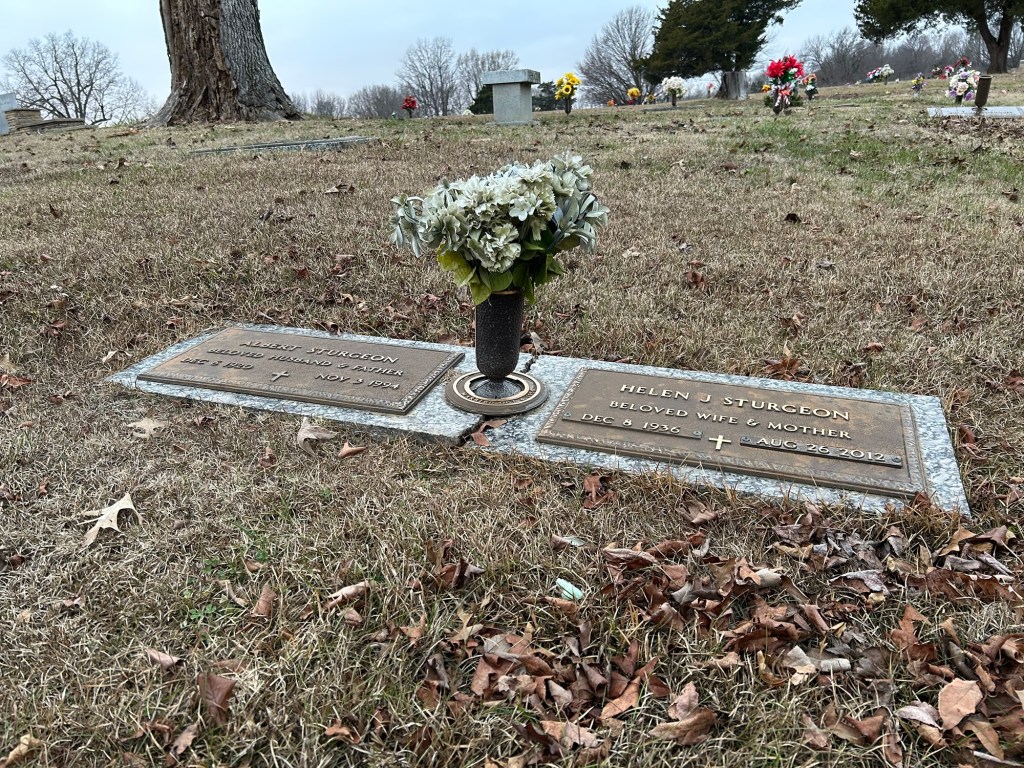
Over and over and over again, I felt young for fill-in-the blank. I was in my late twenties when I completely switched careers to lead an entire church. To just be gross, I had a colonoscopy in my thirties, one thing I wished had been more age appropriate. My dad died when I was twenty-four, and my mom died when I was forty-one, which to me surely felt too young to be the top branch on a family tree.
The first chink in my youthful armor came when I went to law school in my late thirties, but even then, although I joked about being old all the time, the truth was that going to school in sweatshirts and blue jeans with a group of generous young folks who treated me as a colleague made me feel like a kid again.
I guess it was about three years ago when the shift happened. I was a member of a college president’s cabinet at the time, and I recall the day that I looked around the room and noticed that I was one of the oldest there. That felt so bizarre, but that feeling has happened so often since that it is now familiar.
Recently, Jody and I started talking a bit about retirement. You have no idea how unusual that is for us. My standing joke is that one thing we have always agreed on in our marriage is making poor financial choices for our future. But, truth be told, my approach to my own faith never made the words “wealth accumulation” super interesting, and I actually like to work. Add in my suspicion that I won’t live forever, and the idea of retirement never garnered much attention. But suddenly, we find ourselves talking about it some. Maybe in ten or fifteen years if all goes well…
All this has me thinking about embracing the coming winter.
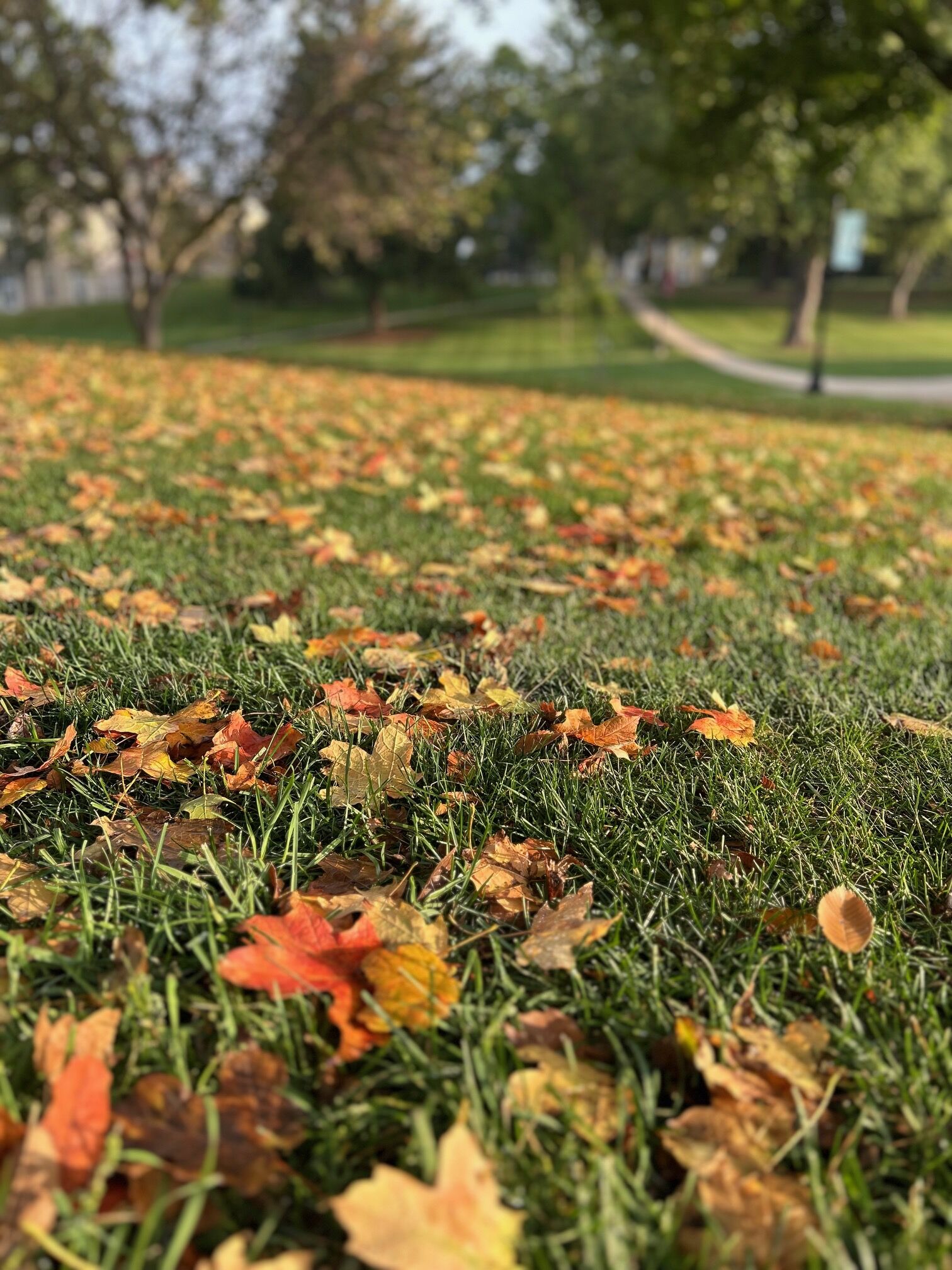
I do love the fall season, but there is a reason that the leaves transform in blazing beauty and then fall to the earth en masse. The trees lose energy and nutrients, which produces gorgeous colors and signals that the leaves won’t survive. Those brilliant colors soon fade, and the trees are laid bare for the dark, cold winter.
So what posture should we adopt for the winter that approaches in our own lives? Not a popular conversation opener for a cocktail party, I suppose, but since I have never been a fan of living in denial, I choose to consider it anyway.
I like the idea of embracing it. Not hunkering down and withering away. Well, withering away may not be optional, but I like the idea of somehow withering with one’s head held high (as possible).
Bears hibernate in winter, but everyone here in Packer Country hates (the Chicago) bears anyway, so I am in friendly territory to adopt a different approach. I am grateful to my friend Mikey for introducing me to the incredible poetry of Andrea Gibson recently, and her conclusion to Time Piece encapsulates what I want to say—and do: “If we never deny the inevitable end of the story, we will write it more beautiful while we’re alive.”
Yes, that’s it. Seeing the coming winter with clear eyes creates space for something more beautiful. Winter approaches, and that is okay.
Imagine stargazing alone on the darkest night and witnessing a glorious cluster of shooting stars hurtling across the sky with such beauty and brilliance that you are forever changed, and then imagine the sadness that comes later when you recognize that you experienced something both powerful and personal that can never be recaptured. That is the sadness and the void in the universe that I feel today.
I met Kimberly Hebert eight years ago by email – at 8:31pm PST on October 23, 2017, to be exact. It was a rough start for me. I had preached a sermon that morning at the University Church of Christ in Malibu, California, on the campus of Pepperdine University titled, “On Behalf of Another.” I opened with the YouTube video “Oh Freedom!” that featured powerful images from the Civil Rights Movement—marches, sit-ins, legislation, Reverend King, Rosa Parks—all set to the haunting lyrics, Before I’ll be a slave / I’ll be buried in my grave / And go home to my Lord / And be free.
I followed what I considered to be a powerful opening with my own story of growing up in a Southern sundown town, and with my preaching foot on the accelerator then told of Oscar Romero giving his life for those being raped and murdered in El Salvador. All that led to the sermon text in Exodus 33 where Moses stood up to God on behalf of his people, and my message was that being “the Church” means standing up on behalf of others. There was even a photo of a sign from a Civil Rights march in the opening video that read “Where is the Church?” that in many ways characterized my sermon’s thesis.
I was sort of proud of it, but Kimberly wasn’t buying it at all. I had no idea who Kimberly Hebert was at the time, but she was in the audience that morning and shared her impressions with me that night in an email that she titled, Where IS the Church? She said the sermon felt “emotionally manipulative.” She said “[t]he church is still silent on issues of race” and that in my sermon the “silence was deafening” and that such silence “is one of the many reasons that the church is impotent in this area and does not show up.” She challenged me to have the “courage to tell the whole story in truth and love” and characterized sermons like mine as “tepid” before closing with the hope that I could receive her message “with the love in which it is being shared.”
It was hard for me to read. It was hard for me to read in part because there was not a doubt in my mind that she was right, and because the message that I had delivered, which was strong for me, failed to address the present nature of American racial politics and had had its true measure revealed: Tepid. Weak.
I wrote back that night – at 10:16pm PST to be exact (I have kept and treasured much of our correspondence). I expressed both apologies and gratitude. I said that she was right and that I had much to learn. I shared my hope that we could visit so that I could learn and grow. I had no idea what I was asking for, but as I have often said, I do my very best work by accident, because from such an inauspicious start that initial email exchange in the space of two evening hours produced for me a brief and beautiful friendship that changed my life for good. Kimberly became my teacher, my consultant, my advisor, and my friend.
In the following months we exchanged emails where I asked ignorant questions and she shared brilliant answers Then we became book partners in a campus ministry effort that worked through the book, Welcoming Justice, by Charles Marsh and John Perkins. I found the book insightful and helpful. Kimberly didn’t care for it. We met for lunch at Le Pain Quotidien, a French bakery-restaurant in Calabasas, on multiple occasions in early 2018 where I slowly caught on to how Kimberly received the book from her lived experience. Each time we met someone would recognize her and sometimes ask for a picture.
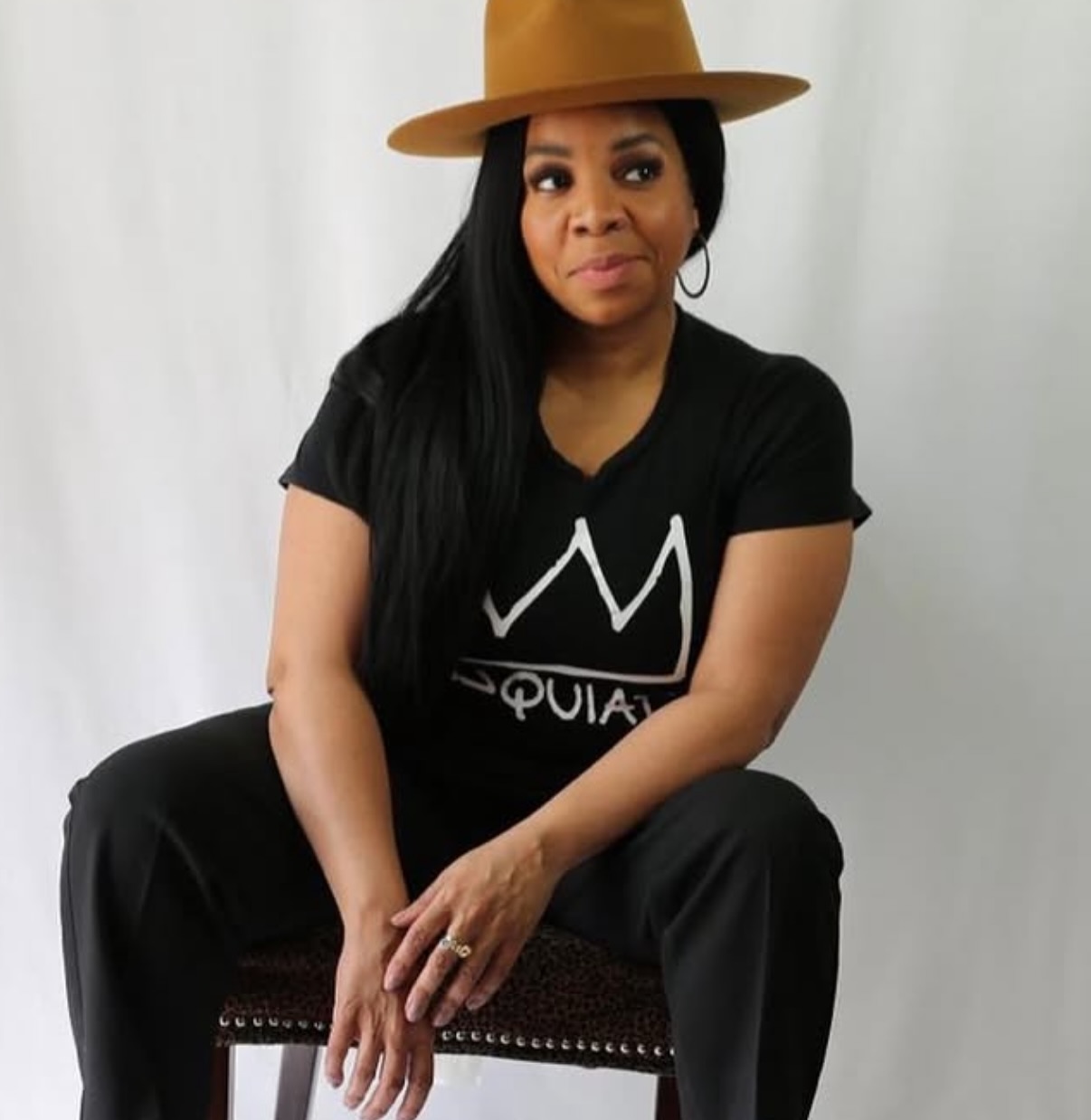
Did I mention that Kimberly was also a movie star? I had no idea when we first interacted, but this later discovery made this special human being even more fascinating.
I’m sure it was our good friend, Google, that shared the news with me when I first wondered about this person that called my sermon on the carpet. At our first Calabasas lunch she was so embarrassed when I told her that my wife was a major fan of her portrayal of Dr. Belinda Brown when she starred alongside Walton Goggins and Danny McBride on the somewhat (okay, more than somewhat) raunchy HBO comedy, Vice Principals. But she was so much more than a brilliant actor. There was a depth and a breadth to her life and an enormous intellect that I was privileged to access. Kimberly grew up in Houston and later received a bachelor’s degree in psychology from Mount Holyoke College in Massachusetts and then an MSW from the University of Chicago before launching a successful career on stage and screen. In my eyes she was larger than life.
I sense a mischievous smile when I remember that I eventually got to turn the mirror around and invite Kimberly to face challenges, too. I invited Kimberly to lead an adult Bible class in beautiful Stauffer Chapel in the summer of 2018 in a series on our personal “cloud of witnesses,” and the thought of bucking the restrictive male-only posture of our shared faith tradition forced her to reach for some courage of her own. But she did it, and the stories of those that shaped her life trajectory were incredible. I even convinced her to share her story in front of the whole church in a worship gathering that September, which just about blew her mind but gave me the greatest joy!
I learned that Kimberly died on Friday. I do not know the details, but I am heartbroken.
I will never forget the awkward nature of our initial contact, but more importantly, I will never forget the deep friendship that developed in such a short time. Kimberly welcomed me into her story and shared physical health challenges that she battled for decades. She invited me to sit with her mother at Cedars Sinai just one year after our initial emails during a concerning procedure that turned out well, just as we had prayed, which proved that we had traveled a long way from suffering through an emotionally manipulative and tepid sermon. Prior to the procedure, Kimberly wrote to me of her gratitude “that God knitted this relationship for such a time as this” and that, “I didn’t see it coming, but God knew I would need a community.” When I announced my move to Nashville a few months later in the spring of 2019, it is crazy to sift through our email correspondence to see how our awkward initial exchange had grown so that we felt such deep loss for miles to separate our friendship.
Just prior to our move to Nashville, Kimberly starred in a play at the Geffen Playhouse in Los Angeles titled, Black Super Hero Magic Mama. Appropriate, of course. Kimberly secured two premium tickets, and Jody and I felt so special to sit in the audience and watch our new friend, the star of the show. The movie premiere for Five Feet Apart, which Kimberly starred in as well, also occurred that night, and since she couldn’t be in two places at the same time, a limo was arranged to whisk her to the premiere afterparty at a Hollywood club after the play, and she invited us along for the experience. I hope you can picture my wife and I, a couple of actual Beverly Hillbillies, stepping out of the limo to the flashing cameras and entering the strobe-lit club where Kimberly introduced us to celebrities such as Cole Sprouse, a co-star, and Justin Baldoni, the director.
I think of that night in March of 2019, the last time I saw her in person and “hugged her neck” (as she would say), as I might think of an appropriately spectacular ending of a fireworks display. I knew that we were moving away from one another quite literally, but I had no hint of finality.
Our email correspondence soon became fewer and farther between, but a couple of years later we had one brief opportunity to reconnect. By that time we had all encountered the murder of George Floyd and the Covid pandemic, and I had moved from Nashville to work at a small college in Illinois. When our volleyball coach at the college planned a fundraiser for cystic fibrosis, I remembered Kimberly’s movie, Five Feet Apart, which was a beautiful love story of two young people with cystic fibrosis who were not allowed to be within five feet of one another (ironically, a movie released a couple of years before “six feet apart” became a part of our national experience), and I reached out to see if Kimberly would meet our students in rural Illinois via Zoom. To which, as you might guess, she graciously agreed. We not only invited our volleyball student-athletes to hear Kimberly share what she learned about cystic fibrosis from her movie role, but also our theater students to hear of her acting career, and also our Black students to learn of her thoughts in the aftermath of the murder of George Floyd and her experiences as a Black woman navigating a career in the United States. As expected, Kimberly was gracious with her time, and profound, and hilarious, and inspiring, and unforgettable.
Jody and I stayed afterward, and that post-Zoom conversation was the last time we spoke and shared the love of our friendship.
In the summer of 2023, Jody and I unexpectedly moved back to Malibu. We thought we might be back in California forever, and Kimberly was one of the first that I emailed. Not long after we arrived, she responded that “[y]ou know I’ll make some time to see you” and that she looked forward to reconnecting. I responded with my new cell number, and that turned out to be our final exchange. We both got busy, and California turned out to be just a bonus year for us that led to a move to our new home in Wisconsin, and my regrets are now deep. I knew that Kimberly’s life remained full without regular installations of our friendship, but it never occurred to me that she might move on from this life so soon. And I wish I had been there for her in the end.
I have been too rattled to think clearly, but I have been trying to think clearly so that I can do honor to the lessons I learned from Kimberly Hebert. I kept our correspondence, and I have been sifting through it since I learned such sad news this weekend, and one lesson I have remembered is found within these words that she shared when we were praying for her health seven years ago: “Again, despite what we are going through, God has not abandoned us. He is always right there with us, even unto the end of the ages.” There is comfort in those words, and my hope remains that her words are true.
Further, as I reread the challenges in her initial outreach to a preacher she did not know, I am emboldened to remember the challenge to my humanity and my personal courage in a culture that seems hell-bent on regressing instead of progressing. She wrote, “A revisionist approach to history is dangerous, particularly when inserted into our religious arena. If you want to challenge the body to be self-reflective in this area, there has to be courage to tell the whole story in truth and love.” Now, more than ever, I want to do better. I want to tell the whole story. I want to tell the truth. I want to tell it in love.
Kimberly’s salutations in our friendship correspondence were the words: Big Love, Kimberly. That is how I remember her today. A special person who loved big.
It was an incredible honor that she loved me in spite of everything that conspired against it, and it is intimidating as hell to remember the courage she challenged me to live with from the very start. May she rest in peace and power, and may I live with greater “courage to tell the whole story in truth and love.”
Farewell, my friend. As the curtain falls and the credits roll, know that I am moved to stand and applaud your extraordinary performance.
I find it especially important in dark and troubled times to closely monitor personal emotions, and we seem to live in dark and troubled times. This came to mind as I drove to the office before eight o’clock on this Sunday morning. My wife is out of town, so I felt justified putting in early Sunday work hours, but such behavior indicates that my emotions could get out of whack.
But it was sixty-three degrees on a lovely morning, and I lowered the window to feel the cool breeze while listening to a station that features soothing acoustic music. And as I drove past farmland I was surprised to see several normally-stationary horses galloping together on a gentle morning run. And then I rounded a curve and noticed that the self-serve produce stand is now decorated with pumpkins and flowers on this first day of autumn. And I sensed in a powerful form the intoxicating feeling of peace.
There was more.
A little farther along, I met an older woman riding her bike on the lonely back roads. We have passed one another on several mornings and now wave with smiles as if we are dear friends, which we did with even more enthusiasm this morning. I then turned toward the office and noticed my friend, Kelly, out walking her dog, which led to another wave and another smile. And as if the world was conspiring for my good, I then noticed a wonderful student, Emma, walking across campus on a Sunday morning, and I stuck my arm out the window with another wave and smile.
And for a moment, if I didn’t know better, I sensed every reason in the world to be happy.
David Brooks published a column in The New York Times three days ago titled, “The Era of Dark Passions.” I surely do not agree with David Brooks on many things, but I typically benefit from reading his thoughts, and I especially appreciated that particular opinion piece. Brooks shared his belief that “something awful has been unleashed” in our current times and that “[e]ven before the Charlie Kirk assassination it was obvious that the dark passions now pervade the American psyche, and thus American politics.” Brooks identified dark passions as Anger, Hatred, Resentment, Fear, and the Urge to Dominate, and he distributed blame for stirring dark passions for personal benefit to his own industry, the media, and to both sides of the political aisle. Brooks then posed the question:
Why does politics feel so different now than in times past? My short answer is that over these years, demagogues in politics, in the media and online have exploited common feelings of humiliation to arouse dark passions, and those dark passions are dehumanizing our culture and undermining liberal democracy. My intuition is that we’re only at the beginning of this spiral, and that it will only get worse.
With that cheery outlook, what is there to do? Well, for starters, Brooks begins:
First, let me tell you how not to reverse it. There is a tendency in these circumstances to think that the other side is so awful that we need a monster on our side to beat it. That’s the decision Republicans made in nominating Trump. Democrats are moving in that direction too. Back in 2016 Michelle Obama asserted that Democrats to go high when Republicans go low, but the vibe quickly shifted. As former Attorney General Eric Holder put it in 2018: “When they go low, we kick ’em. That’s what this new Democratic Party is about.” If Republicans soil our democracy with extreme gerrymandering in Texas, Gavin Newsom and the Democrats will soil our democracy in California. The problem with fighting fire with fire is that you’re throwing yourself into the cesspool of dark passions. Do we really think we won’t be corrupted by them? Do we really think the path to victory lies in becoming morally indistinguishable from Trump? Do we really think democracy will survive? Surveys consistently show that most Americans are exhausted by this moral race to the bottom and want an alternative; do we not trust the American people?
Brooks then advises as “the most effective way to fight dark passions”…
History provides clear examples of how to halt the dark passion doom loop. It starts when a leader, or a group of people, who have every right to feel humiliated, who have every right to resort to the dark motivations, decide to interrupt the process. They simply refuse to be swallowed by the bitterness, and they work — laboriously over years or decades — to cultivate the bright passions in themselves — to be motivated by hope, care and some brighter vision of the good, and to show those passions to others, especially their enemies.Vaclav Havel did this. Abraham Lincoln did this in his second Inaugural Address. Alfred Dreyfus did this after his false conviction and Viktor Frankl did this after the Holocaust. You may believe Jesus is the messiah or not, but what gives his life moral grandeur was his ability to meet hatred with love. These leaders displayed astounding forbearance. They did not seek payback and revenge.Obviously, Martin Luther King Jr. comes to mind: “To our most bitter opponents we say: We shall match your capacity to inflict suffering by our capacity to endure suffering. We shall meet your physical force with soul force. Do to us what you will, and we shall continue to love you. We cannot in all good conscience obey your unjust laws, because noncooperation with evil is as much a moral obligation as is cooperation with good. Throw us in jail, and we shall still love you.”
You might not be surprised that this resonates with me given my latest blog post published a few days prior to Brooks’s column. But it especially came to mind this morning on a lovely ride into work. I place no value on being unrealistic or ignoring the obvious, but I place great value on noticing the good and living with hope, for what is the future without hope?
I guess what I’m saying is that I unexpectedly caught a glimpse of the bright passions on a drive to work this morning, and I am now extra inspired to resist the forces that push the dark passions and choose to cultivate the bright passions more and more instead. As David Brooks concluded his recent column:
The dark passions look backward toward some wrong committed in the past and render people hardhearted. The bright passions look forward toward some better life and render people tough-minded but tenderhearted.
May we look forward toward some better life as tough-minded and tenderhearted people.
At the beginning of David Foster Wallace’s famed commencement speech at Kenyon College in 2005, two young fish encounter an older fish as they are swimming along, and the older fish says to them in passing, “Morning, boys, how’s the water?” As they swim on, one of the young fish eventually looks at the other and asks, “What the hell is water?”
The profundity of Wallace’s illustration has many applications, but I’m thinking today of how we swim in a culture of violence.
At almost the exact same time on Wednesday and hundreds of miles apart, two acts of violence occurred in school settings: a 16-year-old with reportedly anti-Semitic and white supremacist views murdered two high school students before taking his own life, and a 22-year-old with reportedly anti-fascist views murdered an enormously popular politically-conservative speaker on a college campus. And both happened on the day before the anniversary of the terrorist attacks on September 11, 2001. The confluence of these terrible tragedies produced a flood of emotion, naturally, and many in their grief offered expressions like “this is not who we are” and “how did we get here” and “who have we become.” Sadly, my thoughts turned to Wallace’s little parable.
I am (always saddened but) no longer surprised by acts of violence, although I am often surprised when others are surprised by acts of violence. We live in a culture of violence, and I’m not talking about the United States of America (only), and I’m not talking about something that has occurred in the past few years, or even in our lifetimes. I believe that humanity itself, at least human civilization as we understand it, has historically and continually believed at its core that violence can make things better, that violence solves problems, that violence produces justice. We condemn certain acts of violence and condone (sometimes celebrate) others as good, and as a result, violence is as ubiquitous to our lives as water is to a fish.
Governments seek the death penalty under the banner of justice. Nations go to war under the banner of justice. Cartoons and movies and television series create heroes who beat the hell out of villains and in so doing make the world a better place. Logically, while we (can and should and do) condemn the actions of abusers and assassins and terrorists, it should not surprise us when others perform terrible, violent acts that they believe will somehow make something better, too. This is water, as Wallace might say.
Theologian Walter Wink called this “the myth of redemptive violence” and claims that this really is who we are, at least in the sense that this concept is the water in which we swim unaware.
I was a pastor in my early thirties when the 9/11 attacks shocked our nation. At the time, my job was to think deeply about Christianity and translate that into the life of a church. I recall that I quickly became troubled by the natural (and national) response to the tragedy. To be specific, I had understood that my faith tradition looked at war as a terrible event, although for many the just war theory stood as a reluctant option that was developed in an attempt to wrestle with the moral challenges with classic pacifism. All that went out the window quickly when our nation was attacked, and shortly, even preemptive attacks on nations unaffiliated with the attacks seemed justified by large swaths of Christians regardless of the wisdom of centuries of church teachings.
Wink clarified for me at the time that a belief that “violence is both necessary and effective for resolving conflict and achieving justice” may be a far deeper value for many who claim Christianity than Jesus’s call to “love your enemies.” Wink went so far as to claim that “[i]t, and not Judaism or Christianity or Islam, is the dominant religion in our society today.” I recommend his book “The Powers That Be” if you truly want to wrestle with his thoughts and address the “what-ifs” that probably come to mind first (i.e., What if someone breaks into your house to threaten your family? What if nobody stands up to Hitler?). Those are valid questions, and Wink takes them on, but that is not my point today. Instead, I simply point toward the ocean that we swim in together. Violence is an ugly word that we condemn in times of tragedy, yet violence undergirds and defines our culture, and we should at least be aware.
The diagnosis runs deep, and the prognosis is not encouraging, but after decades of wrestling I have adopted an approach to life that does not include despair. While I personally support pathways leading to fewer dangerous weapons instead of more, and while I long for vast improvements in mental health care, neither strike at the root of the redemptive violence mindset. So, what to do?
My choice is simply to reject violence in all its forms, including those popularly conceived of as redemptive. I choose, if you will pardon the metaphor, to attempt to live as a fish out of water.
How to do that is ridiculously complicated, but at least the why is not. Why I choose to pursue a path that rejects all forms of violence is because the ocean I would like to swim in is one where every human being is imbued with dignity and respect and worthy of love. With that perspective, violence is no longer an option because violence is inconceivable toward someone that you truly love.
I know. When someone told me I live in fantasy land, I nearly fell off my unicorn. But I’m not talking love in the silly sentimental sense. I’m talking love in all its messiness. The sort of love that will do the hard work of creative resistance, but never attack or demean or destroy. How can you attack someone you love?
This is how I still claim to be a Christian, despite myriad reasons to disassociate based on popular conceptions of what that means. I believe that indiscriminate love, which includes your worst enemies, is the heart of Jesus’s message, and I am bought in. I cannot imagine that such a radical thought would ever be popular, but I can imagine what it would be like if it were, and that is enough for me.
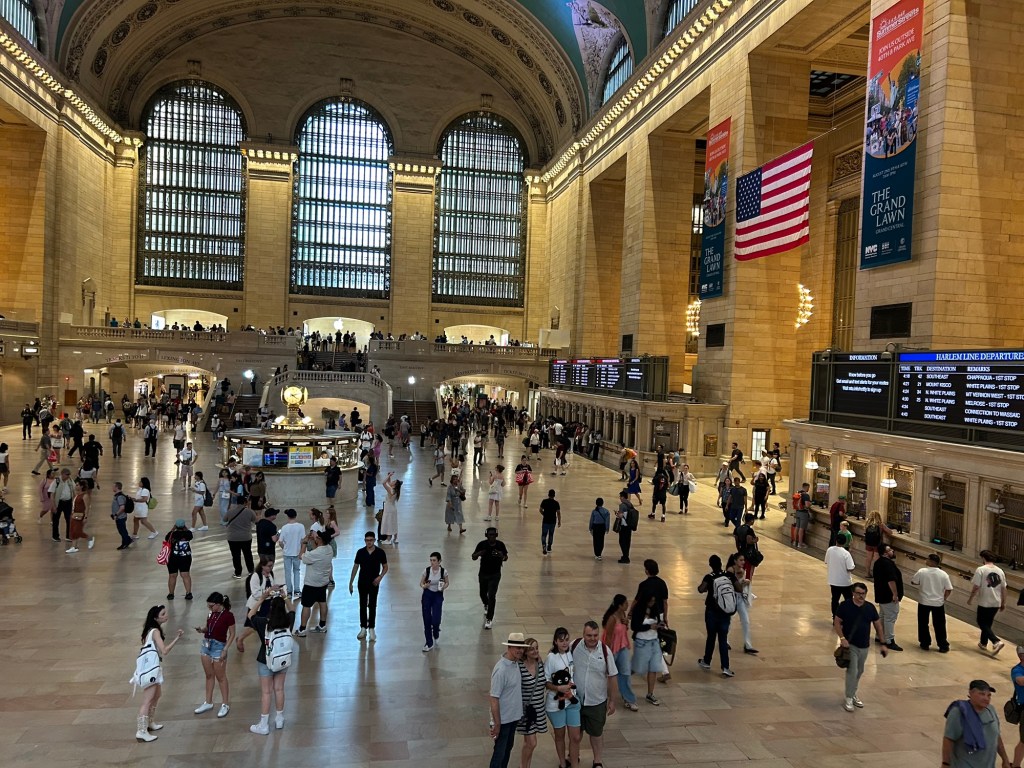
I recently experienced the whiplash of traveling from the serenity of rural Wisconsin to the frenetic pace of Midtown Manhattan and found myself standing in Grand Central Terminal imagining De Niro and Grodin in Midnight Run and marveling at the fact that I was one of around 750,000 people that would pass through that day. It cost me ten bucks to travel from there to the JFK airport, which is basically a miracle.
My trip to NYC was for a conference on higher education thanks to my dear friend, Novita, whose technology group hosted the event. Conference attendees were mostly tech leaders at colleges and universities alongside vendors from the tech industry, and you might not be surprised that a major topic of conversation was “not” the trains at Grand Central. No, Artificial Intelligence (“AI”) was the topic de jour.
My primary relationship with AI had been jokes about how typing Capital A, Capital I (for Artificial Intelligence) in many typical fonts looks exactly like Capital A, lowercase l (for my name, Al), leading to all sorts of fun headlines for me personally, like “How Al Is Changing the Music Business,” and “Stop Talking About Al.” When it comes to new technology, I am intentionally a late adopter. I recognize that the world changes and that I must adapt to remain engaged, but I am critical of our collective tendency to jump at the new and shiny without thinking, so I choose to arrive fashionably late to the party.
But the conference conversations were timely for me as I reluctantly board the AI train. I heard multiple people quote a leader of the tech giant, NVIDIA, who reportedly said, “No, AI is not going to take your job. Someone who knows AI is going to take your job.” That will catch your attention (although it is still funny if you read that inserting my name instead). And I was struck by a side conversation where a couple of high tech leaders said that the very developers of AI are shocked by the speed of its development. That is actually frightening.
My perspective is that as with most things AI is neutral on its face with both good and bad potential. And yet I also identify with the camp that meets this particular technology with great apprehension. I should explain my perspective on the latter.
I feel like a broken record referring to Jacques Ellul and his prophetic 1954 book, The Technological Society, as much as I do, but Ellul’s warning about “ever-increasing means” toward “carelessly-examined ends” seems on steroids when it comes to AI. Not only are the means much more powerful and increasing much more rapidly than ever before, but also the conversation on ends is nonexistent, at least to my knowledge. It is my understanding that the developers aren’t even sure where the technology is headed, much less is our society engaging thoughtful conversations on where society is going to arrive given its current trajectory.
If it helps, I don’t just repeatedly refer to Ellul; I also refer to Jim Collins’s classic book, Good to Great, over and over and over. Good to Great examined companies that made the leap referred to in its title and shared lessons on how that occurred. I recently made a connection between the book and the AI Revolution. In Good to Great, Collins coined the term “Hedgehog Concept” and described it as identifying the one thing in the world that your business can do the very best and then described the “Flywheel Effect” as staying laser-focused on that one thing until the momentum builds to that breakthrough moment for greatness. Important stuff, but I had almost forgotten that Collins had a section on technology, too, and I had almost forgotten because he made the crucial observation that technology should never be the point; instead, technology should at most be a tool that accelerates your laser-focused work on the one thing that is the most important for your business.
This is ridiculously important right now, I believe. While I am fully convinced that society as a whole will not engage a conversation on desired outcomes, maybe you and I in our respective spheres of influence can fight the powerful head winds against us to determine with specificity sufficient for clarity on what we want our lives to look like someday (i.e., the ends) and then with desperation cling to that destination. If AI/tech can be useful to accelerate our journey to our worthy goals, then by all “means” (ha!), use it. But if not, do not get sucked into its powerful and seductive vortex.
I have long heard the saying that the ends do not justify the means, and that’s true in communicating that immoral or unethical behavior is still wrong even if it produces something good. But what I am trying to communicate today is that tenaciously establishing the ends first will help illuminate the means and allow you to banish all unhelpful distractions to the shadows. Put another way, establishing noble ends first illuminates the means that are worthy tools for achieving the noble cause.
Okay, that doesn’t have the ring of a future cliche to it, but I believe it reduces the likelihood that a cyborg devours our souls for lunch someday.



 Starting to Look Up