Tag Archives: dreams

Good Night, and Good Luck

“Sleep is the single most effective thing we can do to reset our brain and body health each day.” – Dr. Matthew Walker, Ph.D.

In early 2015, I asked the following question to Pepperdine’s law students: In comparison to when you first entered Pepperdine School of Law, how would you now describe your practice of rest (e.g., time off, relaxing, Sabbath)? The results: 40% indicated no change; 19% answered stronger; but 41% said weaker. When disaggregated, 52% of first-year students said their practice of rest was poorer than when they started law school. I was not even close to surprised. As the Australians taught us children of the Eighties to say: Been there, done that.

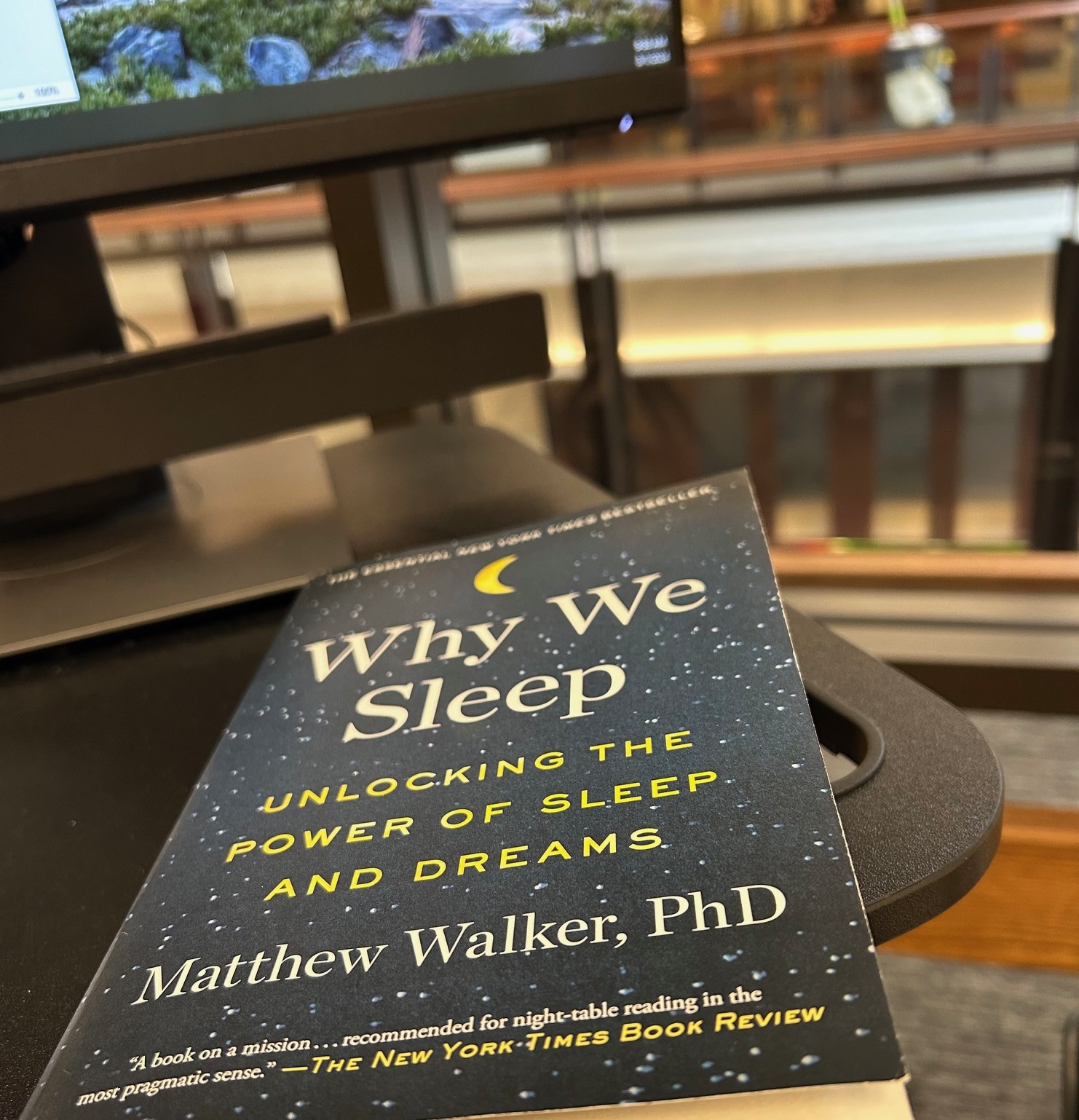
But I was never happy about it. Last semester, nearly a decade later, after discussing sleep troubles with a new law student, I decided that I should at least try to learn something about sleep, so I tracked down a book: Why We Sleep: Unlocking the Power of Sleep at Dreams, by Matthew Walker, Ph.D. I don’t know enough about science to confirm its veracity (there have been critics and controversy), but I do know that after reading it, now I’m having trouble sleeping. But because I don’t want to leave you out of the misery, let me share some of the disturbing (though sometimes cool) information that I read with you. You’re welcome in advance.

For starters, and on a positive note, all animal species seem to sleep, and part of why we humans are awesome may be because of our unique and natural sleep patterns. Specifically, compared to other primates, we sleep in a bed or on the ground instead of perched on tree branches, which allows us a disproportionate amount of REM sleep (the sleep when we dream) because the body is completely paralyzed during REM sleep, which isn’t a terrific idea if you are perched on a tree branch. And while in the cool facts portion of my essay, Walker claimed that the reason we are completely paralyzed during REM sleep is so that we won’t act out our dreams!

Our inordinate amount of REM sleep seems to set us apart in a couple of major ways: First, it heals and helps our mental and emotional health; and second, it enhances our creative and problem-solving abilities. Remember being told to “sleep on it?” Actually, great advice! Although in fact, all sleep phases are beneficial, and messing with any of them causes actual brain impairment.

The human body is fascinating. Just before a baby is born, its amount of REM-sleep is at an all-time high, approximately twelve hours a day. In year one, that declines while deep NREM sleep begins to increase, peaking just before puberty before retreating. The deep NREM sleep during childhood is sculpting the brain, but we all probably remember that it seems like construction halts during the teenage years when all sorts of irrational silliness ensued. Actually, the brain is still maturing then, but rationality is the last to arrive on the scene. Sleep then naturally settles into a predictable pattern in early adulthood. When left to our natural tendencies, human sleep is apparently “biphasic”—about seven actual hours of sleep at night, followed by an hour nap in the early afternoon—but that train apparently left our sociocultural station a long time ago.

In all our societal advancement, however, we have apparently created ways to screw up everything. Have you ever wondered why American life expectancy sucks relative to our immense economic and medical resources? The myriad ways we have created to destroy natural, human sleep patterns and a fingers-stuck-in-the-ears-while-bellowing-la-la-la-la-la-in-the-face-of-research posture toward the importance of sleep may be teensy reasons worthy of consideration.

O sleep, how do I screweth-uppeth thee? Let me count a couple of ways: Darn Thomas Edison for saying let there be light when there shouldn’t be light, and darn alarm clocks (and especially snooze buttons) for daily shocks to our hearts and nervous systems, sometimes multiple times a morning, telling us to get up when we aren’t done sleeping. And since REM sleep is disproportionate toward the end of the seven-to-nine hours of daily sleep we reportedly should be experiencing, about half of all adults in developing countries may be missing out on the unique human benefits that purportedly helped us develop in the first place.

And the consequences are tragic: Weakened immune systems, including an increased risk for certain cancers. Contributions to depression, anxiety, and suicidality. Impaired memory (and while I’m on memory, sleep aids memory both before and after learning, so all-nighters for work or school may be completely counterproductive). Cardiovascular disease. Increased propensity for weight gain, obesity, and developing type 2 diabetes. Drowsy driving—a driver that got up at 7am and heads home from the club at 2am without a single drink is reportedly just as impaired as a legally-drunk driver.

The result? As Dr. Walker wrote, “Relative to the recommended seven to nine hours, the shorter your sleep, the shorter your life span.”

Now we aren’t completely oblivious to our sleeping problems, but it seems that we are unfortunately ignorant to both the extent of the problems and the actual solutions. We typically mitigate with substances, including sleeping pills and/or alcohol and/or caffeine, that can actually do real harm instead of help.

So, what can I do about this to help our law students? I’ll have to get back to you on that one. This seems to be a larger problem than my present work environment, so that’s a major challenge to undertake. But I like major challenges. And it seems far too important to ignore.

What I will do is share with you my summation of the twelve tips for healthy sleep that Dr. Walker shared from the National Institute of Health at the end of his book and hope that someone finds them helpful:

  • Go to bed and wake up at the same time every single day.
  • Exercise, but not too late in the day.
  • Avoid nicotine (period) and caffeine in the afternoon/evening.
  • Avoid alcohol before bedtime.
  • Don’t got to bed too full or too hungry, and avoid beverages late at night.
  • Avoid medicines that disrupt sleep as much as possible.
  • Don’t nap after 3pm.
  • Do something relaxing before bed (not on a phone or computer).
  • Take a hot bath before bed.
  • Make your bedroom dark, cool (e.g., 65 degrees), and gadget-free.
  • Get at least 30 minutes of natural sunlight each day (ideally, an hour each morning).
  • If still awake in bed after 20 minutes, get up and do something relaxing until you are sleepy.

To quote the late, great Edward R. Murrow, “Good night, and good luck.”
Big Dreams, Small Places

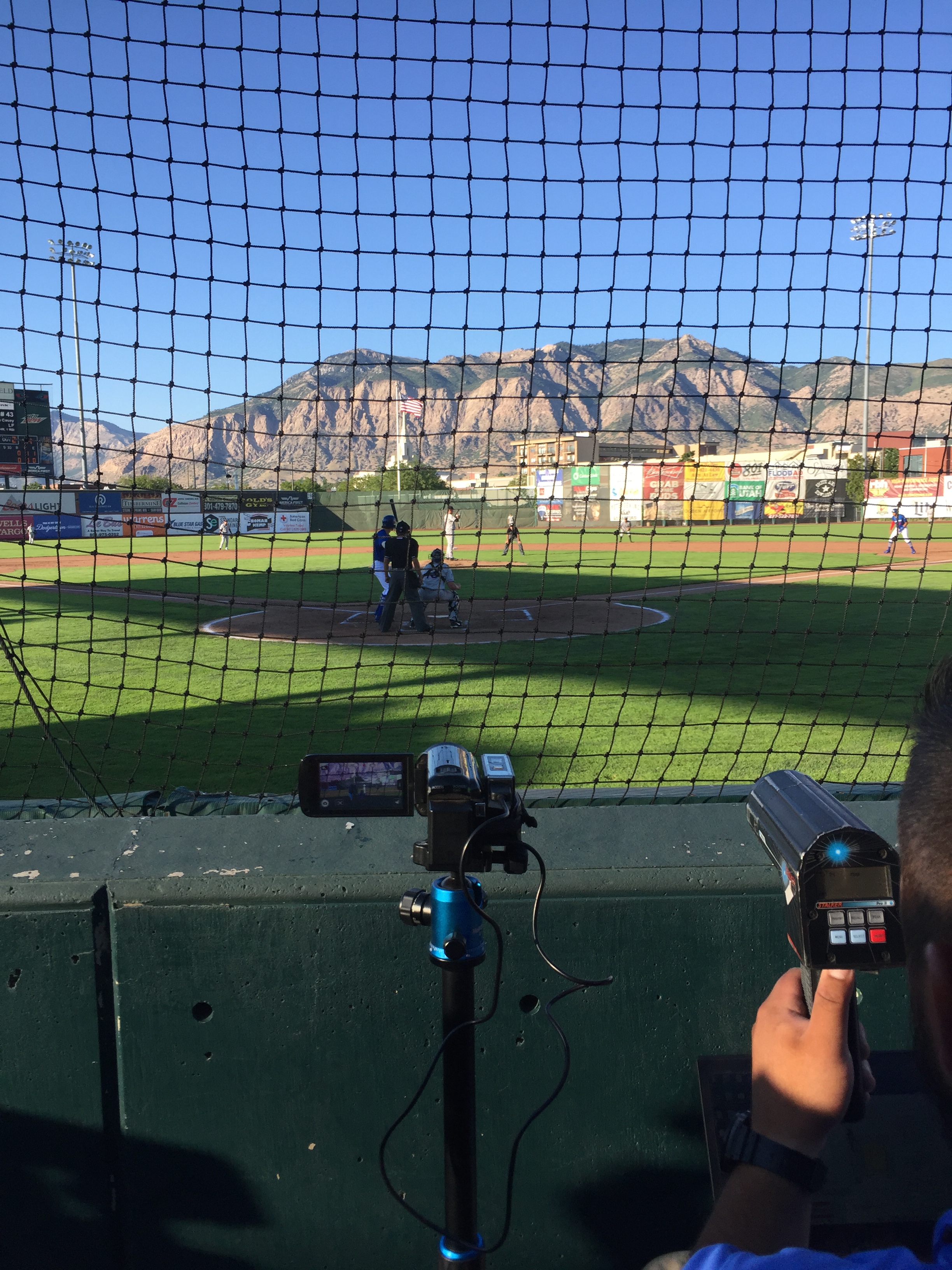
1889There is nothing quite like minor league baseball. Young and hopeful talent, goofy small-town promotions, and unsurpassed fan access all wrapped up in a classic sport.  On my recent stay in Ogden, Utah, I could not pass up the opportunity to see the hometown rookie league affiliate of the Los Angeles Dodgers in action, so I splurged the twelve bucks required for the best seat in the house and sat on the second row behind home plate in the middle of scouts with radar guns evaluating the 18-24 year old athletes on the field.  It was awesome.
Lindquist Field is reportedly the most picturesque venue in the league, and I cannot argue. The view from my high-priced seat featured the centerfield flagpole, which stood in front of the city’s Mormon temple, which stood in front of a gorgeous mountain range lit up by the evening sun.

It was clearly the minor leagues, however, complete with the civilization-insulting Chicken Dance, a corny hometown announcer, and a grounds crew consisting of a grown man dressed like Elvis and two unfortunate children dressed like a Dalmatian and some sort of hound dog. If I was the kid dressed like a hound dog sweeping the dirt, I would be crying all the time, too, simply from sheer embarrassment.

I ignored sound nutritional advice and downed a hot dog, nachos, and churro and root, root, rooted for the home team Ogden Raptors like I was a local. There was no shame in Ogden that evening since a couple of teenagers planted home runs over the sponsorship-laden wall en route to a 3-1 victory over the Grand Junction Rockies in exciting Pioneer League action.

I couldn’t help but think of my trip to Dodger Stadium earlier in the summer when I paid much more than twelve bucks to sit about as far away from home plate as one can manage and still be in the ballpark. The Dodgers are the hottest team in baseball this year and are the darling of a star-studded city, and not that long ago their crazy good all-star rookie Cody Bellinger was just a kid playing for the Ogden Raptors. As was their all-star closer Kenley Jansen. Even the legendary Dodger manager, Tommy Lasorda, once managed the Raptors, too.

The road to the big show always begins in much smaller places. To me, those small places where dreamers set their sights on the distant mountaintops are more fun than the actual object of their dreams.

1895


Dreams

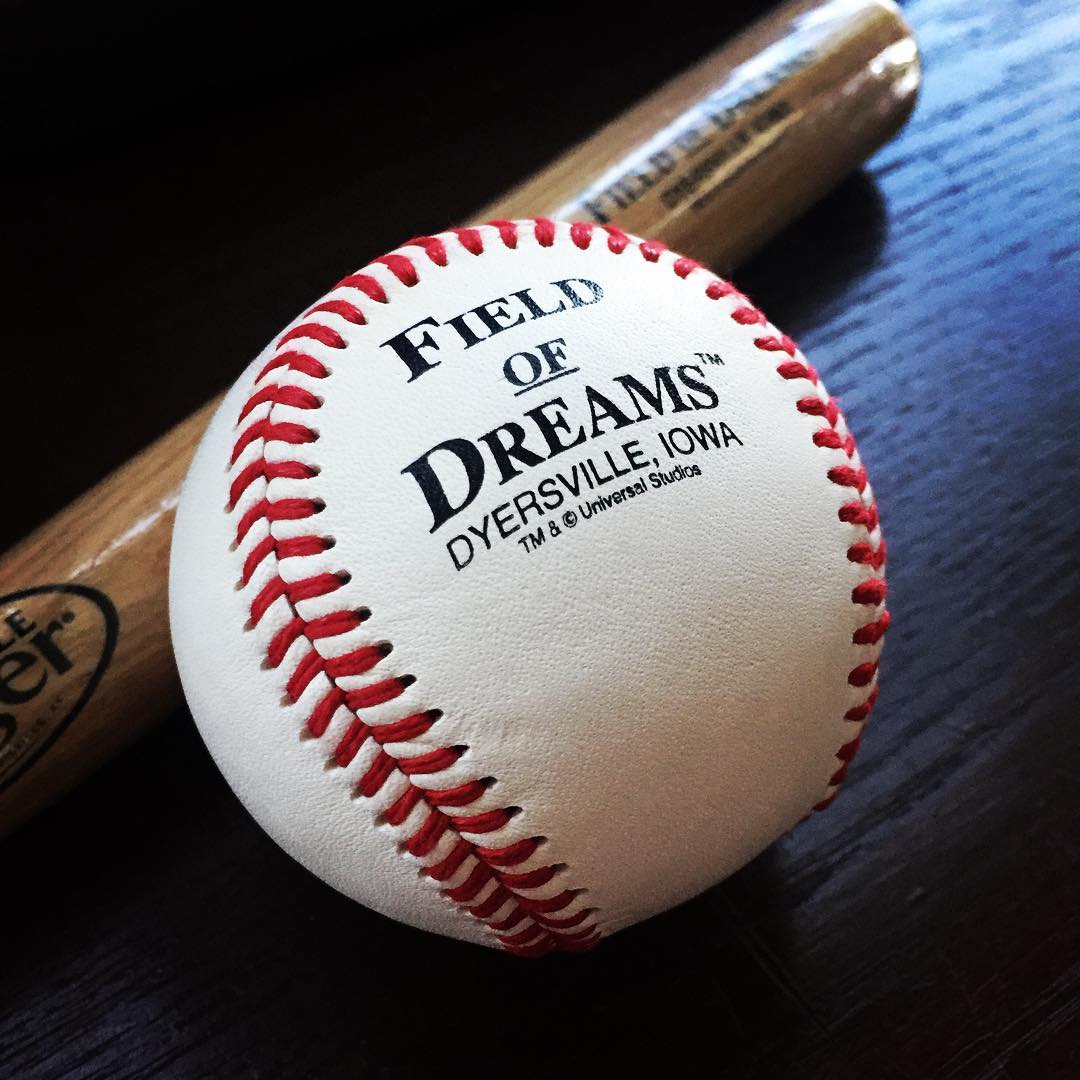
18380491_1304245319630140_7970860990956830720_n(1)My sweet wife visited the Field of Dreams Movie Site in Dyersville, Iowa, last week and brought home several souvenirs since she knows Field of Dreams is my favorite movie of all time. And, it seems, because she loved it there.

It still feels strange to say that Field of Dreams is my favorite movie. It has a corny plot–literally–set in that spooky Iowa cornfield complete with ghost baseball players and disembodied voices. It surely wasn’t my favorite movie when I saw it at the theater in 1989. Sure, I enjoyed the baseball history and the touching storyline, but I tend to prefer movies that aren’t set in fantasy world (nothing personal against Iowa).

My mistake was watching it years later. After my father died. That did me in. That famous last scene when a father is reunited with son and they play catch once again and Annie says to Ray, “Introduce him to his granddaughter” . . . 

Okay, I might need to change the subject. These darn allergies.

Mother’s days and father’s days mean something different to those of us on the other side of the great divide called death. It can be quite depressing, but oddly enough, it never has been for me. And I don’t even have to work hard to understand why. 

As fantastic as it sounds, although Field of Dreams is crazy fiction, I believe it touches on something that is actually very real. In my heart, I believe that someday I will once again hold my mother’s hand and play catch with my dad and introduce him to his youngest granddaughter.

The very thought of it nearly makes my heart explode with anticipation.    

Forging Pathways

2

“Law and order exist for the purpose of establishing justice and when they fail in this purpose they become the dangerously structured dams that block the flow of social progress.” – Martin Luther King, Jr.

Waze calculates thirty-four miles from Pepperdine University to East Los Angeles College; the Pacific Coast Highway to East Cesar E. Chavez Avenue; the celebrity-populated western side of Los Angeles to Cheech Marin’s East L.A.; Malibu to Monterey Park.  It sure seems longer, even in rush hour traffic.  They are two different worlds.

I serve on the advisory council for the East Los Angeles College (“ELAC”) Pathway to Law School Transfer Program, a coalition of educators and practitioners brought together to destroy obstacles that stand in the way of a young person advancing from high school to community college, from community college to a four-year college, and from a four-year college to law school.  It is an inspiring group, and I am honored to be a part.

It is also personally disconcerting.  I’m not exactly sure how I, a first-generation college student from rural Arkansas, the son of a butcher who dropped out of high school to provide for his family during the Great Depression, am suddenly the picture of white privilege in a room full of impressive human beings, but as a lawyer who drove over from his condo in Malibu, even my expertise in denial simply tossed in the towel and admitted the truth.  I may be the most reluctant privileged person around.

It was dark when the meeting ended, and on the stroll across the ELAC campus to drive back to idyllic Malibu, I noticed several classes in session.  Maybe I was wanting it to be so, but it sure looked like all of the students in those classes were engaged in the instruction and not bored on Facebook.  I’m just sure of it.  I then wandered by the math tutoring center, and it was undeniably a hub of academic activity late on a weekday evening.  All this made me feel particularly hopeful in this perplexing world of ours.

If I must come to terms with privilege, and I just might have to, I must use it to help those inspiring students hungry for knowledge in those hushed classrooms gleaming in the darkness.

A Dream On My Mind

“Blues was my first love.  It was the first thing where I said, ‘Oh man, this is the stuff.’  It just sounded so raw and honest, gut-bucket honest.” – Carlos Santana

As American society is forced to observe its ongoing failure to achieve racial equality, and as the nation chugs Pepto Bismol straight from the bottle in anticipation of tonight’s first presidential debate, I find myself listening to the blues.  Part depression, but admittedly, part I like listening to the blues.  

The names of the blues artists are the best: Muddy Waters; Howlin’ Wolf; T-Bone Walker; Blind Lemon Jefferson; and Big Mama Thornton.  (I read a great suggestion for how to create your own blues name using Blind Lemon Jefferson as exemplar.  Start with a physical infirmity, add a fruit, and finish with the last name of a president.  I’m going with One-Eyed Apple Carter.)

And the titles/lyrics of the songs themselves are fantastic: My Starter Won’t Start This Morning.  Call Me Anything, But Call Me.  Cornbread Peas and Black Molasses.  My favorite line from B.B. King: “Nobody loves me but my mother.  And she could be jivin’ too.”  Or, this great section from Lonnie Mack’s Oreo Cookie Blues:

I hide ’em in a cabinet, I keep ’em in a jar
For emergencies you know I keep ’em in the
Glove compartment of my car.
And I can’t live without ’em
They git’ me higher than I can get on booze
I got them Oreo creme sandwich
Chocolate-covered crème-filled cookie blues.

But seriously, despite this troubled world of ours, what business does a pasty-white bozo living in Malibu with a blog about optimistic attitudes like me have listening to the blues?  Well, it could be that someone who feels the need to create a blog about optimistic attitudes may have an underlying issue or two.  And it could be that Santana was on to something and that I’m drawn to something raw and honest, which may be better stated by Wynton Marsalis who said, “Everything comes out in blues music: joy, pain, struggle.  Blues is affirmation with absolute elegance.”

That works for me.  The blues confronts the brutal facts of life elegantly.  On some level, personal, or societal, or whatever, we all have some brutal facts that need confronting, and I would like to do so with elegance, rhythm, and style.

Back in 1939, Big Bill Broonzy sang about dreams he had on his mind that just weren’t true when he woke up in the morning.  Dr. King spoke of such unrealized dreams a few decades later, too.  Today, as we continue to sing the blues, may we not stop dreaming.

“I say to you today, my friends, that in spite of the difficulties and frustrations of the moment, I still have a dream.” — Martin Luther King, Jr.    

Now or Later

[Note: After reading a recent post, my friend, Brittany, suggested that I watch “The Barkley Marathons” on Netflix.  I did, and wow!  For the Netflix aficionados among us, it is a good use of ninety minutes.  I’ll just leave this as a teaser for anyone interested.]

In “The Barkley Marathons” (Netflix, see note above), a graduate student named John shared that he was taught as a child to work hard, save, and plan for the future.  John was a good son who bought what his folks were selling.  However, his father, practicing what he preached, worked and saved throughout his adult life so that he and his wife could travel the world on retirement only to die one year before retirement.  This effected a change in John who decided that you should live life while you have it.

I’m with John.  I’m not signing up for The Barkley Marathons anytime soon, but I’m with John.

Now to be clear, I’m not advocating that anyone quit work, buy a sports car, and go all Thelma and Louise on the world.  Instead, I suggest that we spend some quality time determining what it means to really, truly live, and do that now instead of later.  Later does not come with a guarantee.

Is it possible that “living life while you have it” could look like hard work and saving to travel the world when you retire?  I think so.  If that’s what you discover.  I simply (and humbly) suggest that you make sure of it before placing all of the proverbial eggs in such a basket.

Crazy Dreams

I almost did something insane. My wife and I are on a team headed to Kenya this summer (note: this is not the insane part) to live for a couple of weeks alongside an inspiring organization called Made in the Streets (“MITS”) that rescues street children from the Nairobi slums. Our youngest daughter is going, too, but she will spend her entire summer there as a photojournalism intern. Both my wife and daughter are in love with MITS from past trips, and I must go see for myself what has grabbed their hearts.

Still not the crazy part.

I’m a runner. Well, I’m a runner who is struggling to find motivation to keep being a runner, so I emailed Dusty, our fearless leader to Kenya, to ask what opportunities there might be to run with the Kenyans while there. Dusty had an idea or two and then suggested looking for a race in Nairobi. Well, I didn’t find a race in Nairobi, but I discovered that one of the toughest marathons in the world will occur about four hours north of Nairobi while we are there.

Now to the crazy:
1. The race is held a hundred miles from the equator, so 90+ degrees.
2. Add high humidity.
3. Add the dust from running on a dirt road.
4. Add the thin air of a 5500’ average elevation.
5. Add that I don’t have enough time to train for a normal marathon (and this would be my first).
6. Add actual lions.

Yep, actual lions. The race is held in a game preserve, and in addition to 140 armed rangers it is stated nicely under the “safety” tab on the marathon’s website, and I quote, “A helicopter and Supercub light aircraft monitor the movements of the large species during the race.”

In. Sane. Cray. Zee.

I actually came to terms with going for it—until I learned how much it would cost (and by cost, I mean financial; for some reason, the potential human cost did not deter me). Registration is $250 (steep, but okay) along with a $1,500 fundraising requirement (steep, but I would have bugged all of you for it anyway); however, it would cost $2,000+ more just to travel there and back and sleep in a tent. I’m crazy but not crazy rich.

Here’s the deal. Somewhere in the insanity I found motivation to run again. Okay, sure, the nightmares featuring lion attacks helped, but for the most part, I’m back at it again even though I am not going to run this amazing race.

I haven’t exactly identified the lesson here, but if you are in need of some motivation in some aspect of your life, you might ask someone for suggestions and be open to considering possibilities beyond your wildest dreams. It somehow got me out of bed this morning.

https://www.youtube.com/watch?v=wK2RKu9ANiU#action=share