Tag Archives: resurrection

Disaster Utopias (or, How Normal Often Sucks)

Recently, at a lovely dinner with new friends, our experience with Hurricane Katrina came up in conversation, which unleashed, of course, a thousand stories from the two of us, not to mention the associated emotions and special memories. I am not ashamed to admit that in the twenty years since the storm I have regularly referred to that time period as the most fantastic experience of my life—but saying so always seemed bizarre. That my fondest memories are located in an historic disaster confirmed in my mind that I am a certified weirdo.

And yet, this very thought reminded one of our dinner hosts of a book that she then loaned to me at the end of the evening, and reading it has been a revelation. It turns out that I am not alone.

Rebecca Solnit published A Paradise Built in Hell: The Extraordinary Communities That Arise in Disaster back in 2009, and through examining five historic disasters—the San Francisco Earthquake (1906): the Halifax Explosion (1917); the Mexico City Earthquake (1985); the September 11 Attacks (2001); and Hurricane Katrina (2005)—the author challenges the assumption that communities inevitably collapse into chaos by sharing stories of incredible altruism and cooperation instead.

My wonderful memories following the destruction wrought by Katrina might actually be, dare I say, normal.

I remember being royally pissed off two times after Katrina (well, three if you count the day I tried to call FEMA, but that’s beside my point). The first was months after the storm when we left the Gulf Coast for the first time and well-meaning friends asked if “things were getting back to normal.” No fault on their part, but the inability to comprehend that our community had been permanently and fundamentally changed was jarring. But the second was far worse for me personally, and it was harder to comprehend myself why it produced such strong emotions. When I heard someone from the Gulf Coast wish for things to get back to normal, I was livid. When I calmed down enough to reflect on why that statement made me so furious, as strange as it seemed even then, it occurred to me that I never wanted the “new normal” to end.

To be candid, I am still sorry that it did.

Solnit refers to this as a disaster utopia. She writes: “When I ask people about the disasters they have lived through, I find on many faces that retrospective basking as they recount tales of Canadian ice storms, midwestern snow days, New York City blackouts, oppressive heat in southern India, fire in New Mexico, the great earthquake in Mexico City, earlier hurricanes in Louisiana, the economic collapse in Argentina, earthquakes in California and Mexico, and a strange pleasure overall. It was the joy on their faces that surprised me. And with those whom I read rather than spoke to, it was the joy in their words that surprised me. It should not be so, is not so, in the familiar version of what disaster brings, and yet it is there, arising from rubble, from ice, from fire, from storms and floods. The joy matters as a measure of otherwise neglected desires, desires for public life and civil society, for inclusion, purpose, and power.”

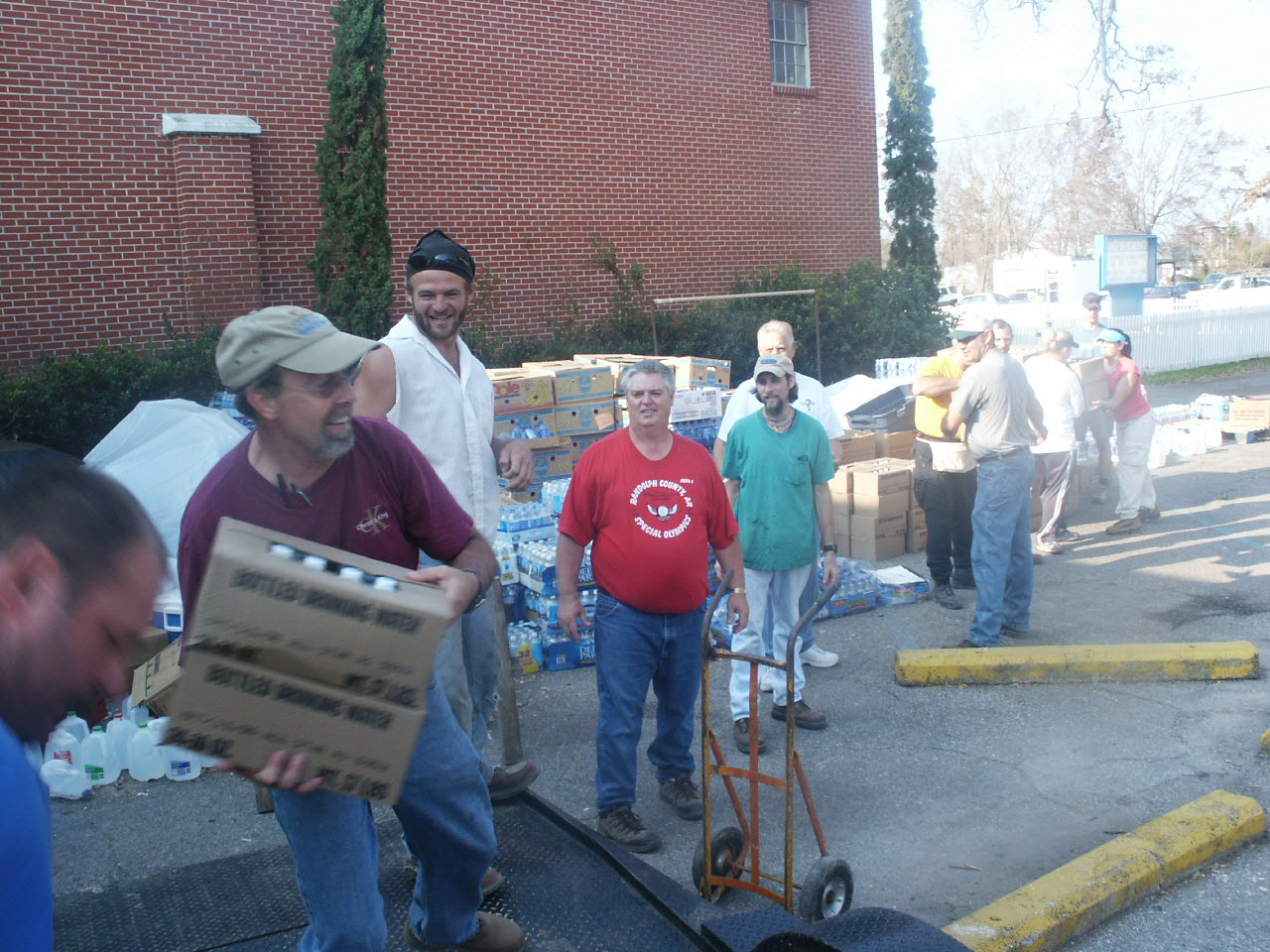
From time to time, I stroll down memory lane and look through pictures from our Katrina experience. The one above is one of many that make me smile. Look closely, and what you will see there is joy. Old friends, new friends, and complete strangers coming together to share and care for no other reason than good and noble hearts. We all worked together, ate together, lived together, loved together. Defying expectations, in the midst of incredible suffering, we laughed together and actually had fun. I can’t explain it, but I experienced it, and it is more comforting than you know to learn that our experience was not an anomaly.

I cannot say that the future is bright. Our climate crisis is predicted to unleash more disasters than ever. Our national debt crisis is predicted to destroy our economy in twenty years. And artificial intelligence is declared by its own people as an existential threat to the planet. But take heart, and I speak from experience, humanity has the inherent ability to respond in beautiful ways specifically in the very worst of times. That may not sound encouraging, but it is true.

As Solnit described, “These remarkable societies suggest that, just as many machines reset themselves to their original settings after a power outage, so human beings reset themselves to something altruistic, communitarian, resourceful, and imaginative after a disaster, that we revert to something we already know how to do. The possibility of paradise is already within us as a default setting.”

Put another way, it is a great comfort that I actually believe in the beautiful metaphor of resurrection. And when it occurs, it is a sight to behold.
Dreams

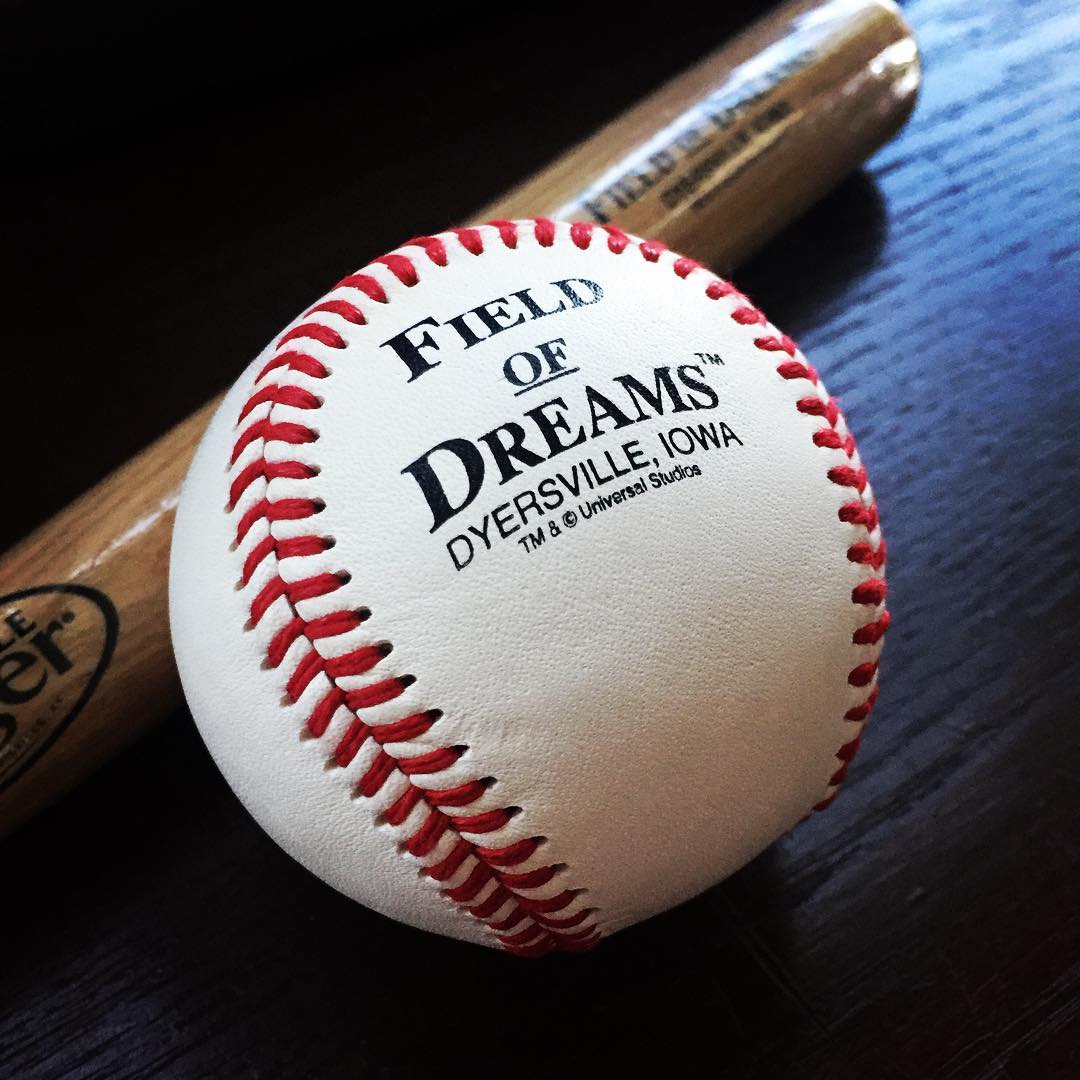
18380491_1304245319630140_7970860990956830720_n(1)My sweet wife visited the Field of Dreams Movie Site in Dyersville, Iowa, last week and brought home several souvenirs since she knows Field of Dreams is my favorite movie of all time. And, it seems, because she loved it there.
It still feels strange to say that Field of Dreams is my favorite movie. It has a corny plot–literally–set in that spooky Iowa cornfield complete with ghost baseball players and disembodied voices. It surely wasn’t my favorite movie when I saw it at the theater in 1989. Sure, I enjoyed the baseball history and the touching storyline, but I tend to prefer movies that aren’t set in fantasy world (nothing personal against Iowa).

My mistake was watching it years later. After my father died. That did me in. That famous last scene when a father is reunited with son and they play catch once again and Annie says to Ray, “Introduce him to his granddaughter” . . . 

Okay, I might need to change the subject. These darn allergies.

Mother’s days and father’s days mean something different to those of us on the other side of the great divide called death. It can be quite depressing, but oddly enough, it never has been for me. And I don’t even have to work hard to understand why. 

As fantastic as it sounds, although Field of Dreams is crazy fiction, I believe it touches on something that is actually very real. In my heart, I believe that someday I will once again hold my mother’s hand and play catch with my dad and introduce him to his youngest granddaughter.

The very thought of it nearly makes my heart explode with anticipation.    

Reinvent Yourself

you-can-call-me-al

I join those who say Facebook is at least worthwhile on your birthday. I liked every nice message last week, although it took forever to “like” each message, but as I worked through the list, the number of names I have collected over the years was striking.

#1: LITTLE AL: That made me smile. I was named after my dad who was named after his dad, so I was Little Al to my dad’s Big Al for many years until I outgrew him by eight inches, which led to…

#2: BIG AL: That was high school and college, partly due to my height, but partly because Al is a name that just feels right with Big in front of it, like John, Dave, Bird, Brother, Trouble, Sur, Government…

#3: COACH AL: My first job was coaching my high school alma mater, and when the superintendent introduced me to the student body, he simply couldn’t bring himself to refer to someone he knew since Little Al as Coach Sturgeon; henceforth, Coach Al.

#4: MR. STURGEON: I moved to a non-coaching job at a new school. Good job, but boring name.

#5: BROTHER AL: My next career was preaching, and we remained in the South, so you get it.

#6: DEAN STURGEON: And then there is now. This one is slowly catching on.

Which do I like best? All of them because each brings awesome memories of great people. Which do I prefer? I don’t, but if you have no reason to use one in particular, then Paul Simon’s song (and classic music video) sums up my advice: You Can Call Me Al.

What does this have to do with anything? Whatever you think about the scientific theory of human evolution, it is undeniable that we evolve as individual human beings, and our capacity to reinvent ourselves appears limitless. So are you happy with all of “you” right now? I suspect none of us are, so the question emerges: Which version of you comes next? You do get to choose.

Today, an elderly couple passed me on the 101 test driving a sparkling white Mercedes convertible with a handicap placard dangling from the rear view mirror in the breeze. That isn’t my personal style, but hey, Fred and Myrtle are making a choice!

Resurrection

My faith leads me to believe in resurrection, not just as a one-time event but as a truth that can provide hope to any circumstance. This entire blog—Starting to Look Up—is a direct reflection of that idea.

Saturday marked the tenth anniversary of Hurricane Katrina, which received varying levels of attention throughout the country.  Some of you know that my family experienced Katrina firsthand and have heard more than enough about it from me; however, many of our new friends in California had no idea and have kindly expressed interest.  To the latter, you may be interested to know that I wrote a little journal that described our experiences in the months that followed the storm, and recently, although a bit embarrassed, I published the journal through a print-on-demand outlet–embarrassed in part from not appreciating my grammatical deficiencies until law school made them apparent, but also because I did not clean it up at all, i.e., no editing, no page numbers, etc. But that may be appropriate since the entire Katrina experience was a tad messy.

For a flavor, here is an entry from the book that was published as a letter to the editor in the Sun Herald newspaper for Christmas 2005. Now, in retrospect a decade later, I believe even more strongly in resurrection and ever-present hope.

I’LL BE HOME FOR CHRISTMAS

In August 1943, over six decades before Hurricane Katrina, Kim Gannon and Walter Kent copyrighted a song titled, “I’ll Be Home For Christmas.” That same year Bing Crosby recorded their brand new song, and it became an instant holiday classic. For its first Christmas, it comforted thousands of American homes ripped apart at the hands of the Second World War, but this was only its big beginning. It has comforted many more every Christmas season since.

There is something both mournful and peaceful about the tune and lyrics:

I’ll be home for Christmas / You can count on me
Please have snow and mistletoe / and presents on the tree
Christmas Eve will find me / Where the love light gleams
I’ll be home for Christmas / If only in my dreams

It plays well in Mississippi this 2005 holiday season, too.

Long ago, I was taught the difference between a house and a home. A house (I learned) has a roof and walls, while a home consists of people. It was a clear distinction. Using these handy definitions of course, the tens of thousands of Gulf Coast residents facing the Christmas season displaced from their “houses” should just toughen up and be downright holiday-happy that they can be “home” for Christmas in a tent, or in a trailer courtesy of the Federal Emergency Management Agency, or even several states away from where their mailbox stood in August.

But I don’t like the definition. Not anymore.

I, for one, think ornaments lovingly handcrafted by sticky three-year-old hands from years gone by are an important part of a home. And I think pictures of Christmases past, with fresh looks of surprise at the sight of a newly-opened presents, are just a downright vital part of a home, too. You can disagree all you want. And I think rarely-seen homemade videos of the last Christmas together before the kids took off for college, and cookbooks with that special recipe for fudge, and that Bing Crosby CD we always listened to on Christmas morning, are all very important ingredients in this wonderful word called “home.”

And this Christmas, thousands upon thousands of these precious ingredients are piled in a landfill somewhere. This is why I think a lot of things about this particular Christmas season sucks. Pardon my French.

Oh, but we’ll make the best of it. There will be downright cute attempts at making a FEMA trailer (of all things) festive. There will be Christmas dinners in hotel rooms and readings of “The Night Before Christmas” with more family members in residence than normal, and important explanations that Santa Claus not only comes down chimneys, but he also comes right through the flap on the tent.

We’ll do our best. And Christmas, believe it or not, will still help us. After all, it revolves around the story of a displaced family living in a barn. And how that story is the birth of hope for the whole world. We need to hear that story most desperately this year.

But in spite of it all – even while considering the very source of hope – we will sing that old Bing Crosby song with extra meaning this year.

Yes, we residents of the Gulf Coast will be home for Christmas, but this year, it will only be in our dreams.