
Tag Archives: music

Blazing Sky

I wanted to title this essay how a third century Italian bishop and a twentieth century Canadian athlete unwittingly combined to inspire a song that has motivated me to embrace life ever since I was a teenager — but that seemed a bit wordy.

So, “Blazing Sky” it is.

Less than 40,000 people live in Formia, a small Italian city located halfway between Rome and Naples on the Mediterranean Coast where two patron saints watch over the town: the famed John the Baptist, and the lesser-known Erasmus of Formia. Not much is known of the early life of the bishop named Erasmus who lived in the third century, but there are many legends of various tortures that he faced living in the era of violent Christian persecution under the Roman co-emperors, Diocletian and Maximian. There are fanciful legends of surviving a red-hot oven as well as rolling down a hill in a barrel filled with protruding spikes. There is a particular legend of miraculously surviving a disembowelment, which led him also to be the patron saint of those suffering abdominal pains, including women in labor. Erasmus of Formia also became the patron saint of sailors, which may be associated with the legend of his continued preaching when lightning struck next to him, the sort of weather event that led many a terrified sailor to cry out to the troubled skies in search of protection.

Rick Hansen has no visible connection to Erasmus of Formia. Rick was born seventeen centuries later and across the planet on Vancouver Island in British Columbia. Rick did not face torture by religious persecution, but he did face tragedy as a teenager when he was thrown from the back of a pickup truck on the way home from a fishing trip and suffered an injury that left him paralyzed from the waist down. And although Rick has no miracle stories, his response to a devastating injury was nothing short of fantastic. Rick worked hard on rehabilitation, graduated from high school, and went to college to major in none other than physical education. He became a high school coach, and more notably, a world-class athlete who won multiple national and world championships. Rick befriended fellow Canadian, Terry Fox, who had a leg amputated due to bone cancer. In 1980, Fox famously attempted a run across Canada to raise money for cancer research, a run that had to end after 3,000+ miles when the cancer returned. Fox died less than a year later, and his heroic story inspired books, movies, and an entire Rod Stewart music tour. It also inspired his friend, Rick Hansen. In 1985, Rick began his Man In Motion World Tour and for the next two-plus years Rick wheeled for 25,000 miles across four continents and through thirty-four countries. Incredible.

Erasmus of Formia died over seventeen centuries ago, but Rick Hansen is still alive today doing inspirational things. (I like that despite the initial accident his love for fishing never waned; and I especially love that today he works to protect sturgeon populations and has written a children’s book titled, Tale of a Great White Fish: A Sturgeon Story.)

What is the connection between Erasmus of Formia and Rick Hansen? I am glad that you asked.

Among the many people inspired by Rick Hansen is fellow Canadian (and uber-famous music composer and producer) David Foster. Foster was working on another project in his Santa Monica recording studio in the 1980s when a movie director friend entered and told him that he had finished a feature film on Rick Hansen and his Man In Motion tour. Foster’s songwriting wheels began to turn, and magic happened when he shared the movie with British singer, John Parr, as they attempted to write a theme song for the movie, St. Elmo’s Fire. The director of St. Elmo’s Fire wanted a song about determination, and after witnessing the story of Rick Hansen, the lyrics just poured out. In a couple of hours they had a megahit song that they titled, Man in Motion. “All I need’s this pair of wheels” turn out to be Rick Hansen’s wheelchair, not Demi Moore’s jeep.

In the movie, Demi Moore, Emilio Estevez, Rob Lowe and the gang hang out at St. Elmo’s Bar, although the movie is titled, St. Elmo’s “Fire.” St. Elmo’s fire is an actual electrical weather phenomenon, a bluish glow that often appears in a stormy sky and can signal a coming thunderstorm, which medieval Mediterranean sailors found most valuable. The movie studio didn’t care for the title, so to keep the title the director wrote a scene into the movie where Rob Lowe’s character explains the phenomenon to comfort Demi Moore’s character. You see, those ancient sailors were comforted by St. Elmo’s fire and attributed that cherished fiery glow to their patron saint, St. Elmo — which is an alternate name for Erasmus of Formia.

Rick Hansen is the Man in Motion OG. And Erasmus of Formia is the St. Elmo in St. Elmo’s Fire.

And for forty years I have been in love with that song.

I never saw the movie way back in 1985. Or since. But I surely heard the song. Each time it came on the radio as I cruised the streets of my hometown something magical happened in my heart. My teenage self consistently reported it as my favorite song even though I didn’t know what any of it meant, but multiple phrases combined with a powerful tune to speak to my young, idealistic soul:

Growin’ up, you don’t see the writing on the wall.

Play the game, you know you can’t quit until it’s won.

You’re just a prisoner and you’re tryin’ to break free.

Burning up, don’t know just how far that I can go.

I can make it, I know, I can.

I can climb the highest mountain, cross the wildest sea.

It has been four decades since I was moved by this classic song. And although I have not been a martyr nor a paralympian, maybe I should not be surprised that my life can undoubtedly be characterized as a man in motion. It has been quite an adventure. And forty years later, I can be driving down a rural Wisconsin road as a fifty-five year old man, and that song can come on the ’80s station, and I will instantly crank it up to an unhealthy level and sing at the top of my lungs. And in such moments, I am fifteen years old again. And I still claim those lyrics decades later: I can make it, I know, I can.

I am glad now to picture a tortured saint literally barreling down a hill and a determined athlete wheeling across a continent. That makes me love the song even more. I instantly feel less tired and more invigorated to face whatever challenge awaits my future. Two people that never knew each other can inspire two people to write a song that can have that effect on a person. Will you join me in chasing after life regardless of its terrors and its unfair challenges?

I can see a new horizon underneath the blazin’ sky
I’ll be where the eagle’s flying higher and higher
Gonna be your man in motion, all I need’s this pair of wheels
Take me where my future’s lyin’, St. Elmo’s fire

Learning to Hear Everything

“People notice when he’s imitating a horn or a bass, but he’s also singing like water, like rain, singing like a piece of wood, or like a plate cracking on the floor . . . . These are all available to him. All these sounds, because he’s just always aware . . . . In life, he’s always observing things. [And] he doesn’t just see everything. He hears everything.” – Marcus Miller (on Al Jarreau, in Kurt Dietrich’s “Never Givin’ Up: The Life and Music of Al Jarreau,” p. 321)

When Jody and I moved to Malibu (the first time) in 2008, like countless others before and since, we experienced the welcome embrace of Hung and Corinne Le. We quickly felt like family as we shared many a meal in the Le home alongside so many others that received similar treatment. On one of our initial visits Hung said that when he first heard about this couple, “Al-and-Jody,” what he kept hearing was, “Al Jarreau.” So before long, we became known to the Le family as the Jarreaus, not the Sturgeons. It would crack us up when “the Jarreaus” would be invited over for dinner, or while there, hear Hung ask to get a picture of “the Jarreaus” before the evening ended.

You can imagine my reaction several months ago now when the opportunity to move to Wisconsin to work at Ripon College became a real possibility and I stumbled upon a list of the College’s famous alums and saw the name: Al Jarreau. I just had to laugh.

Everyone in my generation heard of Al Jarreau. Ten Grammy awards, sure, but it seemed like he was constantly on television for something or other during the Eighties: singing the theme song for the hit show, Moonlighting; wedging his contribution to the epic “We Are the World” performance between Willie Nelson and Bruce Springsteen; performing his hit song, “We’re In this Love Together.” Even I, a sports-obsessed teenager that paid little attention to the music industry, knew his name.

In our many moves, I developed a habit of reading some facet of an area’s history once we arrived. I read “The Age of Gold: The California Gold Rush and the New American Dream” by H.W. Brands when we lived in California. In Nashville, it was “The Children” by David Halberstam. In Illinois, it was “Life of Black Hawk” as dictated by the Sauk leader himself. Anticipating Wisconsin, I noticed someone had recently published a biography on Al Jarreau, and I knew that I had to track it down once there.

Well, I didn’t have to try very hard. On one of my first visits to First Congregational Church of Ripon, I happened to sit next to Kurt Dietrich, a retired music professor from Ripon College who decided to become Al Jarreau’s posthumous biographer in his retirement. And I soon learned that Professor Dietrich would give a presentation on his book at the Ripon Public Library. Jody and I not only attended but I also received an autographed copy of the book, which he graciously addressed to his “new friend Al.”

I finished reading it this morning and thoroughly enjoyed every page. Anyone with even a passing interest in Al Jarreau, or music in general, or stories of incredibly gifted human beings with fascinating journeys, will be glad that they tracked down a copy.

I also read Isabel Wilkerson’s “Warmth of Other Suns” recently, a brilliant history of The Great Migration of Black citizens from the American South during Jim Crow, so I recognized that Al Jarreau was yet another example of an enormously influential Black musician from places like Chicago (e.g., Nat King Cole; Sam Cooke; Quincy Jones) and Detroit (e.g., Aretha Franklin; Diana Ross; Stevie Wonder) whose very genius emanated from people having the courage to flee the racial terror of the South in hopes of better lives for their families. Jarreau’s family story included parents that left Alabama for Chicago with subsequent stops in both Flint and Indianapolis before eventually settling in Milwaukee, Wisconsin, where Al was born and raised.

Although my journey is so, so different, there were several personal connections in the book that made me wish that I had paid far more attention to Al Jarreau along the way. For starters of course, we both had unlikely journeys to Ripon College, but we also made major moves to Southern California that transformed our lives. I also smiled when I noticed that a musician named Willie Weeks played bass on Jarreau’s second album, and I remembered that it was Weeks who later in his career gave my childhood friend, Jon Conley, his big break in Nashville. I also learned that Jarreau’s last concert was in Austin, Texas, where my youngest daughter now lives, and sadly learned that when Jarreau went to the hospital with the illness that took his life in early 2017, he did so in Thousand Oaks, California, where our oldest daughter now lives.

But beyond the coincidences that provided small feelings of connection to this musical legend, I experienced a deeper connection that comes from the work of a good biographer like Professor Dietrich.

For as long as I can remember, I have had a million friends while still feeling a strong sense of loneliness that is hard to describe. I suspect that on a much larger level that describes the life of Al Jarreau.

Everyone felt drawn to Al Jarreau, but he never truly fit into a recognized box. He fit in everywhere, and nowhere. He had a smile and positivity that lit up wherever he happened to be, but he defied easy categorization. He was so loved at Ripon College, but he was nowhere near the typical Ripon College student. He was a phenomenal musical talent, but no one could decide if he was a jazz artist, or pop artist, or R&B artist. He was an incredible human being with extraordinary gifts that was one of a kind, which sounds like a compliment but might be easier to admire than to be.

What I learned about Al Jarreau the musician is that he had an incredible gift for live performance in part due to his magnetic personality, but also because of his unique improvisational ability. Professor Dietrich shared a story from tour director Jerry Levin about a concert in St. Louis in 1978: “Halfway through the concert, a severe thunderstorm materialized, and the power in the venue went out. Although crew and concert organizers went out to see about cranking up a generator and salvaging the concert, the power had gone out in that entire part of the city. As the promoters and Levin began negotiating about refunding ticket prices to the audience, Al started singing all alone on the stage. The band’s percussionist passed out instruments to band members. Audience members got out lighters and flashlights from their purses and backpacks, bathing the room with a kind of a warm glow. Al finished the set, singing seven or eight songs a cappella. At one point, he sat on the edge of the stage. Several rows back, there was a couple with a small child. The youngster was brought up to the stage, where he sat on Al’s knee, and Al sang directly to the boy. Levin finished the story by saying, ‘I don’t think anybody that was there will [ever] forget it.'”

I wasn’t there, but just by reading about it I don’t think I will forget it either.

But what showcased his improvisational abilities, as musician Marcus Miller described, was a special voice that could sound like anything and everything, which wowed his concert audiences. The quote from Miller near the end of the biography really struck me: Jarreau could do this especially well because he paid attention to everything. He listened to everything. He was fully and constantly aware.

That’s what was in my mind as I closed the book on the life of Al Jarreau this morning. I, too, would like to be fully aware, having learned the secret of how to listen to everything. I don’t have Al Jarreau’s unique voice, so I’m not referring to recreating actual sounds in a stage performance of course. No, I’m just imagining the magic of the self-aware life. Maybe it’s a foolish wish, but it sounds like it might even help with loneliness.

I’m glad that Hung Le refers to us as the Jarreaus. I’m glad that we moved to Ripon College and met Professor Dietrich so that I can feel a deeper connection to Al Jarreau through reading his life story. But mostly, I’m glad that all of the above has led me to commit to listening to everything better.

Country

Country-Music_Mezzanine

“The goal in sacred story is always to come back home, after getting the protagonist to leave home in the first place! A contradiction? A paradox? Yes, but now home has a whole new meaning, never imagined before.” – Richard Rohr, Falling Upward: A Spirituality for the Two Halves of Life (pp. 87-88)

Growing up I associated two things with Nashville: Churches of Christ and country music. The former was familiar, but even as a young person I was drawn toward things that were unfamiliar. And the latter was something my dad listened to in the car (other than a brief Randy Travis stage, I did not choose to listen to a lot of country music). So I never pictured myself in Nashville.

But when our potential move emerged, I was surprised how much I was drawn to the city itself. It felt like I would learn a lot about myself in Nashville, who I am, where I come from, and the meaning of the word “home.”

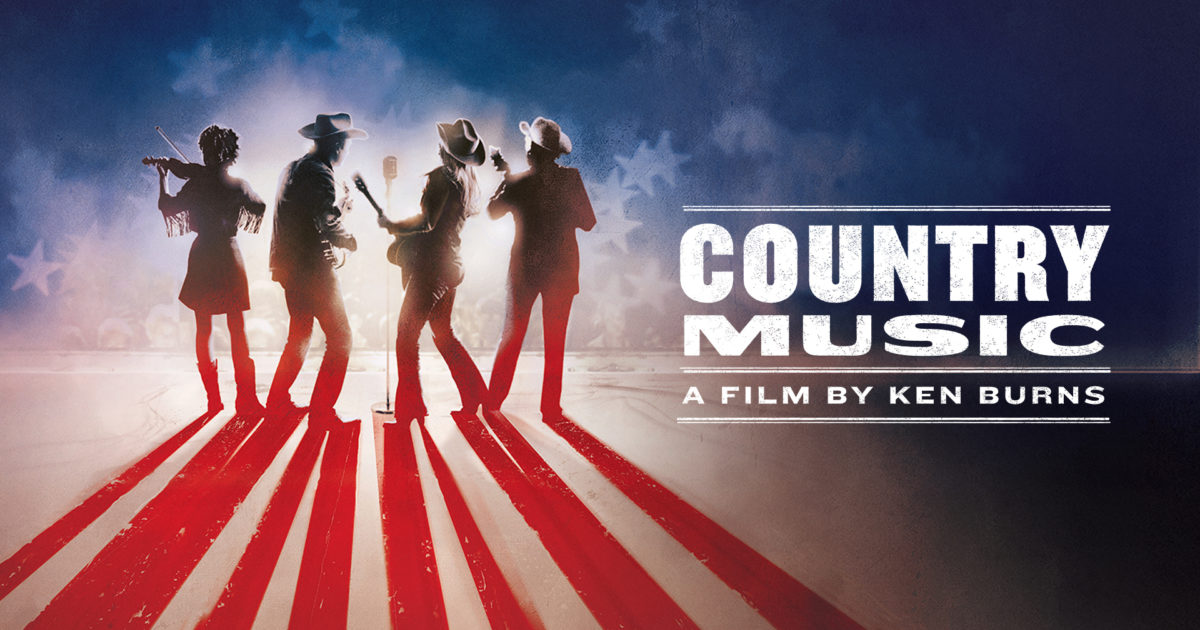
Still, it was surprising to think that country music had a role to play. Sure, moving to ground zero of Churches of Christ would involve introspection, but country music? Somehow I just knew that would prove important, too. Little did I know that famed filmmaker, Ken Burns, was putting the finishing touches on a new documentary miniseries to help me out.

If you have not been following Country Music on PBS, I suggest you find a way to catch up. Simply learning that the banjo came from African slaves and the fiddle came from European immigrants in Appalachia was worth tuning in. Country music is just that—an amalgam of this complicated country—and learning its history is helpful in understanding America if nothing else.

I had unfortunately never heard of DeFord Bailey, the first performer ever introduced on what became known as the Grand Ole Opry, and a grandson of slaves, and a harmonica genius. In fact, it was after Bailey’s brilliant rendition of a train on the show in 1927 (following a show that ended with the New York Symphony’s version) that announcer George Hay said, “For the past hour, we have been listening to music largely from Grand Opera, but from now on, we will present ‘The Grand Ole Opry.’” Bailey was unceremoniously fired in 1941 and spent the rest of his life shining shoes to make a living.

And speaking of 1941, I learned that country music was the favorite choice of soldiers during World War II, which provided a stunning realization as to why my dad always tuned in on the radio when I was a child. Country music must have walked my dad and a lot of people through tough times—the Great Depression, and a world at war. I also learned that it was World War II that propelled the Grand Ole Opry past other radio “barn dances” to its worldwide prominence. According to Burns, Japanese soldiers in the South Pacific were heard saying, “To hell with Roosevelt; to hell with Babe Ruth, and to hell with Roy Acuff.”

I’m not sure what I am learning about myself just yet, so if you are expecting me to weave this together in a perfect harmony that just isn’t going to happen today. What I do know, however, is that the banjo and fiddle are apparently providing the music that is serenading me toward home.

In the Spotlight

Bright Lights

“All the world’s a stage…” – Jacques in As You Like It, by William Shakespeare

As I prepared last Friday night to enjoy my first experience with Singarama, a wildly popular campus tradition that showcases large numbers of ultra-gifted Lipscomb University students, I was mesmerized by the stage lights illuminating the auditorium in celestial royal blue. We in the audience instinctively knew that the lights were simply teasing us. Before long, they would disappear completely, only to explode again and dazzle us with the glittering magic of brightly-costumed performers singing and dancing and delivering a delightful evening of entertainment.

It is a different experience for those on stage. Blinded by the light, they must remain focused in ironic, light-flooded darkness, remembering the steps, remembering the lyrics, remembering to smile. It is a rush of a different kind, one that arrives by hard work, nerves, adrenaline, and execution. In the end we are all happy, but none more so than those who stepped up and delivered in the spotlight.

I also considered this earlier in the week sitting in the famed Madison Square Garden, the self-described most famous arena in the world, watching another set of college students put on a show in front of a crowd under the bright lights. This time it was athletic talent and a live national television audience, but it necessarily involved the same light-flooded darkness, the same adrenaline, and the same task to focus on what had been practiced over and over.

It was a pleasure on both occasions to watch students stand and deliver under the bright lights.

Some seem to crave the spotlight, while others avoid it. There are reasons to be wary of the spotlight, but others to embrace it. It is simultaneously compelling and terrifying. And some who crave the spotlight never receive it, and others who avoid it who find it thrust upon them.

It isn’t a bad metaphor for life, as might have occurred to Shakespeare.

So how does one respond to an impending moment on life’s stage under the bright lights? Discipline. Preparation. Courage. Persistence. Hard work. Good habits. Resilience. Endurance.

And maybe most important of all, an active imagination that envisions in faith that glorious and transcendent moment when you have done your part and the curtain falls or the buzzer sounds—in the spotlight.

Birthday Trips

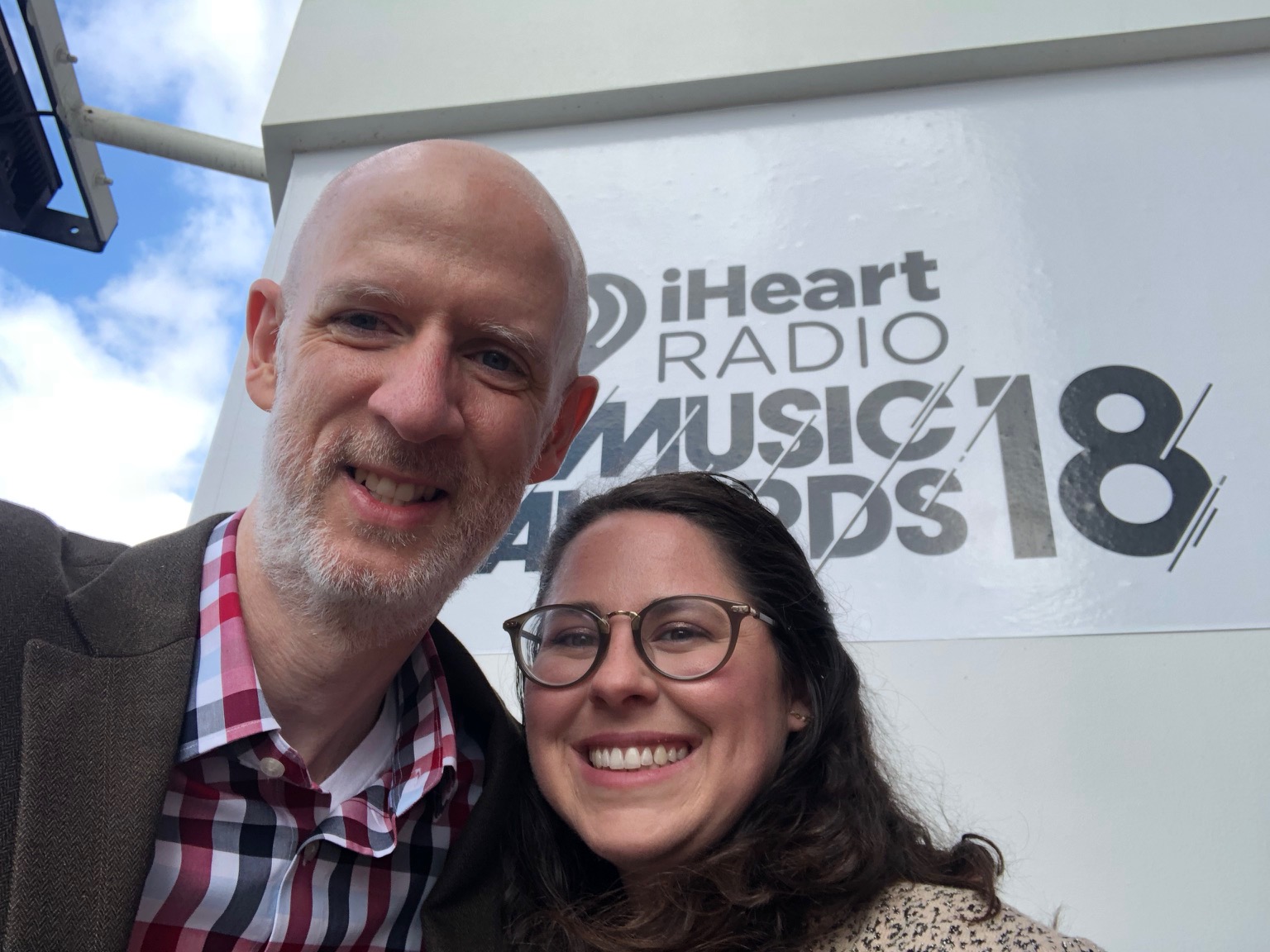
IMG_0199Last night I attended the iHeartRadio Music Awards at The Forum in Inglewood with my oldest daughter, Erica. The celebrity-studded awards show featured mega-stars like Bon Jovi, Eminem, Cardi B, Chance the Rapper, Maroon 5, Camila Cabello, Charlie Puth, and N.E.R.D. Surprisingly, I had heard of a couple of them prior to last evening. And maybe not surprisingly, me and Jon Bon Jovi aren’t teenagers anymore.
This was my annual birthday trip with Erica. Seventeen years ago I had a bright idea to celebrate Erica’s fourteenth birthday with a surprise father-daughter date instead of purchasing a material gift, which immediately became our annual tradition. That inaugural trip included a trip to the House of Blues in New Orleans for an O-Town concert, a boy band that emerged from the reality show, Making the Band. What would motivate me to take my daughter to a boy band concert and spend the evening in an audience filled with screaming teenage girls? The answer is love. Weird, inexplicable, father-daughter love.

My youngest daughter, Hillary, was a preschooler back then, but it didn’t take her long to ask when I would start taking her on special father-daughter birthday trips. So that tradition started, too. Over the years I have taken my daughters on all sorts of secret adventures in a total of thirteen states that have included road trips, sporting events, fancy dinners, museums, theater performances, celebrity stalking, theme parks, cultural experiences, concerts, television events, and now, even an awards show (see the crazy list below).

I guess I could start buying them gifts instead. But they might not let me. And I wouldn’t let me either. Making a memory together is a far better choice than purchasing a present. Trust me.

——————————————————————————————————-

Birthday trips:

Erica:
#14: House of Blues in New Orleans (O-Town concert)
#15: MLS soccer in Dallas, Texas (stalking Landon Donovan)
#16: Spring training baseball in Orlando, Florida
#17: NBA basketball in New Orleans (to watch LeBron in his rookie year)
#18: French Quarter Haunted Tour in New Orleans
#19: Championship tennis in Miami, Florida (to watch Maria Sharapova)
#20: Dinner at Mary Mahoney’s in Biloxi, Mississippi
#21: Dinner at the Hard Rock Casino in Biloxi, Mississippi
#22: Wicked at the Pantages in Hollywood
#23: Driving across country on Route 66
#24: Jimmy Kimmel Live in Hollywood
#25: A tourist weekend in San Francisco
#26: Grammy Museum in Downtown Los Angeles
#27: Pepperdine Associates Dinner in Downtown Los Angeles
#28: NHL Anaheim Ducks game
#29: Horse racing at Santa Anita Race Track
#30: LA Phil at Walt Disney Concert Hall in Downtown Los Angeles
#31: iHeartRadio Music Awards in Inglewood

Hillary:
#6: Lynn Meadows, Marine Life Aquarium, and Chuck E. Cheese in Gulfport, Mississippi
#7: Exploreum in Mobile, Alabama
#8: Jazzland Theme Park in New Orleans
#9: St. Louis Cardinals baseball game at the brand new Busch Stadium
#10: Horse-drawn carriage ride in the French Quarter of New Orleans (followed by a Fantastic 4 movie)
#11: National Civil Rights Museum and a Redbirds game in Memphis, Tennessee
#12: Warner Brothers Tour in Burbank, California
#13: Are You Smarter than a Fifth Grader? (television screening) in Burbank, California
#14: House of Blues in Anaheim, California (Natasha Bedingfield & Andy Grammer concert)
#15: Hairspray screening in Hollywood Forever Cemetery
#16: A tourist weekend in San Francisco
#17: Pepperdine Associates Dinner in Downtown Los Angeles
#18: Space Needle and more in Seattle, Washington
#19: Seattle Seahawks game
#20: Olvera Street in Downtown Los Angeles

The Nashville Scene

22802054_1424706070960843_6066755586089811968_n
At Douglas Corner Cafe

Music City is apparently the popular kid in class these days due to its unique combination of live music, yummy food, Southern hospitality, and distinctive attractions. The Grand Ole Opry is an experience all by itself. I was told that you never know what you will see at the Opry, and when NFL Hall-of-Famer Terry Bradshaw and NASCAR legend Darrell Waltrip took the stage to sing an Eagles song, I had to admit that I never saw that one coming.

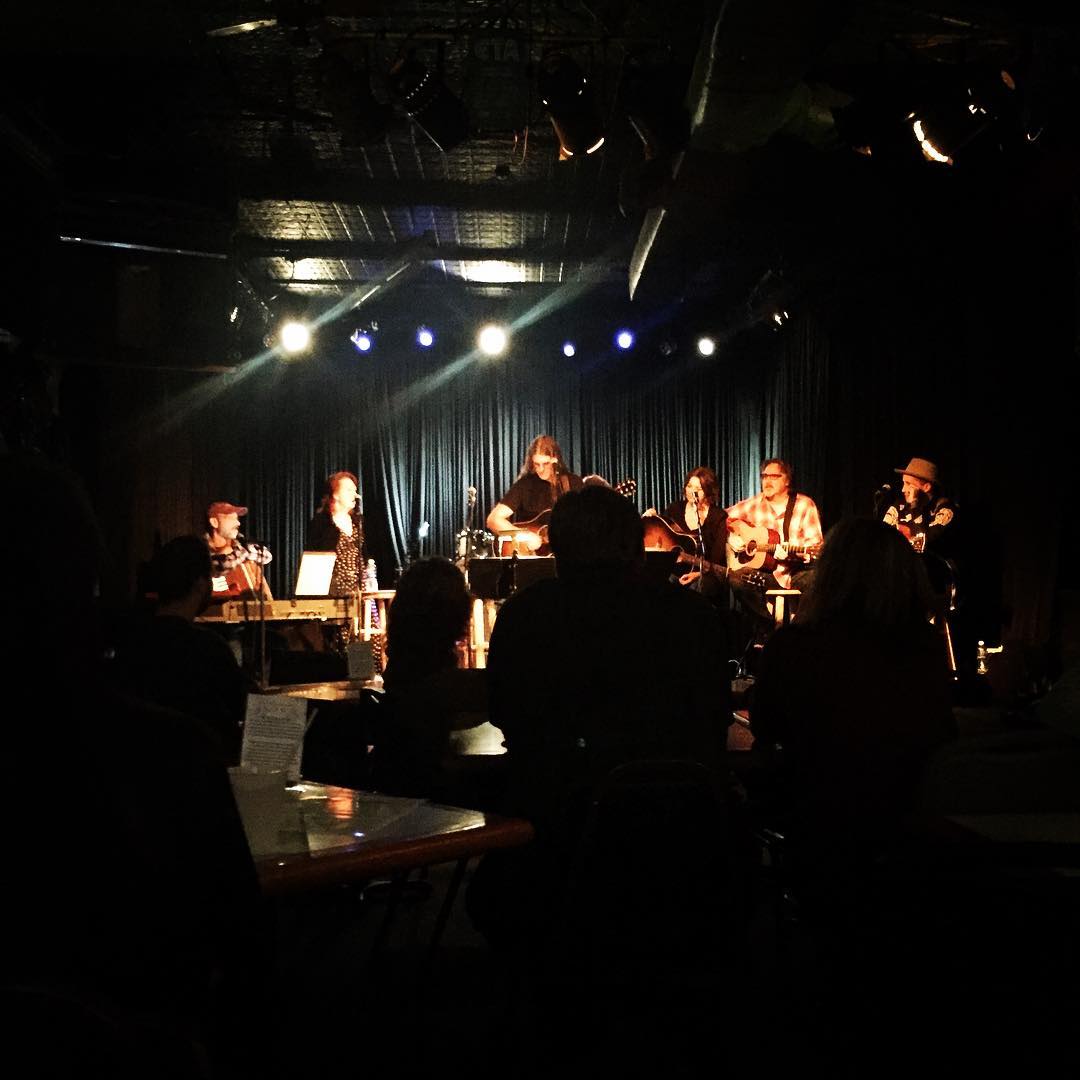
It was good to see several old friends during my recent visit to Nashville like Caleb, Ken, the entire Walker family, and my old buddy, Jon, from Arkansas. Jon is an accomplished musician, and since he wasn’t touring I also had the special opportunity to see him in action at a singer-songwriter night at the Douglas Corner Café (pictured above).  It was great to see these friends, but due to a limited schedule I missed many other friends who now live in Nashville, too.

In fact, it is hard to know who lives there now since lots and lots of folks are moving to Nashville. I went for an early morning run and noticed the new and cramped residential construction and heard somber talk of sharp increases in housing costs and the terrible traffic accompanying such rapid growth. It is the next Atlanta, they say, and if the speaker is really in a bad mood, maybe it is a future L.A.

Nashville is a cool city, but the collective concern is that it might have become so cool that it will inevitably lose its special appeal. It seems that contentment is an elusive virtue, so it is hard to blame anyone. It is the human condition to take something good and then push for more until it isn’t so great anymore.

But personally and ironically, I don’t want to be content with the inability to be content.  Try that one out on your therapist.

Life Soundtrack

18949778_1735992256699940_7067436704965066752_n
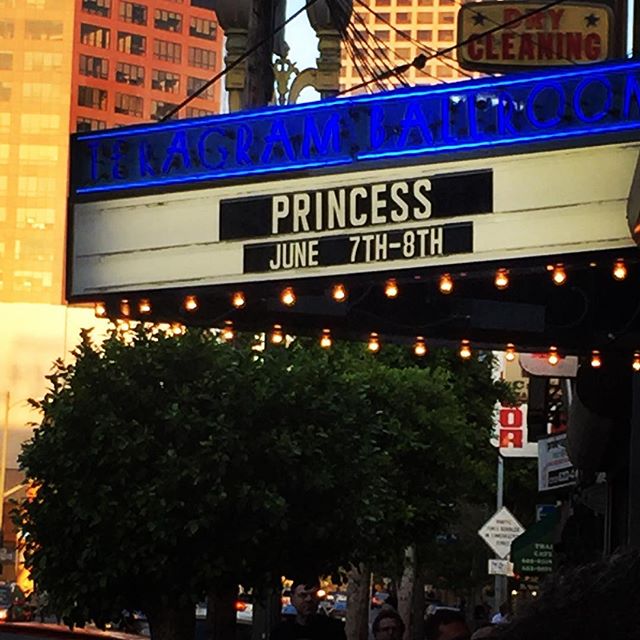
The Teragram Ballroom is an intimate concert venue a little off the beaten path in downtown Los Angeles that holds around six hundred people. My wife and I tracked it down Thursday night to see Princess, a Prince cover band, since my wife is a huge Prince fan (and since our friend, Karl, told me about the concert just in time for Mother’s Day shopping).

We arrived early, partly because that is a sickness of mine and partly to combat the oppressive Los Angeles traffic. We entered the venue ninety minutes before showtime only to discover that there is no seating in the Teragram Ballroom, so we found a spot at the edge of the stage and began our standing marathon.

It was worth it.  It was such a fun show.  Princess consists of Maya Rudolph of Saturday Night Live fame and Gretchen Lieberum, a singer-songwriter college friend of hers, so it was part great music and part hilarious. That Rudolph’s fellow SNL actor, Fred Armisen, unexpectedly was part of the band made it even better.

I don’t go to many concerts but happened to attend a couple lately and both were trips down memory lane. Both U2 and Prince music apparently produce large class reunions from the 1980s. I did not see kiosks for treating baldness, midlife crises, or fading eyesight at either concert, but those seem like missed opportunities.

What I did see were people reconnecting with thoughts and emotions from over thirty years ago that were important early chapters in what has now become life stories.  I was not immune.  I surely did not know what I was looking for in high school, but reconnecting with that U2 song made me consider how I have handled the journey in the intervening years. And I didn’t really go crazy in high school, but reconnecting with that Prince song made me reflect on whether I have made good use of this fleeting life since I first sang that fleeting life anthem along with him in 1984.

It was fitting that Maya Rudolph and her college buddy were on stage Thursday night.  They are us, the children of the 1980s, and we are all together at this interesting stage of life.  In this time of life reflection, it is a general rule that regrets and disappointment show up to say hello. So if I can call for one more class meeting, I simply have one question for my fellow students: Are we gonna let the elevator bring us down?  

I choose to punch a higher floor and start looking up.

Resolute (Or, 17 for ’17)

happy-new-year-resolutions-quotes

I resolve to do the right thing even if it appears illogical.

I resolve to laugh more often and at inappropriate times.

I resolve to spend more time with people and less with screens and devices.

I resolve to see otherwise invisible people.

I resolve to spend more time with my eyes closed listening to good music.

I resolve not to listen to music when I’m driving.

I resolve to go for long runs in new places.

I resolve to spend more time outdoors in familiar places.

I resolve to try something new.

I resolve to treasure something old.

I resolve to feed my mind, body, and spirit healthy things.

I resolve not to give anyone or anything the power to choose my attitude.

I resolve to replace a noisy, busy life with a simple, smooth rhythm.

I resolve to read books and learn stuff.

I resolve to use my talents to make the world a better place.

I resolve to love my wife and daughters more than ever.

I resolve to live resolutely.

A Dream On My Mind

“Blues was my first love.  It was the first thing where I said, ‘Oh man, this is the stuff.’  It just sounded so raw and honest, gut-bucket honest.” – Carlos Santana

As American society is forced to observe its ongoing failure to achieve racial equality, and as the nation chugs Pepto Bismol straight from the bottle in anticipation of tonight’s first presidential debate, I find myself listening to the blues.  Part depression, but admittedly, part I like listening to the blues.  

The names of the blues artists are the best: Muddy Waters; Howlin’ Wolf; T-Bone Walker; Blind Lemon Jefferson; and Big Mama Thornton.  (I read a great suggestion for how to create your own blues name using Blind Lemon Jefferson as exemplar.  Start with a physical infirmity, add a fruit, and finish with the last name of a president.  I’m going with One-Eyed Apple Carter.)

And the titles/lyrics of the songs themselves are fantastic: My Starter Won’t Start This Morning.  Call Me Anything, But Call Me.  Cornbread Peas and Black Molasses.  My favorite line from B.B. King: “Nobody loves me but my mother.  And she could be jivin’ too.”  Or, this great section from Lonnie Mack’s Oreo Cookie Blues:

I hide ’em in a cabinet, I keep ’em in a jar
For emergencies you know I keep ’em in the
Glove compartment of my car.
And I can’t live without ’em
They git’ me higher than I can get on booze
I got them Oreo creme sandwich
Chocolate-covered crème-filled cookie blues.

But seriously, despite this troubled world of ours, what business does a pasty-white bozo living in Malibu with a blog about optimistic attitudes like me have listening to the blues?  Well, it could be that someone who feels the need to create a blog about optimistic attitudes may have an underlying issue or two.  And it could be that Santana was on to something and that I’m drawn to something raw and honest, which may be better stated by Wynton Marsalis who said, “Everything comes out in blues music: joy, pain, struggle.  Blues is affirmation with absolute elegance.”

That works for me.  The blues confronts the brutal facts of life elegantly.  On some level, personal, or societal, or whatever, we all have some brutal facts that need confronting, and I would like to do so with elegance, rhythm, and style.

Back in 1939, Big Bill Broonzy sang about dreams he had on his mind that just weren’t true when he woke up in the morning.  Dr. King spoke of such unrealized dreams a few decades later, too.  Today, as we continue to sing the blues, may we not stop dreaming.

“I say to you today, my friends, that in spite of the difficulties and frustrations of the moment, I still have a dream.” — Martin Luther King, Jr.    

I’d Like to Teach the World to Sing

Well, I did it. On Saturday night, I sang a solo in public for the very first time. This caught me up to most of the world, so no grand accomplishment, but it sure was for me. Our church hosted a low- and at times off-key talent show to raise money for those of us traveling to Kenya this summer and somewhere between the expansive definition of “talent” and guilt for not doing much for the trip so far I decided that this was a fine time to break my forty-five year silence. I chose “Forever and Ever Amen” by Randy Travis, partly because I will love my wife forever and ever (amen) and partly because I have a bass voice and thought this song choice reduced the risk of total humiliation. My kind friend, Shelby, graciously agreed to accompany on guitar, and had she not, I totally would have chickened out.

My problem began in church at age six. I was sitting by my mother and belting out the chorus of a favorite song when a couple in the pew in front of us turned and gave me a dirty look as if to say, “Let us put this nicely—you are annoying the hell out of us, so shut up.” Setting aside the fact that annoying the hell out of someone is arguably a net spiritual benefit to the annoyed, I shut up. I shut up for a decade.

Fast forward to sophomore year of high school. While sitting in “chapel” at my small, Christian high school, I accidentally broke my sincere vow never to let anyone hear me sing and my friend, John Mark, said, “You have a good voice: Why don’t you sing more?” That one comment changed my world. Okay, I didn’t start a band or anything, but that one comment returned my voice, just like a single criticism took it away, and I started singing again, allowing my voice to blend into the music of the world.

It took another thirty years (I may be a slow learner), but two days ago, John Mark’s encouragement even allowed me to offer the world a song on my own.

You should never underestimate the power of a single act of criticism or encouragement.