Tag Archives: christianity

Swimming in a Culture of Violence

At the beginning of David Foster Wallace’s famed commencement speech at Kenyon College in 2005, two young fish encounter an older fish as they are swimming along, and the older fish says to them in passing, “Morning, boys, how’s the water?” As they swim on, one of the young fish eventually looks at the other and asks, “What the hell is water?”

The profundity of Wallace’s illustration has many applications, but I’m thinking today of how we swim in a culture of violence.

At almost the exact same time on Wednesday and hundreds of miles apart, two acts of violence occurred in school settings: a 16-year-old with reportedly anti-Semitic and white supremacist views murdered two high school students before taking his own life, and a 22-year-old with reportedly anti-fascist views murdered an enormously popular politically-conservative speaker on a college campus. And both happened on the day before the anniversary of the terrorist attacks on September 11, 2001. The confluence of these terrible tragedies produced a flood of emotion, naturally, and many in their grief offered expressions like “this is not who we are” and “how did we get here” and “who have we become.” Sadly, my thoughts turned to Wallace’s little parable.

I am (always saddened but) no longer surprised by acts of violence, although I am often surprised when others are surprised by acts of violence. We live in a culture of violence, and I’m not talking about the United States of America (only), and I’m not talking about something that has occurred in the past few years, or even in our lifetimes. I believe that humanity itself, at least human civilization as we understand it, has historically and continually believed at its core that violence can make things better, that violence solves problems, that violence produces justice. We condemn certain acts of violence and condone (sometimes celebrate) others as good, and as a result, violence is as ubiquitous to our lives as water is to a fish.

Governments seek the death penalty under the banner of justice. Nations go to war under the banner of justice. Cartoons and movies and television series create heroes who beat the hell out of villains and in so doing make the world a better place. Logically, while we (can and should and do) condemn the actions of abusers and assassins and terrorists, it should not surprise us when others perform terrible, violent acts that they believe will somehow make something better, too. This is water, as Wallace might say.

Theologian Walter Wink called this “the myth of redemptive violence” and claims that this really is who we are, at least in the sense that this concept is the water in which we swim unaware.

I was a pastor in my early thirties when the 9/11 attacks shocked our nation. At the time, my job was to think deeply about Christianity and translate that into the life of a church. I recall that I quickly became troubled by the natural (and national) response to the tragedy. To be specific, I had understood that my faith tradition looked at war as a terrible event, although for many the just war theory stood as a reluctant option that was developed in an attempt to wrestle with the moral challenges with classic pacifism. All that went out the window quickly when our nation was attacked, and shortly, even preemptive attacks on nations unaffiliated with the attacks seemed justified by large swaths of Christians regardless of the wisdom of centuries of church teachings.

Wink clarified for me at the time that a belief that “violence is both necessary and effective for resolving conflict and achieving justice” may be a far deeper value for many who claim Christianity than Jesus’s call to “love your enemies.” Wink went so far as to claim that “[i]t, and not Judaism or Christianity or Islam, is the dominant religion in our society today.” I recommend his book “The Powers That Be” if you truly want to wrestle with his thoughts and address the “what-ifs” that probably come to mind first (i.e., What if someone breaks into your house to threaten your family? What if nobody stands up to Hitler?). Those are valid questions, and Wink takes them on, but that is not my point today. Instead, I simply point toward the ocean that we swim in together. Violence is an ugly word that we condemn in times of tragedy, yet violence undergirds and defines our culture, and we should at least be aware.

The diagnosis runs deep, and the prognosis is not encouraging, but after decades of wrestling I have adopted an approach to life that does not include despair. While I personally support pathways leading to fewer dangerous weapons instead of more, and while I long for vast improvements in mental health care, neither strike at the root of the redemptive violence mindset. So, what to do?

My choice is simply to reject violence in all its forms, including those popularly conceived of as redemptive. I choose, if you will pardon the metaphor, to attempt to live as a fish out of water.

How to do that is ridiculously complicated, but at least the why is not. Why I choose to pursue a path that rejects all forms of violence is because the ocean I would like to swim in is one where every human being is imbued with dignity and respect and worthy of love. With that perspective, violence is no longer an option because violence is inconceivable toward someone that you truly love.

I know. When someone told me I live in fantasy land, I nearly fell off my unicorn. But I’m not talking love in the silly sentimental sense. I’m talking love in all its messiness. The sort of love that will do the hard work of creative resistance, but never attack or demean or destroy. How can you attack someone you love?

This is how I still claim to be a Christian, despite myriad reasons to disassociate based on popular conceptions of what that means. I believe that indiscriminate love, which includes your worst enemies, is the heart of Jesus’s message, and I am bought in. I cannot imagine that such a radical thought would ever be popular, but I can imagine what it would be like if it were, and that is enough for me.

Well… (Or, Facing Reality)

I fancy myself an early riser and enjoy getting to the office before the campus comes to life, but I often encounter a wonderful member of our custodial staff who has been at work long before my arrival. Recently, we struck up a conversation about the bitterly cold temperatures in the forecast for today, and as our conversation concluded, my colleague said with a smile and as a matter of fact, “Well, we are in Wisconsin.”

I love it. I’m going to use that phrase a lot.

Later, it occurred to me that the sentiment that undergirds that statement reflects a deeply held value of mine regarding life in general.

I am a Christian, but being raised in a specific Christian tradition that encouraged me to think deeply and arrive at my own conclusions, my personal journey has led me to become a different kind of Christian than expected, possibly different than you picture when you hear the term, and probably much to the dismay of several teachers along the way. But I have found great sustenance in the writings of unique thinkers from days gone by, and one of those is William Stringfellow (1928-1985). Near the end of his 1966 book, Dissenter in a Great Society, the lawyer and lay theologian wrote:

“[T]he Christian knows . . . that this world is a fallen world, not an evil world but the place in which death is militant and aggressive and at work in all things. . . . Of all people, Christians are the most blunt and relentless realists. They are free to face the world as it is without flinching, without shock, without fear, without surprise, without embarrassment, without sentimentality, without guile or disguise. They are free to live in the world as it is.” (page 161, updated with gender neutral terms)

Now that has not been my natural experience as a Christian or with Christians, so I apologize for cutting to the chase with that reading because there is much to be understood from Stringfellow prior to such a conclusory passage, but trust me when I say that once I got the full impact of Stringfellow’s theological framework, that passage made a deep impression on me. One way to put it is that it led to a desire to say to myself when life seems unhinged, “Well, we are on Planet Earth.”

I sincerely aspire not to be shocked by what happens in this world, and although a work in progress, I do make progress. And while the limits are often tested, I am less and less surprised by elections, politicians, business tycoons, crimes, illnesses, and disasters. I still feel the deep disappointment, pain, and sadness that acts of injustice produce, but importantly, I am less likely to despair and less likely to live in fear.

As Stringfellow put it, I strive to accept the world we live in for what it is. That’s accept, not approve; in fact, as Stringfellow writes later, I am in perpetual protest. But as a “blunt and relentless realist” who is less likely to be debilitated by current events, I can protest with a steady resolve and with inexplicable hope.

It is bitterly cold outside today in my new home state, but saying “Well, we are in Wisconsin” reminds me that cold weather is to be expected and allows me to bundle up and face the hard reality.

That general idea gets me through life, too.

Chaos or Community?

It seems to me that a debate over where a nation’s flags should be positioned today should be about the national holiday’s namesake rather than two others who are not, the national holiday’s namesake that is.

To be fair, one of the two obviously did not invite the debate. In fact, just over forty-six years ago (January 14, 1979) President Jimmy Carter became the first president to propose a national holiday honoring Reverend King even though thirty such bills had been proposed and defeated in Congress in the decade following the assassination, with the first proposal coming just a few days after the national tragedy in 1968.

President Carter’s proposal was unsuccessful, too. There were repeated financial arguments against the holiday over the years (e.g., President Ronald Reagan cited cost concerns; i.e., it will cost too much money to give federal workers another day off), and there were repeated personal attacks (e.g., Senator Jesse Helms called Reverend King a “Marxist” — and even President Reagan, again, who eventually signed the 1983 national holiday bill that finally made it through Congress into law, dodged a question about Senator Helms’s accusations with a thinly-veiled slap, “We’ll know in thirty-five years, won’t we,” referring to the scheduled release of FBI surveillance recordings). Today’s youth are presumably ignorant of the long road to the national celebration of the life of Martin Luther King, Jr.

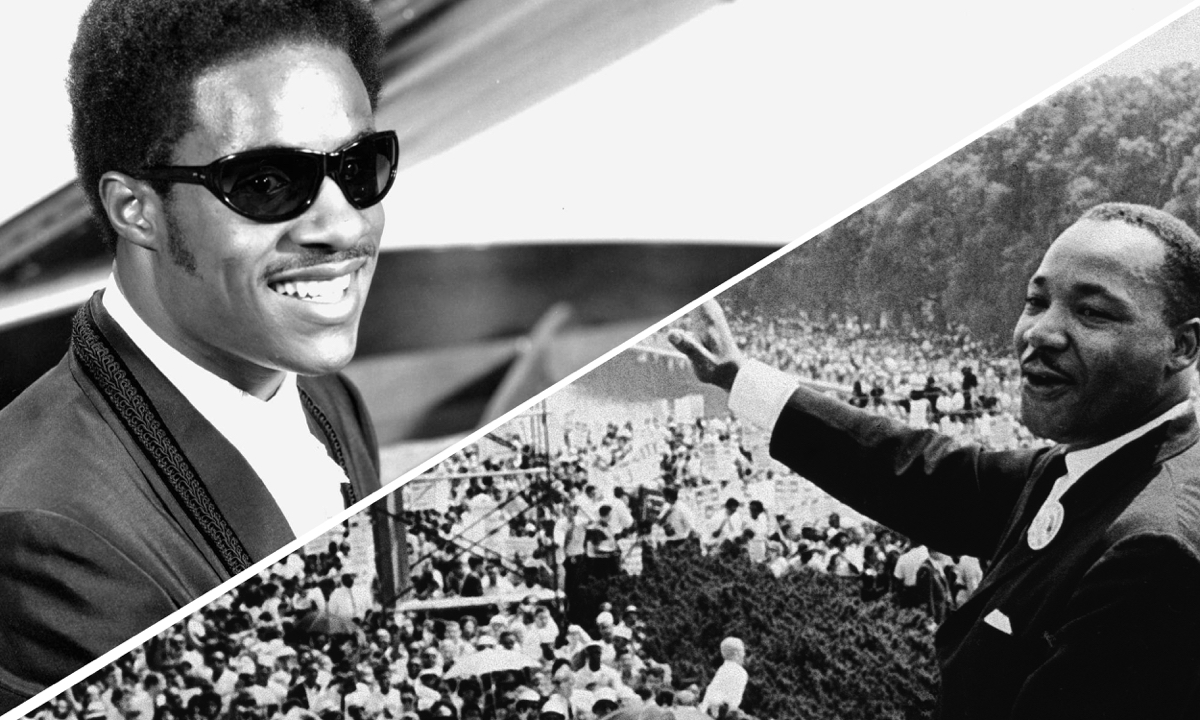
Key to generating the public pressure necessary to turn the tide on a national holiday, including a petition with an incredible six million signatures, was the extraordinary effort of musical legend, Stevie Wonder, who wrote and released his MLK-holiday-inspired version of the song, “Happy Birthday,” in 1981. “Happy Birthday” became one of his signature songs and has endured in beautiful ways. At the first official national MLK Day celebration in 1986, Stevie was the headline performer.

Still, even with the eventual declaration of a federal holiday, many states were reluctant to participate. It wasn’t until the year 2000 that every state officially came on board, although I am sad to report that both Alabama and Mississippi, in a breathtaking and ongoing insult, still combine the holiday to recognize both Martin Luther King, Jr. and Robert E. Lee, the Civil War general that led the fight to preserve Black slavery.

And if the fight for a day to recognize Reverend King wasn’t hard enough, we add a presidential inauguration today. Given the Twentieth Amendment to the United States Constitution’s specification for presidential inaugurations (January 20) and the designated date for MLK Day (third Monday in January, instead of his actual birthday, January 15), this will happen periodically. It happened with both President Bill Clinton’s second inauguration in 1997 and President Barack Obama’s second inauguration in 2013, and it won’t happen again until 2053, but it is happening today.

I listened to Stevie Wonder’s signature song, and given the persistent reluctance to fully celebrate the holiday and the bitter divisions in our nation, certain of his lyrics struck me with special force:

  • “the way to truth is love and unity to all God’s children”
  • “the whole day should be spent in full remembrance of those who lived and died for the oneness of all people”
  • “we know that love can win”
  • “the key to unity of all people is in the dream that you had so long ago that lives in all of the hearts of people that believe in unity”

I wish that those sentiments — sentiments that happen to reflect Reverend King’s understanding of Christian values — could be the full focus of a day like today.

Today, I do get to be a part of a lengthy reading to commemorate the holiday. We will gather in the “MLK Room” on the Ripon College campus and read aloud sections of the last book that Reverend King published prior to his assassination, titled, “Where Do We Go from Here: Chaos or Community?” That question — Reverend King’s question — reverberates today. Which will we choose?

Sometime between today’s presidential inauguration and tonight’s college football championship, I propose finding a few minutes to reflect on Stevie Wonder’s lyrical call to the world as set forth in his birthday song for Reverend King and truly consider the question: Where will we go from here — chaos, or the beloved community of which Reverend King so famously dreamed?

An Historic Election: Looking Backward, Inward, and Forward

I confess a deep sadness following last week’s presidential election. It is a personal sadness, sure, but it is far more on behalf of those from historically-marginalized groups that feel especially vulnerable and afraid due to a resounding national stamp of approval for a candidate famous for hateful rhetoric offered in their specific direction. E.g., Stand back and stand by. Black jobs. Grab them by the ____. Too many direct quotes about specific women’s bodies to list. Mocking a reporter with arthrogryposis. Muslim bans. Shithole countries.

I felt especially sad for my two amazing daughters. Their professional lives and personal hearts are dedicated to teaching children who live in poverty in the urban core and who are now facing a promise of mass deportation that will rip immigrant families apart. It is hard to imagine a fear more fundamental than a powerful government separating you from your family. It was hard enough for me to communicate with my heartbroken daughters as they went to work the morning after the election and know that they love children by name who are facing those fundamental fears.

My sadness expands recognizing that my personal religion, Christianity, generally speaking, is openly and willingly associated with the national stamp of approval for the hateful rhetoric. Although I disagree with their conclusion, I can understand the thought processes of those who saw the election as a “lesser of two evils” vote, but there is never cause for celebration following a lesser-of-two-evils vote. And yet lots of Christians celebrated this one with euphoric joy; saw it as an answered prayer; used words like anointed. I unfortunately opened Facebook the day after the election.

I have been on a thirty-year journey with faith and politics, a journey that began in the early 1990s with me a young, questioning adult and the simultaneous rise of the Religious Right as a political movement. As Evangelical (for lack of a better term) churches gravitated toward the proselytization of a political strategy, I was saved from dismissing Christianity and moving on entirely, in part, by stumbling upon the writings of Will D. Campbell who demonstrated for me that there was a different way to be Christian, and I concluded that for me following Jesus meant that I must love everyone, regardless. Both sides. All humans. Even enemies. Learning to “live reconciled” became an important phrase to me, as did “indiscriminate love.”

But that really messed me up. Loving everyone is a recipe for loneliness in a culture insistent on choosing sides, winners and losers, us and them. On one hand, I could see the pain felt by those that experienced decades of cultural condescension and blindness to class inequality from the Political (and Religious) Left while on the other hand growing increasingly cognizant of the centuries of pain felt by those that experienced the terrible injustice and marginalization perpetuated by the Political (and Religious) Right. So, I eventually learned to bite my tongue a lot, choosing instead to plant seeds, attempting not to alienate either side in an attempt to love and maintain relationships with everyone. I chose to work within a lot, behind the scenes a lot. And I felt guilty a lot for not doing and/or saying more.

My interpretation of Christianity remains, but in time I sought a quiet freedom from a life where I am not allowed to be fully authentic, and I am grateful for the wonderful feeling of liberation that I now experience. But given my own emotional reaction this week, and given numerous private texts and conversations with friends from all over the country that we made on our long journey toward personal liberation, my personal freedom seems self-serving and wholly insufficient.

But what to do?

That question has dominated my thinking, and I am grateful for anything I have heard and read from Dr. Tressie McMillan Cottom in the aftermath of the election (like the full Daily Show interview). Dr. Tressie has helped me tremendously (and I thank my friend, Chalak, for telling me about her in the first place). And I have also benefitted from articles written by both David Brooks and David French after the election, white men from conservative backgrounds who through their columns have assured me that my visceral reactions to the election aren’t simply because I drank Kool-Aid at the Liberal Vacation Bible School.

Collectively, they pulled no punches in saying that chaos is coming but emphasized that despair cannot be allowed to be the mood for long. Dr. Tressie advised, “Don’t cry too long over a sinking ship,” and the subject of David French’s email read, “We don’t have time to waste time in despair.”

French wrote, “There’s a temptation to retreat. If you have a stable job, a good family and good friends, you can check out of politics. After all, politics can be painful. It’s not just the pain of loss, but also the pain of engagement itself. MAGA is extraordinarily cruel to its political opponents. But despair is an elite luxury that vulnerable communities cannot afford. If Trump was telling the truth about his intentions — and there is no good reason to think he wasn’t — then he will attempt a campaign of retribution and mass deportation that will fracture families, create chaos in American communities and potentially even result in active-duty troops being deployed to our cities.”

So, while sad and tempted to quit caring, even that, as depressing as it sounds, is “an elite [and selfish] luxury.” Here are my commitments instead:

#1: See. I choose not to give up on my faith commitment to see all people—i.e., to love neighbors, regardless of anything. David Brooks published an important book last year titled, “How to Know a Person,” and his post-election column explained something Will Campbell helped me see long ago, i.e., a “redistribution of respect” that led to a “vast segregation system” between the Political Left and those that now comprise the base of the MAGA movement. Brooks’s post-election column titled, “Voters to Elites: Do You See Me Now?,” reminds me that condescension creates problems and does not cure them, and I won’t abandon my desire to see all people as human beings equally worthy of sincere love and respect.

#2: Speak. This, I confess, feels like my greatest challenge. One change I must adopt moving forward is a willingness to speak up more, even though that will risk alienation from and dismissal by people that I love on every side. It is tempting to bite my tongue, especially when I want to remain in relationship with everyone, but I think David French is right when he says we are compelled to “speak the truth.” He explained it this way: “Telling the truth means combating deception and misinformation, but it also means publicly defending the dignity and humanity of the people and communities who are the object of Trump’s wrath. It means resisting malice when we encounter it in our churches and communities.” Remaining silent might appear to preserve relationships, but it forecloses all prospects for true justice and real harmony. This blog post is an initial and meager attempt to speak up more.

#3: Act. Finally, as hard as the first two are to do, they are insufficient without action. David French wrote that we must “protect the vulnerable,” but I like how Dr. Tressie said it best: “Don’t cry too long over a sinking ship. Build dinghies.” To continue the nautical metaphor, the Brooks column concluded this way: “[W]e are entering a period of white water. Trump is a sower of chaos, not fascism. Over the next few years, a plague of disorder will descend upon America, and maybe the world, shaking everything loose. If you hate polarization, just wait until we experience global disorder. But in chaos there’s opportunity for a new society and a new response to the Trumpian political, economic and psychological assault. These are the times that try people’s souls, and we’ll see what we are made of.”

I want my soul to pass this test, so with thanks to Dr. Tressie and the two Davids, and after much reflection, I have concluded that it takes all three: See. Speak. Act. Looking backward in despair, looking inward in contemplation, and now looking forward with resolve, that is what I commit to do.

An Emma Lazarus Poem in the Heart of Malibu

She was disruptive, to say the least. A woman, scowling, mentally unstable, stalked the parking lot like a cornered tiger, roaring words at full volume toward the universe, at least half-threatening, and seemingly half-afraid. We were celebrating the thirtieth anniversary of the Malibu Community Labor Exchange with a big fiesta, complete with delicious food from Kristy’s, a troupe performing traditional Oaxacan dances in festive costumes, and a highly-energetic mariachi band. But, as I mentioned, she was disruptive, to say the least.

Some tried to help, appropriately, and unsuccessfully. At times, her behavior escalated toward a possible physical confrontation, and several of the workers on hand rose and drew near like tender bouncers, ready to assist. Oscar, a friend and protégé of the legendary Cesar Chavez, who for six days a week for thirty years now—that’s something like nine thousand times—has driven to Malibu from South Central Los Angeles to direct the center and handle situations exactly like this one, stood close, observing, listening, caring. At the conclusion of the dance performance, the teenage dancers shared a special dance involving pineapples, which triggered a barrage of the verbal outbursts, but the young dancers kept their composure and performed flawlessly, while occasionally darting an eye to the woman lurking at stage left. But nothing stopped the beauty of the night; and, in fact, the uncomfortable interruptions seemed somehow to complete a full picture of the three decades of the Labor Exchange in Malibu: humanity, in all its complicated forms.

I loved being there alongside workers and supporters, as always, and at night’s end was talking to Oscar who, speaking of the woman, leaned in to share with that trademark magical twinkle in his eye like he is witnessing special things in the universe: “Do you know what she shared with me when she left? She said, kindly, ‘Oscar, thank you for tonight.’”

As she stalked out into the night, alone, she said, Thank you.

I know there are many ways of making sense of the universe, but I happen to be a follower of Jesus. I have often thought of the Malibu Community Labor Exchange as a modern version of the story that Jesus told about the Rich Man and Lazarus, but at the party on Saturday night, the scene was more like the wild story where a man called Legion because of his many demons screamed and screamed at Jesus in a cemetery—or a later version where a follower named Paul had a similar encounter with a woman in Greece. In those stories, the demons got tossed out. I really wish that I could toss out her demons, too.

In the meantime, I am glad to know that there is a place right here in Malibu that is willing to offer patient hospitality to those battling demons who accept an open invitation to the party.

“Give me your tired, your poor,
Your huddled masses yearning to breathe free,
The wretched refuse of your teeming shore.
Send these, the homeless, tempest-tost to me,
I lift my lamp beside the golden door!”

By Emma Lazarus, from The New Colossus

Withdrawals

IMG_1903

I recently canceled my subscription to Runner’s World and replaced it with a subscription to The Atlantic Monthly. For one thing that makes me feel smarter, but more importantly, I wanted to enhance my intellectual curiosity and the broad offerings of The Atlantic promised a more balanced diet.

The first issue in 2020 did not disappoint.

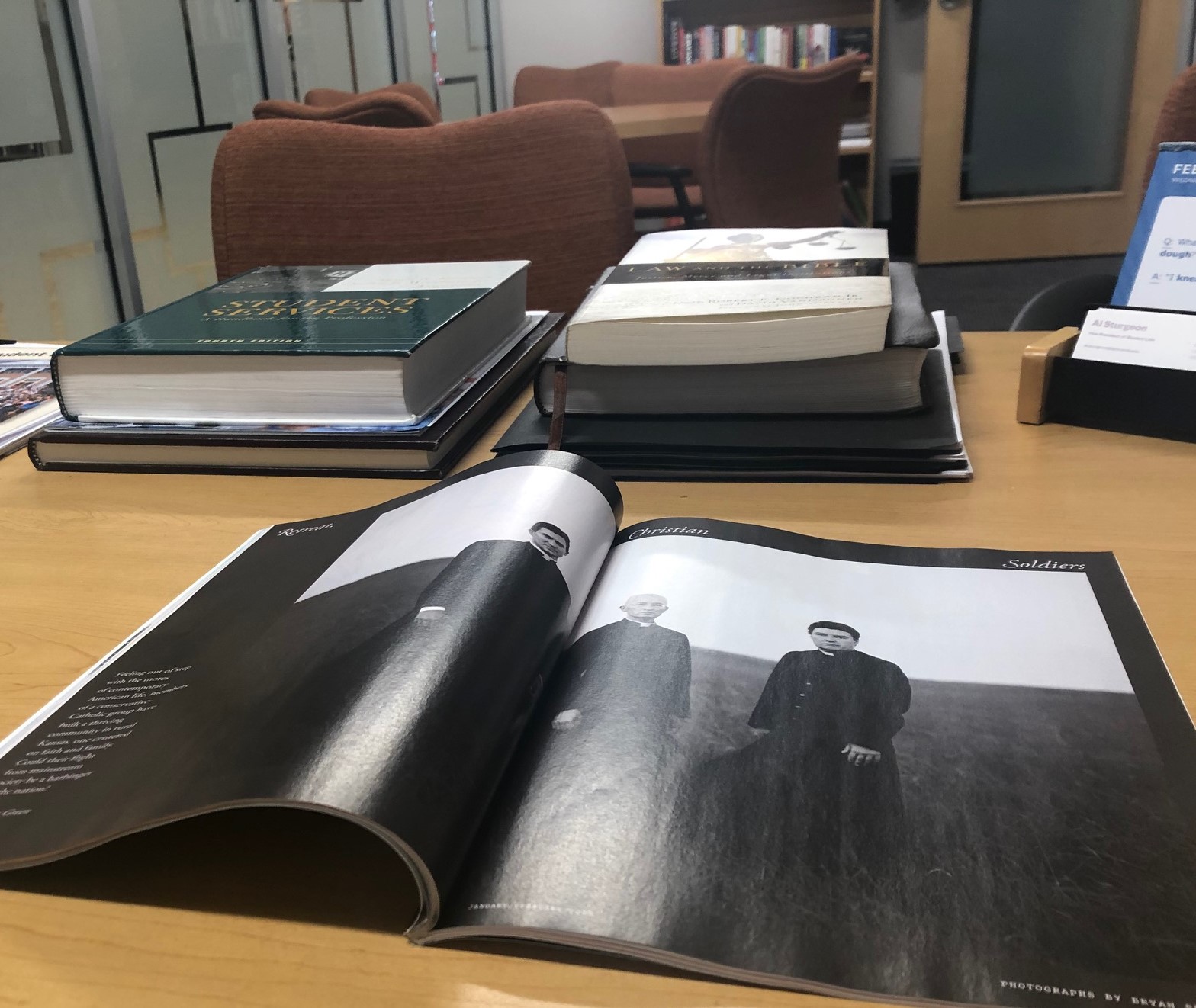
Specifically, I was intrigued by Emma Green’s article, “Retreat, Christian Soldiers.”  The article introduces the town of St. Marys, Kansas, and in so doing, the Society of St. Pius X that has come to define the town. The online version of the article (located HERE) uses the headline, “The Christian Withdrawal Experiment,” and describes it this way: “Feeling out of step with the mores of contemporary life, members of a conservative-Catholic group have built a thriving community in rural Kansas. Could their flight from mainstream society be a harbinger for the nation?”

Green draws attention to Rod Dreher’s 2017 bestseller, The Benedict Option, which advocates that particular posture—withdraw and circle the wagons. Both the article and book highlight the flight of those with conservative values, but the monastic approach has been used irrespective of political preference. All types of groups have been escaping the world in search of utopian community for time immemorial.

I surely understand the motivation. Hopeful to instill specific values in our children and attracted to surrounding ourselves with said values, it is logical to gather with like-minded people in community. I get it. I even desire it from time to time.

But it isn’t my cup of tea.

I love where I grew up, so don’t here this as criticism of my beloved hometown, but when I read about St. Marys, Kansas, in certain ways I thought of Paragould, Arkansas. I grew up in a peaceful homogeneous world where values were consistent at home, church, school, and town, and I felt safe and well. Who could argue with such a thing? On the other hand, I raised my children in non-insular environments, which is risky by nature. Diversity creates friction, and friction is, well, combustible.

So I do not write today to make judgments. I went to law school and can therefore make valid arguments for—and against—both.

But I do write from my particular experience. I understand the attraction to insularity, and I understand the attraction toward diversity. For some unexplained reason, I am drawn more to the latter.

Law and the Bible

51-ASgVtsvL._SX331_BO1,204,203,200_

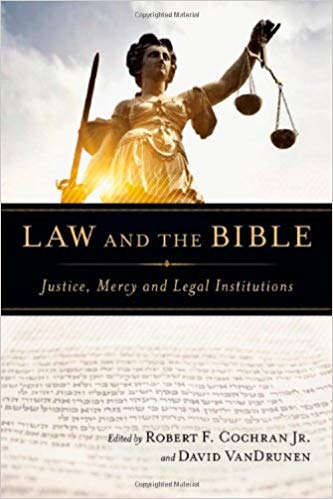
I am beyond honored to teach an undergraduate course this semester titled, Law and the Bible, in Lipscomb’s Fred D. Gray Institute for Law, Justice, and Society—even more honored that it is based on a course built (and using a text edited) by friend and former colleague, Professor Bob Cochran. To have the opportunity to combine my legal training and ministry experience in a classroom is pretty great, and that there are eleven brilliant and passionate students enrolled is almost too good to be true.

Professor Cochran divided the Bible in nine sections and teamed legal scholars and theologians to write each chapter (he joined his friend, Dallas Willard, to approach the Gospels) and explore what the Bible teaches about law and its relevance to current issues.

We have much to discuss.

I have a complicated relationship with politics and rarely write publicly on political issues anymore, not because I no longer have opinions, but for other reasons. To sit in a classroom, however, and consider contemporary issues starting with the Bible, that has me excited.

I confess disappointment that religious folks often react to major political moments by supporting their predetermined political candidate/party without wrestling with the individual issue at hand based on theological arguments. One would think that those who claim religion would avoid automatically supporting one political party and examine each individual situation in light of their sacred text. Maybe the penetrating question is: What is truly sacred?

I’m excited to consider such questions this semester with a gifted group of college students.

Freedom is a Road to Love

21689042_1460902524017721_1722276701670473728_n(1)

“[T]he ultimate goal of human beings is not the ‘kingdom of freedom.’ Rather, the kingdom of freedom is a process toward the kingdom of God, which is the kingdom of love.” – Miroslav Volf (explaining Jurgen Moltmann), Exclusion & Embrace, 105

I chose “Freedom Road: The Exodus Story” as our church’s fall semester sermon series and brought it to a close yesterday morning. We will now turn our attention to the birth of Jesus and a brand new year and a consideration of how to live once liberated from oppression.

I have enjoyed the freedom road journey despite having to listen to myself speak along the way. It is a spectacular story. We started with the birth of Moses in Egyptian slavery and followed the stunning liberation narrative until Joshua stood in a land of promise and called the Israelites to fully commit to God.

It has been particularly interesting to consider freedom in a land that loves the idea so much because the American preoccupation with independence is at odds with my particular faith. Freedom is a good word, of course, if for no other reason than because oppression is a bad word, but there is danger in making freedom the ultimate goal—and our unfortunate tendency is to value our independence above all things. I agree with Volf/Moltmann in recognizing freedom instead as a pathway to a beautiful land where love rules.

But I still don’t trust myself. While drawn through compelling hints toward the land where love rules, I have been conditioned to be in control and to avoid answering to anyone other than Me. The cultural indoctrination runs deep.

So I find myself still on Freedom Road, ironically in the process of being set free from the oppression of Freedom. But my journey is filled with hope and faith in a beautiful future that to date remains unseen.


Unarmed Truth & Unconditional Love

94d5a3c3a1397d1a4df25f54640503c2

Ralph Abernathy and Will Campbell grieve the assassination of Dr. Martin Luther King, Jr. in the Lorraine Motel (April 1968)

“I believe that unarmed truth and unconditional love will have the final word.” – Dr. Martin Luther King, Jr.

I was deep in the heart of rural Texas when the chaos in Charlottesville unfolded last weekend and found myself in a conversation with a couple of local police officers about other matters. I mentioned that they should visit us in California sometime and one offered a kind smile and said, “Nah, Californians don’t like Southern Republicans.” We laughed, but there is some measure of truth to his statement. And vice-versa, of course. There is plenty of not liking to go around these days.

I am a Christian, which unfortunately means many things to many people, but for me it means that I must love everyone. No exceptions. So I stand in opposition to hate in any form, which most assuredly includes all versions of white supremacy. And because I must love everyone then I am necessarily opposed to acts of violence. It is a package deal. Violence toward a loved one is unfathomable, so when you choose to love everyone it kind of takes the wind out of Violence’s sails.

“‘Don’t the Bible say we must love everybody?’ / ‘O, the Bible! To be sure, it says a great many such things; but, then, nobody ever thinks of doing them . . .'” – In Uncle Tom’s Cabin by Harriet Beecher Stowe

Will D. Campbell is a personal hero of mine who was an important leader in the Civil Rights Movement and a fierce advocate for the victims of deep racism. However, Campbell started to notice that many of his fellow activists used the same dehumanizing language  and tone toward the “segregationists” that segregationists used toward African-Americans. Since Campbell was a Christian, he took a stand against that, too.

“With the same love that is commanded to shower upon the innocent victim of his frustration and hostility, the church must love the racist. Moreover, the church is called to love those who use and exploit both the racists and their victims for personal wealth and political gain. The church must stand in love and judgment upon the victim, the victimized, and those, both black and white, who exploit both, for they are all the children of God.” – Will D. Campbell, in Race and Renewal of the Church (1962)

Some things in this country have improved in the half century since the milestone moments of the Civil Rights Movement while many others have quite obviously not. And the version of Christianity touted by “Brother Will” and Dr. King often appears unopened in the shrink-wrapped box.

But I remain hopeful. For I, too, believe that unarmed truth and unconditional love will someday have the final word.

What Gives Me Hope

interfaith-group-2017As nostalgia sets in at the prospect of leaving the law school, the privileges I enjoy become more pronounced.  One of my favorites has been hosting the Interfaith Student Council.

Early this week, sixteen wonderful people—fourteen law students, one undergraduate student, and one lawyer—showed up for an evening of discussion (the lawyer took the picture above!).  This fine group represented various flavors of Christianity, Islam, Judaism, and Atheism.

The leaders offered two potential topics for the evening: a heavy discussion about the controversial Trump immigration executive order, and a lighter discussion of dating practices in various faith traditions.  The group decided to do both and briefly discuss the heavy topic before moving to the lighter topic.  It may be unsurprising in the rear view mirror, but we never made it past the first.

Early in the conversation, one of the kindest people I have ever known shared a personal story that involved a close acquaintance sharing things that characterized this person’s entire religion in a terrible light.  I don’t think this kind soul has the capacity for anger, but there was definite hurt.  And confusion.  I mean, what do you do when someone you know portrays you and everyone in your faith as evil?

Everyone tried to help, and a good conversation ensued.

Later on, after the conversation took several twists and turns, a different student spoke up—one who comes from the faith that was used to characterize the other student as evil—and directed remarks back to that tough situation.  And she apologized.  She apologized on behalf of her entire faith.  And then she started crying, which made the other student start crying, and if we weren’t careful it was going to get all of us but they hugged it out and gave us a fighting chance.

If I am honest, as I sit here and type away, you know how your tears like to hang out in your upper cheekbones watching television and how they stand up and put their shoes on when you start thinking about touching moments like this one?  Well, maybe that is happening right now, but you’ll never know.

At the end of the evening, I asked everyone what gives them hope when times seem dark.  Folks shared some great answers, but I have to tell you that what gives me hope is an evening like that one and an encounter like the one between those two wonderful students.

Some may look at the world right now and just see stormy weather, but in that one embrace I believe I saw a break in the clouds.