Warm (-ing up to) Embrace

9486

“Loving your enemies . . . Far from being the pious injunction of a utopian dreamer, this demand is an absolute necessity for the survival of our civilization. Yes it is love that will save our world and civilization; love even for our enemies.” – Martin Luther King, Jr.

I war privileged to hear Yale professor and prominent theologian, Miroslav Volf, speak in March, and although late to the party I just finished his most famous book, Exclusion & Embrace.  It was in a sense required reading since I teach a course in the Straus Institute for Dispute Resolution at Pepperdine University School of Law titled, Apology, Forgiveness, and Reconciliation—topics that are at the heart of his book.

Full disclosure: I am not an idiot—unless you are simply comparing me and Mirsolav Volf that is.  I understood a good number of the words he used in the book but most of the time was intellectually flailing and gasping for air.  He is brilliant.  Which is why I was particularly intrigued to read such a brilliant mind analyze the components of a hug.

Exclusion & Embrace addresses our fractured “us vs. them” world where exclusion is coin of the realm and presents the image of embrace as a theological counter—almost literally.  Volf properly discloses that an embrace is too intimate for some cultures and not intimate enough for others but that he is interested in the metaphor more than the actual practice.  And then he breaks a hug down into four distinct parts that led me to imagine a Sesame Street song: First, you open your arms; then, you wait; then, you close your arms; then, you open your arms again.

You may not have analyzed the components of a hug before, but stick with me here…

To open the arms indicates a desire for the other and an invitation to come into personal space that I have created for you.  To wait is an act of vulnerability that refuses the path of force and respects the autonomy of the other.  To close the arms—the actual embrace—is a tender and reciprocal act of shared space.  And to open the arms again is a sign of release and respect that provides both the freedom and independence to leave—and to return again.

Okay, this is great for your spouse or kids or friends.  For them, I’m a hugger.  But what about the people you despise (unfairly assuming that the latter isn’t your spouse or kids or friends)?

To put down the weapon and open-armed invite those you despise into your intimate space is almost unthinkable.

To go one further and silently, vulnerably, allow your enemy the choice to either accept or attack—both choices are hard to stomach.

To then actually and tenderly embrace the despicable is a simply nauseating thought.

And then to release the enemy as friend?

I’m glad that Volf is super smart because he would be up a creek if he needed to raise a following or lead a team or run for office.  Nobody is going to want to do this.  Being right and feeling proud and getting even are going to be way more popular than seeking reconciliation.

But being right and feeling proud and getting even sure produce an enormous supply of ugly.  I, for one, am interested in any alternative that leads to a true and lasting peace—even if it does sound like awfully hard work and more than a little loony tunes.

The Choice Is Yours (Or, If the Horse Is Dead, Dismount; But If It’s Still Alive, You Might as Well Learn How to Ride It)

e20816c1dce70514b76bc07c6327d641--jimmy-v-quotes-inspirational-cancer-quotesPeyton Manning hosted the 25th annual ESPY Awards about twenty-five miles from my television set a couple of nights ago in downtown Los Angeles. The ESPY phenomenon was conceived as the MTV Awards for sports, but the original show in 1993 instantly became so much more when Jim Valvano — Jimmy V — delivered his heroic speech less than two months before he died from bone cancer.  He was 47 years old.  Guess which birthday I’m looking at?

I remember that inspirational speech quite well because I had just completed my first season as a high school basketball coach and was scheduled to attend a Nike coaching clinic in Chicago later that summer where Jimmy V was a featured speaker — legendary Villanova coach, Rollie Massimino, had to fill in following his good friend’s untimely death.

The entire clinic was a heady experience for a baby basketball coach from small-town Arkansas like me what with Rollie eulogizing Jimmy V, foul-mouthed John Chaney stringing together profanities like an auctioneer, classy Lute Olson sharing Arizona’s secrets, a potentially inebriated P.J. Carlesimo basically phoning it in, and upstart Cincinnati head coach Bob Huggins sharing a story that has helped shape the trajectory of my adult life.

Huggins was just a year removed from a shocking run to the Final Four in Minneapolis where his Bearcats lost by four points to the uber-talented Fab Five from Michigan. Following the loss, a dejected Coach Huggins walked the cavernous halls of the Metrodome and bumped into his father, who himself had been a successful high school basketball coach.  Huggins told us that he expected his dad to give him a hug or something but instead heard him say, “If you would have rebounded better you would have won.”

Thanks, dad.  Huggins reported that he was furious.  Until he thought about it and determined that if they would have rebounded better they would have won.  So that’s what he set out to work on instead.

I needed to hear that at the time and have needed to hear it again on many occasions ever since.  Feeling sorry for yourself is easy work that feels surprisingly good and well-deserved, but that and a dollar can rent you a movie on iTunes.  It is far more productive to figure out what you can control and get to work on that instead.

In a Few Words

airbnb

The Airbnb concept is somehow both weird and intuitive.  It is weird to spend the night in a perfect stranger’s home, but then again it makes sense to get some use out of something otherwise unused at a mutually beneficial price.

The service thrives on customer reviews, of course.  For instance, any review with “there were creepy people playing with snakes” will pretty much guarantee that I will keep looking.  On the other hand, “there were creepy people playing with snakes—and free churros” might persuade me to stay more than one night.  So it is in the best interest of the host to provide a pleasant stay, which leads to good reviews, which leads to more business.  You know, Economics 101.

What I did not know until recently is that the hosts can also review the guests.  Makes sense, I guess, but I will admit to being a little nervous when I recently received my first review by an Airbnb host.  Here is what I got: “Al is clean and kind.”

I am incredibly proud.  Absolutely love it.  Mark it down, when I check out of the Airbnb called Life, I believe that is headstone worthy.

It reminded me of a great Anne Lamott story (in Grace (Eventually): Thoughts on Faith, 37-45) when she helped her friend with a dance class for adults with special needs.  Several days later, Anne’s friend told her that after the class one of the students said, “I liked those old ladies!  They were helpers, and they danced.”  Those are the words Lamott wants on her gravestone.

I have had more opportunities to be around death so far than I remember requesting and each instance got me to thinking.  After all the resume drafts, and after all the performance reviews, and after all the updating the LinkedIn profile—and even after the obituary is written, read, and recorded—a few numbers and a few words are engraved on a rock in an attempt to sum up one’s life.  An entire life in just a few words.

What will your words be?  I’m just saying, clean and kind ain’t bad.

Arizona Beauty

19625082_960791194061285_1186972924452536320_n“Love of beauty is taste. The creation of beauty is art.” – Ralph Waldo Emerson

I am embarrassed to admit that I avoided art appreciation in college because it just sounded terrible. While we are all naturally drawn to beauty, some of us are raised to find that hard to admit or believe or even notice. The creation of beauty (as Emerson defined art) was not my native language, and it has taken me years to recognize that my reticence to embrace an appreciation of beauty is the real terrible.

So I am making up for lost time.

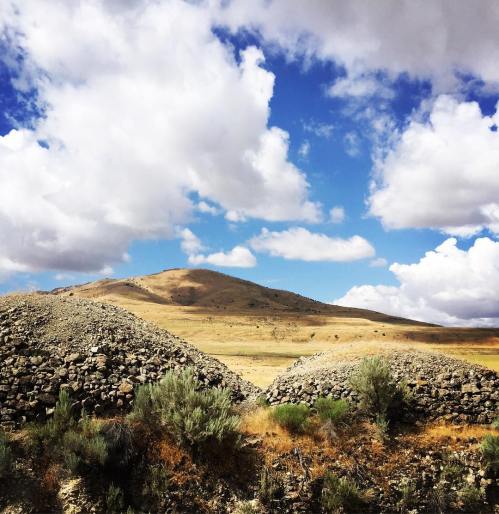
Last week my wife and I gorged ourselves on beauty with a trip through stunning Arizona. At one moment we were rocketing through the searing desert in our air-conditioned car in silent admiration of the towering cactuses (saguaros) standing proudly against the otherwise nothingness. At another we are winding our way to otherworldly Sedona where the colossal Red Rocks attract their spiritual disciples—and we were speechless in our reverence.  And then we climbed to higher elevations where the ponderosa pines seemed to appear out of nowhere and made us wonder if we had been magically transported to Colorado, especially when we saw the summer snow high on the San Francisco Peaks.  Oh and there was this little place called the Grand Canyon up there, too.  Breathtaking is no hyperbole.

We were determined to watch the sunset at the Grand Canyon, and it was a good decision. We arrived about an hour early—the magic hour—and found a point just west of Mather Point to watch the sunlight play off the canyon walls and witness the beauty for which no human being can claim credit.  Words and pictures all fail.  The sandy browns and the sleepy blues and the flashy reds and oranges undulated across the vast expanse like a wave of exploding fireworks in extreme slow motion.

I would love to say that it was unforgettable, but I know myself too well to say such a thing. I still have the ability to dismiss the grand spectacle of nature and revert to seeing beauty merely in utilitarian terms.  That is my particular training, and I am nothing if not a good student.

Utilitarian Me asks what good watching something like a plant or a tree or a big rock or a ravine or a sunset does for me. Utilitarian Me can be a pain in the butt and doesn’t always deserve a response. But I will give in this time and respond with a quote from Kafka: “Anyone who keeps the ability to see beauty never grows old.”

I feel younger already.

19624409_246515619176096_2939357346867970048_n

19622994_1587183304687799_1525220784631447552_n

Lift Every Voice and Sing

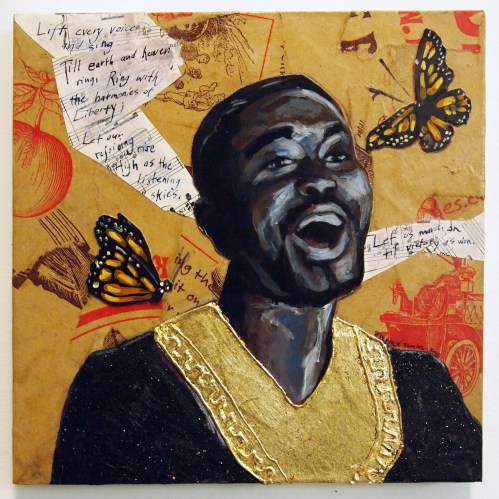
OLYMPUS DIGITAL CAMERAArtwork by Stephen Towns

The multi-talented James Weldon Johnson wrote the poem “Lift Every Voice and Sing” in 1900 to commemorate the birthday of Abraham Lincoln. His brother later set the poem to music and with time it became known as the Black National Anthem.

I first heard the song when the group Acapella included it in their “America” album in 1992.  It instantly became my favorite patriotic hymn.  The song has been performed by so many artists, but I still think the version I first heard is one of the best—probably because it touched my heart so deeply.

I have learned firsthand that it is possible to grow up both poor and privileged, and the concept of freedom means something far different to someone who did not grow up privileged.  Maybe that is why this particular song resonates on such a powerful level.  It was conceived by those who dreamed of freedom.

Independence Day arrives tomorrow in this strange and conflicted land, and I confess that my heart is pretty strange and conflicted right now, too.  But as this celebration of freedom arrives, and as I reflect on these lyrics, among many options I choose to raise my voice in song and join the chorus.

Lift every voice and sing,
Till earth and heaven ring,
Ring with the harmonies of Liberty;
Let our rejoicing rise
High as the list’ning skies,
Let it resound loud as the rolling sea.
Sing a song full of the faith that the dark past has taught us,
Sing a song full of the hope that the present has brought us;
Facing the rising sun of our new day begun,
Let us march on till victory is won.

Stony the road we trod,
Bitter the chast’ning rod,
Felt in the days when hope unborn had died;
Yet with a steady beat,
Have not our weary feet
Come to the place for which our fathers sighed?
We have come over a way that with tears has been watered.
We have come, treading our path through the blood of the slaughtered,
Out from the gloomy past,
Till now we stand at last
Where the white gleam of our bright star is cast.

God of our weary years,
God of our silent tears,
Thou who hast brought us thus far on the way;
Thou who hast by Thy might,
Led us into the light,
Keep us forever in the path, we pray.
Lest our feet stray from the places, our God, where we met Thee,
Lest our hearts, drunk with the wine of the world, we forget Thee;
Shadowed beneath Thy hand,
May we forever stand,
True to our God,
True to our native land.

The Desert Dweller (by Howard Thurman)

windowseat_thurman

I am a fairly new Howard Thurman fan. Most recently, I stumbled across this short essay he titled, “The Desert Dweller.”

He has lived in the desert so long that all of its moods have long since become a part of the daily rhythms of his life. But it is not that fact that is of crucial importance. For many years it has been his custom to leave a lighted lantern by the roadside at night to cheer the weary traveler. Beside the lantern there is a note which gives detailed directions as to where his cottage may be found so that if there is distress or need, the stranger may find help. It is a very simple gesture full of beauty and wholeness. To him it is not important who the stranger may be, it is not important how many people pass in the night and go on their way. The important thing is that the lantern burns every night and every night the note is there, “just in case.”

Years ago, walking along a road outside Rangoon, I noted at intervals along the way a roadside stone with a crock of water and, occasionally, some fruit. Water and fruit were put there by Buddhist priests to comfort and bless any passerby — one’s spiritual salutation to another. The fact that I was a traveler from another part of the world, speaking a strange language and practicing a different faith, made no difference. What mattered was the fact that I was walking along the road — what my mission was, who I was — all irrelevant.

In your own way, do you keep a lantern burning by the roadside with a note saying where you may be found, “just in case”? Do you place a jar of cool water and a bit of fruit under a tree at road’s turning, to help the needy traveler? God knows the answer and so do you!

#MyMile

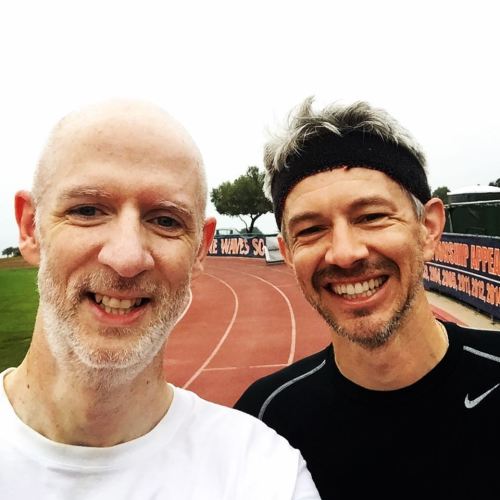
19275276_10154444289351784_2410358217710841199_nStrava is the self-described “social network for athletes.” I accepted Brad’s invitation to join anyway. Strava challenged its users to go for a personal record (“PR” in runner lingo) in June in The Strava Mile. For some reason I accepted that invitation, too.

We jogged a warmup mile to the Pepperdine track last Thursday morning for this midlife crisis, er, I mean, historic event only to discover college basketball, soccer, and cross country athletes there in early morning workouts. They must have been entertained to see two middle-aged men take turns laboring at (our) top speed around the track to see how fast we could run a solitary mile. Will Ferrell and David Spade will play us in the movie.

I think we impressed ourselves if no one else. That was true for me since my regular exercise routine never includes speed work and because Michael Dukakis was running for president the last time I ran a competitive mile. It got me to wondering what an old man could really do if he was committed to a solid workout plan?

So I consulted my good friend, Google, and discovered John Trautmann. John was an elite college athlete and a 1992 Olympian who like most young adults gave up exercising, got a job that paid actual money, and started eating a lot of doughnuts. He added sixty-five pounds of Krispy Kreme by the age of forty and then decided that he preferred being in shape. So he went to work and at age forty-six (my age now) established the world record in the mile for the 45-49 age group by running an astonishing 4:12.33. 

Okay, that’s not going to happen for me. But it did happen, and that fact alone is crazy inspirational.

What needs changing in your life? And what are you waiting for?

One Love

Fathers DayMy sweet daughters took me to reggae night at the Hollywood Bowl last weekend for Father’s Day. It was a beautiful evening that featured Ziggy Marley, and it was extra special to hear him perform his father’s classic music on a day that honored dads.  It was also a little, ahem, “foggy” in the Bowl on reggae night, and let’s just say that I was glad it was an open air venue.

You can’t tell from looking at me, but Bob Marley remains one of my favorite artists. My daughters knew this, of course, and it was sweet of them to endure an evening of reggae with old dad even though reggae probably doesn’t crack the top ten on either of their favorite musical genres list. Those two girls are sure at the top of my list of favorites.

I went about this whole dad thing unconventionally. I fell in love with sweet Erica before meeting and marrying her mom and skipped straight to the homework and bicycles stage of Erica’s life. And I was there from the start with sweet Hillary, complete with diaper duty and sleepless nights and everything that followed. They are different people with different talents and different approaches to life, and I have had different experiences with each of them. But they are sisters and daughters together who love each other very much, and I love them both with my whole heart.

It’s a stretch to claim that our unique approach to family formation is an ideal approach, but I have to admit that it has turned out pretty crazy fantastic for me. I have two separate amazing relationships with two separate amazing young women.

But it is one love.  And one heart.

Give thanks and praise to the Lord.  This dad thing has turned out all right.

ThanksLiving

Meister-Eckhart-Quotes-25-The-Best-OnesOur church family has long prepared and served periodic meals for the weekly meetings of a local ministry that serves marginalized people in Malibu. After the meal there is a Bible study for those interested in staying, which ends up being a decent number of people. Last week, the message from the ministry leader was part sermon and part motivational speech that encouraged those in attendance to live with courage. I was particularly impressed by the connection he had with the motley audience. It was obvious that they liked him, which I suspect is in large part because he likes them.

At the end there was a short time of prayer — short because it was getting dark and the audience was well aware of when the city bus made its last run through Malibu. As the leader went person to person for short prayer requests, I was stunned to hear that the emphasis of a majority of people was on how thankful they were to God for their blessings.

Marginalized. Poor. Damaged. Broken. Homeless. And thankful.

I got in my car as the sun descended over the Pacific Ocean and drove back to a beautiful home on an immaculate university campus. And as I headed out I drove past this slow line of individuals that will cause citizens to roll up their windows and lock their doors. They were headed to the bus stop. To the beach. To the woods. To God knows where.

I have much to learn from those good souls. The car and the house and the job and the respect of society — none of it is worth very much if I do not live thankfully. To live thankfully regardless of circumstances is a true sign of success regardless of the outside packaging. 

Spinning Strong

Jody Spin InstructorMy wife is now a certified indoor cycling instructor and I am on notice that I will soon attend one of her first classes. She is amazing, and I am slightly terrified.

I remember the first “spin” class she ever attended quite well. We were new to California and she was new to working out, but she had a celebrity crush on Bob Harper from The Biggest Loser television show and could not pass up the opportunity to attend one of his classes. On arrival, she soon determined that she was in over her head since it was a ninety-minute class for experienced spinners, which is not the bunny slope approach to this particular workout. However, shortly after the class started and she concluded that this wasn’t for her, she tried to get off the bike only to discover that her legs did not work. So, out of options, she decided to just keep spinning and finished the class.

Bob left as the class wrapped up that fateful day for a speaking engagement at another L.A. gym, and Jody and her friend, Jeneen, planned to attend that as well so that Jody could get her picture made with him. They thought that the gym was two blocks away and decided to walk, but it turned out that their math was a little off and the gym was actually twenty blocks away. This important fact came to light a little late in the walk over. At one point, Jody actually collapsed in a crosswalk when her jelly legs gave way. But again, out of available options, she kept walking and got that picture.

At the time we lived on the third floor of a college dormitory—a college dormitory that had no elevator—and when she made it home I showed no mercy since the self-inflicted pain came as a result of pursuing a celebrity crush! The pain was such that she had to pull herself up and down the stairs each day. And after relaxing on the couch, she had to roll off the couch simply to pull herself back into a standing position. It was funny (for me) for quite some time until she really started to wonder if there was some sort of permanent damage. But she recovered and lived to work out another day.

In fact, she has worked out a lot of other days since that memorable introduction to spinning and the results are stunning. Did I mention that she is now certified to teach these sorts of classes?

My wife is the strongest person I know, and I am the luckiest. She will be an amazing teacher and inspiration to others as an indoor cycling instructor. But she has me pretty scared.