Tag Archives: politics

Cultivate the Bright Passions

I find it especially important in dark and troubled times to closely monitor personal emotions, and we seem to live in dark and troubled times. This came to mind as I drove to the office before eight o’clock on this Sunday morning. My wife is out of town, so I felt justified putting in early Sunday work hours, but such behavior indicates that my emotions could get out of whack.

But it was sixty-three degrees on a lovely morning, and I lowered the window to feel the cool breeze while listening to a station that features soothing acoustic music. And as I drove past farmland I was surprised to see several normally-stationary horses galloping together on a gentle morning run. And then I rounded a curve and noticed that the self-serve produce stand is now decorated with pumpkins and flowers on this first day of autumn. And I sensed in a powerful form the intoxicating feeling of peace.

There was more.

A little farther along, I met an older woman riding her bike on the lonely back roads. We have passed one another on several mornings and now wave with smiles as if we are dear friends, which we did with even more enthusiasm this morning. I then turned toward the office and noticed my friend, Kelly, out walking her dog, which led to another wave and another smile. And as if the world was conspiring for my good, I then noticed a wonderful student, Emma, walking across campus on a Sunday morning, and I stuck my arm out the window with another wave and smile.

And for a moment, if I didn’t know better, I sensed every reason in the world to be happy.

David Brooks published a column in The New York Times three days ago titled, “The Era of Dark Passions.” I surely do not agree with David Brooks on many things, but I typically benefit from reading his thoughts, and I especially appreciated that particular opinion piece. Brooks shared his belief that “something awful has been unleashed” in our current times and that “[e]ven before the Charlie Kirk assassination it was obvious that the dark passions now pervade the American psyche, and thus American politics.” Brooks identified dark passions as Anger, Hatred, Resentment, Fear, and the Urge to Dominate, and he distributed blame for stirring dark passions for personal benefit to his own industry, the media, and to both sides of the political aisle. Brooks then posed the question:

Why does politics feel so different now than in times past? My short answer is that over these years, demagogues in politics, in the media and online have exploited common feelings of humiliation to arouse dark passions, and those dark passions are dehumanizing our culture and undermining liberal democracy. My intuition is that we’re only at the beginning of this spiral, and that it will only get worse.

With that cheery outlook, what is there to do? Well, for starters, Brooks begins:

First, let me tell you how not to reverse it. There is a tendency in these circumstances to think that the other side is so awful that we need a monster on our side to beat it. That’s the decision Republicans made in nominating Trump. Democrats are moving in that direction too. Back in 2016 Michelle Obama asserted that Democrats to go high when Republicans go low, but the vibe quickly shifted. As former Attorney General Eric Holder put it in 2018: “When they go low, we kick ’em. That’s what this new Democratic Party is about.” If Republicans soil our democracy with extreme gerrymandering in Texas, Gavin Newsom and the Democrats will soil our democracy in California. The problem with fighting fire with fire is that you’re throwing yourself into the cesspool of dark passions. Do we really think we won’t be corrupted by them? Do we really think the path to victory lies in becoming morally indistinguishable from Trump? Do we really think democracy will survive? Surveys consistently show that most Americans are exhausted by this moral race to the bottom and want an alternative; do we not trust the American people?

Brooks then advises as “the most effective way to fight dark passions”…

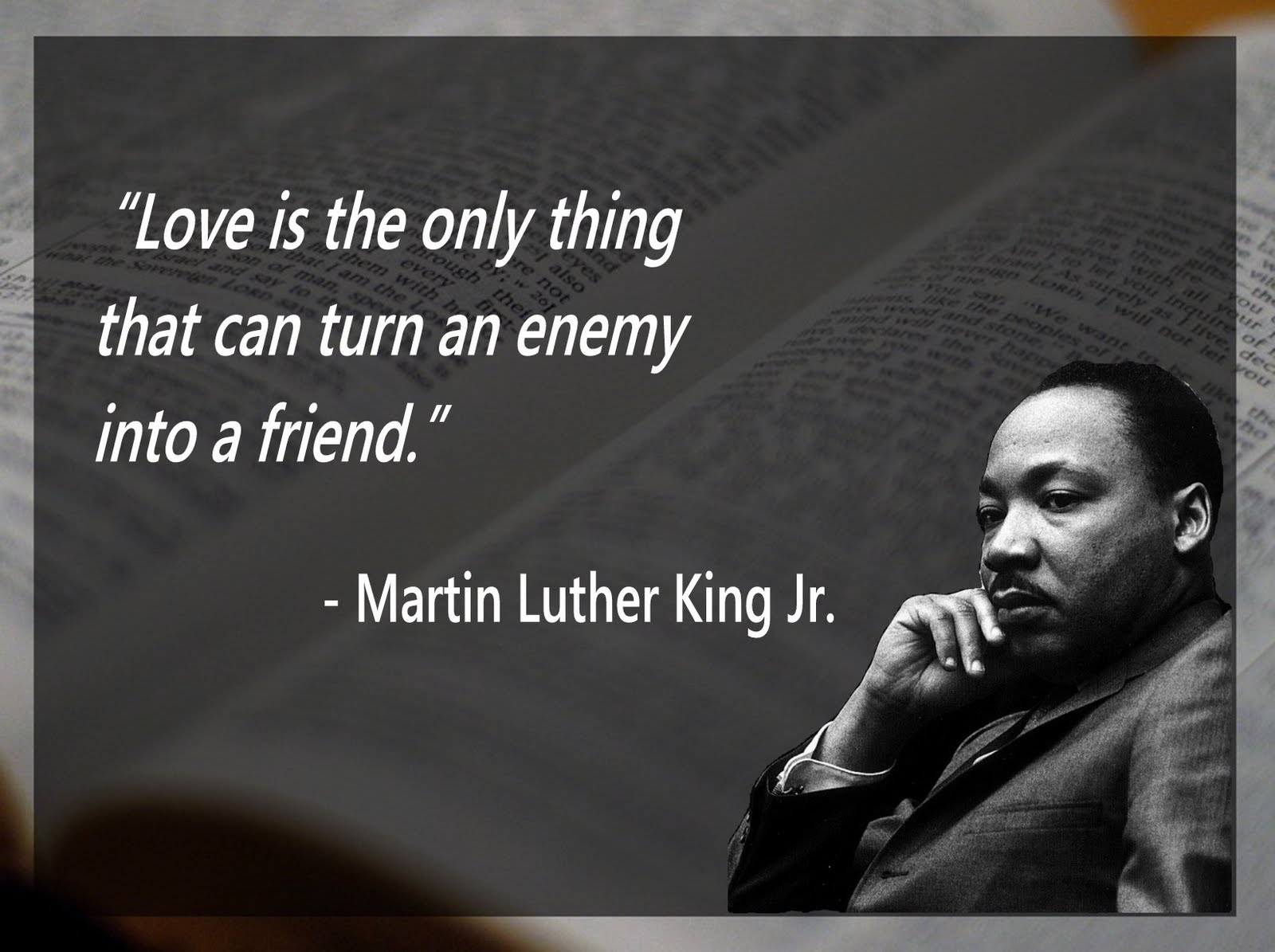
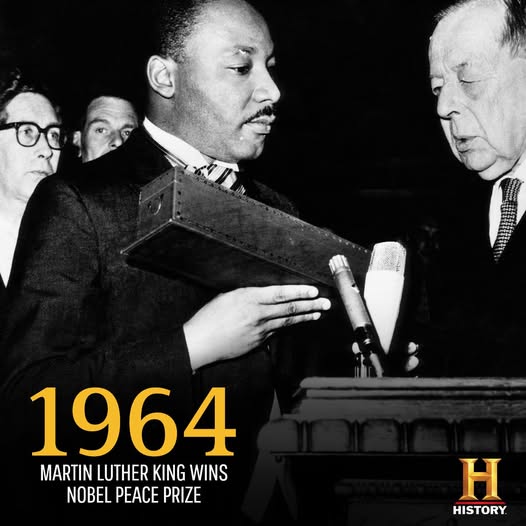
History provides clear examples of how to halt the dark passion doom loop. It starts when a leader, or a group of people, who have every right to feel humiliated, who have every right to resort to the dark motivations, decide to interrupt the process. They simply refuse to be swallowed by the bitterness, and they work — laboriously over years or decades — to cultivate the bright passions in themselves — to be motivated by hope, care and some brighter vision of the good, and to show those passions to others, especially their enemies. Vaclav Havel did this. Abraham Lincoln did this in his second Inaugural Address. Alfred Dreyfus did this after his false conviction and Viktor Frankl did this after the Holocaust. You may believe Jesus is the messiah or not, but what gives his life moral grandeur was his ability to meet hatred with love. These leaders displayed astounding forbearance. They did not seek payback and revenge. Obviously, Martin Luther King Jr. comes to mind: “To our most bitter opponents we say: We shall match your capacity to inflict suffering by our capacity to endure suffering. We shall meet your physical force with soul force. Do to us what you will, and we shall continue to love you. We cannot in all good conscience obey your unjust laws, because noncooperation with evil is as much a moral obligation as is cooperation with good. Throw us in jail, and we shall still love you.”

You might not be surprised that this resonates with me given my latest blog post published a few days prior to Brooks’s column. But it especially came to mind this morning on a lovely ride into work. I place no value on being unrealistic or ignoring the obvious, but I place great value on noticing the good and living with hope, for what is the future without hope?

I guess what I’m saying is that I unexpectedly caught a glimpse of the bright passions on a drive to work this morning, and I am now extra inspired to resist the forces that push the dark passions and choose to cultivate the bright passions more and more instead. As David Brooks concluded his recent column:

The dark passions look backward toward some wrong committed in the past and render people hardhearted. The bright passions look forward toward some better life and render people tough-minded but tenderhearted.

May we look forward toward some better life as tough-minded and tenderhearted people.

An Historic Election: Looking Backward, Inward, and Forward

I confess a deep sadness following last week’s presidential election. It is a personal sadness, sure, but it is far more on behalf of those from historically-marginalized groups that feel especially vulnerable and afraid due to a resounding national stamp of approval for a candidate famous for hateful rhetoric offered in their specific direction. E.g., Stand back and stand by. Black jobs. Grab them by the ____. Too many direct quotes about specific women’s bodies to list. Mocking a reporter with arthrogryposis. Muslim bans. Shithole countries.

I felt especially sad for my two amazing daughters. Their professional lives and personal hearts are dedicated to teaching children who live in poverty in the urban core and who are now facing a promise of mass deportation that will rip immigrant families apart. It is hard to imagine a fear more fundamental than a powerful government separating you from your family. It was hard enough for me to communicate with my heartbroken daughters as they went to work the morning after the election and know that they love children by name who are facing those fundamental fears.

My sadness expands recognizing that my personal religion, Christianity, generally speaking, is openly and willingly associated with the national stamp of approval for the hateful rhetoric. Although I disagree with their conclusion, I can understand the thought processes of those who saw the election as a “lesser of two evils” vote, but there is never cause for celebration following a lesser-of-two-evils vote. And yet lots of Christians celebrated this one with euphoric joy; saw it as an answered prayer; used words like anointed. I unfortunately opened Facebook the day after the election.

I have been on a thirty-year journey with faith and politics, a journey that began in the early 1990s with me a young, questioning adult and the simultaneous rise of the Religious Right as a political movement. As Evangelical (for lack of a better term) churches gravitated toward the proselytization of a political strategy, I was saved from dismissing Christianity and moving on entirely, in part, by stumbling upon the writings of Will D. Campbell who demonstrated for me that there was a different way to be Christian, and I concluded that for me following Jesus meant that I must love everyone, regardless. Both sides. All humans. Even enemies. Learning to “live reconciled” became an important phrase to me, as did “indiscriminate love.”

But that really messed me up. Loving everyone is a recipe for loneliness in a culture insistent on choosing sides, winners and losers, us and them. On one hand, I could see the pain felt by those that experienced decades of cultural condescension and blindness to class inequality from the Political (and Religious) Left while on the other hand growing increasingly cognizant of the centuries of pain felt by those that experienced the terrible injustice and marginalization perpetuated by the Political (and Religious) Right. So, I eventually learned to bite my tongue a lot, choosing instead to plant seeds, attempting not to alienate either side in an attempt to love and maintain relationships with everyone. I chose to work within a lot, behind the scenes a lot. And I felt guilty a lot for not doing and/or saying more.

My interpretation of Christianity remains, but in time I sought a quiet freedom from a life where I am not allowed to be fully authentic, and I am grateful for the wonderful feeling of liberation that I now experience. But given my own emotional reaction this week, and given numerous private texts and conversations with friends from all over the country that we made on our long journey toward personal liberation, my personal freedom seems self-serving and wholly insufficient.

But what to do?

That question has dominated my thinking, and I am grateful for anything I have heard and read from Dr. Tressie McMillan Cottom in the aftermath of the election (like the full Daily Show interview). Dr. Tressie has helped me tremendously (and I thank my friend, Chalak, for telling me about her in the first place). And I have also benefitted from articles written by both David Brooks and David French after the election, white men from conservative backgrounds who through their columns have assured me that my visceral reactions to the election aren’t simply because I drank Kool-Aid at the Liberal Vacation Bible School.

Collectively, they pulled no punches in saying that chaos is coming but emphasized that despair cannot be allowed to be the mood for long. Dr. Tressie advised, “Don’t cry too long over a sinking ship,” and the subject of David French’s email read, “We don’t have time to waste time in despair.”

French wrote, “There’s a temptation to retreat. If you have a stable job, a good family and good friends, you can check out of politics. After all, politics can be painful. It’s not just the pain of loss, but also the pain of engagement itself. MAGA is extraordinarily cruel to its political opponents. But despair is an elite luxury that vulnerable communities cannot afford. If Trump was telling the truth about his intentions — and there is no good reason to think he wasn’t — then he will attempt a campaign of retribution and mass deportation that will fracture families, create chaos in American communities and potentially even result in active-duty troops being deployed to our cities.”

So, while sad and tempted to quit caring, even that, as depressing as it sounds, is “an elite [and selfish] luxury.” Here are my commitments instead:

#1: See. I choose not to give up on my faith commitment to see all people—i.e., to love neighbors, regardless of anything. David Brooks published an important book last year titled, “How to Know a Person,” and his post-election column explained something Will Campbell helped me see long ago, i.e., a “redistribution of respect” that led to a “vast segregation system” between the Political Left and those that now comprise the base of the MAGA movement. Brooks’s post-election column titled, “Voters to Elites: Do You See Me Now?,” reminds me that condescension creates problems and does not cure them, and I won’t abandon my desire to see all people as human beings equally worthy of sincere love and respect.

#2: Speak. This, I confess, feels like my greatest challenge. One change I must adopt moving forward is a willingness to speak up more, even though that will risk alienation from and dismissal by people that I love on every side. It is tempting to bite my tongue, especially when I want to remain in relationship with everyone, but I think David French is right when he says we are compelled to “speak the truth.” He explained it this way: “Telling the truth means combating deception and misinformation, but it also means publicly defending the dignity and humanity of the people and communities who are the object of Trump’s wrath. It means resisting malice when we encounter it in our churches and communities.” Remaining silent might appear to preserve relationships, but it forecloses all prospects for true justice and real harmony. This blog post is an initial and meager attempt to speak up more.

#3: Act. Finally, as hard as the first two are to do, they are insufficient without action. David French wrote that we must “protect the vulnerable,” but I like how Dr. Tressie said it best: “Don’t cry too long over a sinking ship. Build dinghies.” To continue the nautical metaphor, the Brooks column concluded this way: “[W]e are entering a period of white water. Trump is a sower of chaos, not fascism. Over the next few years, a plague of disorder will descend upon America, and maybe the world, shaking everything loose. If you hate polarization, just wait until we experience global disorder. But in chaos there’s opportunity for a new society and a new response to the Trumpian political, economic and psychological assault. These are the times that try people’s souls, and we’ll see what we are made of.”

I want my soul to pass this test, so with thanks to Dr. Tressie and the two Davids, and after much reflection, I have concluded that it takes all three: See. Speak. Act. Looking backward in despair, looking inward in contemplation, and now looking forward with resolve, that is what I commit to do.

Midwest Nice

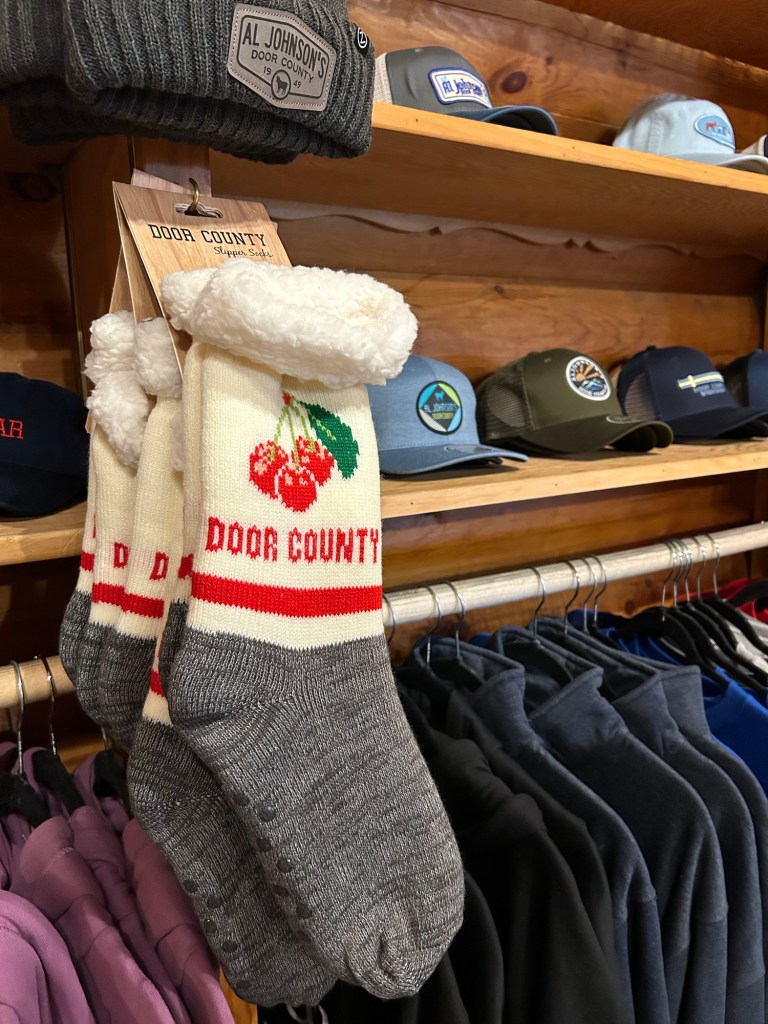
Door County was not on my radar until recently, but I’m making up for lost time.

When I told my L.A. friend, Stephanie, that we were moving to Wisconsin, she said that I should check out the latest season of the reality cooking show, Top Chef. So, I did, and learned about the famous Door County cherries and the zany Door County “fish boils” (that look both entertaining and terrifying). It took about two seconds to decide that I wanted to visit, and we did a week ago for ourselves and then again yesterday with visiting family because it is just too wonderful not to share.

A week ago we went to see the fall colors, which was a resounding success. We drove through Green Bay Packer gameday traffic with our sights set on Sturgeon Bay, of course, since we’re Sturgeons and all. We had to stop for a picture in Sturgeon Bay, but because we were hungry Sturgeons, we stopped for brunch, too.

At Scaturo’s Baking Company & Café, Jody, ever the Southerner, ordered biscuits and gravy, while I went with an omelet that featured famous Wisconsin cheese, and just as we started to eat a door opened and our new friend, Tom, poked his head in the door! We knew that Tom and Debbie were in Door County that weekend, too, but it was such a fun surprise to bump into them and share a lovely and unexpected brunch together.

We then drove up Highway 42 to Egg Harbor where we stopped to walk around a bit. I swear that we hadn’t walked ten yards when I heard my name, and it was Tom again! We joined him at an artisan bread shop where Jody purchased a butter cookie before heading up the road a bit to an artisan cheese factory to sample several of the twenty cheeses that they make onsite.

We continued our drive up Highway 42 to its famously winding end at Northport, taking in the sights in cool communities like Fish Creek, Ephraim (my personal favorite), Sister Bay, Ellison Bay (where I got a scrumptious gluten-free “cherry berry muffin” at Kick Ash, a fun coffee shop), and Gills Rock. On the return trip we took the Lake Michigan route and stopped for a stroll in Bailey’s Harbor. We finally stopped to eat (again) in Sturgeon Bay before heading home. No additional Tom sightings, but still, all in all, a perfect day.

Back at home a week ago Sunday, I posted my fall foliage pictures on my social media accounts, and then Rob, a friend from Nashville commented that he had just seen Door County featured on 60 Minutes! What are the odds?!

I immediately watched the segment, titled, “This Wisconsin county has backed the winning presidential candidate for the last 6 elections,” which opened by saying that of the 513 counties in the key swing states, Door County is the only one that has picked the winner in every election this century. So, 60 Minutes decided to take a closer look.

I suggest you take fifteen minutes of your life and watch the segment, but in case you do not, I’ll share why I am writing today: not simply to introduce you to “the Cape Cod of the Midwest,” but to share with you how the 60 Minutes segment ended. Here is the final exchange between Jon Wertheim (journalist for 60 Minutes), Emma Cox (Door County store owner voting on the left), and Austin Vandertie (Door County dairy farmer voting on the right):

But in our quest, maybe we stumbled across something even more rare, we found a place in America where family and community outrank party loyalty. In this divisive election season, we came to America’s ultimate battleground….except there was no battle … as they say here with pride, we live above the tension line. 

Jon Wertheim: What’s your sense of how the tone in Door County compares to the tone nationally?

Emma Cox: You don’t wanna alienate your neighbors. You don’t wanna alienate your fellow business owners. You all come together.

Jon Wertheim: Do you have family members that are gonna vote differently from you?

Austin Vandertie: Oh, absolutely.

Jon Wertheim: Everyone invited to Thanksgiving, regardless?

Austin Vandertie: Absolutely. Politics is, you know, if we can’t talk about it that means it’s gone way too far in the wrong direction.

Jon Wertheim: You recognize that’s not necessarily the, the vibe in the country at large?

Austin Vandertie: Hey. We’re a little different in Wisconsin, I guess. We got that Midwest nice going on. 

In keeping with the undulations of Highway 42, in Door County, Wisconsin, you swing back and forth and continue on down the road. 

Election Day is almost here. I have strong opinions and significant apprehension concerning what lies ahead. But in the wishful thinking department, let it be known that I wish the entire world would adopt a Door County “Midwest Nice” commitment so that I actually believed that we all would continue on down the road together.

Roses Are Red, Violets Are Blue, but Wisconsin Is Actually Purple

Purple haze all in my brain / Lately, things just don’t seem the same / Actin’ funny but I don’t know why / Scuse me while I kiss the sky.” – Jimi Hendrix

I stopped using social media to discuss politics a long time ago, mostly because I just didn’t love the desire to claw out my eyeballs. The following represents only a minor shift in personal policy, I hope.

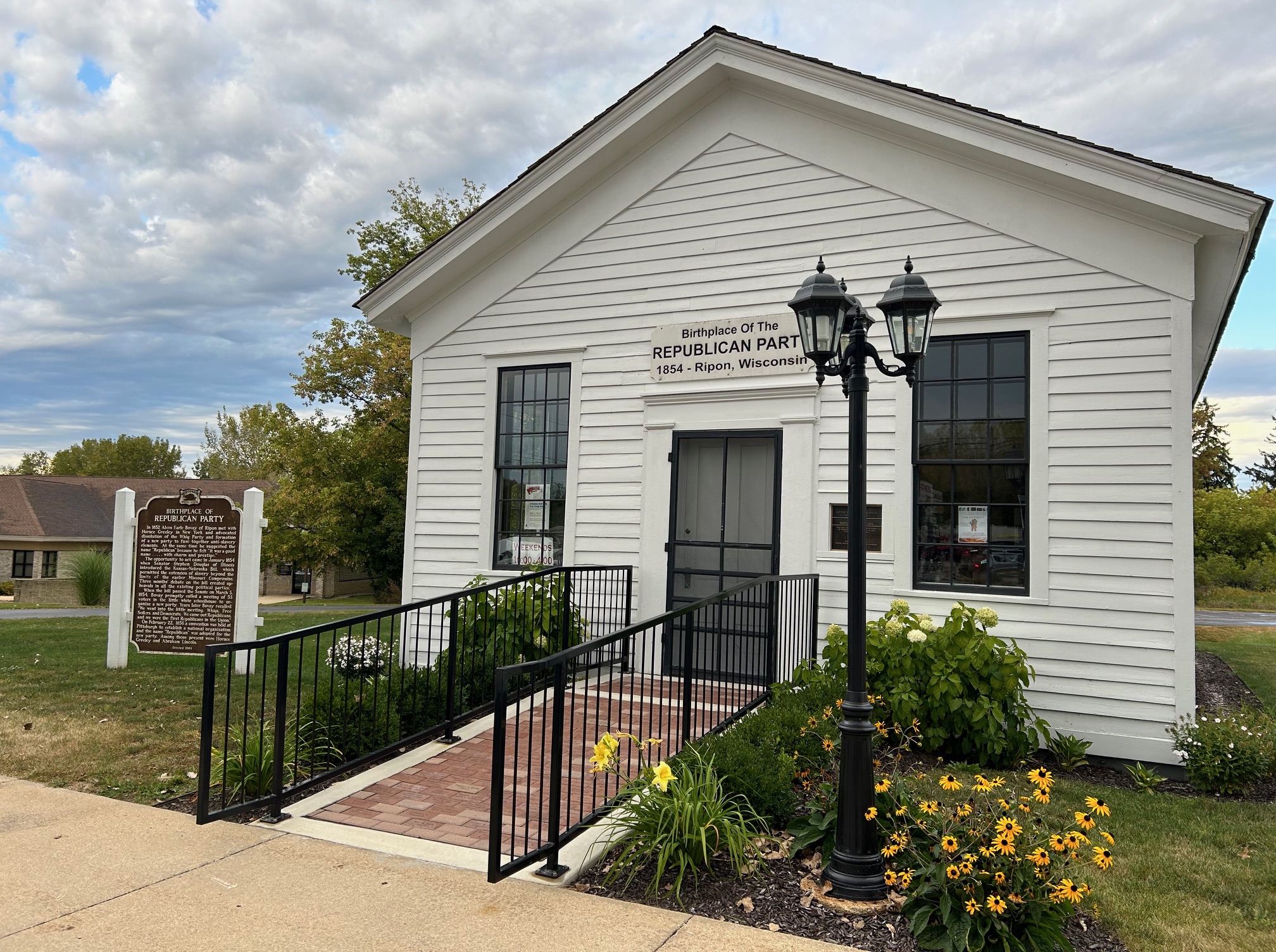
My new hometown is the birthplace of the Republican Party. Alvan Bovay, a lawyer and mathematician from New York City, moved to Ripon, Wisconsin, in 1850, one year after the city was founded, and in 1854, frustrated by the potential spread of slavery in the proposed Kansas-Nebraska Act, called a meeting at the First Congregational Church and proposed forming a new political party to oppose slavery if the bill passed. Well, the bill passed, and Bovay hosted a follow-up meeting at what is now known as the Little White Schoolhouse, a meeting that led to the establishment of the Republican Party. Six years later, the United States elected its first Republican president, Abraham Lincoln, and all hell broke loose soon thereafter.

As you might suspect, when I pass by the Little White Schoolhouse in my new hometown, I often see travelers there taking pictures from their respective pilgrimages. Ironically, I think supporters of both major political parties should take pilgrimages here, albeit for different reasons: Republicans, for obvious reasons, being the birthplace of their party, but Democrats, on the other hand, for historic reasons, too, i.e., to honor an early political movement that stood up for basic civil rights for Black citizens and then held the nation together during the bloodbath that ensued when Southern states seceded to preserve white supremacy. There’s much there for both to celebrate if they so choose.

In a way, I guess my new hometown serves as a nice microcosm of life in a purple state, having something that both Democrats and Republicans can honor.

With the 2024 presidential election on its final approach, Wisconsin, my new home state, is receiving a lot of attention as a “battleground” state. (My new academic department chair was quoted in Newsweek just last week.) Wisconsin is one of only five states (along with Arizona, Georgia, Michigan, and Pennsylvania) that voted for Trump in 2016 and Biden in 2020, displaying the capacity to vote for a presidential candidate from different parties. In addition, officially, and this may change following the next election, Wisconsin is one of only three states (along with Montana and Ohio) that has one United States Senator from the Democratic Party and one United States Senator from the Republican Party—down dramatically from twenty-seven split delegations in 1980.[1] Wisconsin is apparently the prototype of a “purple” state, a mixture of red and blue—even though when it comes to colors, this football-crazed state prefers the green and the gold to that associated with one of its historic rivals, the Minnesota Vikings.

I happen to like purple—when it comes to politics.

I’m actually quite blue, to be sure, when it comes to the political team I typically root for, and I have strong feelings along those lines about this particular presidential election, but as one who cares deeply about words like diversity, equity, inclusion, and belonging, and very much dislikes words like echo chamber, groupthink, and homogeneity, I am fond of what are now extraordinary places where people from different perspectives live in community and everyone has the chance to speak up and be heard. So, I like living in a place that is currently known as a purple state.

However, refusing to put my head in the sand, I’m well aware that these rarities are headed toward extinction, and I’m not sure that will change anytime soon.

I sort of like the idea of a purple party. (This is where my wife, a major Prince fan, perks up, and I confess that going back to (political) parties like its 1999 seems surprisingly nice given today’s crazy town carnival, but that’s not where I’m headed with this little essay.)

I sort of like the idea of a purple party, but I’m not going to call a meeting at the Little White Schoolhouse and try to start one, mostly because I only sort of like the idea and think it would turn out poorly. The idea of a purple party would probably end up as a gathering of all the moderates, those tired of the extremists on both sides—almost a call back to the political establishment once upon a time. Make America Moderate Again, if you will. I can see the purple MAMA hats already.

But actually, sometimes, I like extremes. Like, a lot. For example, all things considered, pretty much any landmark movement for human rights was a radical movement once upon a time, and I want to be on those teams.  

No, instead of a party for “those in the middle,” though an understandable wish for many, what I wish for instead is not even a party, just a place in this world where people from very different backgrounds with very different characteristics and very different perspectives can be in the same place and learn from each other and refuse to hate each other (which is where the train consistently derails) and choose to respect each other as human beings. Places where Justice Ginsburg and Justice Scalia go to the opera together, and where George W. Bush and Michelle Obama exchange hugs and cough drops, and where friendships develop like Snoop Dogg and Martha Stewart; Ella Fitzgerald and Marilyn Monroe; Sherlock Holmes and Dr. Watson; Harry and Sally; Bert and Ernie; Woody and Buzz.

Wishful thinking, I know, this notion of radical respect and radical friendship across dividing social lines. Who could really imagine that happening anywhere? But if anyone ever calls a meeting at a little schoolhouse somewhere with that in mind, please pass along the invitation.


[1] Sure, Maine and West Virginia also have split delegations, but theirs are Independent and Republican, not Democrat and Republican. And don’t even try with Vermont: nothing split about that delegation!

Law and the Bible

51-ASgVtsvL._SX331_BO1,204,203,200_

I am beyond honored to teach an undergraduate course this semester titled, Law and the Bible, in Lipscomb’s Fred D. Gray Institute for Law, Justice, and Society—even more honored that it is based on a course built (and using a text edited) by friend and former colleague, Professor Bob Cochran. To have the opportunity to combine my legal training and ministry experience in a classroom is pretty great, and that there are eleven brilliant and passionate students enrolled is almost too good to be true.

Professor Cochran divided the Bible in nine sections and teamed legal scholars and theologians to write each chapter (he joined his friend, Dallas Willard, to approach the Gospels) and explore what the Bible teaches about law and its relevance to current issues.

We have much to discuss.

I have a complicated relationship with politics and rarely write publicly on political issues anymore, not because I no longer have opinions, but for other reasons. To sit in a classroom, however, and consider contemporary issues starting with the Bible, that has me excited.

I confess disappointment that religious folks often react to major political moments by supporting their predetermined political candidate/party without wrestling with the individual issue at hand based on theological arguments. One would think that those who claim religion would avoid automatically supporting one political party and examine each individual situation in light of their sacred text. Maybe the penetrating question is: What is truly sacred?

I’m excited to consider such questions this semester with a gifted group of college students.

A Little Moderation

download

The Great Southern California Drought seems awfully wet nowadays.  I read that it will take several wet years to rescue SoCal from its drought condition, but you have to give it to January 2017 for trying to do it all at once.  Last Friday’s rains produced multiple mudslides that effectively turned Malibu into a peninsula in advance of the heavy rains that hit on Sunday.  If the Pepperdine deer and coyotes start lining up in pairs, you will find me consulting Waze for the nearest Noah.

So it appears that the prayers for rain produced so much of it that the world around here is literally falling apart.  Figures.  Life’s strong suit does not appear to be producing a happy medium.

While not below the poverty line, I grew up relatively poor.  In the early 1980s, my dad was laid off from his longtime work as a butcher in a meatpacking plant and took a part-time job at a neighborhood grocery store.  I knew the store well, having built my baseball and football card collection from its candy counter thirty cents and one pack at a time.  When my loving father found out that I liked a particular brand of candy, he would bring home so much of it in brown paper bags that I couldn’t stand to look at it anymore.  You don’t get upset with a dad who loves you that much.  But you do start secretly feeding Laffy Taffy to stray animals.

Moderation is as rare as happiness is elusive, and there just may be a connection between the two.  And if the current state of American politics is instructive, moderation is less popular than ever.  Extreme is in, and moderation is out.

Imagine changing the names of television shows and events from extreme to moderate:

  • Moderate Home Makeover (ABC)
  • Moderate RVs (Travel Channel)
  • Moderate Weight Loss (ABC)
  • Moderate Couponing (TLC)
  • Moderate Homes (HGTV)
  • Moderate Cuisine (The Food Network)
  • The Moderation Games (ESPN)

Not really ratings grabbers.

But the ancient philosophers may have been on to something when they advised moderation. “Never go to excess, but let moderation be your guide.” (Cicero)  “If one oversteps the bounds of moderation, the greatest pleasures cease to please.” (Epicetus)  “If you have found honey, eat only enough for you, lest you have your fill of it and vomit it.” (Proverbs 25:16, ESV; see also Laffy Taffy, above.)

As this blessed rain falls and the hills collapse, I guess I’m just thinking that the ancient virtue, Temperance, deserves a second look.

#winning

foam-finger-11-e1395603815168

We live in a world of competition.

This weekend, a mind-boggling number of people will tune in to see who wins and loses when Jimmy Fallon hosts the Golden Globes a few miles down the road at the Beverly Hilton.  Since I watch more football than movies, I will be more interested in the winners and losers of the College Football Championship and the wildcard round of the NFL playoffs.  Whatever your fancy, there is a competition for it—just look at the ridiculous number of reality competition shows on seemingly every network, e.g., Cupcake Wars; America’s Next Top Model; Last Comic Standing; The Bachelor/ette; Whisker Wars (yes, that was a real show).

And why should it surprise us that a former reality show celebrity emphasized “winning” so much in his shockingly successful presidential campaign?

Our entire social order is based on competition.  Our justice system is adversarial with the thought that the fight to win will produce just results.  Our economic system is designed to pit businesses against one another so that prices are lowered and products are improved.  Our political system sets parties against one another to determine the will of the majority and promote compromise.  And sports and entertainment?  Well, again, just turn on your television.

We live in a world of competition.

Even if I thought competition was a bad idea, any attempt to speak against it would be a losing battle (Ha!).  Competition is apparently inherent to human existence, but it sure makes it hard to promote love for and cooperation with others in a world that teaches us to see each other as competitors.  What’s a blogger to do?

In 2011, actor Charlie Sheen had a public meltdown and in a series of bizarre statements famously declared that he was “winning” and created one of the more popular Twitter hashtags to date.  Unwittingly, he also may have solved my dilemma.  You can apparently redefine what it means to win!

So here’s my proposal: Be a winner, sure, but first pick a battle that is worth the struggle and then carefully consider how to calculate true success.

Willing to Talk

oscar

The results of the presidential election prompted me to visit my friend, Oscar, at the Malibu Community Labor Exchange last weekend.  For over two decades, Oscar has directed the day labor hiring site day after day, week after week, year after year.  He is a personal friend and hero.  I went to see Oscar because I wondered how the day laborers were reacting to the news, but to be candid, Oscar is such a man of peace and wisdom that I anticipated the visit would be good for me, too.  I miscalculated the election itself, but at least I got that one right.

Oscar was a Cesar Chavez apprentice back in the day and traveled with Cesar to all sorts of interesting places and situations.  It was fascinating to hear him make connections between then and now.  As the world remembers, Cesar’s activism was strong yet nonviolent and eternally optimistic.  Si, se puede!  I think we all need a good helping of strong, nonviolent optimism right now.

As we visited, Oscar recalled times when Cesar was criticized for meeting with government officials who were seen as his direct enemies.  Many supporters of the farm workers could not even bring themselves to say the names of those opposition leaders and could hardly stomach witnessing Cesar shake hands, pose for pictures, and sit in conversation with people they believed to be evil.  Cesar was willing to talk with them anyway.  Oscar explained Cesar’s approach: On behalf of others, he was always willing to talk with anyone to advance the cause regardless of his personal feelings or the reaction it generated.

It is far too easy to surround ourselves with like-minded individuals and forego the arduous task of seeking to engage and understand those in opposition, but we will only move forward if we are willing to talk to each other.  That, my friends, requires us to put the needs of others ahead of our own and even risk ridicule from our own people.

Thanks to Cesar for living this out.  Thanks to Oscar for reminding me.

Si, se puede!

Love Down in Early Trading

11I’m not sure that I met the height requirement for this American roller coaster, but I am apparently strapped in and here we go.

Let me just say that I believe love wins in the end.  But right now love is getting clobbered.  It’s like love is the Cleveland Browns.

The unique American experiment used the language of equality at its inception, which was absurdly false.  With time, various social justice movements emerged that brought differing measures of hope and progress to those beaten down or discredited due to their skin color, religion, gender, sexual orientation, and so on.  Such progress occurred through acts of love by courageous advocates who put their lives on the line for their brothers and sisters.  However, one category was rarely on the list of people to love, and that was a love for the people doing the beating or discrediting (i.e., “the enemy”).

But who in their right mind would propose loving an enemy when it is undeserved, especially when hate, resentment, and rage all feel so darn good?  Well, there was Dr. King, but he was a rare bird.  My Christian faith calls for a love of enemies, but it seems that Harriet Beecher Stowe summed it up in this little exchange in Uncle Tom’s Cabin:

“Don’t the Bible say we must love everybody?”

“Oh, the Bible!  To be sure, it says a great many such things; but then, nobody ever thinks of doing them…”

Regardless, we have spiraled into an awful mess.  “I don’t love you because you are a certain category.”  “Then I don’t love you because you are a terrible person because you don’t love people because they are in a certain category.”  “Well, now I don’t love you either because you say I am a terrible person.”  “Well then…”

It is a spiral leading nowhere good.  Specifically, it led to this presidential election, and from what I see, there is no sign of this train slowing down on either side.

It is telling that this presidential campaign produced two “anyone but” movements (i.e., “anyone but Trump” and “anyone but Hillary”).  Both meant exactly what they said.  Both emerged because our (un)civil war led the two sides to offer candidates representing the ultimate middle finger to their sworn enemy: “We propose the worst person you can imagine to be the most powerful person on the planet.”

One side won.  The other is apoplectic.  It was inevitable either way.

Let me be specific.  First, I am from Arkansas.  Second, I voted for Secretary Clinton.  It stings to hear what some friends say about “anyone who would vote for Hillary.”  It is hard to imagine that someone can say such things and love me at the same time.  Simultaneously, it stings to hear what some friends say about “anyone who would vote for Trump”—e.g., when entire swaths of my friends and family are referred to as uneducated, ignorant, redneck, and so on.  It is hard to imagine that someone can say such things and love those I love at the same time.

Love is just getting trounced.  Who knows, maybe it is game over, and if so, hopefully someone will learn a lesson from us someday after we are finished annihilating ourselves.  But I choose love anyway.  Even when it seems impossible, I continue to believe that love wins in the end.

To my friends on both sides who are understandably afraid, I humbly suggest that your fear may be misplaced.  Instead of being afraid of those you believe look down on you or those you love—and maybe they really do look down on you or those you love—I suggest (to quote a president) that the true enemy is fear itself.  And the antidote is love.  Learning to love an enemy is incredibly difficult, but I believe it is the hope of the world.

So how might one attempt to do such a radical thing as love someone you have good reasons to hate?  Buddhist monk, Thich Nhat Hanh, offers this: “To love our enemy is impossible.  The moment we understand our enemy we feel compassion towards him or her, and he or she is no longer our enemy.”

I say it is worth a shot.  Categorically dismissing others is getting uglier all the time.

Hope for the World

As Valentine’s Day bled into Presidents’ Day, I decided to give up any love of politics for Lent. This may be the perfect year for such a sacrifice.

The tragic loss of Justice Scalia over the weekend was quickly followed by the tragic politicization of his passing.  There is political work to do, of course, but it was sad, though not surprising, that a presidential candidate had tweeted an opening shot before the Supreme Court had even published an official statement on the loss of their colleague.

This presidential campaign cycle? Wow.

Best I can tell, nine viable candidates remain—two Democrats (Clinton; Sanders), six Republicans (Bush; Carson; Cruz; Kasich; Rubio; Trump), and one lurking independent (Bloomberg). It is possible that Batman or a Muppet or One Direction (campaign slogan alert?) may enter the field, too, given this unpredictable election cycle.

If the presidential field took the field as a baseball team, I’d put Sanders in left (of course), Bloomberg in center (of course), and Cruz in right (of course). Trump would have to play first because it has a #1 in it. Bush and Kasich would necessarily be the (Republican Establishment’s) double-play combination, and Clinton would be a natural at the hot corner given her experience with controversy. I’d put Carson behind the plate (i.e., coming from behind now anyway), and Rubio could take the mound since he is the youngest candidate and may have the most lively arm.

American presidential politics is both fascinating and disturbing, sort of like a roadside accident elicits a peek. Although I vote and appreciate our system, my personal philosophy is best summed up by the late Will D. Campbell (and speaking of baseball): “I watch the political process pretty much as I watch baseball. I have a favorite team, but I know that ultimately it makes no difference who wins. I gave up on politics offering any hope for the world’s problems a long time ago.”

There is a complex thought system that underlies the quote. Just so you know.

Well, I’ll risk oversimplification and explain it this way: I stand with Will D. Campbell and Dr. King in believing that the hope for the world lies in our ability to see one another as brothers and sisters.

Watching our prospective leaders in a democracy speak as they do is a direct reflection of our own hearts, and it seems that we hate each other. Well, maybe not hate (yes, I do mean hate), but at least we resent or despise or fear each other. Surely not family.

I am happy that the inspiring friendship between Justice Scalia and Justice Ginsburg has received some attention this weekend.  It is unfortunate that it appears to have zero effect on the presidential campaign.

My best bet as to who will win in November? Nobody. Oh, someone will be elected president of these United States, but in this political climate, I’m not predicting any real winners. I am predicting a lot of angry people. (I’m also predicting a large number of folks will renege on their pledge to move to Canada if ________ is elected.)

It is personally comforting that I do not believe the “hope for the world’s problems” lies in a presidential election, but at the same time, it is troubling that the hope I believe in appears to have zero traction, Scalia/Ginsburg notwithstanding.

I’m going to see everyone as brothers and sisters anyway.