Remember Thanksgiving

thanksgiving-crewI confess that I didn’t read the instructions very closely, but I’m pretty sure we can stop being thankful now that the holiday has passed.  I’m not 100% positive on this, but since we are apparently expected to line up at midnight and explode out of the starting blocks like Usain Bolt to beat our fellow citizens to the hottest deals, it seems that the time to appreciate what we already have has now passed and that we need new things for which to give thanks!

As the Black Fridays Matter shoppers launch a frontal assault on economic stagnation today, it is my understanding that one can now accomplish said shopping from the comfort of one’s own home.  Note to self: Remember to be thankful for that next year!  Although racing through a shopping mall plus a little mixed martial arts with your neighbor is undoubtedly a nice way to burn calories from the holiday feast.

I’m kidding.  Mostly, and sort of.  Good ol’ capitalism depends on this annual injection, and most of our pocketbooks could use the good deals offered today both for things we really do need as well as for things we really do share as expressions of love in this season of giving.  But you have to admit—the quick-change artistry from pausing in gratitude to sprinting for acquisition is humorous at least, and if we are honest, we may have a tiny little predisposition for going overboard.

But my thoughts today have less to do with shopping and more to do with memory.  Specifically, I don’t want to forget to be thankful when life hits the accelerator again.

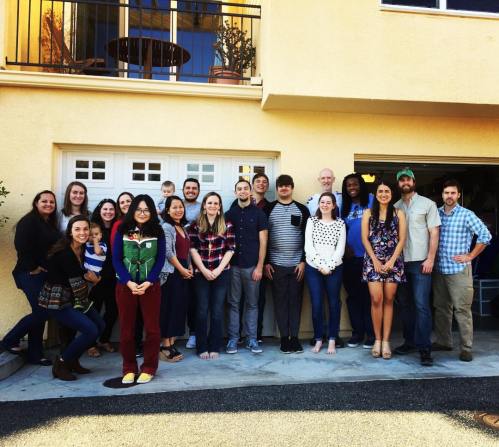
Yesterday was pretty fantastic.  My little family was reunited, and we were honored to host a diverse group of friends for feasting and fun (and football).  We even had multiple international friends with us for their very first American Thanksgiving!  Our time together was a strong reminder of our personal blessings in this wonderful life.

I would like to experience that feeling on more days each year than the fourth Thursday in November, and if I can think crazy thoughts, maybe even every day?  In this frenzied life, I like to think that each and every day has enough space in it to pause and appreciate the good.

The Thanksgiving holiday may just come once each year, but maybe it can make such a strong impression as to lead us to infuse a little thanksgiving in every day.

The Thankful Life

3a61a4b7fda80b09de018f928e04a03dI once heard a speaker say that you could give everyone a sheet of paper with a line down the middle, ask everyone to write all the reasons to be happy on the left side of the paper and all the reasons to be sad on the right side of the paper, and everyone could fill up both sides.  The question is: Which side of the paper will you live your life on?
This week, by holiday, this particular nation asks everyone to pause and live on the thankful side.

I am thankful for the invitation.  I believe that I will.


Willing to Talk

oscar

The results of the presidential election prompted me to visit my friend, Oscar, at the Malibu Community Labor Exchange last weekend.  For over two decades, Oscar has directed the day labor hiring site day after day, week after week, year after year.  He is a personal friend and hero.  I went to see Oscar because I wondered how the day laborers were reacting to the news, but to be candid, Oscar is such a man of peace and wisdom that I anticipated the visit would be good for me, too.  I miscalculated the election itself, but at least I got that one right.

Oscar was a Cesar Chavez apprentice back in the day and traveled with Cesar to all sorts of interesting places and situations.  It was fascinating to hear him make connections between then and now.  As the world remembers, Cesar’s activism was strong yet nonviolent and eternally optimistic.  Si, se puede!  I think we all need a good helping of strong, nonviolent optimism right now.

As we visited, Oscar recalled times when Cesar was criticized for meeting with government officials who were seen as his direct enemies.  Many supporters of the farm workers could not even bring themselves to say the names of those opposition leaders and could hardly stomach witnessing Cesar shake hands, pose for pictures, and sit in conversation with people they believed to be evil.  Cesar was willing to talk with them anyway.  Oscar explained Cesar’s approach: On behalf of others, he was always willing to talk with anyone to advance the cause regardless of his personal feelings or the reaction it generated.

It is far too easy to surround ourselves with like-minded individuals and forego the arduous task of seeking to engage and understand those in opposition, but we will only move forward if we are willing to talk to each other.  That, my friends, requires us to put the needs of others ahead of our own and even risk ridicule from our own people.

Thanks to Cesar for living this out.  Thanks to Oscar for reminding me.

Si, se puede!

It’s Lonely at the Top, but It’s Not Always Quiet

1My first Los Angeles Rams game came with a free helping of déjà vu when the crowd transformed its booing of starting quarterback Case Keenum into chants of “We want Goff” in reference to Jared Goff, the rookie backup quarterback hoped to be the future of the franchise.  Goff never saw action, but the fans did their best to get him in the game.

I say déjà vu because my wife first gave me NFL tickets in 2006 for a Monday Night Football contest in old Texas Stadium with my great friend, Dave, which happened to be the game when Tony Romo replaced starting quarterback, Drew Bledsoe, after the crowd spent much of the first half chanting Romo’s name.  It was a little awkward for Cowboy Nation that night, not to mention Romo, when his first pass was intercepted after he ran on the field to deafening cheers.  Romo did go on to a great season, however, but I don’t think that would matter either way to the fans in Los Angeles chanting for change a decade later.

It’s lonely at the top, but it’s not always quiet.

Me, I’ve been a coach and a preacher and a dean, three professions that encounter a healthy share of critics, and I know well the convenient criticism that someone else would have made a different and better decision.

I once read that the contents of Abraham Lincoln’s pockets on the night he was assassinated are in some drawer tucked away in the bowels of the Smithsonian, and that among the assorted items is a newspaper clipping that complimented the sitting president, which is particularly interesting once you remember his unpopularity at the time.  It seems that even a great leader like Lincoln needed to remember that his efforts were not entirely unappreciated.

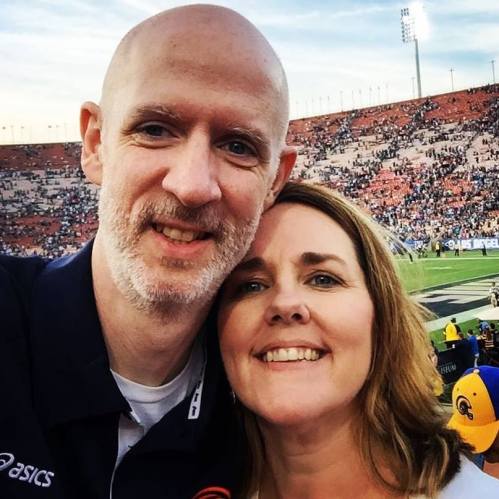
As I sat in the Los Angeles Memorial Coliseum a week ago with my lovely wife and listened to the disgruntled fans voice their disgruntled-ness, I thought about what poor Case Keenum should do.  Backpacking across Europe is an option, as is a noise-canceling helmet.  Instead, I suggest that Mr. Keenum keep an encouraging note in his pocket and continue to give everything he has to his work—I don’t think he has to go so far as to avoid the theater.

Love Down in Early Trading

11I’m not sure that I met the height requirement for this American roller coaster, but I am apparently strapped in and here we go.
Let me just say that I believe love wins in the end.  But right now love is getting clobbered.  It’s like love is the Cleveland Browns.

The unique American experiment used the language of equality at its inception, which was absurdly false.  With time, various social justice movements emerged that brought differing measures of hope and progress to those beaten down or discredited due to their skin color, religion, gender, sexual orientation, and so on.  Such progress occurred through acts of love by courageous advocates who put their lives on the line for their brothers and sisters.  However, one category was rarely on the list of people to love, and that was a love for the people doing the beating or discrediting (i.e., “the enemy”).

But who in their right mind would propose loving an enemy when it is undeserved, especially when hate, resentment, and rage all feel so darn good?  Well, there was Dr. King, but he was a rare bird.  My Christian faith calls for a love of enemies, but it seems that Harriet Beecher Stowe summed it up in this little exchange in Uncle Tom’s Cabin:

“Don’t the Bible say we must love everybody?”

“Oh, the Bible!  To be sure, it says a great many such things; but then, nobody ever thinks of doing them…”

Regardless, we have spiraled into an awful mess.  “I don’t love you because you are a certain category.”  “Then I don’t love you because you are a terrible person because you don’t love people because they are in a certain category.”  “Well, now I don’t love you either because you say I am a terrible person.”  “Well then…”

It is a spiral leading nowhere good.  Specifically, it led to this presidential election, and from what I see, there is no sign of this train slowing down on either side.

It is telling that this presidential campaign produced two “anyone but” movements (i.e., “anyone but Trump” and “anyone but Hillary”).  Both meant exactly what they said.  Both emerged because our (un)civil war led the two sides to offer candidates representing the ultimate middle finger to their sworn enemy: “We propose the worst person you can imagine to be the most powerful person on the planet.”

One side won.  The other is apoplectic.  It was inevitable either way.

Let me be specific.  First, I am from Arkansas.  Second, I voted for Secretary Clinton.  It stings to hear what some friends say about “anyone who would vote for Hillary.”  It is hard to imagine that someone can say such things and love me at the same time.  Simultaneously, it stings to hear what some friends say about “anyone who would vote for Trump”—e.g., when entire swaths of my friends and family are referred to as uneducated, ignorant, redneck, and so on.  It is hard to imagine that someone can say such things and love those I love at the same time.

Love is just getting trounced.  Who knows, maybe it is game over, and if so, hopefully someone will learn a lesson from us someday after we are finished annihilating ourselves.  But I choose love anyway.  Even when it seems impossible, I continue to believe that love wins in the end.

To my friends on both sides who are understandably afraid, I humbly suggest that your fear may be misplaced.  Instead of being afraid of those you believe look down on you or those you love—and maybe they really do look down on you or those you love—I suggest (to quote a president) that the true enemy is fear itself.  And the antidote is love.  Learning to love an enemy is incredibly difficult, but I believe it is the hope of the world.

So how might one attempt to do such a radical thing as love someone you have good reasons to hate?  Buddhist monk, Thich Nhat Hanh, offers this: “To love our enemy is impossible.  The moment we understand our enemy we feel compassion towards him or her, and he or she is no longer our enemy.”

I say it is worth a shot.  Categorically dismissing others is getting uglier all the time.

Better Days Ahead?

1

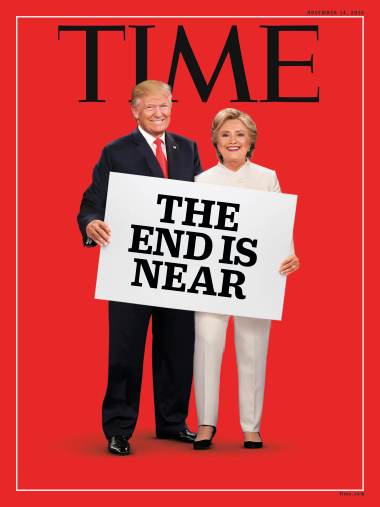
Well, mad props to TIME magazine for mastering the double entendre.

Regardless of the outcome, tomorrow’s presidential election will be historic, and although nobody will remember this bizarre campaign with affection, I suspect that its conclusion will not cool the bubbling hatred that threatens to erupt and make an awful mess.  In other words, I’ll be glad when it’s over, but I don’t think it will be over when it’s over.

So, what to do?  Although Canada is nice this time of century, flight doesn’t inspire a heck of lot more hope than the ugly fight we have endured.  There must be a third way to a better future.

My personal vote is for a commitment to reduce hatred (whether or not it is on the official ballot), beginning in my own heart and extending to actions that will have a similar effect on others.  That seems particularly worthwhile to me.

Don’t be fooled into thinking that life will instantly be better once the results are final.  But don’t be fooled into thinking that things cannot be better.  Better is surely worth the struggle.

I mean, the Cubs won the World Series.  The possibilities are endless.

Universal Ideals of Human Dignity

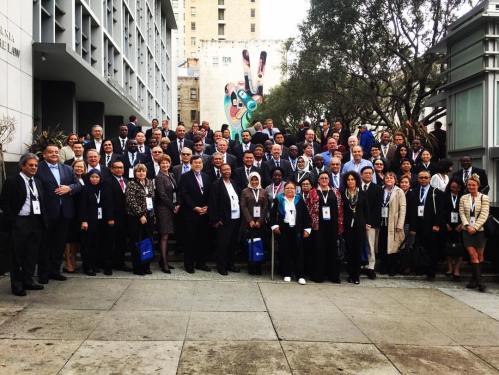
1I traveled to San Francisco last weekend with my friend and colleague, Ahmed, to represent our dean at the annual conference of the International Association of Law Schools and was humbled to gather with people from all over the world who are responsible for training the next generation of lawyers.  It is no exaggeration to say that the world depends on this good work.

Neither is it a statement of pride since I was obviously out of my element in a conference full of legal scholars.  This was particularly obvious when we were asked to divide into small groups based on our areas of expertise, and, um, I don’t have one.  But, I had to choose something so, given the choices, I chose “human rights” because, well, I’m for them.

But what an honor.  In two separate sessions, I sat in a small classroom with a handful of individuals who consider it their life calling to teach human rights to law students.  There were professors from South Africa and India, Australia and Italy, Russia and Canada, Indonesia and the United States.  Can you imagine?

The Office of the United Nations High Commissioner for Human Rights claims that “[h]uman rights are rights inherent to all human beings, whatever our nationality, place of residence, sex, national or ethnic origin, colour, religion, language, or any other status” and purports to represent “the world’s commitment to universal ideals of human dignity.”

I like that phrase—universal ideals of human dignity.

What I found surprising in the privileged opportunity afforded me at this unique conference was what that special group of people found surprising in their visit to San Francisco.  And that was the homelessness on full display in the short walk from the hotel to the conference location.

I have often been told that the poverty in these United States does not compare to poverty in the developing world, and I’ve traveled enough now to understand the proposition.  But please slap me if I ever fail to remember that the universal ideals of human dignity apply to the people on the American margins, too.


Taunting Fear

11

“The enemy is fear.  We think it is hate; but, it is fear.” – Gandhi

I think Halloween is fun.  My wife thinks it is the best day of the year.  I prefer to sit outside munching on fun-size candy bars while families wander by in goofy costumes.  My wife likes to purchase skeletons that frighten the neighborhood children.  That isn’t disturbing at all, right honey?  (Awkward nervous laughter.)

I may not like Halloween as much as my wife, but I do enjoy it.  To promote the candy industry, sure, but more importantly, I like the idea of poking fun at things that scare us.  Not because our fears aren’t real or sufficiently serious—I don’t advocate dismissing fears.  Instead, I vote for conquering them.  My parents have been taken away by that ultimate fear we call death, and I don’t seem to be getting any younger myself, but I have decided that fear and death will not have its way with my life. I fully intend to live a life that isn’t ruled by fear.

Ralph Waldo Emerson once wrote, “When a resolute young fellow steps up to the great bully, the world, and takes him boldly by the beard, he is often surprised to find it comes off in his hand, and that it was only tied on to scare away the timid adventurers.”

Don’t be a timid adventurer.

My friend, Danny, says it this way: Fear is a punk.  I’ll be celebrating that tonight with a bowl full of Kit Kats and Mr. Goodbars.

Forging Pathways

2

“Law and order exist for the purpose of establishing justice and when they fail in this purpose they become the dangerously structured dams that block the flow of social progress.” – Martin Luther King, Jr.

Waze calculates thirty-four miles from Pepperdine University to East Los Angeles College; the Pacific Coast Highway to East Cesar E. Chavez Avenue; the celebrity-populated western side of Los Angeles to Cheech Marin’s East L.A.; Malibu to Monterey Park.  It sure seems longer, even in rush hour traffic.  They are two different worlds.

I serve on the advisory council for the East Los Angeles College (“ELAC”) Pathway to Law School Transfer Program, a coalition of educators and practitioners brought together to destroy obstacles that stand in the way of a young person advancing from high school to community college, from community college to a four-year college, and from a four-year college to law school.  It is an inspiring group, and I am honored to be a part.

It is also personally disconcerting.  I’m not exactly sure how I, a first-generation college student from rural Arkansas, the son of a butcher who dropped out of high school to provide for his family during the Great Depression, am suddenly the picture of white privilege in a room full of impressive human beings, but as a lawyer who drove over from his condo in Malibu, even my expertise in denial simply tossed in the towel and admitted the truth.  I may be the most reluctant privileged person around.

It was dark when the meeting ended, and on the stroll across the ELAC campus to drive back to idyllic Malibu, I noticed several classes in session.  Maybe I was wanting it to be so, but it sure looked like all of the students in those classes were engaged in the instruction and not bored on Facebook.  I’m just sure of it.  I then wandered by the math tutoring center, and it was undeniably a hub of academic activity late on a weekday evening.  All this made me feel particularly hopeful in this perplexing world of ours.

If I must come to terms with privilege, and I just might have to, I must use it to help those inspiring students hungry for knowledge in those hushed classrooms gleaming in the darkness.

See. Respect. Listen. Love.

2

When Hurricane Katrina flooded our one-story house in 2005, it claimed treasured and irreplaceable items such as our wedding album and family videos while graciously sparing the crap in the attic that was there because we didn’t want it in the first place.  Gee, thanks.  My revenge came from unwittingly sparing a few boxes of personal mementos in my apparently waterproof office simply because we didn’t have room in the house.  I do my best work by accident.

Included in those mementos, believe it or not, was a college research paper that is now a quarter-century old, presented to Dr. Willard Gatewood at the University of Arkansas in 1991 and titled, “Arkansas Democrats in the Presidential Election of 1928.”  That paper was painstakingly typed on an actual typewriter (yes, boys and girls, a typewriter) and placed in a transparent plastic sleeve with a white binder with my social security number (ID number at the time!) emblazoned under my name on the cover page.  I kept the paper because I was proud of it and have a tiny problem throwing things away.

I remembered that paper last week and had to go for a trip down memory lane.

I don’t think I’m to blame for watching CNN last Thursday when I saw Hillary Clinton and Donald Trump laugh at each other’s jokes the day after trading verbal sucker punches and refusing to shake hands in their final debate.  Curiosity got the best of me.  It turned out that our nation’s top presidential candidates were at the Al Smith Dinner, an annual event hosted by the Archbishop of New York to raise money for needy children, and traditionally the last time presidential candidates share a stage prior to the election every four years.

It was the reference to Al Smith that led me to turn a closet upside down to find that old research paper.

Governor Al Smith of New York was the first Catholic to lead a major party ticket in a presidential election when nominated by the Democratic Party in 1928.  Smith chose Senator Joe T. Robinson of Arkansas as his running mate, the first southerner for a major party in that role since the Civil War, and Arkansas faced a dilemma: The heavily Democratic state had one of its own on the ticket, but Smith’s Catholicism was wildly unpopular across the state.  As a result, Protestant ministers in particular led anti-Smith campaigns that allowed the small contingent of Arkansas Republicans to pull up an easy chair while the Democrats worked both sides of the campaign.

In the end, the Smith-Robinson ticket still carried Arkansas and a handful of other states in the Solid South, but Herbert Hoover won the election in a landslide.  And then the stock market crashed, followed by a great depression and second world war and so on and so forth until I wrote a research paper that I can’t seem to throw away.

Today, it is hard to imagine passionate opposition to a presidential candidate simply because s/he is Catholic.  But it happened.  I wonder what research papers will be written by twenty-year-old students about the Election of 2016 decades down the road?

As Hillary Clinton closed her speech at the Al Smith Dinner, she reflected:

And when I think about what Al Smith went through it’s important to just reflect how groundbreaking it was for him, a Catholic, to be my party’s nominee for president.  Don’t forget – school boards sent home letters with children saying that if Al Smith is elected president you will not be allowed to have or read a Bible.  Voters were told that he would annul Protestant marriages.  And I saw a story recently that said people even claimed the Holland Tunnel was a secret passageway to connect Rome and America, to help the Pope rule our country. Those appeals, appeals to fear and division, can cause us to treat each other as the Other.  Rhetoric like that makes it harder for us to see each other, to respect each other, to listen to each other. And certainly a lot harder to love our neighbor as ourselves.