Tag Archives: hurricane katrina

Gene

The word “hero” rarely fits those you actually spend time with up close, but I use it often to describe Gene Logan. I have told Gene Logan stories to people all around the world.

Gene was somehow both tender hearted and tough as nails, and I loved and respected him deeply. At many times in my life, I made intentional decisions because I thought it was what Gene would do. I think they call that sort of person a role model. When it comes to Gene, I prefer hero.

Gene died yesterday. Although separated by miles and years, I feel the loss deep in my soul.

There are many stories, but the most dramatic come from our shared leadership experience in response to Hurricane Katrina twenty years ago. To me, Gene’s leadership was legendary, and I suspect the historic element of that natural disaster is why I associate Gene with the heroic.

It was Gene who said “let’s go” just hours after the worst of the storm had passed, and I followed him in the dark with a flashlight, defying curfew, climbing over rubble, smelling and hearing the gas from the ruptured main, searching for one of our church widows who had chosen to ride out the storm at home.

But the story that I have told the most, and the one that will forever be my living definition of leadership is something that he did unannounced, which was his leadership style. So many of us in our church community lost our homes, but Gene did not. His home was not far from our church’s building, which was our relief headquarters, and for those first few weeks after the devastation those of us who were freshly homeless bedded down on the floor each night alongside incredible volunteers who continually came to our rescue. One night I noticed that Gene was sleeping on the floor with the rest of us, too, and it occurred to me that not only did Gene have a perfectly fine bed a few blocks away, but he also had a bad back. If you knew Gene you would know that this is not the sort of observation that you share directly with him, so I went to his wife, Eileen, and wondered what he was thinking. Eileen said, “Oh, he said that he would not sleep in his bed until everyone in the church had a bed to sleep on.”

I get emotional thinking about that every time, but especially today. If ever a single action defined a person — defined a leader — defined a hero — that is it for me. How wonderful to have someone in the world that will be with you in your worst moments and refuses to leave your side until your worst moments have passed.

And how sad that the someone who showed that to me isn’t with us anymore. It is his turn to rest, although I can’t see that making him happy, but I trust that somehow his extraordinary love will be rewarded on whatever is on the other side of this life.

Thank you, Gene. For everything.

How President Jimmy Carter Changed My Life for Good

Biloxi, Mississippi (2008)

After a hundred years of life and a week’s worth of funeral activities, President Jimmy Carter’s remains will finally be laid to rest in his Georgia hometown this evening. Many memories have been shared by many people, so I might as well add mine, too.

I was six years old when Governor Carter was elected President Carter in 1976, marking the first presidential election that I remember, but my childhood memories related to him are few and scattered, including peanut jokes, gas no longer thirty cents a gallon, and wearing yellow ribbons for the hostages. Twenty years later, however, he changed my life for good.

As a young adult wrestling with my Christian faith in the early 1990s, I became convinced that Jesus’s primary news was that all people matter to God and that God’s business is setting right what has gone wrong in the world for all people, particularly the poor and marginalized. And as I wrestled to reconcile that belief with what appeared to be a different primary business of organized churches, my new wife and I soon found personal meaning by moving into a home serving children who were abused, neglected, or troubled.

While there, sometime in 1996, I read a U.S. News & World Report interview with President Carter about his new book, “Living Faith.” In the interview, President Carter shared that his home church once wanted to do something nice for a poor family at Thanksgiving, but they had one problem: Nobody knew a poor family. So, undeterred, they approached the local social services office to get the name of a poor family that they could approach. It occurred to President Carter that something was very wrong with that picture, i.e., a church having to go to the government to find the poor families.

That observation cut straight to my heart.

I must have spoken about that article in the weeks that followed because my mother bought “Living Faith” for me that Christmas, which turned out to be one of the most important gifts of my life. As I devoured the book, I read the chapter titled, “Faith in Action,” and discovered Habitat for Humanity. As I read about the organization’s mission to alleviate poverty housing, it struck me that my hometown, Paragould, Arkansas, an all-white sundown town with railroad tracks that segregated the community even further along socioeconomic lines, could really use Habitat for Humanity.

This changed my life forever.

I set out to establish a Habitat for Humanity affiliate in my hometown in early 1997, only to discover that the national organization required new affiliates to be diverse and a representation of the entire community, which challenged my heretofore wholly homogenous life. And as a result, I soon learned that so many people representing labels that I had been taught were bad or lost or wrong were in reality good and found and right, at least as much as my folks were, and often more so.

This has been the great lesson of my life, and I have been joyfully benefiting from its reality for the past three decades as we have lived all over these United States, traveled all over this planet, and befriended so many people that I can no longer even imagine that labels are dependable.

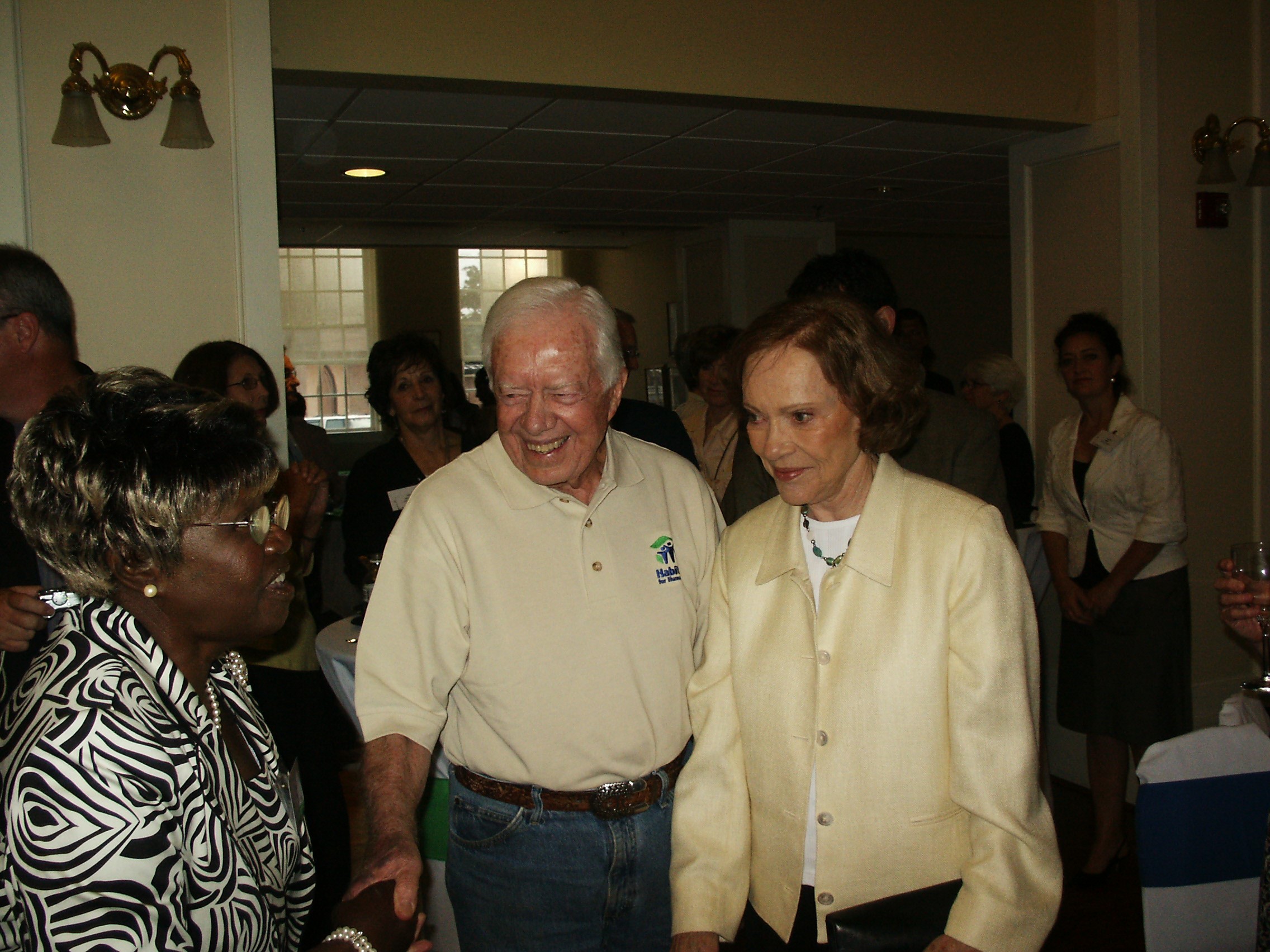
I never introduced myself to President Carter, although the picture above shows how close I came when another Habitat for Humanity affiliate that I helped establish hosted the Jimmy & Rosalynn Carter Work Project in 2008 to address the devastation wrought by Hurricane Katrina. As a board member, I was honored to attend a VIP event that evening and see the Carters up close, but it never worked out to shake his hand and say thank you.

That’s okay. But I will say it today on the day that President Carter’s remains are finally laid to rest in his Georgia hometown after a hundred years and a week’s worth of funeral activities.

Thank you, Mr. President. You changed my life for good, and I am forever grateful.

Surprised by Nostalgia

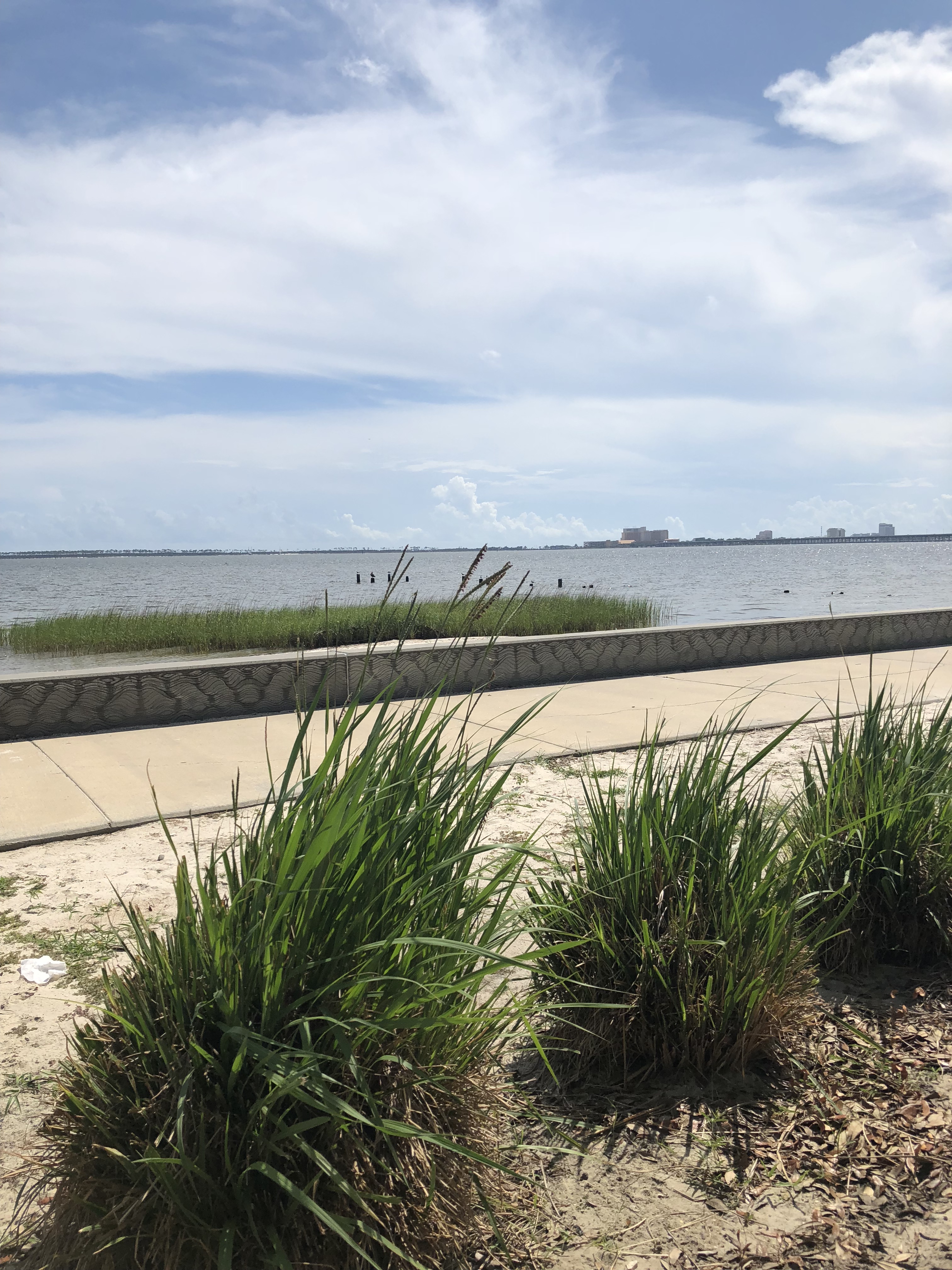
Front BeachI was born and raised in Arkansas. I love Arkansas. Now I live in California. And I love California. But recently I was reminded that a significant part of my heart remains in Mississippi.
We lived in Mississippi for about ten years and then moved to California about ten years ago. When we moved I expected to visit Mississippi from time to time, but somehow that had not happened in nine years until an unexpected invitation to officiate a funeral for a sweet friend arrived a couple of weeks ago. After a crazy couple of days of rearranging plans, I woke up to discover that I had been blasted into the past. I was unprepared.

I often say that nostalgia is just not my jam. For better or worse, my brain is oriented toward what is ahead, so life’s rearview mirror is relatively unused in my world. Well, it got used a bunch on this return to Mississippi.

Upon landing in Gulfport, I rented a car and drove down Highway 49 to the Gulf Coast and then along the beach that had been ravaged by Katrina thirteen years ago and, as the kids say, I started to feel all the feels. I saw familiar landmarks such as Beauvoir, the Biloxi Lighthouse, and Mary Mahoney’s. I saw the Coast Coliseum where my oldest daughter graduated high school and Point Cadet where my youngest had her first dance recital. There was the familiar Sharkhead’s souvenir shop and Jaws-inspired entrance but with a post-Katrina transformation that turned the entire first floor into a shaded parking lot. The Treasure Bay casino pirate ship is simply gone forever, and although I had never stepped foot inside, that made me want to cry. I had misplaced certain memories like the unique combination of bright white sands and murky waters and wondered what else I had forgotten over the years. It appeared that my GPS had sent me unwittingly down Memory Lane.

Our old hometown of Ocean Springs really threw me for a loop. I drove downtown past Lovelace Drugs and the Walter Anderson Museum and had to get out on Front Beach just to breathe. I stopped for a heavenly Tato-Nut donut and drove to our old Katrina-flooded house and discovered that it now looks like it did that fateful day when we evacuated for the storm. I wasn’t sure what to think about that sort of resurrection.

But seeing old friends nearly made my heart explode with love. Jim and Dimple. Gene and Eileen. All the Fains. Bruno and Linda. Angie and Carol. Todd and Robin. Samantha and Shelly. Tandy and Peggy. Bernice and Cathy. Frances and Mark. Tim and Katie. Connor and Amanda. Debbie and Brynlee. There is so much love in my heart for Ocean Springs and the Mississippi Gulf Coast—especially for our friends. I knew that in my brain and held it in my heart, but this trip resurrected the feeling from deep in my soul. Nostalgia hit me like a wave and left me dizzy. Like that old storm surge.

I texted my wife to say that we have to go back and visit together sometime. She said that she had wanted to do that for a long time now.

I know that I should learn to stop and smell the roses. But I am learning that I should also stop, turn around, and head back to Mississippi to smell the magnolias from time to time.

See. Respect. Listen. Love.

2

When Hurricane Katrina flooded our one-story house in 2005, it claimed treasured and irreplaceable items such as our wedding album and family videos while graciously sparing the crap in the attic that was there because we didn’t want it in the first place.  Gee, thanks.  My revenge came from unwittingly sparing a few boxes of personal mementos in my apparently waterproof office simply because we didn’t have room in the house.  I do my best work by accident.

Included in those mementos, believe it or not, was a college research paper that is now a quarter-century old, presented to Dr. Willard Gatewood at the University of Arkansas in 1991 and titled, “Arkansas Democrats in the Presidential Election of 1928.”  That paper was painstakingly typed on an actual typewriter (yes, boys and girls, a typewriter) and placed in a transparent plastic sleeve with a white binder with my social security number (ID number at the time!) emblazoned under my name on the cover page.  I kept the paper because I was proud of it and have a tiny problem throwing things away.

I remembered that paper last week and had to go for a trip down memory lane.

I don’t think I’m to blame for watching CNN last Thursday when I saw Hillary Clinton and Donald Trump laugh at each other’s jokes the day after trading verbal sucker punches and refusing to shake hands in their final debate.  Curiosity got the best of me.  It turned out that our nation’s top presidential candidates were at the Al Smith Dinner, an annual event hosted by the Archbishop of New York to raise money for needy children, and traditionally the last time presidential candidates share a stage prior to the election every four years.

It was the reference to Al Smith that led me to turn a closet upside down to find that old research paper.

Governor Al Smith of New York was the first Catholic to lead a major party ticket in a presidential election when nominated by the Democratic Party in 1928.  Smith chose Senator Joe T. Robinson of Arkansas as his running mate, the first southerner for a major party in that role since the Civil War, and Arkansas faced a dilemma: The heavily Democratic state had one of its own on the ticket, but Smith’s Catholicism was wildly unpopular across the state.  As a result, Protestant ministers in particular led anti-Smith campaigns that allowed the small contingent of Arkansas Republicans to pull up an easy chair while the Democrats worked both sides of the campaign.

In the end, the Smith-Robinson ticket still carried Arkansas and a handful of other states in the Solid South, but Herbert Hoover won the election in a landslide.  And then the stock market crashed, followed by a great depression and second world war and so on and so forth until I wrote a research paper that I can’t seem to throw away.

Today, it is hard to imagine passionate opposition to a presidential candidate simply because s/he is Catholic.  But it happened.  I wonder what research papers will be written by twenty-year-old students about the Election of 2016 decades down the road?

As Hillary Clinton closed her speech at the Al Smith Dinner, she reflected:

And when I think about what Al Smith went through it’s important to just reflect how groundbreaking it was for him, a Catholic, to be my party’s nominee for president.  Don’t forget – school boards sent home letters with children saying that if Al Smith is elected president you will not be allowed to have or read a Bible.  Voters were told that he would annul Protestant marriages.  And I saw a story recently that said people even claimed the Holland Tunnel was a secret passageway to connect Rome and America, to help the Pope rule our country. Those appeals, appeals to fear and division, can cause us to treat each other as the Other.  Rhetoric like that makes it harder for us to see each other, to respect each other, to listen to each other. And certainly a lot harder to love our neighbor as ourselves.


Future Friends

hk1

hk4I fiercely disagree with Donald Trump’s assertion that the firestorm surrounding his 2005 remarks “is nothing more than a distraction” and strongly believe that the resulting conversations on misogyny and sexual assault (not to mention presidential choices) are significant and important.

Same time, somewhere in the neighborhood of a thousand people are dead in the wake of Hurricane Matthew, and as a survivor/veteran/victim of Hurricane Katrina who was a beneficiary of intense public attention and the resulting flood of love and support, my thoughts are especially with those grieving families and all who have suffered from the storm.

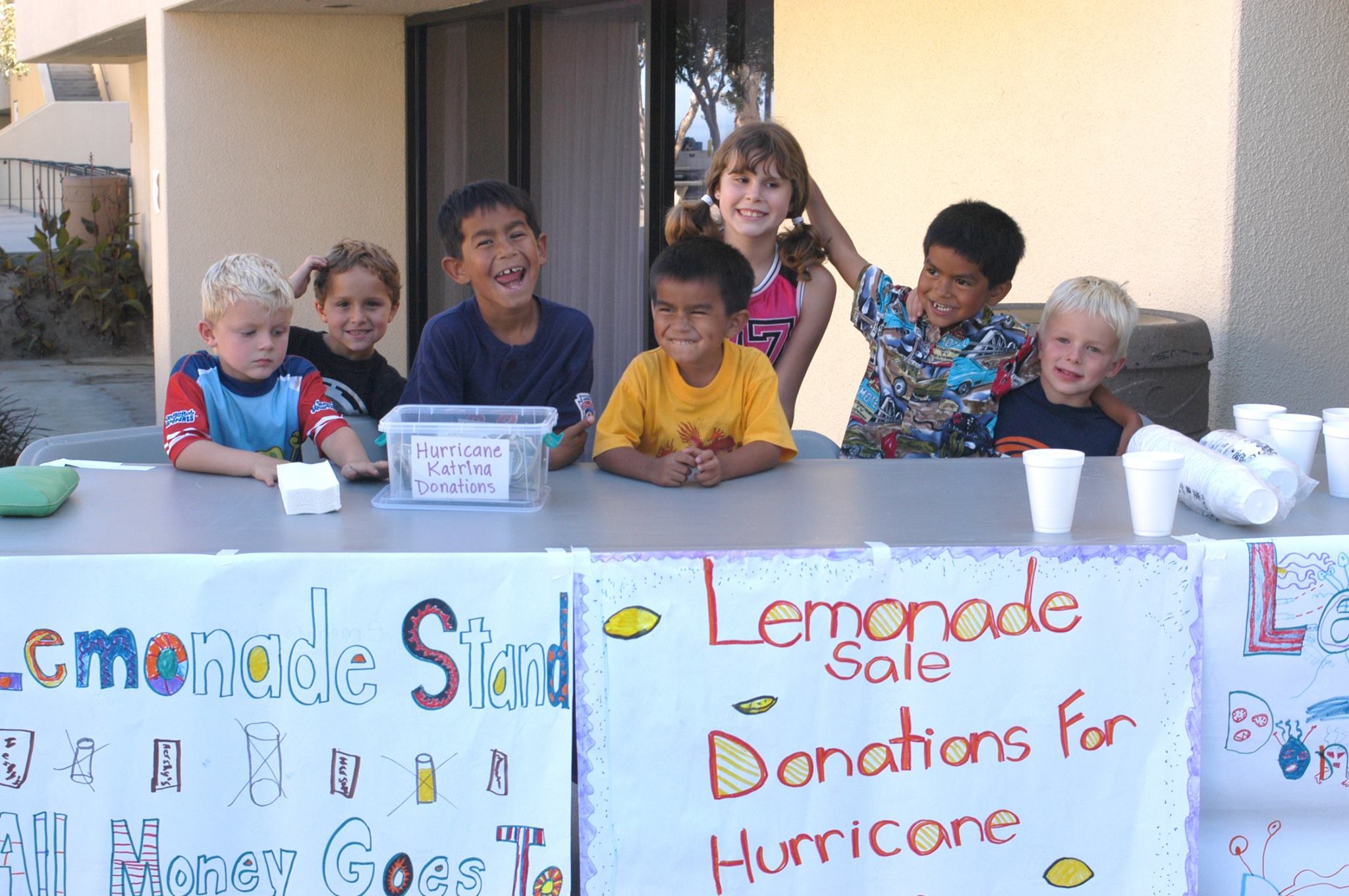
Last week, as Matthew grew in intensity, our good friend, Hung, shared a sweet Facebook post that featured a picture from 2005 of cute kiddos working a lemonade stand at Pepperdine University for the victims of Hurricane Katrina.  It touched my heart since the cute kiddos in that picture eventually became friends, classmates, and youth group buddies of our youngest daughter who lost the only house she had ever known in that storm two thousand miles away.  Who could have imagined that years later those same kids would be fast friends?  I am certain that the money collected that day did not specifically rescue us from our homelessness, but as I looked at that picture, in my mind it was as direct a connection as if they had hand-delivered the cash seen sitting in that Tupperware container.

Sometimes I feel overwhelmed by the great needs in this world and the inability to address them all.  As a recovered victim with the luxury of looking back, I can say that the sentiment expressed in both the Quran and the Talmud that whoever saves one life saves them all rings true.  And if we ever need extra motivation to take action, imagining that your pocket change will directly benefit someone you will come to know and love just might do the trick—even more so if you can sense how it will touch the heart of your Future Friend.

hk2

Make Them Know

“Make them know.”

In Jesmyn Ward’s award-winning novel, Salvage the Bones, Skeetah, a poor Mississippi teenage boy whispered that phrase to his treasured pit bull, China, before sending her into battle against her nemesis, Kilo.  I found it to be the most gripping line in a terrific book.

Salvage the Bones is a fierce story of a poor family as told through the eyes of a teenage girl, motherless, surrounded by men and boys, secretly pregnant, and trying to understand life as Hurricane Katrina warms up, bears down, and then inundates their world.  Among many compelling topics the novel explores is the idea of invisibility, which is where the phrase “make them know” leapt off the page and demanded my attention.  Unnoticed, overlooked, neglected—those are not good words, and undeniably not a good feeling.

My little family of four lost our home eleven years ago today in Hurricane Katrina, and although we surprisingly have fond memories of that great national tragedy due to a heightened sense of community and the opportunity to meet great-hearted strangers full of love, the raging waters surely had some of our tears sprinkled in.  And, to be honest, from time to time, a little bit of spit in it projected in anger toward institutions including but not limited to governments and insurance companies, pardon the legalese.

And I’ll tell you, if you ever want to get punched by someone from Mississippi (and who doesn’t?), then say that you thought Hurricane Katrina was just in New Orleans.  Please know that it wasn’t.

Make them know.

When you mix marginalization and anger and leave it in the microwave too long, you start to hear those words building in your heart.  And more often than not, they emerge violently.

So why does my family have fond memories of a tragedy in our lives?  Despite the infuriating institutions that failed us?  Despite the relatively speaking inordinate attention our New Orleans neighbors received?  It is because we were loved.  We were known.

In this tragic world of ours, where the recipe for violence is constantly prepared in the kitchen, the best advice I can offer is to be about the work of making others known.  Expecting others to do it themselves is not healthy for anyone.

Joy to the World

My family traditionally opened presents on Christmas Eve, so the Twelve Days of Christmas confused me. Heck, we barely did one. But I never found leaping lords and diverse birdlife, i.e., laying geese, swimming swans, turtle doves, calling birds, partridges housed in pear trees, and hens of French origin all that appealing in the first place.

But I get it now. No, not the lords and birds. I get the Twelve Days of Christmas because I counted and my calendar contains at least twelve holiday-themed events before we even make it to family on Christmas Day.

This observation comes with zero complaints, but it does feel a little disjointed with all the violence and fears and anger and arguments in the world right now—especially since the most recent tragedy occurred at a holiday party. Peace on Earth seems a little, well, laughable, if it wasn’t so sad.

The feeling is familiar. When Hurricane Katrina devastated our community in 2005, it seemed a little odd to have a holiday party that year, too. (We may have worn ugly sweaters, but mostly because that’s what arrived on the relief truck!) But I concluded then that we needed to celebrate even more. After all, given my particular faith tradition, the story of the season revolved around a family with nowhere to sleep.

Maybe that works this year, too. (There was after all a violent infanticide in the Christmas story.) I’m not thinking that “Peace on Earth” is such a terrific phrase right now, at least not if we expect signs of that coming true anytime soon. But, any celebration that talks about Hope seems timely. And anything at all that produces a measure of Joy sounds pretty good, too. As many songs and gifts and love and light as we can muster is a pretty fantastic idea when it’s dark outside.

If it takes twelve-plus days and parties to make a little dent in the darkness, then bring on the egg nog!

Resurrection

My faith leads me to believe in resurrection, not just as a one-time event but as a truth that can provide hope to any circumstance. This entire blog—Starting to Look Up—is a direct reflection of that idea.

Saturday marked the tenth anniversary of Hurricane Katrina, which received varying levels of attention throughout the country.  Some of you know that my family experienced Katrina firsthand and have heard more than enough about it from me; however, many of our new friends in California had no idea and have kindly expressed interest.  To the latter, you may be interested to know that I wrote a little journal that described our experiences in the months that followed the storm, and recently, although a bit embarrassed, I published the journal through a print-on-demand outlet–embarrassed in part from not appreciating my grammatical deficiencies until law school made them apparent, but also because I did not clean it up at all, i.e., no editing, no page numbers, etc. But that may be appropriate since the entire Katrina experience was a tad messy.

For a flavor, here is an entry from the book that was published as a letter to the editor in the Sun Herald newspaper for Christmas 2005. Now, in retrospect a decade later, I believe even more strongly in resurrection and ever-present hope.

I’LL BE HOME FOR CHRISTMAS

In August 1943, over six decades before Hurricane Katrina, Kim Gannon and Walter Kent copyrighted a song titled, “I’ll Be Home For Christmas.” That same year Bing Crosby recorded their brand new song, and it became an instant holiday classic. For its first Christmas, it comforted thousands of American homes ripped apart at the hands of the Second World War, but this was only its big beginning. It has comforted many more every Christmas season since.

There is something both mournful and peaceful about the tune and lyrics:

I’ll be home for Christmas / You can count on me
Please have snow and mistletoe / and presents on the tree
Christmas Eve will find me / Where the love light gleams
I’ll be home for Christmas / If only in my dreams

It plays well in Mississippi this 2005 holiday season, too.

Long ago, I was taught the difference between a house and a home. A house (I learned) has a roof and walls, while a home consists of people. It was a clear distinction. Using these handy definitions of course, the tens of thousands of Gulf Coast residents facing the Christmas season displaced from their “houses” should just toughen up and be downright holiday-happy that they can be “home” for Christmas in a tent, or in a trailer courtesy of the Federal Emergency Management Agency, or even several states away from where their mailbox stood in August.

But I don’t like the definition. Not anymore.

I, for one, think ornaments lovingly handcrafted by sticky three-year-old hands from years gone by are an important part of a home. And I think pictures of Christmases past, with fresh looks of surprise at the sight of a newly-opened presents, are just a downright vital part of a home, too. You can disagree all you want. And I think rarely-seen homemade videos of the last Christmas together before the kids took off for college, and cookbooks with that special recipe for fudge, and that Bing Crosby CD we always listened to on Christmas morning, are all very important ingredients in this wonderful word called “home.”

And this Christmas, thousands upon thousands of these precious ingredients are piled in a landfill somewhere. This is why I think a lot of things about this particular Christmas season sucks. Pardon my French.

Oh, but we’ll make the best of it. There will be downright cute attempts at making a FEMA trailer (of all things) festive. There will be Christmas dinners in hotel rooms and readings of “The Night Before Christmas” with more family members in residence than normal, and important explanations that Santa Claus not only comes down chimneys, but he also comes right through the flap on the tent.

We’ll do our best. And Christmas, believe it or not, will still help us. After all, it revolves around the story of a displaced family living in a barn. And how that story is the birth of hope for the whole world. We need to hear that story most desperately this year.

But in spite of it all – even while considering the very source of hope – we will sing that old Bing Crosby song with extra meaning this year.

Yes, we residents of the Gulf Coast will be home for Christmas, but this year, it will only be in our dreams.

Life with an Exclamation Mark

IMG_0572

I took this picture in a little house in South Mississippi thirteen years ago before my daughter Hillary’s first day of kindergarten at Magnolia Park Elementary. Three years later, Katrina did shameful things to that little house, but this picture survives and brings its own flood of memories.

Yesterday, Hillary graduated from Malibu High School, and I am a proud and thankful dad.

You may recognize me from the NA (“Nostalgics Anonymous”) meetings, but I am not a sad nostalgic. Instead of asking What happened to my little girl?, I choose to say Look what happened to my little girl! The punctuation is important. Approaching life with a joyful exclamation mark is preferable to a despondent question mark.

As a nostalgia-holic, I began rummaging through old computer files and stumbled across a journal entry from when Hillary was six years old:

Recently, I was snuggling up with Hillary on the couch, tickling her and playing, her infectious giggle in steady use. I said something about her being my angel, and then I feigned seriousness and asked her, “Are you an angel, or are you just a regular human being?” She giggled her honest response, “I don’t know.” After a moment of playful reflection, she added, “I feel like a regular human being.”

I’m still not convinced but am as proud today as ever.

Whatever the marker in life—from first days to last days and all the big days in between—I side with Viktor Frankl in saying that although Attitude is a required course in life, there are several from which we get to choose. Instead of weeping for days long gone or frustrated longing for days yet to come, I choose to celebrate life’s markers with wide-eyed wonder.

Look what happened to my little girl!

1