Well, at least no one can say that Jody and I were boring in the first half of the 2020s.
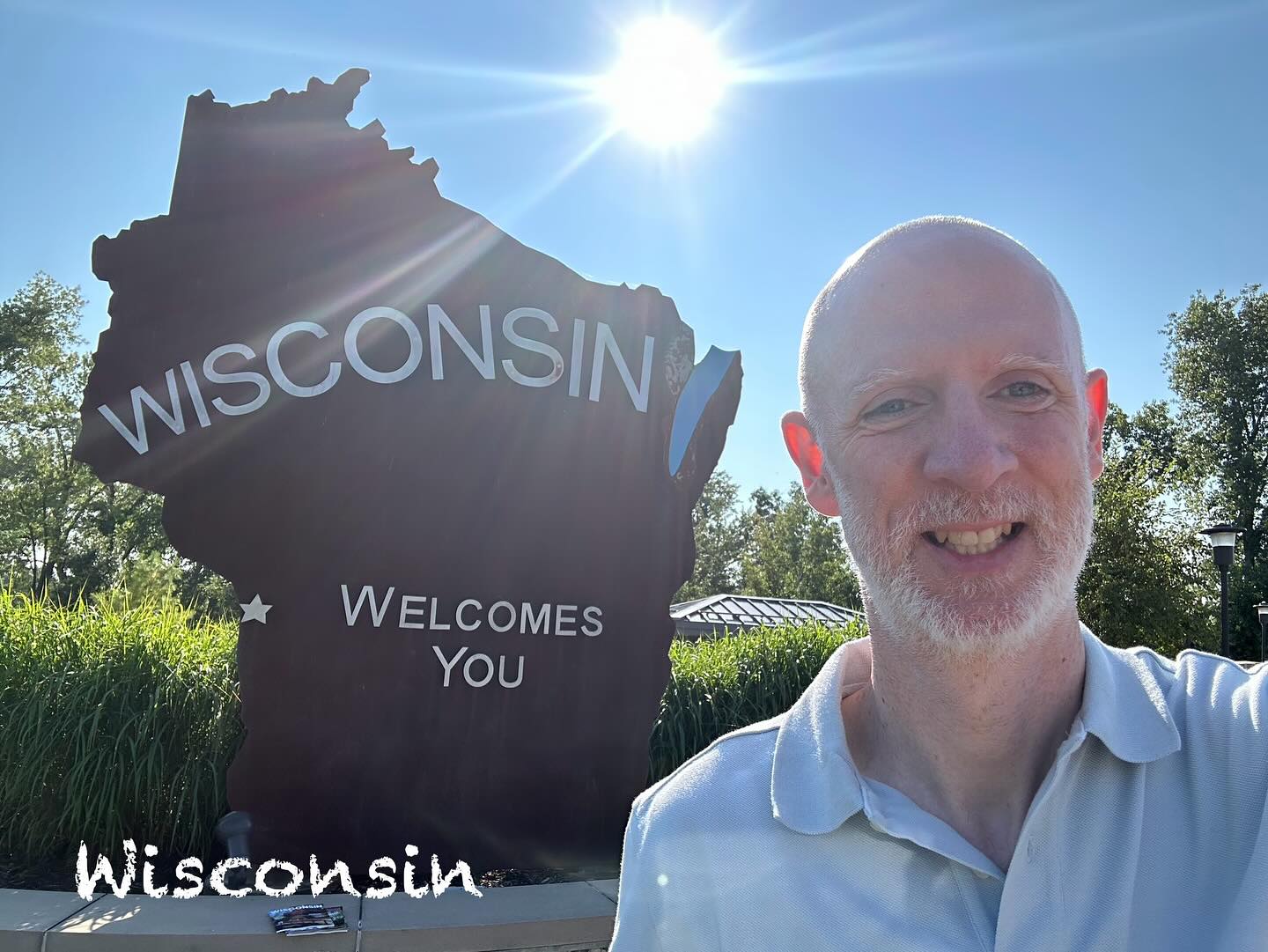
All that to say: I recently moved to Wisconsin. [Pause for predictable reactions.] And, Jody will join me here soon. We anticipated the jokes about our pinball-machine behavior over the past few years,1 but in all candor, a certain Rhett Butler quote comes to mind. It has been a bumpy road that led to Wisconsin, but it is our road and only our road, and we are grateful for the ride as well as its destination.
Six states now. Six! Six DMV visits. Six license plates, and no, we’re not aiming for the complete set.
You won’t believe me, but as a general rule I believe that staying put should be the default life position. Chasing greener grass is a fool’s game. (Although, full disclosure: I have found that the grass in Wisconsin actually is greener than the grass in Southern California (but that’s beside the point).) Chasing excitement and/or fleeing boredom is not the way to live in my opinion, but sometimes . . . some-times . . . there may come a time to move on.2 I cannot say when that might be for anyone else, if ever, but I can say that if the call ever becomes clear, my experience is that it is worth listening.
For dramatic example, I am currently reading Isabel Wilkerson’s beautiful and important book, The Warmth of Other Suns, a masterful chronicling of “The Great Migration” of Black American citizens to the North and West from the Jim Crow South between 1915-1970.3 I am astounded both by the relentless instances of racial terror that led to the diaspora and the incredible courage required to undertake the harrowing journey.4 Your possible journey to some version of freedom (and mine) will be ridiculously less challenging, less dramatic, and less heroic than the stories Wilkerson shares of other journeys that led human beings, for instance, from Arkansas to Wisconsin, but their stories display in unforgettable fashion that human beings can pursue freedom in even the most terrible of circumstances.
Our journey is not book-worthy, but it is incredibly special to us. I love my Arkansas roots, but if you became a part of our life story in Mississippi, or California, or Tennessee, or Illinois, or California (again) — and you know who you are — then each move was more than worth it for us. I know I speak for Jody when I say that our lives are incomplete and unimaginable without you in it.
So you can laugh at us for moving again all you want, because we know what awaits us here in Wisconsin before it even happens: More special people. Plus, this time, in private and personal ways, our own unique type of freedom.
Stay tuned if you are at all interested as I resume my blogging habit, and I will be sure to narrate as our life unfolds in this new and beautiful part of the country.
And Good Lord, if I might put in (another) request, may whatever years we have left see far more planting and much less uprooting.
Nearly six million human beings made the journey. ↩︎
Wilkerson shares the story of Arrington High, a native of Mississippi who was imprisoned in an insane asylum in the 1950s for speaking against injustice, helped to escape and cross the state line into Alabama, and then nailed into a coffin and shipped on a train to Chicago. ↩︎
This essay was first published in The Smart Set on 2.26.24.
I specifically hoped not to be an old person that longed for the good old days, but, well, here’s the deal: I remember when binge was considered a bad word. Now, it is a weekend plan. And I’m not talking about those darn kids today; I’m talking about my weekend plan.
Decades ago, the only time I heard the word was when someone was characterized as a “binge drinker” or possibly a “binge eater” and such descriptions were assigned with pity, or sometimes even, disdain. It was never a compliment, and it surely was never a self-description. Now, I and a zillion others proudly anticipate, for example, “binging” a television series as a source of entertainment, and strikingly, even as a source of self-care.
Stay with me now.
Here’s what has me perplexed: The word itself means doing something excessively, and to do anything excessively means doing it more than is reasonable or acceptable. If that’s still true and the English language hasn’t shifted just yet, then to binge means to do something too much.
All this to say: I’m (re-)watching The Office. Hilarious. So, so funny. Deep, loud laughter emerges from my body in a way that frightens the neighbors. It is so good. But I can’t seem to stop! An episode ends, and I know that I said it was the last one for the night, but another begins, and the opening is so funny, so I think that I’ll just watch a couple of minutes, and then it’s the entire episode, and then it ends, and I know that I said it was the last one for the night, but another begins… You get the picture.
I should clarify that “discipline” is my greatest strength, and what I find concerning is that more and more I recognize in myself the lack of my greatest strength, and in more ways than watching The Office. This is why I am writing today, to sort through my troubled mind, as well as processing what I suspect is a broader sociological phenomenon.
________
In 1992, Bruce Springsteen released the album, Human Touch, and the third track was a little song titled, “57 Channels (And Nothin’ On).” It was not one of his biggest hits, but it was one of the most-played songs on rock stations that year, and I remember it well. The Boss sang:
I bought a bourgeois house in the Hollywood hills With a trunkload of hundred thousand-dollar bills Man came by to hook up my cable TV We settled in for the night my baby and me We switched ’round and ’round ’til half-past dawn There was fifty-seven channels and nothin’ on Fifty-seven channels and nothin’ on Fifty-seven channels and nothin’ on
Is that not hilarious? Only fifty-seven channels? Those of us who use “fifties” to describe our age now remember what might prompt such a song. We remember a time with thirteen channels, although in reality, there were only maybe four. The Boss’s incredulity was understandable to most of the world in 1992: how excessive was fifty-seven channels!?! Now, we have fifty-seven apps on our televisions, each one filled with never-ending options.
The shift has been nothing short of remarkable. It goes beyond the number of shows we can call up at any given time—even the shows we watch often have options within. For example, it isn’t enough to watch the news: You watch the crawl at the bottom of the screen to get more news than the news you are currently watching. It isn’t enough to watch a game: You watch the crawl at the bottom of the screen to get more scores than the game you are currently watching, including statistics, win probabilities, betting lines, fantasy updates, and more.
[Adopt crotchety-old man voice:] In my day, you had to get up off the couch just to change the channel! And in my day, there were these things called “commercials” that interrupted the show without a skip option if you can believe it. And craziest of all: After your favorite show ended, you had to wait an entire week to watch the next episode.
I guess I’m wondering if there might have been some good in those old days? Doesn’t sound right, but maybe something about less options and more waiting?
_______
My dad was a child in the 1920s, a full century ago now, and he told a certain story that may or may not have been true. Honestly, it sounds more like an adventure of Tom Sawyer, but regardless, he told me that his first job was working in a general store and that on the very first day his new boss told him that he could eat all the candy that he wanted from the candy counter. So, day one, he ate himself sick of candy and soon discovered that he was never tempted to eat from the candy counter again. That was the story, and it was obvious that my dad admired the Solomon-like wisdom of that old storeowner.
Now, I’m afraid that such wisdom is outdated, too. I, for one, am sensing the tendency to eat myself sick of candy, then eat myself sick of candy again, and again, and again, and again. I’m talking way beyond television, of course. Overconsumption of snacks, or scrolling social media, or many other forms of entertainment, among other possibilities. The sky appears to be the unfortunate limit.
When I think back to my law school days, the work product I am most proud of is a paper I wrote for Professor Ellen Pryor in a seminar course on “Law and Morality.” I titled my paper, “Enough Already: How Lawyers Can Respond to the Problem of Greed.” Within, I wrestled with the question: How should a lawyer respond to greed? And as I considered the various definitions of the ancient concept, one of the original seven deadly sins, I found a contemporary theologian’s one-word definition the most compelling. Stanley Hauerwas answered an interviewer’s question, “So, what is greed?” with a single word: “More.”
That seems to work for the binge mentality that I am wrestling with today. More. Always more. Never enough.
To really get ugly, gluttony is yet another of the seven deadly sins, which I once saw defined as habitual greed. “More” but as a habit. That starts to sound disturbingly familiar. I wonder if gluttony is just another way of saying binge mentality?
_______
I like to picture Jacques Ellul at his writing desk in the early 1950s, somehow able to peek into our present century. The French sociologist published a book in 1954 that was later translated into English as “The Technological Society.” If you can imagine, in the year before Bill Gates and Steve Jobs were born, Ellul published a book that predicted that technology would be presented as a servant of humanity but would eventually overrun the world and become its master. In the foreword to the English translation, famed American sociologist, Robert K. Merton described Ellul’s argument by saying, “Ours is . . . a civilization committed to the quest for continually improved means to carelessly examined ends.”
I’m old enough now to understand and remember the desire for improved means. I spent a lot of time watching television as a child while wishing for improved means. Now, I’m wondering if anyone spent real, slow, quality time examining the ends that those improved means would produce? The ends that we are now experiencing?
_______
Stephen Covey shared an illustration in one the books in his Seven Habits empire. Covey proposed something he called the “law of the farm” in contrast to something like cramming for an exam in school. For the latter, you might be successful, but cramming simply will not work on the farm. You can’t cram for harvest. You have to plant in a certain season, water, and cultivate, and only when you have patiently and consistently performed all of the above and the time is right will you reap the harvest. On the farm, all things must come in due time.
Maybe one of the things that works best by the law of the farm is a human being. Maybe, we discover our best when we don’t cram too many things in at once. Maybe, we discover our best when we aren’t rushed, when we learn to wait, and when we go without for a while—until the time is right. Maybe, in all of our progress, we have focused too much on the means so that we have forgotten what we should aim for in the first place: a deliberate rhythm that produces a fruitful life. Maybe “enough” is a more important word to learn than “more.”
_____
The Judeo-Christian tradition values the concept of shabbat, or Sabbath, a day set aside for rest and contemplation. The weekly practice creates a rhythm of life: work; work; work; work; work; work; rest; work; work; work; work; work; work; rest; and so on, and so on. It sets in place a habit that reminds you that you actually can stop, regularly, rhythmically. It reminds you that you can do without for a little while. The concept even extends to agriculture, where land lies fallow in regular rotation so that the very earth is renewed and replenished—the law of the farm.
Today, I am considering whether we should devote increased attention to anything that causes us to stop, to rest, to say that’s enough. Anything that trains us to do without and to refuse the temptation to always say yes to more. If not, the continued acceleration in the availability of more and more and more of the things we desire might not end well.
I’m probably being a bit too dramatic. As always, I remain hopeful for the future, but as the great Michael Scott once said, “I’m not superstitious, but I am a little stitious.”
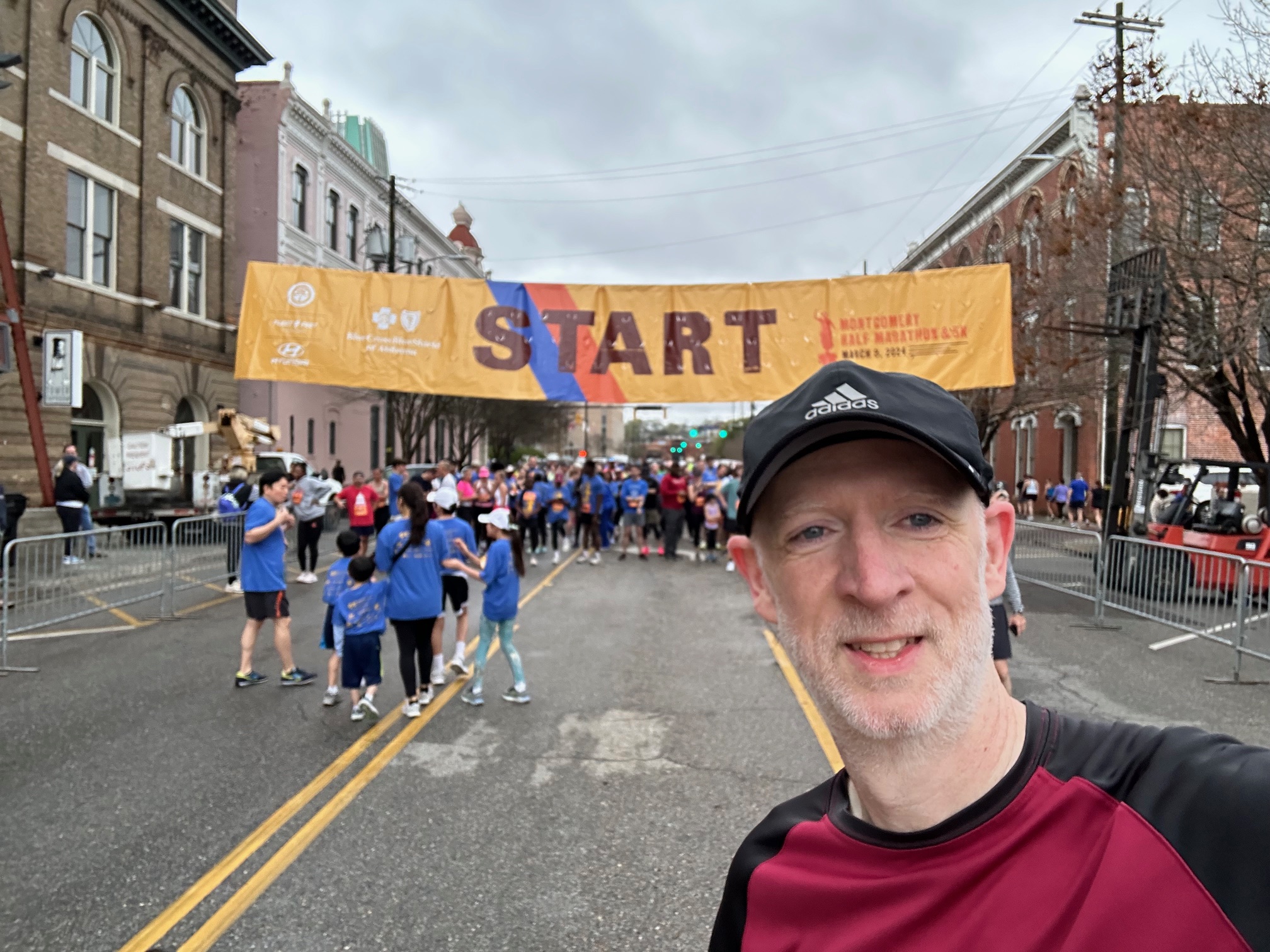
Every weekend I like to go for a long run, so last Saturday when I was in Alabama on the Nootbaar Institute’s “Faith & Justice” trip, I left the hotel about 6:45am to explore. I soon noticed several other runners, a surprising number, and then noticed they were all wearing racing bibs. I then rounded the corner and stumbled upon a road race preparing to start.
I asked one of the runners about the schedule, and he said that a half-marathon was starting at 7am, and a 5k would follow at 7:15am. I looked at my phone and saw that it was 6:50am. After two seconds’ worth of thinking, I raced back to my hotel, up to my fifth floor room to snag a credit card, then back to the race site to see if I could register for the 5k. The gun for the half-marathon went off just as I made it to the registration table, and I was the last person to register for the 5k. Once registered, they provided a bag full of race goodies, which led me to realize that I had nowhere to store it, so I ran back to the hotel a second time to store it during the race, then raced back to the starting line just a few minutes before the 5k began.
There were 500+ runners in the 5k, and I may not have been fully awake, but when the gun went off I took off and won my old-man age group and came in maybe 10th or 11th overall. Life is just funny sometimes.
I’m not 100% sure why I’m telling you all this story. Maybe just an encouragement toward physical fitness. But maybe the encouragement is this: When you walk out the door each morning to face another day, keep your eyes open — you just never know what you might discover.
“Sleep is the single most effective thing we can do to reset our brain and body health each day.” – Dr. Matthew Walker, Ph.D.
In early 2015, I asked the following question to Pepperdine’s law students: In comparison to when you first entered Pepperdine School of Law, how would you now describe your practice of rest (e.g., time off, relaxing, Sabbath)? The results: 40% indicated no change; 19% answered stronger; but 41% said weaker. When disaggregated, 52% of first-year students said their practice of rest was poorer than when they started law school. I was not even close to surprised. As the Australians taught us children of the Eighties to say: Been there, done that.
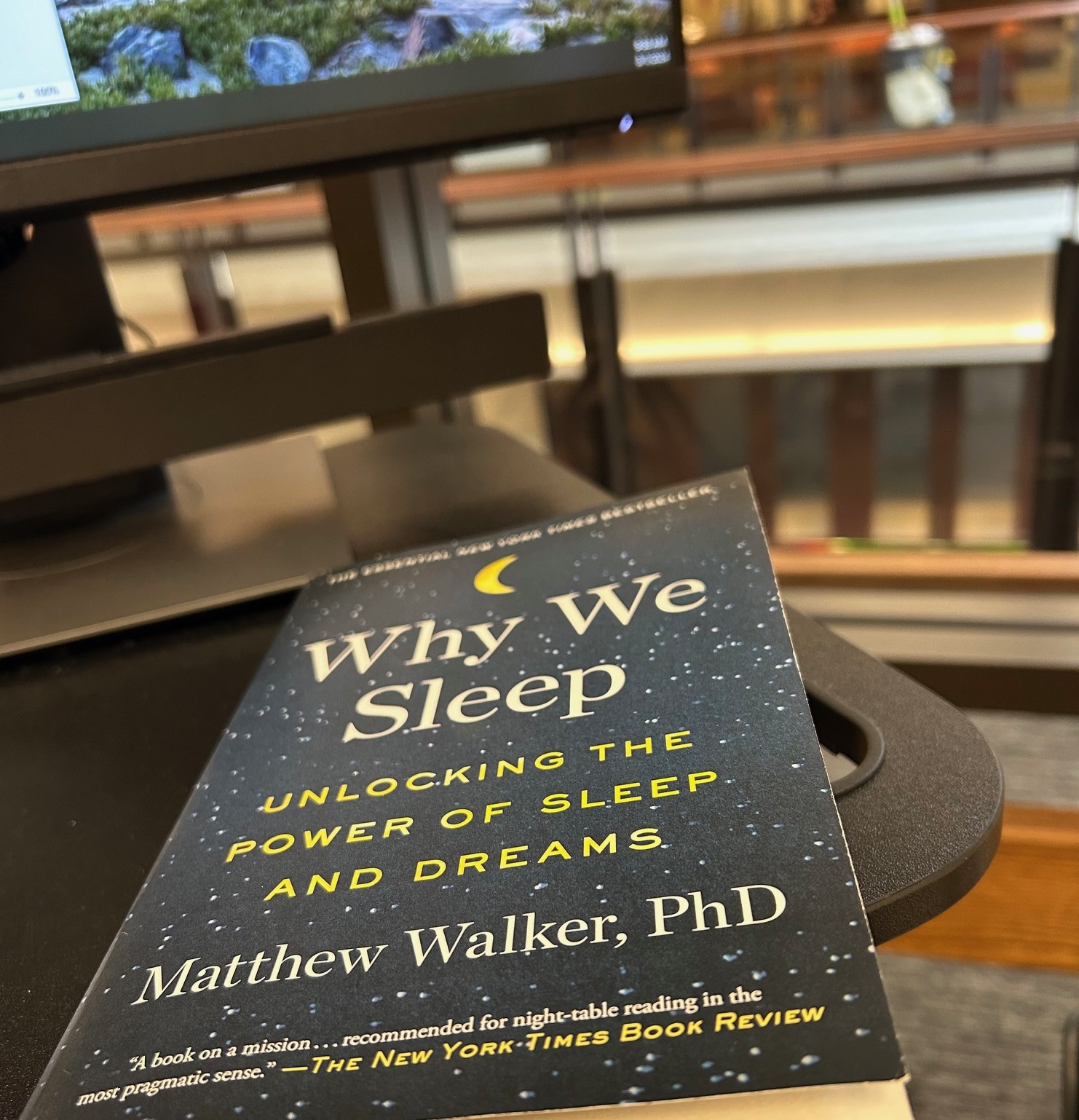
But I was never happy about it. Last semester, nearly a decade later, after discussing sleep troubles with a new law student, I decided that I should at least try to learn something about sleep, so I tracked down a book: Why We Sleep: Unlocking the Power of Sleep at Dreams, by Matthew Walker, Ph.D. I don’t know enough about science to confirm its veracity (there have been critics and controversy), but I do know that after reading it, now I’m having trouble sleeping. But because I don’t want to leave you out of the misery, let me share some of the disturbing (though sometimes cool) information that I read with you. You’re welcome in advance.
For starters, and on a positive note, all animal species seem to sleep, and part of why we humans are awesome may be because of our unique and natural sleep patterns. Specifically, compared to other primates, we sleep in a bed or on the ground instead of perched on tree branches, which allows us a disproportionate amount of REM sleep (the sleep when we dream) because the body is completely paralyzed during REM sleep, which isn’t a terrific idea if you are perched on a tree branch. And while in the cool facts portion of my essay, Walker claimed that the reason we are completely paralyzed during REM sleep is so that we won’t act out our dreams!
Our inordinate amount of REM sleep seems to set us apart in a couple of major ways: First, it heals and helps our mental and emotional health; and second, it enhances our creative and problem-solving abilities. Remember being told to “sleep on it?” Actually, great advice! Although in fact, all sleep phases are beneficial, and messing with any of them causes actual brain impairment.
The human body is fascinating. Just before a baby is born, its amount of REM-sleep is at an all-time high, approximately twelve hours a day. In year one, that declines while deep NREM sleep begins to increase, peaking just before puberty before retreating. The deep NREM sleep during childhood is sculpting the brain, but we all probably remember that it seems like construction halts during the teenage years when all sorts of irrational silliness ensued. Actually, the brain is still maturing then, but rationality is the last to arrive on the scene. Sleep then naturally settles into a predictable pattern in early adulthood. When left to our natural tendencies, human sleep is apparently “biphasic”—about seven actual hours of sleep at night, followed by an hour nap in the early afternoon—but that train apparently left our sociocultural station a long time ago.
In all our societal advancement, however, we have apparently created ways to screw up everything. Have you ever wondered why American life expectancy sucks relative to our immense economic and medical resources? The myriad ways we have created to destroy natural, human sleep patterns and a fingers-stuck-in-the-ears-while-bellowing-la-la-la-la-la-in-the-face-of-research posture toward the importance of sleep may be teensy reasons worthy of consideration.
O sleep, how do I screweth-uppeth thee? Let me count a couple of ways: Darn Thomas Edison for saying let there be light when there shouldn’t be light, and darn alarm clocks (and especially snooze buttons) for daily shocks to our hearts and nervous systems, sometimes multiple times a morning, telling us to get up when we aren’t done sleeping. And since REM sleep is disproportionate toward the end of the seven-to-nine hours of daily sleep we reportedly should be experiencing, about half of all adults in developing countries may be missing out on the unique human benefits that purportedly helped us develop in the first place.
And the consequences are tragic: Weakened immune systems, including an increased risk for certain cancers. Contributions to depression, anxiety, and suicidality. Impaired memory (and while I’m on memory, sleep aids memory both before and after learning, so all-nighters for work or school may be completely counterproductive). Cardiovascular disease. Increased propensity for weight gain, obesity, and developing type 2 diabetes. Drowsy driving—a driver that got up at 7am and heads home from the club at 2am without a single drink is reportedly just as impaired as a legally-drunk driver.
The result? As Dr. Walker wrote, “Relative to the recommended seven to nine hours, the shorter your sleep, the shorter your life span.”
Now we aren’t completely oblivious to our sleeping problems, but it seems that we are unfortunately ignorant to both the extent of the problems and the actual solutions. We typically mitigate with substances, including sleeping pills and/or alcohol and/or caffeine, that can actually do real harm instead of help.
So, what can I do about this to help our law students? I’ll have to get back to you on that one. This seems to be a larger problem than my present work environment, so that’s a major challenge to undertake. But I like major challenges. And it seems far too important to ignore.
What I will do is share with you my summation of the twelve tips for healthy sleep that Dr. Walker shared from the National Institute of Health at the end of his book and hope that someone finds them helpful:
Go to bed and wake up at the same time every single day.
Exercise, but not too late in the day.
Avoid nicotine (period) and caffeine in the afternoon/evening.
Avoid alcohol before bedtime.
Don’t got to bed too full or too hungry, and avoid beverages late at night.
Avoid medicines that disrupt sleep as much as possible.
Don’t nap after 3pm.
Do something relaxing before bed (not on a phone or computer).
Take a hot bath before bed.
Make your bedroom dark, cool (e.g., 65 degrees), and gadget-free.
Get at least 30 minutes of natural sunlight each day (ideally, an hour each morning).
If still awake in bed after 20 minutes, get up and do something relaxing until you are sleepy.
To quote the late, great Edward R. Murrow, “Good night, and good luck.”
Does “hopeless romantic” mean that you cannot help but be romantic? That’s my impression. Could it be instead that you have no shot at ever being very good at it? Asking for a friend.
My life posture is to invest in the community I find myself in, which is far less complicated if you do not move around the country every couple of years. It is difficult leaving people and places that you love, but fully investing in a new community means, for me at least, that I cannot devote too much attention to the rearview mirror. Being wistful for days gone by can be debilitating, but every once in a while, a thought will sneak in from the past that makes me wistful anyway.
Somewhere in our North American tour after leaving Los Angeles in 2019, I’m sure it was around Valentine’s Day, I got all wistful when remembering a tradition that I developed while here in the City of Angels when I would get up even earlier than normal on Valentine’s Day, beat the crazy traffic to Downtown L.A., and snag a parking spot near the Los Angeles Flower District. The Flower District advertises “a spectacular and unequaled array of the freshest flowers, greens and fillers available, many of them California grown, along with an impressive, overwhelming selection of floral supplies.” All I know is that they have a heck of a lot of flowers and that I felt the strong need to go there each year and buy my wife roses for Valentine’s Day.
I understand that you can order flowers in many ways that are far more convenient than driving to Downtown Los Angeles, but I found that I really missed the inconvenient approach. Getting up extra early was never a problem on those occasions. There was something about the experience itself that made it wonderfully worthwhile. Not the shopping or purchasing process so much (actually, I was always utterly confused while there), but the whole idea just felt special.
This year, on our first Valentine’s Day since moving back to L.A., I knew what I had to do.
I arrived at the Flower District at 5:52am on Valentine’s Eve, utilized what appeared to be a legal parking space, and stepped into the craziness. As expected, I was soon overwhelmed. It was dark and yet colorful, and I felt like I joined a swarm of ants attacking an unattended slice of red velvet cake but that I was the only ant unaware of where I was going. I noticed lots of duos carrying long, Christmas-tree-sized cardboard boxes, and they definitely knew where they were going. I’m not sure who all was represented in the swarm, but I assume wholesalers and vendors, small business owners and growers, and maybe even silly husbands like me, although I can’t be sure. I simply wandered in and out of shops, deflecting all the can-i-help-yous until I saw what I wanted, which was news to me, too.
Was I supposed to barter? Well, I didn’t. The price quoted was less than what I would have paid ordering those flowers from the comfort of anywhere other than in-person in Downtown Los Angeles, so I just handed over the cash. Thankfully, I am freakishly tall; otherwise, getting out of the chaos carrying a large vase of roses might have been even more eventful, but by 6:16am, I was back in my car and on the road, driving home one-handed to protect my floral purchase through the burgeoning automotive ant swarm.
I made it home an hour later and proudly presented the roses to my wife, who smiled and laughed the sort of laugh that says, “I am married to a certifiable idiot, but I think he must really love me.”
Which was the reaction I hoped for.
To be candid, I don’t think I am a hopeless romantic under either definition. I like to think of myself more as a hopeful romantic—hopeful that I will be better at it along the way.
Given such a goal, I am glad to be reunited with the Flower District.
I woke up two minutes early, turned off the alarm, and crawled out of bed at 5:28am, glad to go for a run, while never excited to crawl out of a warm bed in the darkness. I exercise daily, but once a week I drive to Malibu Colony Plaza in search of a flat place to run that also has easy parking. I like it there, although I do not care for the early morning darkness in the winter months. On Thursday I was glad to notice a slight hint that the light of spring is coming.
I stretched a bit and took off as normal, trying to wake my legs up, too. My pace is always measured at first, careful not to start too quickly, but on that morning, I soon added a short sprint as I dodged leftover rain puddles alongside the dangers of PCH traffic.
Near the Malibu Pier, I noticed what appeared to be an unhoused individual on the sidewalk ahead, lurking, if you will, in the shadows. I often visit with unhoused people, so this was nothing extraordinary, but knowing that many battle mental illness makes me a little wary in early morning encounters. I noticed that this young man was gathering his things and shuffle-jogging ahead, presumably to get out of my way, so I gave him a wide berth and passed by with several feet between us. We exchanged good mornings, and I added a how’s-it-going, which, although a standard greeting for me, may not be the most thoughtful question for an unhoused man carrying a large pack on his back before six o’clock in the morning. But his response, half-shouted with what I can only describe as great joy, and spoken like he was glad that someone asked, was, “I’m doing f***ing great!”
Well, alrighty then. I was glad to hear it. My mind began to cycle through options for why he was doing expletively great at such an hour, but ultimately, I just chuckled and took it at face value, thankful that he was having a fantastic morning.
After reaching the halfway mark I fist-bumped a power pole and turned back, now in a much better mood, and at some point, encountered my new friend again where I said, “Have a good one, friend.” He replied, “You, too, brother,” with “brother” said in a way that led me to believe that if I immediately fell and busted my head open, I was 100% convinced that this man would take care of me like a brother. I can’t explain how I knew that from a word spoken in passing by a stranger, but I knew it to be true. What a warm and peaceful thought in the forty-degree weather.
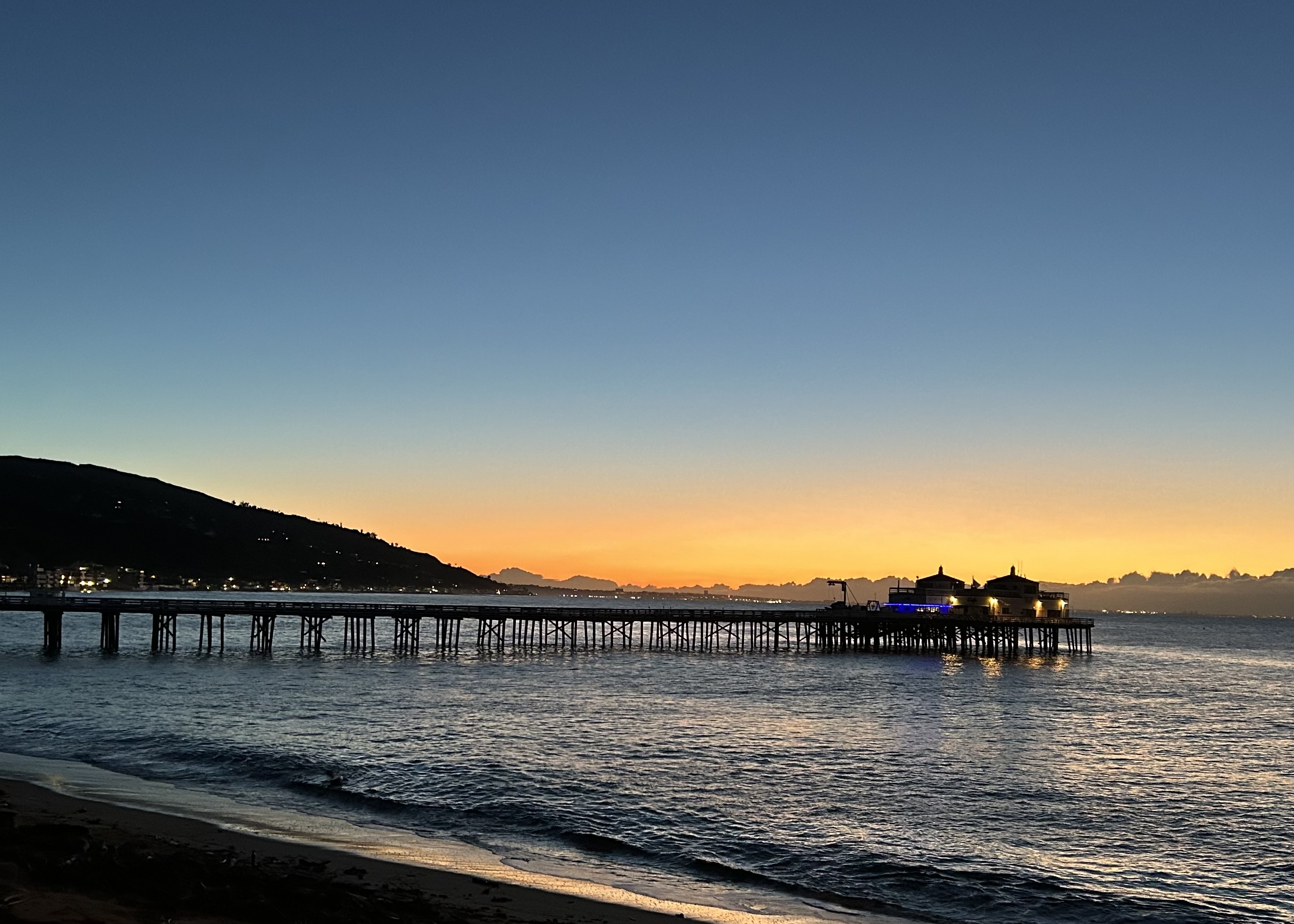
At the Malibu Pier again, thanks to ever-lighter skies, I stopped long enough to take a picture, then took off for my final mile of the morning. I may get my runner’s card revoked for this confession, but I don’t think I have ever felt a runner’s high; however, when I started running again, I felt like a deer bounding through the woods, bouncy and strong, and that last mile was phenomenal. I don’t know that I have ever felt better on a run
My short drive home felt very different from my short drive there, and when I pulled into the neighborhood it seemed that no one else had even stirred from their slumber. Before the sun had truly risen, it felt like I had already had an incredible morning.
I felt the need to write about that first hour of Thursday morning but wondered about the moral to the story. Why should anyone care about that first hour of my day?
Maybe the moral is that who needs a moral to a story when you stumble on anything good? In a life that can be too cruel too often, notice all the good moments. They seem to get us through the rest.
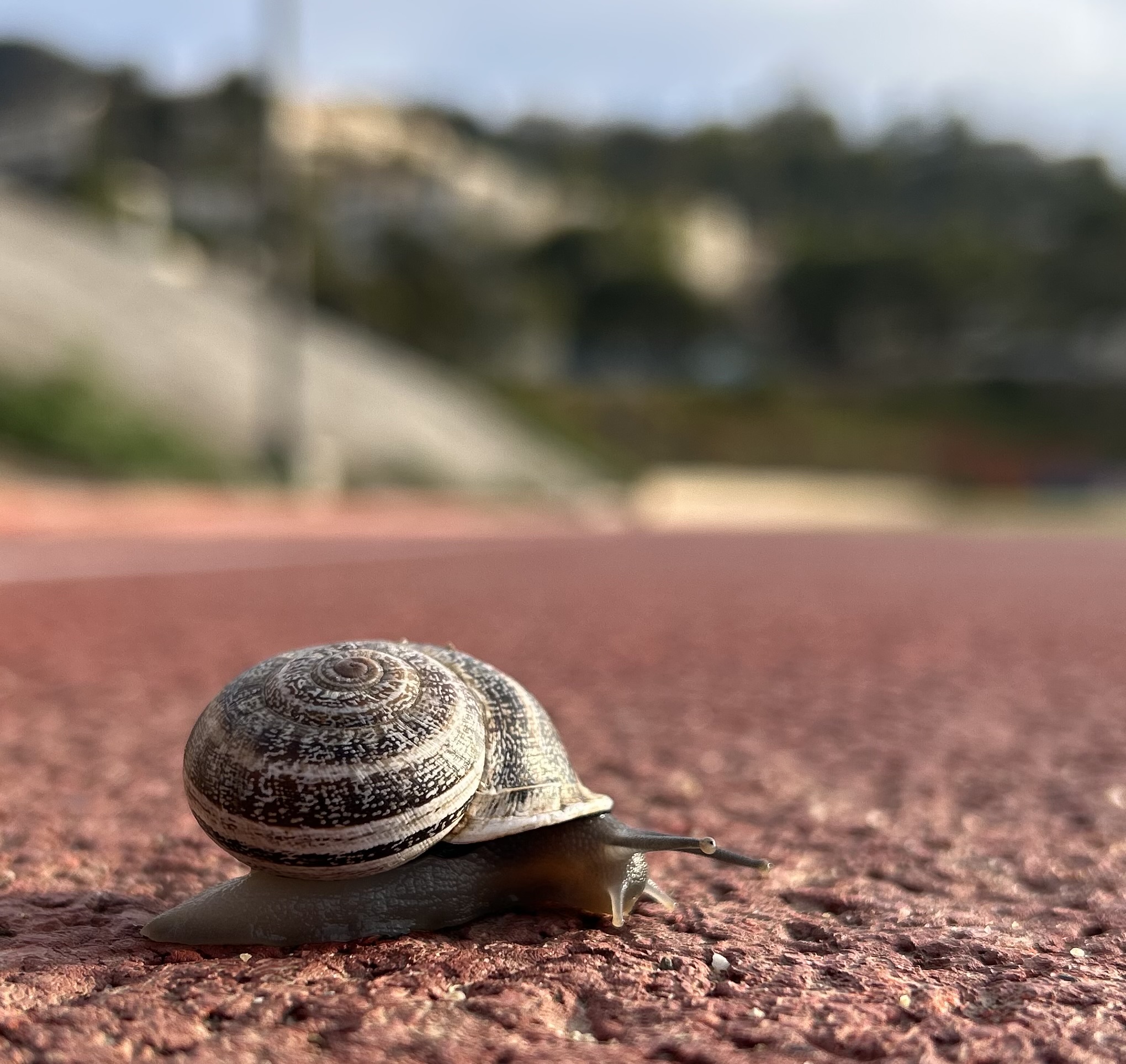
Laps on a track can be tedious for a runner, especially when you can almost sense the nearby beach and mountain trails wondering why you are running in circles instead of enjoying their spectacular views. So maybe I was just bored and looking for entertainment when I noticed the snail there on the track with me. Now I’m not known to be fast, and I don’t want to brag, and pardon me for being crass, but I was absolutely kicking that snail’s ass—if snails have asses. Again, not to brag, but in the time it took me to run twelve laps — three miles! — the snail had only made it across two or three lanes. Regrettably, I don’t think the snail even knew that you are supposed to run on a track in a circular fashion, so its lack of progress was sort of embarrassing. I just couldn’t break the news, but I kept watching on each lap, and that silly snail kept right on going.
I myself was on the track because I am a fifty-three-year-old man whose decades of poor posture produced a year of terrible lower back pain. The pain was so intense that I thought running was over for me entirely. Done. Kaput. Sayonara. But, surprisingly, I have been inching back toward where I would like to be as a runner. Inching, well, I guess, yes, now that I say it out loud, at a snail’s pace. I was specifically on the track that day to take it slow and easy so that I could continue for the long haul.
Huh. Interesting.
Maybe the snail and I have a lot in common after all, beyond our striking features. Stubbornness, for starters. Or, to place it in a more positive frame, perseverance. Confucius reportedly said, “It does not matter how slow you go so long as you do not stop.” I’m not 100% positive that Confucius spoke English, but I’m trusting this is somewhere in the neighborhood.
My primary physical talent is that I do not like to stop. That can often be a negative characteristic in multiple life areas, which is worth considering on another day, but today I celebrate the good in that part of my constitution. I may not be the smartest or fastest or strongest or funniest or best-looking or mechanically-inclined or able to leap even small buildings in a single bound – okay, a bit depressing to go on recognizing all the things I am not – but I have always been able to keep on moving, even when it hurts, and even when it is slow going. Sometimes, maybe that’s a pretty great thing.
I guess a snail running track can be quite inspiring when looked at from the right angle. When we gauge ourselves not by flashy victories but the ability to persist toward a destination, maybe we can be pretty inspiring, too.
It just occurred to me that the snail may have been crossing the track the entire time I was there simply to line up for the mile run. I wouldn’t be surprised, and if so, you go get ‘em my new snail friend.
If this condo is the last place that I live in this old world, I don’t think I will be missing out on anything. That’s how sucky I think moving is at this point in my life.
When I was born among the dinosaurs back in 1970, my parents brought me home to a tiny rental house on West Mueller Street, which also served as my port of departure when I packed a happening yellow beige Pontiac 6000 and drove away to college in 1988. In the thirty-five-plus years since, it feels like all I have done is move.
Just in college, I lived in one dorm, two houses, and four apartments, followed by yet another apartment upon my return from college. Next comes marriage, and in our thirty years together we have lived in sixteen “homes” in five states. Our longevity record for a single address is five-and-a-half years, and that was the house that was destroyed by a hurricane, which at the time seemed a possible sign that we should keep moving to avoid being smacked by the universe.
Thus, I repeat: If I never move again, it seems that I have enjoyed just about all that there is to be enjoyed about the experience.
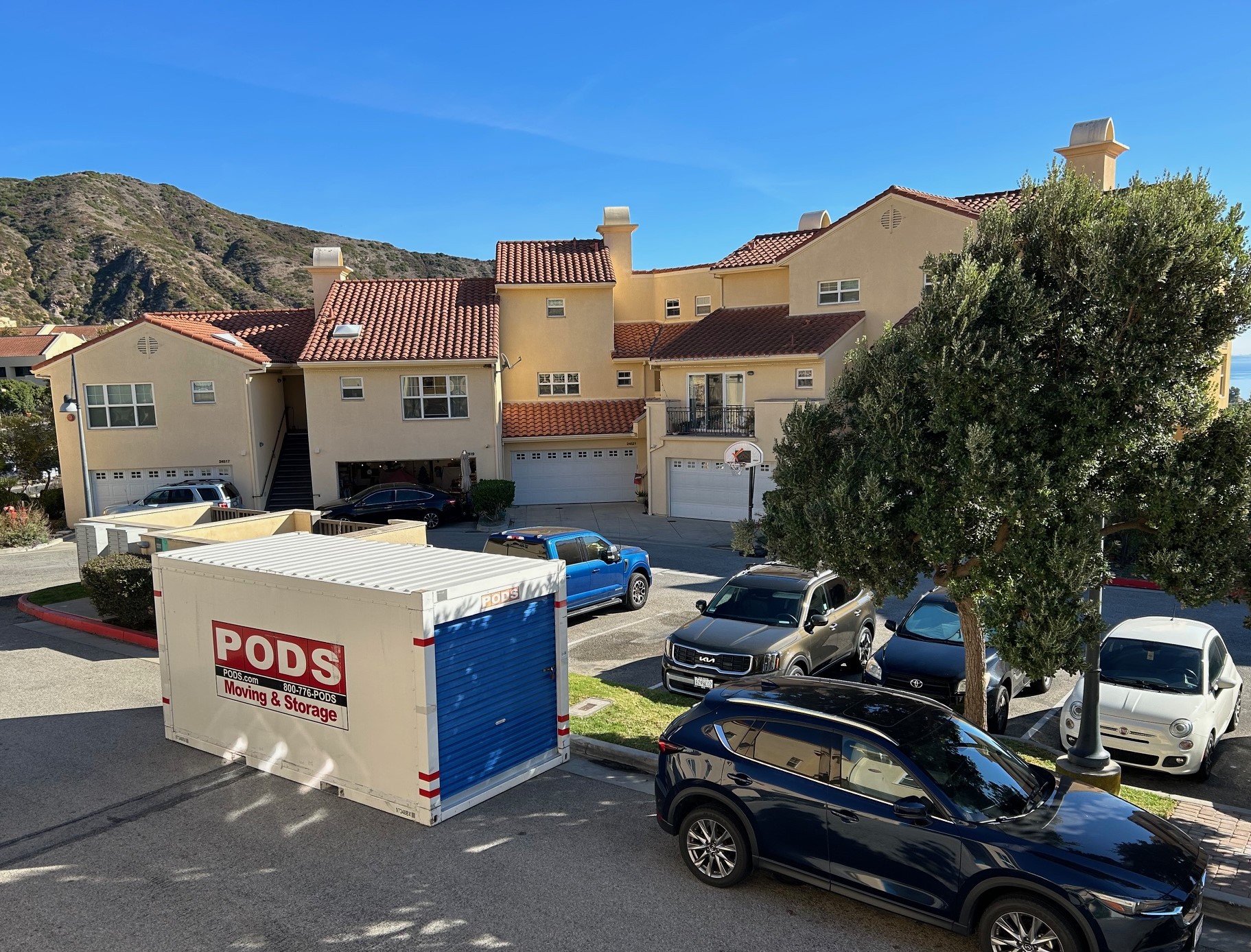
We returned to California last summer, which actually turned out to be a unique move for us. We moved to a tiny apartment, really a hotel room, expecting to move back to one of our old neighborhoods at some point in the year ahead; so, for the first time we rented a PODS container to ship most of our stuff directly to a storage facility in California. About six months later, a.k.a. a few weeks ago, we moved to our new condo and had the PODS container delivered where we fully reacquainted ourselves with the joys of moving: cardboard; hand trucks; cardboard; assembling beds; more cardboard; furniture movers and navigating stairs; so much cardboard.
My wife and I came to the same independent conclusion: Moving ever again sounds like a terrible idea.
Our situation is interesting: If we ever retire from our jobs at Pepperdine, we are required to sell our condo and move somewhere else again, which means, if you’re playing along at home with me, that our future offers two real scenarios—we can die, or we can move again. I’m just saying, here among the cardboard, that dying does not sound like such a terrible choice.
Oh, I know that I’m just getting old. And that I have a faulty memory, which I understand will not necessarily improve with more aging. There will be a point, I’m sure, when I forget what seems clear right now, and moving yet again is not completely out of the question. But my goodness the list of things I would rather do than move just grew exponentially.
Um, so you are planning to move again? Oh. Congratulations. Well, I’m sure you’ll be fine. Nothing to worry about.
I remember that it was a driving rain, not the occasional sprinkle that SoCal folks like to call rain. It was the sort of rain that I normally wouldn’t run in, but I did that day simply because it was my last chance and others expected me there. What I did not know was that my regular running buddies had invited others, just for me, and it warmed my heart when ten friends showed up to run “The Strand” with me in the driving rain.
I discovered The Strand way back in 2010 when I resumed running after a twenty-plus year rest stop. Back then, I wanted to move beyond running circles on a track but needed somewhere flat, which wasn’t too easy to find around Malibu, and a friend told me about a special place where she did her marathon training. I checked it out and fell in love instantly. In the early days I ran alone, but eventually my friend, Jeff, tagged in, and before long we had a beautiful variety of folks along for the run, and I loved it. That final run in early 2019 was special to me, posing for a picture with ten great friends, all smiling and soaked to the bone, there as a sweet gift to me.
I suppose that I thought I might run it again someday. We left a daughter in California in 2019, so I knew that we would visit, and I probably thought that I would have a chance to run it again. But I could not have anticipated the curves in the road of life over the past five years, and by the time we made the surprising decision to move back in early 2023, due to back trouble, I wasn’t sure that I would even run again, much less on The Strand.
But today, I did. Six glorious miles, nearly five years later. Maybe Mother Nature is nostalgic because it almost rained me out, but the sun popped out like a giant surprise just as I took off, and I dodged the flooded parts of the path as I ran down memory lane.
To be candid, I had decided that it would be okay if I never ran again, including The Strand. Aging and injuries help readjust your expectations of life. But I felt wistful every time I drove by and kept the goal in mind, and I am glad that I had a chance to do something that was special to me—again. I know enough now to admit that I might run it hundreds more times, or never again, and either way is okay. But I guarantee you that I will appreciate each opportunity, should they arise.
As I ran, I remembered a lovely poem from a dark poet, Raymond Carver, who expressed his desire to go down to the ocean and see the sights one more time, at least. He wrote:
I hate to seem greedy—I have so much to be thankful for already. But I want to get up early one more morning, at least. And go to my place with some coffee and wait. Just wait, to see what’s going to happen.
Exactly. I hate to seem greedy, too, but my posture will also be facing forward, hoping for the chance to go to my favorite running place one more time, at least – rain or shine.
I don’t remember why I started counting how many books I read each year (narcissistic tendencies?), but for whatever reason, this is my seventh consecutive year to keep track. I wish I could declare a “book of the year,” but I am proud of the diversity represented in this year’s booklist, and there are just so many that are so good in so many different ways. Suffice it to say that in the past year, thanks to the authors below, I have traveled through time and space, experienced deep pain and silly laughter, learned new lessons and remembered old ones, and encountered both desperation and inspiration. I’m grateful for it all.
FICTION
The Color Purple by Alice Walker
Jonathan Livingston Seagull by Richard Bach
The Alchemist by Paulo Coelho
The Bluest Eye by Toni Morrison
Annie John by Jamaica Kincaid
Something to Do with Paying Attention by David Foster Wallace
Oblivion: Stories by David Foster Wallace
Jazz by Toni Morrison
Later by Stephen King
The Outsiders by S.E. Hinton
Box Socials by W.P. Kinsella
Cost of Arrogance by H. Mitchell Caldwell
Morgan’s Passing by Anne Tyler
Cost of Deceit by H. Mitchell Caldwell
Democracy by Joan Didion
Let Us Descend by Jesmyn Ward
A Wrinkle in Time by Madeleine L’Engle
NONFICTION
The Little Book of Restorative Justice for Colleges & Universities by David Karp
Basketball (and Other Things) by Shea Serrano
Free Cyntoia by Cyntoia Brown-Long
The Terrible and Wonderful Reasons Why I Run Long Distances by The Oatmeal
Telling the Truth by Frederick Buechner
Father Flanagan of Boys Town: A Man of Vision by Huge Reilly and Kevin Warneke
The Other Wes Moore by Wes Moore
God, Human, Animal, Machine by Meghan O’Gieblyn
Bettyville by George Hodgman
Why Won’t You Apologize? by Harriet Lerner
Liturgy of the Ordinary by Tish Warren
Life Worth Living by Miroslav Volf, Matthew Croasmun, and Ryan McAnnally-Linz
Dusk, Night, Dawn by Anne Lamott
Failures of Forgiveness by Myisha Cherry
A People’s History of American Higher Education by Philo A. Hutcheson
The Grace of Troublesome Questions by Richard T. Hughes