
Tag Archives: pepperdine

Big Love

Imagine stargazing alone on the darkest night and witnessing a glorious cluster of shooting stars hurtling across the sky with such beauty and brilliance that you are forever changed, and then imagine the sadness that comes later when you recognize that you experienced something both powerful and personal that can never be recaptured. That is the sadness and the void in the universe that I feel today.

I met Kimberly Hebert eight years ago by email – at 8:31pm PST on October 23, 2017, to be exact. It was a rough start for me. I had preached a sermon that morning at the University Church of Christ in Malibu, California, on the campus of Pepperdine University titled, “On Behalf of Another.” I opened with the YouTube video “Oh Freedom!” that featured powerful images from the Civil Rights Movement—marches, sit-ins, legislation, Reverend King, Rosa Parks—all set to the haunting lyrics, Before I’ll be a slave / I’ll be buried in my grave / And go home to my Lord / And be free.

I followed what I considered to be a powerful opening with my own story of growing up in a Southern sundown town, and with my preaching foot on the accelerator then told of Oscar Romero giving his life for those being raped and murdered in El Salvador. All that led to the sermon text in Exodus 33 where Moses stood up to God on behalf of his people, and my message was that being “the Church” means standing up on behalf of others. There was even a photo of a sign from a Civil Rights march in the opening video that read “Where is the Church?” that in many ways characterized my sermon’s thesis.

I was sort of proud of it, but Kimberly wasn’t buying it at all. I had no idea who Kimberly Hebert was at the time, but she was in the audience that morning and shared her impressions with me that night in an email that she titled, Where IS the Church? She said the sermon felt “emotionally manipulative.” She said “[t]he church is still silent on issues of race” and that in my sermon the “silence was deafening” and that such silence “is one of the many reasons that the church is impotent in this area and does not show up.” She challenged me to have the “courage to tell the whole story in truth and love” and characterized sermons like mine as “tepid” before closing with the hope that I could receive her message “with the love in which it is being shared.”

It was hard for me to read. It was hard for me to read in part because there was not a doubt in my mind that she was right, and because the message that I had delivered, which was strong for me, failed to address the present nature of American racial politics and had had its true measure revealed: Tepid. Weak.

I wrote back that night – at 10:16pm PST to be exact (I have kept and treasured much of our correspondence). I expressed both apologies and gratitude. I said that she was right and that I had much to learn. I shared my hope that we could visit so that I could learn and grow. I had no idea what I was asking for, but as I have often said, I do my very best work by accident, because from such an inauspicious start that initial email exchange in the space of two evening hours produced for me a brief and beautiful friendship that changed my life for good. Kimberly became my teacher, my consultant, my advisor, and my friend.

In the following months we exchanged emails where I asked ignorant questions and she shared brilliant answers Then we became book partners in a campus ministry effort that worked through the book, Welcoming Justice, by Charles Marsh and John Perkins. I found the book insightful and helpful. Kimberly didn’t care for it. We met for lunch at Le Pain Quotidien, a French bakery-restaurant in Calabasas, on multiple occasions in early 2018 where I slowly caught on to how Kimberly received the book from her lived experience. Each time we met someone would recognize her and sometimes ask for a picture.

Did I mention that Kimberly was also a movie star? I had no idea when we first interacted, but this later discovery made this special human being even more fascinating. 

I’m sure it was our good friend, Google, that shared the news with me when I first wondered about this person that called my sermon on the carpet. At our first Calabasas lunch she was so embarrassed when I told her that my wife was a major fan of her portrayal of Dr. Belinda Brown when she starred alongside Walton Goggins and Danny McBride on the somewhat (okay, more than somewhat) raunchy HBO comedy, Vice Principals. But she was so much more than a brilliant actor. There was a depth and a breadth to her life and an enormous intellect that I was privileged to access. Kimberly grew up in Houston and later received a bachelor’s degree in psychology from Mount Holyoke College in Massachusetts and then an MSW from the University of Chicago before launching a successful career on stage and screen. In my eyes she was larger than life.

I sense a mischievous smile when I remember that I eventually got to turn the mirror around and invite Kimberly to face challenges, too. I invited Kimberly to lead an adult Bible class in beautiful Stauffer Chapel in the summer of 2018 in a series on our personal “cloud of witnesses,” and the thought of bucking the restrictive male-only posture of our shared faith tradition forced her to reach for some courage of her own. But she did it, and the stories of those that shaped her life trajectory were incredible. I even convinced her to share her story in front of the whole church in a worship gathering that September, which just about blew her mind but gave me the greatest joy!

I learned that Kimberly died on Friday. I do not know the details, but I am heartbroken.

I will never forget the awkward nature of our initial contact, but more importantly, I will never forget the deep friendship that developed in such a short time. Kimberly welcomed me into her story and shared physical health challenges that she battled for decades. She invited me to sit with her mother at Cedars Sinai just one year after our initial emails during a concerning procedure that turned out well, just as we had prayed, which proved that we had traveled a long way from suffering through an emotionally manipulative and tepid sermon. Prior to the procedure, Kimberly wrote to me of her gratitude “that God knitted this relationship for such a time as this” and that, “I didn’t see it coming, but God knew I would need a community.” When I announced my move to Nashville a few months later in the spring of 2019, it is crazy to sift through our email correspondence to see how our awkward initial exchange had grown so that we felt such deep loss for miles to separate our friendship.

Just prior to our move to Nashville, Kimberly starred in a play at the Geffen Playhouse in Los Angeles titled, Black Super Hero Magic Mama. Appropriate, of course. Kimberly secured two premium tickets, and Jody and I felt so special to sit in the audience and watch our new friend, the star of the show. The movie premiere for Five Feet Apart, which Kimberly starred in as well, also occurred that night, and since she couldn’t be in two places at the same time, a limo was arranged to whisk her to the premiere afterparty at a Hollywood club after the play, and she invited us along for the experience. I hope you can picture my wife and I, a couple of actual Beverly Hillbillies, stepping out of the limo to the flashing cameras and entering the strobe-lit club where Kimberly introduced us to celebrities such as Cole Sprouse, a co-star, and Justin Baldoni, the director.

I think of that night in March of 2019, the last time I saw her in person and “hugged her neck” (as she would say), as I might think of an appropriately spectacular ending of a fireworks display. I knew that we were moving away from one another quite literally, but I had no hint of finality.

Our email correspondence soon became fewer and farther between, but a couple of years later we had one brief opportunity to reconnect. By that time we had all encountered the murder of George Floyd and the Covid pandemic, and I had moved from Nashville to work at a small college in Illinois. When our volleyball coach at the college planned a fundraiser for cystic fibrosis, I remembered Kimberly’s movie, Five Feet Apart, which was a beautiful love story of two young people with cystic fibrosis who were not allowed to be within five feet of one another (ironically, a movie released a couple of years before “six feet apart” became a part of our national experience), and I reached out to see if Kimberly would meet our students in rural Illinois via Zoom. To which, as you might guess, she graciously agreed. We not only invited our volleyball student-athletes to hear Kimberly share what she learned about cystic fibrosis from her movie role, but also our theater students to hear of her acting career, and also our Black students to learn of her thoughts in the aftermath of the murder of George Floyd and her experiences as a Black woman navigating a career in the United States. As expected, Kimberly was gracious with her time, and profound, and hilarious, and inspiring, and unforgettable.

Jody and I stayed afterward, and that post-Zoom conversation was the last time we spoke and shared the love of our friendship.

In the summer of 2023, Jody and I unexpectedly moved back to Malibu. We thought we might be back in California forever, and Kimberly was one of the first that I emailed. Not long after we arrived, she responded that “[y]ou know I’ll make some time to see you” and that she looked forward to reconnecting. I responded with my new cell number, and that turned out to be our final exchange. We both got busy, and California turned out to be just a bonus year for us that led to a move to our new home in Wisconsin, and my regrets are now deep. I knew that Kimberly’s life remained full without regular installations of our friendship, but it never occurred to me that she might move on from this life so soon. And I wish I had been there for her in the end.

I have been too rattled to think clearly, but I have been trying to think clearly so that I can do honor to the lessons I learned from Kimberly Hebert. I kept our correspondence, and I have been sifting through it since I learned such sad news this weekend, and one lesson I have remembered is found within these words that she shared when we were praying for her health seven years ago: “Again, despite what we are going through, God has not abandoned us. He is always right there with us, even unto the end of the ages.” There is comfort in those words, and my hope remains that her words are true. 

Further, as I reread the challenges in her initial outreach to a preacher she did not know, I am emboldened to remember the challenge to my humanity and my personal courage in a culture that seems hell-bent on regressing instead of progressing. She wrote, “A revisionist approach to history is dangerous, particularly when inserted into our religious arena. If you want to challenge the body to be self-reflective in this area, there has to be courage to tell the whole story in truth and love.” Now, more than ever, I want to do better. I want to tell the whole story. I want to tell the truth. I want to tell it in love.

Kimberly’s salutations in our friendship correspondence were the words: Big Love, Kimberly. That is how I remember her today. A special person who loved big.

It was an incredible honor that she loved me in spite of everything that conspired against it, and it is intimidating as hell to remember the courage she challenged me to live with from the very start. May she rest in peace and power, and may I live with greater “courage to tell the whole story in truth and love.”

Farewell, my friend. As the curtain falls and the credits roll, know that I am moved to stand and applaud your extraordinary performance.
Good Night, and Good Luck

“Sleep is the single most effective thing we can do to reset our brain and body health each day.” – Dr. Matthew Walker, Ph.D.

In early 2015, I asked the following question to Pepperdine’s law students: In comparison to when you first entered Pepperdine School of Law, how would you now describe your practice of rest (e.g., time off, relaxing, Sabbath)? The results: 40% indicated no change; 19% answered stronger; but 41% said weaker. When disaggregated, 52% of first-year students said their practice of rest was poorer than when they started law school. I was not even close to surprised. As the Australians taught us children of the Eighties to say: Been there, done that.

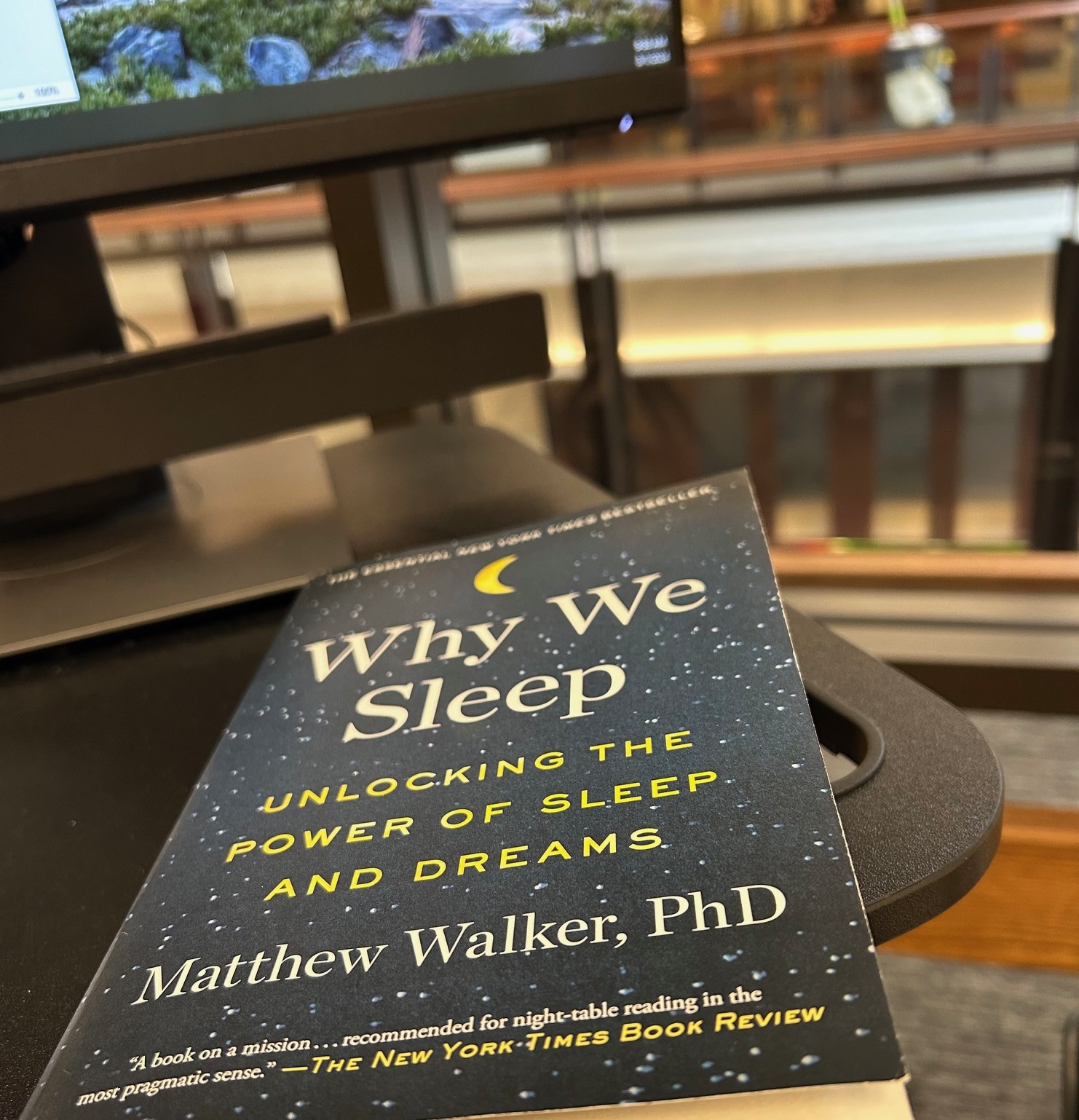
But I was never happy about it. Last semester, nearly a decade later, after discussing sleep troubles with a new law student, I decided that I should at least try to learn something about sleep, so I tracked down a book: Why We Sleep: Unlocking the Power of Sleep at Dreams, by Matthew Walker, Ph.D. I don’t know enough about science to confirm its veracity (there have been critics and controversy), but I do know that after reading it, now I’m having trouble sleeping. But because I don’t want to leave you out of the misery, let me share some of the disturbing (though sometimes cool) information that I read with you. You’re welcome in advance.

For starters, and on a positive note, all animal species seem to sleep, and part of why we humans are awesome may be because of our unique and natural sleep patterns. Specifically, compared to other primates, we sleep in a bed or on the ground instead of perched on tree branches, which allows us a disproportionate amount of REM sleep (the sleep when we dream) because the body is completely paralyzed during REM sleep, which isn’t a terrific idea if you are perched on a tree branch. And while in the cool facts portion of my essay, Walker claimed that the reason we are completely paralyzed during REM sleep is so that we won’t act out our dreams!

Our inordinate amount of REM sleep seems to set us apart in a couple of major ways: First, it heals and helps our mental and emotional health; and second, it enhances our creative and problem-solving abilities. Remember being told to “sleep on it?” Actually, great advice! Although in fact, all sleep phases are beneficial, and messing with any of them causes actual brain impairment.

The human body is fascinating. Just before a baby is born, its amount of REM-sleep is at an all-time high, approximately twelve hours a day. In year one, that declines while deep NREM sleep begins to increase, peaking just before puberty before retreating. The deep NREM sleep during childhood is sculpting the brain, but we all probably remember that it seems like construction halts during the teenage years when all sorts of irrational silliness ensued. Actually, the brain is still maturing then, but rationality is the last to arrive on the scene. Sleep then naturally settles into a predictable pattern in early adulthood. When left to our natural tendencies, human sleep is apparently “biphasic”—about seven actual hours of sleep at night, followed by an hour nap in the early afternoon—but that train apparently left our sociocultural station a long time ago.

In all our societal advancement, however, we have apparently created ways to screw up everything. Have you ever wondered why American life expectancy sucks relative to our immense economic and medical resources? The myriad ways we have created to destroy natural, human sleep patterns and a fingers-stuck-in-the-ears-while-bellowing-la-la-la-la-la-in-the-face-of-research posture toward the importance of sleep may be teensy reasons worthy of consideration.

O sleep, how do I screweth-uppeth thee? Let me count a couple of ways: Darn Thomas Edison for saying let there be light when there shouldn’t be light, and darn alarm clocks (and especially snooze buttons) for daily shocks to our hearts and nervous systems, sometimes multiple times a morning, telling us to get up when we aren’t done sleeping. And since REM sleep is disproportionate toward the end of the seven-to-nine hours of daily sleep we reportedly should be experiencing, about half of all adults in developing countries may be missing out on the unique human benefits that purportedly helped us develop in the first place.

And the consequences are tragic: Weakened immune systems, including an increased risk for certain cancers. Contributions to depression, anxiety, and suicidality. Impaired memory (and while I’m on memory, sleep aids memory both before and after learning, so all-nighters for work or school may be completely counterproductive). Cardiovascular disease. Increased propensity for weight gain, obesity, and developing type 2 diabetes. Drowsy driving—a driver that got up at 7am and heads home from the club at 2am without a single drink is reportedly just as impaired as a legally-drunk driver.

The result? As Dr. Walker wrote, “Relative to the recommended seven to nine hours, the shorter your sleep, the shorter your life span.”

Now we aren’t completely oblivious to our sleeping problems, but it seems that we are unfortunately ignorant to both the extent of the problems and the actual solutions. We typically mitigate with substances, including sleeping pills and/or alcohol and/or caffeine, that can actually do real harm instead of help.

So, what can I do about this to help our law students? I’ll have to get back to you on that one. This seems to be a larger problem than my present work environment, so that’s a major challenge to undertake. But I like major challenges. And it seems far too important to ignore.

What I will do is share with you my summation of the twelve tips for healthy sleep that Dr. Walker shared from the National Institute of Health at the end of his book and hope that someone finds them helpful:

  • Go to bed and wake up at the same time every single day.
  • Exercise, but not too late in the day.
  • Avoid nicotine (period) and caffeine in the afternoon/evening.
  • Avoid alcohol before bedtime.
  • Don’t got to bed too full or too hungry, and avoid beverages late at night.
  • Avoid medicines that disrupt sleep as much as possible.
  • Don’t nap after 3pm.
  • Do something relaxing before bed (not on a phone or computer).
  • Take a hot bath before bed.
  • Make your bedroom dark, cool (e.g., 65 degrees), and gadget-free.
  • Get at least 30 minutes of natural sunlight each day (ideally, an hour each morning).
  • If still awake in bed after 20 minutes, get up and do something relaxing until you are sleepy.

To quote the late, great Edward R. Murrow, “Good night, and good luck.”

The (Temporary) Beach Life

Life can be strange sometimes, and for me at least, oftentimes. Case in point: I grew up in a blue-collar household and may have a tiny issue with being around great wealth (that I’ve been working on for several decades now), so of course I have now lived in Malibu not once but twice. This time, just for pure comedy it seems, Jody and I had the opportunity for the past five months to rent a studio apartment on Broad Beach Road, a mile-long road with homes that realtors describe as “some of the most exclusive and expensive in all of Malibu.” Our Mazda vehicles blended in perfectly.

I confess a little online stalking where I learned that our neighbors included celebrities like Valerie Bertinelli, Dustin Hoffman, Ray Romano, Pierce Brosnan, and Mindy Kaling (and from days gone by, De Niro; Spielberg; Ol’ Blue Eyes; Matthau; McQueen; Goldie & Kurt; Devito & Perlman; and Archie Bunker, just to name a few). And then there are the rich people. So, you get it: for the past few months Broad Beach residents included the uber-wealthy, the celebrities, and the Sturgeons. As Sesame Street taught us, one of these things is not like the other. We tried to organize a neighborhood quilting group but had trouble tracking down good email addresses.

What a cool adventure it has been. That’s what I kept telling myself, and it was true. I am so grateful to have had this opportunity, but not in the wow-we-finally-hit-the-jackpot sort of way; instead, it has been a remarkable opportunity to have an actual mailing address in a neighborhood that few have the opportunity to experience. That distinction may not make sense to you, but it does to me.

We are moving into our new campus condominium at Pepperdine today, which was the plan all along, and we are happy to get settled. We are especially happy to have an actual kitchen, not to mention rooms with bona fide doors just in case we need a little privacy from one another from time to time. (Yes, the studio apartment on Broad Beach was a teensy-bit small.) But we are grateful for our life experience down on the beach.

Will we miss it? It’s a good question. One would think we would miss the sound of the waves crashing all night the most, or possibly the breathtaking views, and maybe one of those will turn out to be true, but on one hand I have chalked the entire adventure up as just that, an adventure, so I intend to be thankful for the adventure and not waste time looking in the rearview mirror; but on the other hand, if I was to miss something, I think I know what it would be instead.

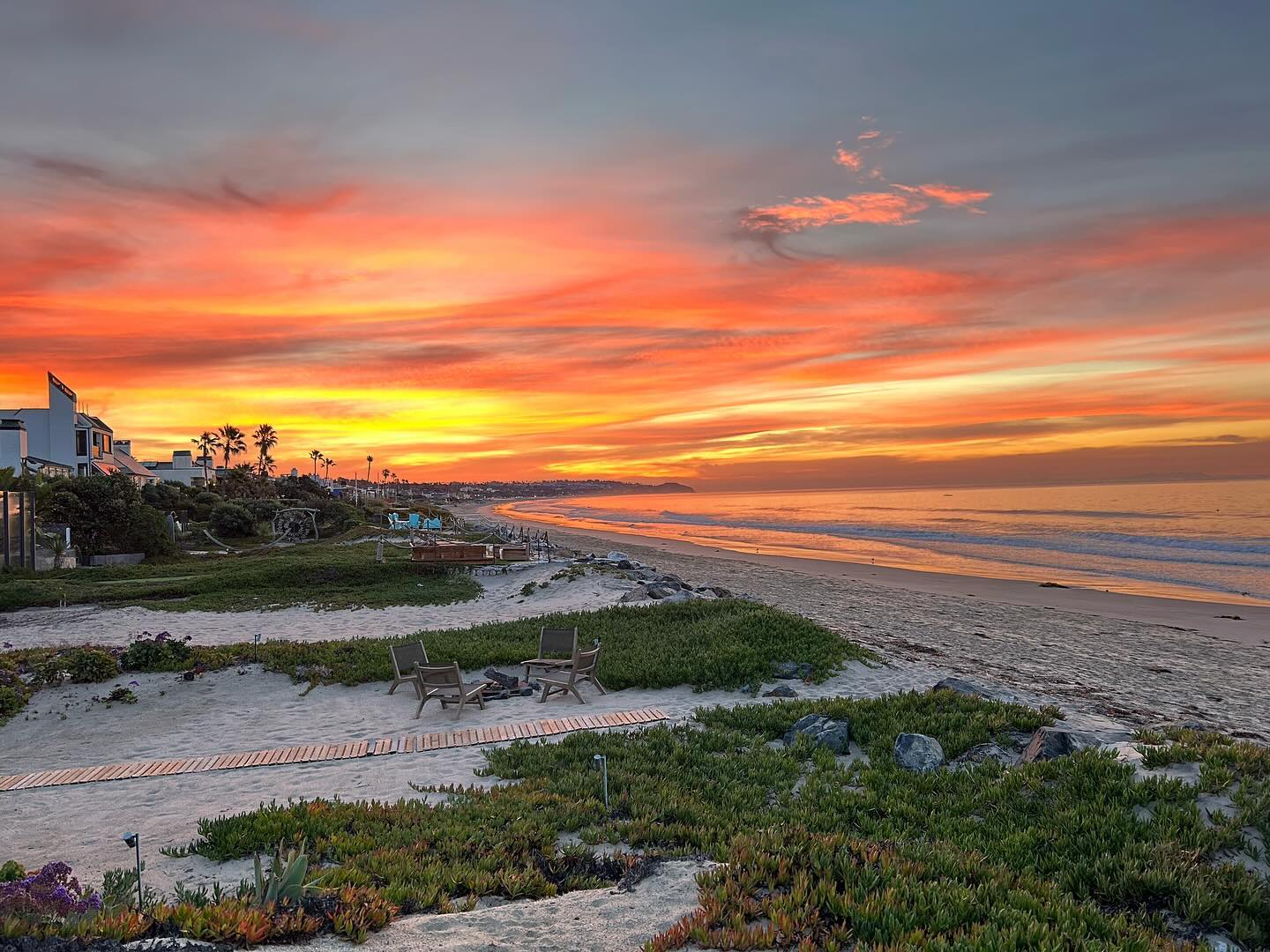
One morning, on the beach at sunrise, I took possibly the best picture I will ever take in my life (pictured above, thanks iPhone). Both sunrise and sunset can be spectacular in these parts, especially during what SoCal tries to call winter, but what is more remarkable than the view and the picture it produced is that often, at sunrise, I would walk down to the beach and look to my left and then to my right before coming to the stunning conclusion that I was the only person around. That feeling, my friends, was a gift that I don’t have words to describe.

If I will miss anything, that will be it. But when you get a gift like that, how could you be anything but grateful?  

Tragedy

tragedy: a lamentable, dreadful, or fatal event or affair; calamity; disaster.

Painfully, recently, the Pepperdine University campus community has borne witness to tragedy.

Around 8:30pm on Tuesday night, four Pepperdine seniors—Asha, Deslyn, Niamh, and Peyton—were killed when struck by a car on the Pacific Coast Highway in Malibu. Those four precious students were attending a school-sponsored fraternity-sorority mixer and were standing on the roadside when a high-speed vehicle crashed into multiple parked cars, propelling one to fatally strike the young women. It is a tragedy that is simply beyond words. The driver of the vehicle is twenty-two years old and a Malibu resident, and some in the Pepperdine community know him, too. Words do not exist. An unspeakable tragedy.

This, of course, comes on the heels of the savage terrorist attacks in Israel that has impacted the Pepperdine community as well. Los Angeles has the largest Jewish population outside of the nation of Israel, and that is reflected on campus, including here at the law school where I work. In fact, one of our terrific law professors was in Israel celebrating the holiday with his family when the attacks occurred and ended up teaching a class via Zoom from a hotel rooftop in the war zone. He is back among us now, thankfully, but the pain here is personal and palpable. Add to the mix our students and colleagues with personal and family connections to Palestine. Their pain is most personal as well, along with unique fears and concerns, now feeling a double minority in a terrible, terrible time. Another unspeakable tragedy.

It has been and is a time of great sadness here.

Tragedy. We sit in the audience and watch tearfully as the play ends with both Romeo and Juliet lifeless on the floor of the tomb. As the curtain falls, we’re stunned that Medea gets away with murder—or that Oedipus is heartbroken, blind, and begging—or that Hamlet dies in Horatio’s arms. We sit in the audience and weep for Rose and Jack as the Titanic goes down.

We are all too aware of the concept of tragedies. But when we discover ourselves in close, real-life proximity to those enduring unspeakable pain, we instinctively remember the phrase, there but for the grace of God go I, although there is a gnawing thought that our day will come, too, grace of God notwithstanding

Tragedy.

How does anyone even find the courage to face life in the face of such, well, reality? I am no expert. I only have so many birthdays and personal experiences, but what those have produced so far are the following thoughts, for what they are worth:

  • Be kind. Be kind to others, Be kind to yourself. Life is hard enough, and it is too hard for any of us to add any more unkindness to the world.
  • Be grateful. That there is anything good in life is an act of grace, and there are absolutely things that are good in life, and grace exists. Life is too hard to neglect anything beautiful that occurs along the way.
  • Be intentional. Live well. Make your life count for something. Don’t waste your precious moments. Contribute your verse. Awaken to the penetrating question that Mary Oliver poses of what you will do with your wild and precious life. Life is too hard not to make it count.

This community is in a time of great sadness, so surely not now, currently in the throes of grief, but when individuals are able to get up off the mat, whenever that is, and face life again with tragedy all too evident, I pray that we choose to do justice to the memories of those who have been lost. Life is simply too precious to waste.

Niamh, Peyton, Asha, and Deslyn

I’d Like You to Meet Cross Country

Given 4,000+ miles of moves back and forth across the country just in the past five years, it stands to reason that I would love a sport called “cross country.” Now I love all sorts of sports, but with all due respect—and you would never know this from watching ESPN or reading the sports page—cross country absolutely crosses the finish line in first place.

I can see that you have a different opinion. That’s okay, your being wrong will in no way prevent us from being friends. Just know that I’m not alone. Writer/speaker/podcaster-extraordinaire, Malcolm Gladwell put it this way: “I won’t belabor the obvious about cross country. It is insanely fun. Races take place during the glory days of fall. The courses are typically in beautiful parts of the country. Cross country meets don’t feel like sporting events; they feel like outdoor festivals—except everyone is fit, as opposed to high. Everyone should be so lucky as to run cross country.”

That’s what I’m talking about.

My introduction to cross country came in the fall of 1985 when Coach Watson came to our high school cafeteria and asked several of us, “Hey, do you want to run cross country?” We said, “Sure,” not knowing what it was, but knowing that we liked Coach Watson and that it sounded like something to do, and with no actual training or meets in advance, we traveled to a town called Arkadelphia and came home with a state runner-up plaque. That’s a pretty cool way to meet a sport.

Sadly, I lost touch with the sport for a couple of decades or so, but another random encounter with a coach, this time “Coach Rad” at Pepperdine, who invited me to be a volunteer chaplain for his men’s and women’s teams, allowed me to fall in love again. I got to hang out with the coolest kids and tag along on early morning runs in spectacular locations, and more importantly, have a front row seat to witness what makes endurance running special, i.e., the human capacity to push through pain and discover a better version of yourself. A few years later, incredibly, while at Blackburn College, I got to be a college cross country coach myself! What fun it was to spend even more time with inspiring young people and watch them grow.

This weekend, I discovered myself back in Malibu, clear a-“cross country” once again, thinking about my favorite sport. On Friday evening, I was on my computer tracking my friends at Blackburn as they competed in Illinois, and on Saturday morning I was in person at Alumni Park to cheer on the Waves. On both occasions, I noticed that I was smiling.

I guess I’m just happy and felt compelled to share my cross country testimony today. You don’t have to be a cross country fan. I promise that I won’t hold it against you. If beauty and camaraderie and courage and fresh air and holistic health and resilience and smiling in general just aren’t your things, I hear that a sedentary lifestyle is pretty popular these days?

Legal Education

I answer Student Affairs when asked my profession and Higher Education as my industry. That’s how I see the last dozen years of my life, but the truth is I didn’t realize that Student Affairs was a profession until I joined it. My introduction to this profession came at my very own law school immediately following graduation and bar exam at the unconventional age of forty, but I have had the pleasure and opportunity to engage in such work at two other institutions of higher education since. But now, pun pathetically intended, I have returned to the scene of the crime to work in student affairs in a law school setting,

My law school colleagues use another term of art: Legal Education. That has always cracked me up. We’ll say that we work in legal education, like all the other education forms are illegal education. I enjoy the work. I have enjoyed all three of my professional stops in higher education, but having survived the unique ordeal of law school myself, I feel extra helpful here. So maybe I should just say that my field is Student Affairs with a bit of a specialty in law.

For those unfamiliar, I am not faculty. The academic classroom is the faculty habitat and the centerpiece of higher education, but student affairs professionals are the folks that complement the academic mission of a college/university/professional school by nurturing the formation of mind, body, and spirit in the students outside of the classroom. I love what I get to do.

We just finished “Launch Week” at the Caruso School of Law. It was the tenth annual Launch Week, which was especially fun since I was involved in launching Launch Week a decade ago. As one might hope, others have taken what we started and continued to make it better and better. The original idea was to blow up “new student orientation,” which always sounded sort of optional, and dive into law school on Day One. It was an awesome week. The new students were noticeably engaged and professional, and the upper-division students that volunteered as mentors were outstanding, most returning to pay forward their past experience as brand-new students.

Yesterday, just after the new students’ first real law school classes, we gathered on Pepperdine’s breathtaking Alumni Park overlooking the Pacific Ocean for a barbecue to close out the week. And since I left, the student government added a little friendly competition among the class sections to the festivities, which included a Giant Jenga war, an actual tug-of-war, and finally, a little dodgeball. Law students can be the least bit competitive, and they got into it, but consistent with the DNA of this particular law school, they got into it with laughter and cheering for one another.

I took pictures and was especially proud of a few I snagged from the Jenga throwdown, where it struck me that it might provide a decent metaphor for what is to come. Deep, particular concentration was required of the students as they worked to dismantle and build upon something that seemed pretty sturdy in the first place, and with each passing moment the pressure of falling apart continued to mount. Sounded a little like law school to me. But the students kept delivering, one after the other, while their colleagues and mentors constantly cheered them on.

And then your whole world comes crashing down. Ha! That was a joke! Okay, maybe the metaphor isn’t perfect.

But my profession believes that you can learn some valuable lessons outside of the classroom, too. Even playing Giant Jenga.

Leslie was selected to be the student speaker at her law school graduation in 2015. I have always remembered something that she said: “A lot of people make lawyer jokes, but when your world falls apart, nobody calls a comedian.” This week, 185 impressive humans began their study of law here in Malibu, and it is an honor to be a part of the team that walks alongside them, complementing their formal studies, cheering them on, being there for the challenges that arise, caring for their wellbeing and personal development, and watching them transform into the people that you do call on in your darkest hour. That, my friends, is how I see my work in Student Affairs in Legal Education. What an honor.

Kindertransport

Blog Pic (Kindertransport)

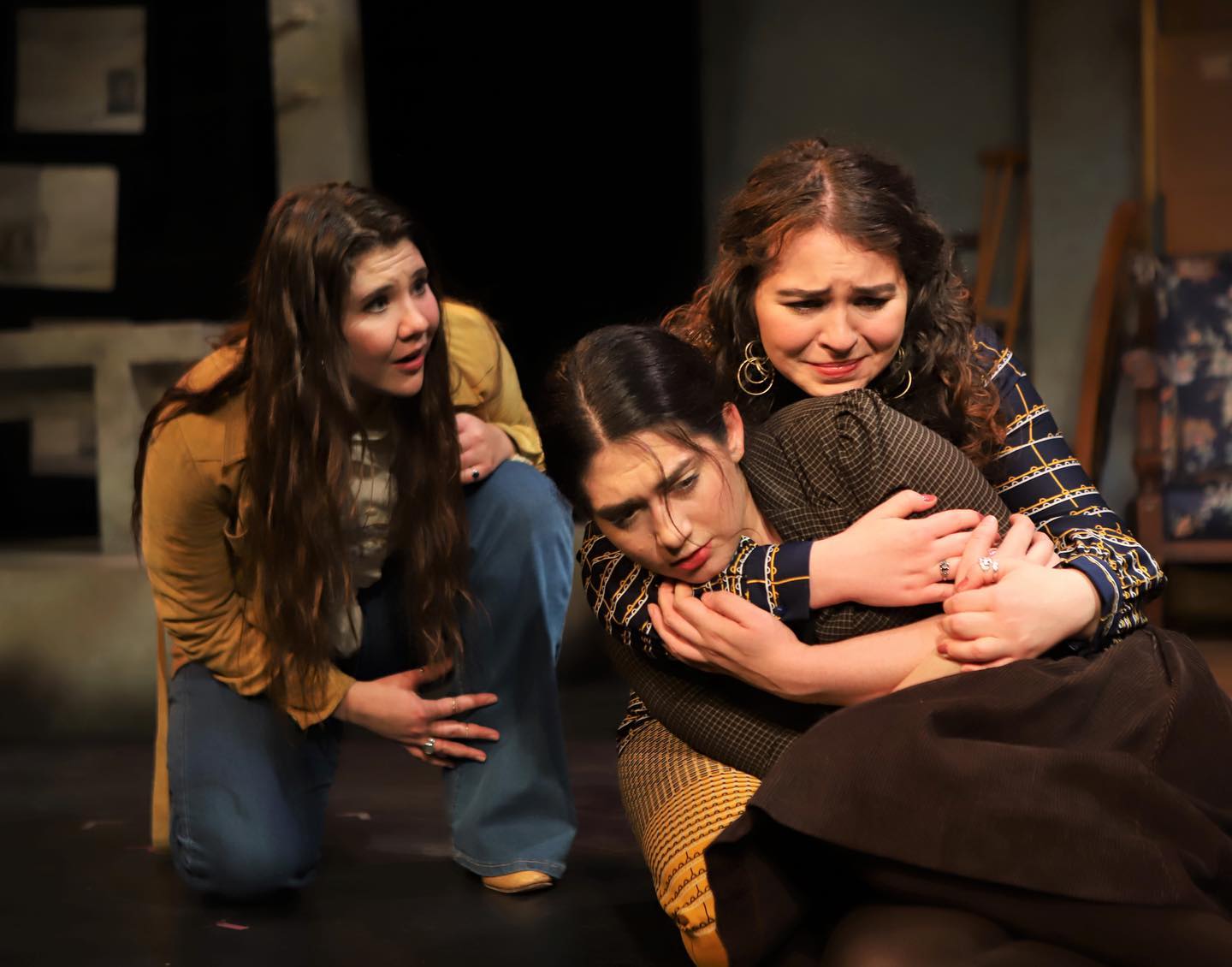
I caught a bit of the Oscars last night and found myself wondering if I might see someone from the Lipscomb University Department of Theatre walk the Hollywood red carpet someday. I am a big fan of Lipscomb Theatre! On Saturday evening my wife and I went to campus to see Kindertransport, and although I expected to be impressed, I was not prepared for the show. When I first saw the name, Kindertransport, I envisioned a play about a school bus. Oh no. Kindertransport is an intense and powerful story.

The story is historical fiction. Prior to the outbreak of World War II, thousands of Jewish children refugees were hastily transported out of Germany to escape the coming savagery. As Dr. Jay Geller, Professor of Modern Jewish Culture at Vanderbilt University who served as theater consultant wrote in the program, “German Jewish parents and their children faced the terrible dilemma of choosing between a perilous staying together and a temporary—quite possibly permanent—separation as well as having to imagine the parent’s possible death and the child’s possible survival.”

Kindertransport is a vivid portrayal of how that might have played out for one family. The entire cast was amazing, and thanks to their masterful storytelling, I cannot stop thinking about it.

As a former history teacher, I am always stunned when I learn of moments in world history that I had never heard of before. I learned on Saturday evening that the United Kingdom welcomed 10,000 unaccompanied Jewish children before Nazi Germany closed the borders prior to the outbreak of World War II but that the United States rejected legislation to do the same based on public opinion polls. The talk-back after the show shared that a large number of Jewish refugee children actually arrived at an American port but were sent back to Germany because of the policy. How many of those children were murdered as a result of that decision?

It was easy to connect the Kindertransport story line with our friend at Pepperdine, Hung Le, simply substituting a different place and a different war (Vietnam), and how his beautiful story came to bless so many lives (read it HERE). It made me wonder what stories are being crafted today?

That is the potential power of an incredible story like Kindertransport. Aching with that mother, making it up as she went along, hoping to save her child. Aching with that little girl, also making it up as she went along, trying to survive on her own far too soon. Aching with that good soul, also in uncharted waters, attempting to welcome a stranger in need.

How will that powerful story change me?

Gifts

Ashley Lahey

Ashley Lahey entered the final semester of her senior season as the top-ranked women’s tennis player in the nation (not to mention one of the top students at Pepperdine), but more importantly to me, she ranks among the best human beings.

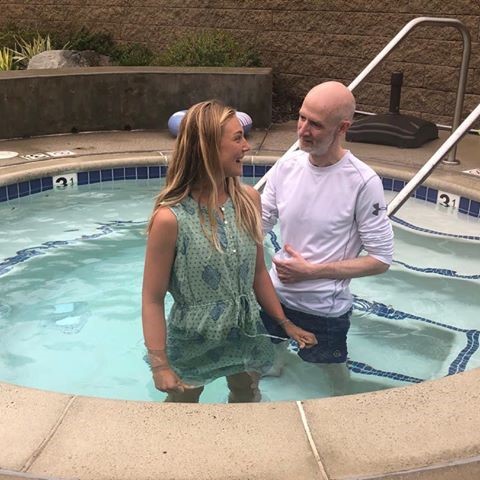
Ashley (reluctantly) came to the church where I preached in Malibu with her boyfriend and my good buddy, Treet, but I had no idea at the time that she was in a season of struggle. She broke down in tears at a tennis match the first time we had a brief conversation, which led to a longer sit-down where I got a glimpse of what was really in her heart. From that time on I simply had the great privilege of watching her immense intellect and strong will in action—just like on the tennis court—as she journeyed to faith. After my last sermon there, Ashley asked if I would baptize her, and I had that opportunity on my very last day living in Malibu. What a tremendous gift.

I am writing about Ashley because last week was a rough one in my world. I lost an old friend and traveled to honor his life, and on the way unexpected chaos broke out among the work I had left behind. It was a hard week. And then Friday night, sitting at home and processing all that had happened, Ashley sent a video of her sharing her faith story that day at Celebration Chapel at Pepperdine where she graciously gave me a prominent place in the story. What a sweet gift on any day, but especially for me on that day.

In the unpredictable messiness of life, the unexpected gifts are extra special.

Ashley Baptism

First Grade for Grown-ups

2019_invpsa_logo__medium

I am one of sixty-four students from around the world here in Alexandria, Virginia, at the 2019 NASPA Institute for New Vice Presidents for Student Affairs. Each of us is the most senior student affairs officer on our respective campuses and in our first two years on the job. That so many of us are here is an interesting statement about both higher education and student affairs.

We were told that this is an institute and not a conference to make it clear that we will not pick and choose among class offerings. No, we will all partake of the same intensive cohort experience, including sharing meals together. Tuesday evening is our only break, and as luck would have it, I get to attend Game Four of the NLCS with my buddies, Steve and Rachel (Go Cards!).

I jumped at the opportunity to be here. When I served as Dean of Students at Pepperdine Law, I did my best to attend the national AALS conference each year because I learned a lot, sure, but more importantly, because of the relationships I formed with people who truly understood what I did each day. I still miss my law school student affairs buddies, but that is what excites me about being here today—the opportunity to connect with more amazing people from diverse places who share the common bond of loving students from the same seat as mine.

I love, love, love diversity. It is simultaneously a challenge to navigate and a gift to embrace. But for those like me who are drawn toward diversity instead of resistant to it, it is worth remembering that we also need those who truly “get” us. What I love about national organizations is that it provides the opportunity for both.

There is just one me, and for that we can all be thankful. But there are sixty-three other people here that have a job like mine, and what a comfort it is to know that and to know them.

Names

blog pic names“Ever since happiness heard your name, it has been running through the streets trying to find you.” – Hafez

I threw out the ceremonial first pitch for a Lipscomb University baseball game last Friday, which was easily the most difficult and embarrassing thing I did all weekend. But I received far more sympathy for reading around three hundred names at the undergraduate commencement ceremony on Saturday afternoon. (For the baseball fans, the pitch was in the dirt, low and away, and the manager made the wise decision to pull me after a single pitch—no Tommy John surgery, but the trainer has me icing the old arm anyway.)

This was not my first time pronouncing names at graduation, having done so while at Pepperdine Law for three consecutive years sometime back.  My favorite memory from those inaugural years was when I announced Hillary Mace, and much to my surprise (and I’m sure the fury of the events team), she ignored our wonderful dean and president and jumped up to my podium to give me a hug instead of accepting her diploma first.  That kind of made my life.

But there are the haunting memories, also known as the attempts to pronounce the most difficult names given my cultural background.  I remember practicing with my friend, Mr. Dehbozorgi, and feeling confident and ready.  However, when it was showtime, I remember the sinking feeling when I looked at the next graduate in line and noticed Farshad’s excited face—and yet it wasn’t his turn!  Farshad’s encouraging facial expression was saying, “C’mon, big guy, you can do this!”  My facial expression was saying, “I am a deer, and I see headlights.”  We somehow survived the interminable showdown, although therapy must have helped me forget exactly how.

My first foray reading names at Lipscomb had some definite pronunciation challenges, but given my return to the American South (and that Lipscomb is a more regional university), the names were most definitely easier.  The best part was that I got to share the load with two new friends, Brian and Catherine (pictured above), so that each of us pronounced about three hundred names. Brian and Catherine are fantastic, and I was honored to be on their team.

That we have names is interesting all by itself, and the phenomenon of announcing names at formal recognition ceremonies even more so.  It is a powerful feeling to stand on stage under bright lights wearing bizarre attire and declare a name over a powerful microphone that signifies the end of years of rigorous academic study and unleash wild applause from family and friends.

What is it about hearing that name?

Maybe it is because more often than not it is the first thing we do to a human being—give it a name. We are given a miracle, and we feel compelled to identify it in some way, and we say, You are _______. There. That is who you are. With time we learn to say it ourselves: I am ______. It is our linguistic attempt to establish a foundational identity, this curious mix of sounds and syllables.

We are each somebody. Every single one of us.

If you ever doubt it for yourself, give me or Brian or Catherine a call. We are seasoned professionals who can declare your name and unleash the applause.