Tag Archives: college

Portfolio in Pictures

I saw Doc Hollywood in the movie theater way back in 1991, but it stuck with me over the years. In fact, I have repeated its storyline many times now, but it wasn’t until a year or so ago that my Malibu buddy, Dillon, recognized that it is basically the same storyline as the 2006 Disney Pixar movie, Cars. Must be a pretty good yarn to generate two popular movies.

I share that storyline often because a particular scene generated a personal tradition that I maintain on the back of my office door. In the original movie, the young arrogant doctor arrived at the embarrassing epiphany that the old crotchety doctor knows much more than he suspected. It was a hard and surprising lesson. Later, after learning that truth, the wise old doctor opens an antique armoire in his office to show pictures of the hundreds of babies that he had delivered over the years in that small town that were pasted inside that piece of furniture. The old doctor explained, “Well, this is my portfolio.”

For good reason, although I don’t remember the specific occasion, I remembered that scene during the 2012-2013 academic year, my second working in higher education, and my first in a major administrative role. It occurred to me then that my personal portfolio — what truly matters — would be comprised of each student that I have the honor to serve and see grow into their respective futures.

At the end of that academic year, I made a poster of a collage of pictures taken with students over the course of that year together. And in a sort of homage to Dr. Aurelius Hogue in Doc Hollywood, in place of an antique armoire, I taped my poster to the back of my office door. I told myself that I would look at it from time to time and remember what truly mattered.

I have looked at it more times than I can count, and I now have eleven additional posters taped to the back of my office door for each of the years that followed. Twelve posters for twelve years at three institutions, all filled with precious people and special memories. And I just received my thirteenth in the mail from my first year at Ripon College. If all goes as planned, there are many more to come.

Old Dr. Hogue told young Dr. Stone (aka Doc Hollywood) during his shameful epiphany, “I doubt you’d know crap from Crisco.” But later, discovering a suddenly willing protégé, he taught him gently that it is the people that matter more than anything. The people — “. . . this is my portfolio.”

That’s what the back of my office door says to me.

I Was Here

For years I was told that I would not recognize Northwest Arkansas should I visit again, and that was the truth. Funny, you take a thirty-year trip away from a place and things tend to change a bit. I felt sort of lost all the time. Well, not all the time. Definitely not all the time. 

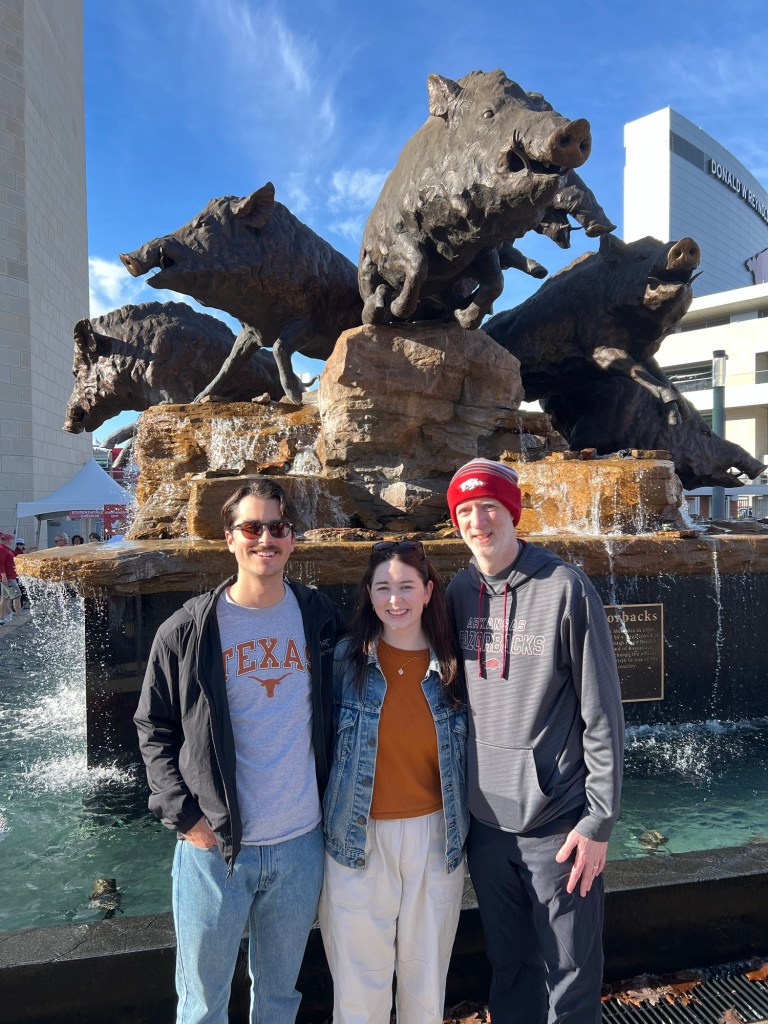
My youngest had the idea to meet up in Fayetteville for a renewal of the old Southwest Conference football rivalry between the University of Arkansas, my college alma mater, and the University of Texas, her grad school alma mater, now conference foes again (but in the SEC). She and her boyfriend drove up from Austin, and I flew down from Wisconsin, and my heart is grateful for all the emotions and memories generated by the weekend together.

The actual football wasn’t the greatest, at least from my perspective, but the look on their faces the first time the entire stadium called the Hogs was worth the football. To be honest, it wasn’t the thumping I expected, so I was proud of that, and as I absorbed the loss I recalled that we beat Texas in Little Rock my senior year way back in 1992 just as we joined the SEC, so it isn’t like I have gone without. 

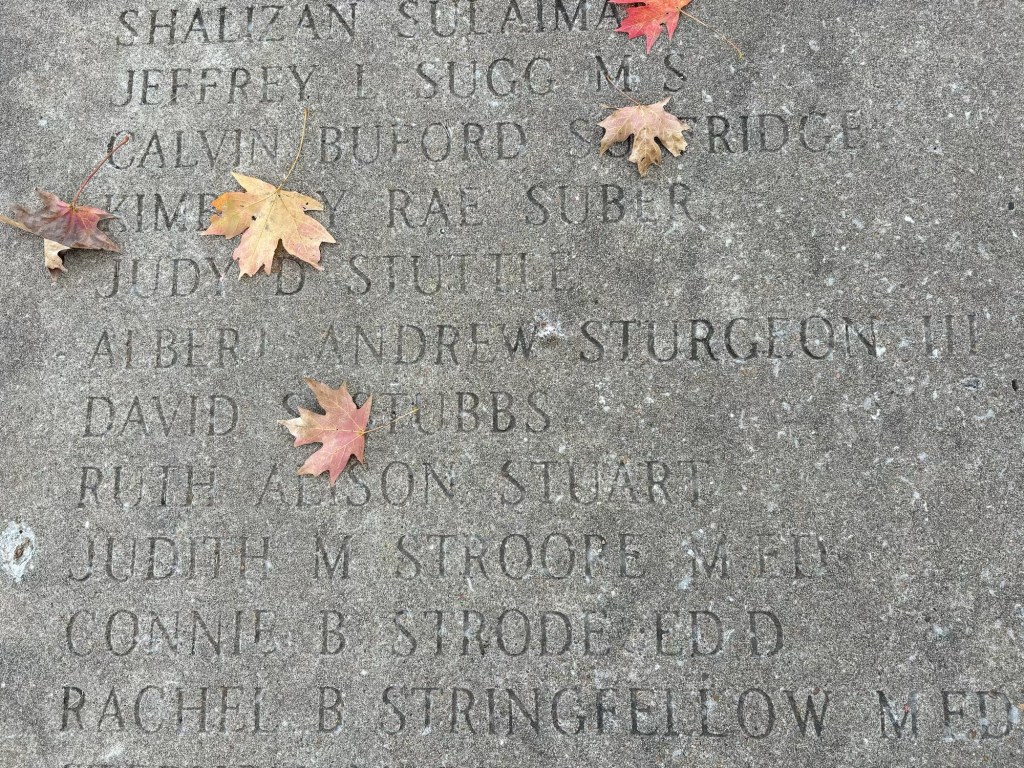
It was an early game, so we got to wander through campus a little on a sunny Saturday afternoon afterward, and I enjoyed the three of us being together on a quest to track down my name engraved on a campus sidewalk as part of the beautiful Senior Walk tradition at the University of Arkansas. Seeing my name meant more to me than I expected. After thirty years, my name is still etched on a sidewalk for generations of college students and campus visitors as if to say: You should be aware that I was here.

Yes, I really was here. I once spent three formative years of my life here, and it was good to remember.

It was extra special to visit with Hillary, whose life has been drastically different than mine from the start, and especially to consider that in very real ways her life experience is a direct result of my decision to go to the University of Arkansas in the first place. I have not forgotten walking across campus in awe as a first-generation college student, falling in love with the realization that the world contains wonders I had never imagined. It was there specifically that my horizons expanded, as well as my willingness to set sail from safe harbor on multiple occasions afterward. My wanderlust, which has characterized and now characterizes her life, emanated from that first act of curiosity and courage. I guess it even led her to the sworn enemy territory of the University of Texas!

It would be nice to go back for another visit someday, but it might not happen, and that is okay. This was enough for me. Yes, this was special enough for me. There is no need to be greedy.

Regardless, and forever, Go Hogs! 

Small, but Mighty

Life in these United States involves immersion in a culture where bigger is typically considered better. That’s undeniable, I think. We naturally count likes and followers, poll numbers and votes, items sold and bottom lines, box office receipts and numbers of thumbs up, runs/goals/points leading to wins and losses—and judge what is “successful” accordingly. The more, the merrier, so they say. I have yet to see someone enter the Shark Tank and say: My dream is a nice, small business. Hell, no one gets to be a “shark” on Shark Tank for having a small business. Like I said, everywhere we turn: bigger = better.

Not surprising. Our foundational institutions are based on competition: a capitalistic economic system; an adversarial justice system; a democratic political system: in a competitive world, bigger numbers are how we establish the winners and the losers. That is just what we do.

I opened my laptop last Friday to the New York Times article, “Trump Claims Harris’s Rallies are Smaller. We Counted.” Of course, you did. That’s what we do: count sizes of things. It is like we all wear glasses with special lenses so that every person and everything that we see is on one side or the other of a greater-than or less-than sign. Those familiar mathematical signs sit above the commas and periods on our keyboard, and even the words themselves imply value. Greater than. Less than.

This is all well and good (I guess), unless you are on the less-than side. Unless you are (brace yourself)—small. In a competition-based society, the underlying idea is that being small and coming up short is unfortunate and that such misfortune provides the motivation to do more, to grow bigger, based on the assumption, of course, that bigger is better. I mean, one of the very definitions of “small” is “insignificant and unimportant.”

I’m not sure that I buy the entire premise.

__________________________________________

Ten years ago, during the college search journey with our youngest daughter, we learned about small, liberal arts colleges. I confess: as a first-generation, Pell-eligible student myself, I knew very little about an awful lot, and these small colleges were a revelation. My primary experience had been with large, public universities, community/junior colleges, or generally mid-sized, private, faith-based universities. But as we searched, we found these cool, tiny places fascinating.

We learned of the work of Loren Pope, an independent college counselor who said, “The smaller the school, the more impact it can have on a kid. My mission in life is to change the way people think about colleges.” Pope wrote a book titled, Colleges that Change Lives, and we visited several on his list, including a tiny place in rural Wisconsin. We loved our visit to Wisconsin, but our daughter ultimately decided that that particular college was not the place for her college education. But she said to my wife and I: “You two should work there someday.”

Well, life is funny. Several years later, my wife and I did find ourselves working at a small, liberal arts college in rural Illinois that we loved very much. And now, hot off the presses, we are working at a small, liberal arts college in rural Wisconsin — not the same one we visited a decade ago, but nearby, and for us, even better.

I can say from personal experience that, despite today’s disturbing rhetoric, colleges of all shapes and sizes can change lives for the better, but I must also say that I find myself enthusiastically agreeing with Loren Pope that these small colleges can have an extra special sort of impact. In my short time at Ripon College, I have watched the presidential debate and considered the future of our nation with an intimate group of students; watched a football game on a lovely Saturday afternoon where none of the players involved had an athletic scholarship; attended an activities fair and visited with students promoting interests ranging from paranormal activity to equestrian sports, from Greek Life to service organizations, from physics to art, from College Democrats to College Republicans, and affinity groups representing Black students, LatinX students, Asian students, LGBTQIA+ students, and more. All on a campus with less than a thousand students, and all on a campus where these students with diverse backgrounds and diverse interests know one another and the professional educators that love what they get to do here.

There is a particular beauty in something small, but to be small is to be at risk in this world. Small businesses, small farms, small towns, and small colleges are all at constant risk of extinction. But I think there is a corresponding and greater risk on the other side of the equation. In my early days of full-time ministry, I stumbled on some writings of a youth pastor/theologian named Mike Yaconelli, who was considered sort of edgy in a way that I found interesting. It was the heyday of “church growth” strategies, and I remember that he wrote something like, “The only thing you need to worry about with church growth is not to grow too big.”

I liked that then, and I like it now, more than ever.

Aristotle had a similar idea, from what I understand, and wrote extensively on his belief that a city-state should be big enough, but not too big, and that maybe 500-1,000 people was, to quote the philosopher Goldilocks, just right. To present day, Simon Sinek makes a similar argument. In his wonderful book, Leaders Eat Last, in Part 5 he outlines “the abstract challenge,” i.e., as civilizations and organizations grow large, the people the leaders purportedly protect tend to become abstract, invisible to the leaders. Sinek doesn’t hold back on the ramifications and titles chapter thirteen: Abstraction Kills.

All I hear is Yaconelli saying to literally take care not to get “too” big, i.e., so big that you cannot know one another. Don’t grow so big that people become just a number.

What is it that I find so special in the small college setting, the thing about small anything that transcends the typical experience in our particular “advanced” culture? It reminds us to truly see each other.

I often wonder if the world is losing its marbles, and although questioning institutions is one of my favorite things to do, the warlike drumbeat questioning the age-old assumption that a college education is a good thing sort of blows my mind. Is college for everyone? No. Is college too expensive for many? Yes. Should we work to improve things? Sure. But my goodness, I could write forever about the impact of college on the world as well as individual lives and families, including mine.

Instead of feeding our tendency to ask poorly-framed questions (which, ironically, college can help address), maybe the overly broad “Is college worth it?” should be reframed as “Which colleges are worth it?” And if so, I humbly suggest that we check our culturally-influenced tendency to evaluate an answer thinking that bigger is better and be willing to look to the small places. You just might discover a gem.

“Here it is again, the Great Reversal: many of the first ending up last, and the last first.” – Jesus (Matthew 20:16, MSG)
Office of Student Life, Reporting for Duty

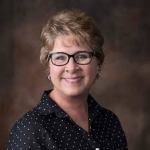
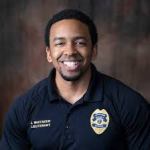
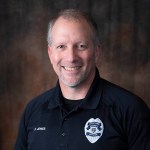
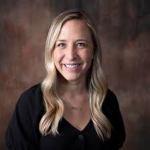
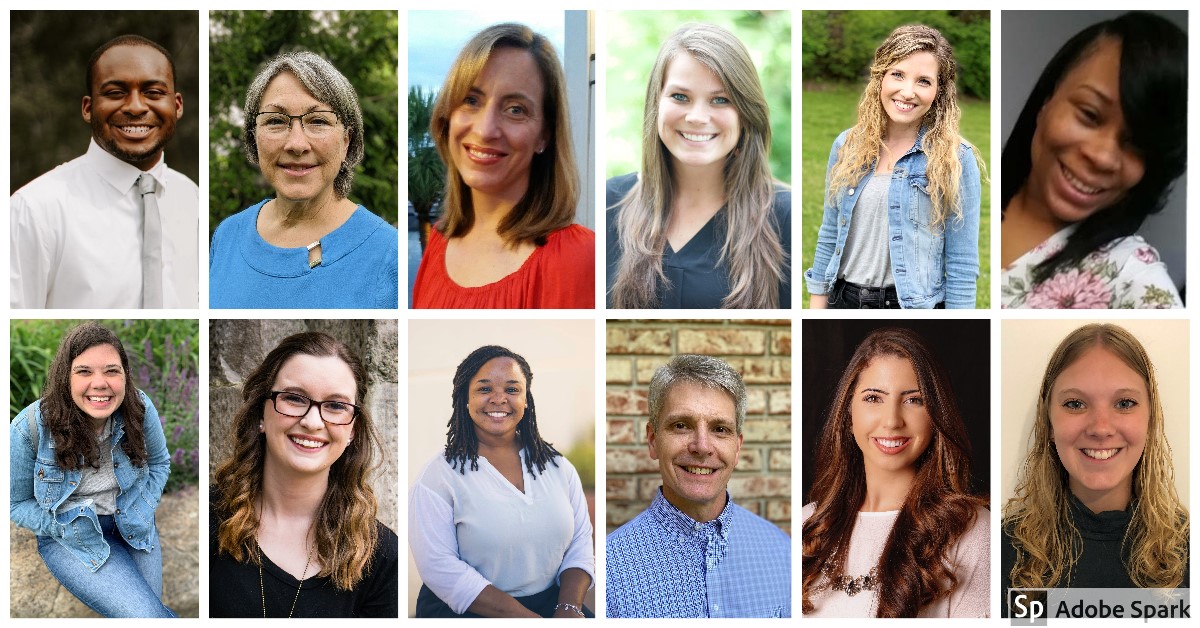
Professional headshots of 44 team members above (6 more team members not pictured) plus pictures of 12 new hires this summer below (still searching for 3 open positions)
image046

This afternoon feels part finish line, part starting line, and all sorts of consequential.

In the middle of March 2019 my wife and I said our tearful goodbyes to California and drove across the country to a new life in Tennessee. One year later, in the middle of March 2020, I was leading an effort to evacuate as many university students as possible from campus as COVID-19 began its terrible reign. And for the last five months, both I and my team have worked harder than I thought possible.

This has been the most challenging season of work that I have faced, including working through multiple historic natural disasters—and in a real sense we are just getting started.

My university is one of many that carefully and prayerfully weighed all the competing forces and decided to welcome large numbers of students back to our classrooms and residence halls for a new academic year, and the preparatory work to do that well has been intense. Although both my housing/residence life team and security team literally never left campus for a single second—and my other teams have worked nonstop remotely as well—early tomorrow morning is when freshmen begin moving in our residence halls in significant numbers. And this week of move-ins and new student orientations build to the first day of fall semester classes one week from tomorrow.

So this afternoon feels like a big deal.

I am confident that we have prepared well and that we will love our community well, but in a COVID-19 world we have all discovered that we cannot predict what happens next. So I cannot say with confidence, nor should I predict, what the next few months will hold. What I do know is this: regardless of what happens, if I grow to be an old man and sit on a porch someday with folks from my team who lived through these past few months, we will look back and remember with pride that we gave our full hearts along with blood, sweat, and tears—most definitely, tears—on behalf of our students. And what might stand out the most is that we learned that our capacity to do extraordinary work was greater than we had ever imagined.

I find great comfort in that today. To be a part of a team like this is an honor. And knowing full well that the days ahead are filled with great challenges, I am proud to face those challenges with these good people.

Here we go.

Closure One Way or Another

DCF 1.0

Hillary’s Bedroom, Ocean Springs, Mississippi (2005)

I turn in my grades this week, and graduation is scheduled for Saturday—a “virtual” ceremony, of course. We plan to have as many graduates as possible return here in December for the in-person version, but it made sense to do something now to commemorate the occasion since these wonderful students have completed the requirements and are college graduates. Many faculty and staff have given their best to make the virtual ceremony meaningful. Our hurt for our graduates’ loss is only exceeded by their own pain. But we sure are trying our best.

Closure is important, and when the typical ways are impossible, we need to create some version anyway.

When my youngest daughter was eight years old, we lost our house to a hurricane. We gutted the house and sold it at a significant loss, and that little girl asked me to take her to visit the house one final time in early December to say good-bye. That seemed like a harmless thing to do.

It was cold that afternoon [note: the picture above was months earlier], and looking back, I guess it was sort of fitting. The wind cut straight through you, foreboding. We didn’t need a key to get in. Or even hands now that I think of it. All of our doors and most of our windows had not been on the house for the past quarter of the year, so when Hillary and I walked in the house, there really wasn’t much to see. But it felt different.

Hillary took over as tour guide and led me from room to room. At times she was less tour guide and more tourist, asking me for some clarification in each place. “Daddy, was this where the couch was?” “Daddy, wasn’t this where we had the television?” From time to time, the tour guide would pop up with a few declarations: “This is where the big red chair was.” “Here is where I would play with my bouncy-balls every once in a while.” “Here was my bed!”

I didn’t recognize what was happening because I am a moron. Hillary was studying. It was cramming for finals time. She did not want to forget.

I started to see that little “I wanna cry” face a few times, but I told myself I was wrong. It’s probably just the wind whipping through the house, making her cold. I didn’t take any chances, however, so I asked Hillary if she wanted us to pray and thank God for all the good times in this house. She did. So we held hands in that cold and drafty gutted-out mess of a house, that house where Hillary left for her first day of school, the place where magical creatures like Santa and the Tooth Fairy and the Easter Bunny brought wonder to that child’s imagination, the site of bed-snuggles and family nights and fevers and boo-boos and birthday parties and loose teeth and special suppers and homemade cookies and every single one of Hillary’s memories that defined “home”—and we prayed. And God saw it. And it was good.

Then, like a march to an execution we began our last trip out of that house of memories, though an eight-year-old seemed to skip playfully more than shuffle in shackles even if the journey was final and difficult. She made the declaration on her way out that this would be the last time she stepped foot in that house. She didn’t say it in such a sad voice, but she said it from a sad heart. The house had to have been sad, too.

The bone-chilling wind was just a bit colder on the outside of the house, and I was ready for some heat in the car, but Hillary wanted one more treasure-hunting trip to the front ditch where we had tossed our belongings for debris removal months earlier. Like a good father, I said, “Okay, don’t step on a nail. I’ll be in the car.”

This was another in my long line of parental mistakes.

The good news is that she didn’t step on a nail. The bad news is that she saw her prize-winning science fair display ground into the front ditch. That was not good at all.

She made it into the car without crying. She bravely mentioned that she had spotted something very important to her in the front ditch, then went on to share what it was. She had the face-thing going full strength now, doing her best not to cry. We told the house good-bye, made one last drive-by of the front ditch, and we made it part of the way down the road before she lost it. As always, Hillary had my full permission to do just that.

Fifteen years later I still remember the lesson that little girl taught me: Closure matters. Even if it is a weak substitute for normal methods, it matters.

It is hard to explain and even harder to fathom, but we think back on those hurricane stories with some odd type of fondness now. It turned out to be a special and unforgettable time in our lives.

It is my prayer that our graduates can do that someday, too. But for now, and this weekend in particular, let’s make up some kind of moment to close the door on a special time. And it is more than okay if it brings a tear.

Law and the Bible

51-ASgVtsvL._SX331_BO1,204,203,200_

I am beyond honored to teach an undergraduate course this semester titled, Law and the Bible, in Lipscomb’s Fred D. Gray Institute for Law, Justice, and Society—even more honored that it is based on a course built (and using a text edited) by friend and former colleague, Professor Bob Cochran. To have the opportunity to combine my legal training and ministry experience in a classroom is pretty great, and that there are eleven brilliant and passionate students enrolled is almost too good to be true.

Professor Cochran divided the Bible in nine sections and teamed legal scholars and theologians to write each chapter (he joined his friend, Dallas Willard, to approach the Gospels) and explore what the Bible teaches about law and its relevance to current issues.

We have much to discuss.

I have a complicated relationship with politics and rarely write publicly on political issues anymore, not because I no longer have opinions, but for other reasons. To sit in a classroom, however, and consider contemporary issues starting with the Bible, that has me excited.

I confess disappointment that religious folks often react to major political moments by supporting their predetermined political candidate/party without wrestling with the individual issue at hand based on theological arguments. One would think that those who claim religion would avoid automatically supporting one political party and examine each individual situation in light of their sacred text. Maybe the penetrating question is: What is truly sacred?

I’m excited to consider such questions this semester with a gifted group of college students.

Gimme a Break

ab887681c1573c956fc56f0ca5760934

Although every week is a work week for my department, today marks the beginning of what feels like a much-needed, and much-anticipated, break. Classes are canceled, calendars are less cluttered, and the roller coaster offers an opportunity to breathe.

I love the academic calendar. For someone who simultaneously craves routine and can’t stand monotony, the academic calendar provides the perfect blend of predictability and variety. I love the summer of planning and anticipation, the flurry of the fall semester, the joy of the holiday breaks, and the spring semester sprint toward the finish line of commencement.

But I especially need a break right now.

One year ago, while the power was out in Malibu post-fire, I set aside the breathing mask and trusted my laptop battery in the dark of my office for a job interview. Life has not slowed down for a minute since.

I am so excited that our daughters are visiting our new Nashville home this week, and you’ll surely hear more about that later. But this morning, I am headed to the office with a smile. I don’t need a break to rest. Instead, I simply need time away from the frenzy of meetings and events, with time and space to think, to process, to clear the old mind so that I can dream again.

I give thanks for that today, three days ahead of schedule.

First Grade for Grown-ups

2019_invpsa_logo__medium

I am one of sixty-four students from around the world here in Alexandria, Virginia, at the 2019 NASPA Institute for New Vice Presidents for Student Affairs. Each of us is the most senior student affairs officer on our respective campuses and in our first two years on the job. That so many of us are here is an interesting statement about both higher education and student affairs.

We were told that this is an institute and not a conference to make it clear that we will not pick and choose among class offerings. No, we will all partake of the same intensive cohort experience, including sharing meals together. Tuesday evening is our only break, and as luck would have it, I get to attend Game Four of the NLCS with my buddies, Steve and Rachel (Go Cards!).

I jumped at the opportunity to be here. When I served as Dean of Students at Pepperdine Law, I did my best to attend the national AALS conference each year because I learned a lot, sure, but more importantly, because of the relationships I formed with people who truly understood what I did each day. I still miss my law school student affairs buddies, but that is what excites me about being here today—the opportunity to connect with more amazing people from diverse places who share the common bond of loving students from the same seat as mine.

I love, love, love diversity. It is simultaneously a challenge to navigate and a gift to embrace. But for those like me who are drawn toward diversity instead of resistant to it, it is worth remembering that we also need those who truly “get” us. What I love about national organizations is that it provides the opportunity for both.

There is just one me, and for that we can all be thankful. But there are sixty-three other people here that have a job like mine, and what a comfort it is to know that and to know them.

Away from Home

Freshman Year (Sturgeon)

It has been a long time since I was a college freshman, which my present work constantly reminds me. I barely remember it now and often wonder if that is a gracious gift of aging.

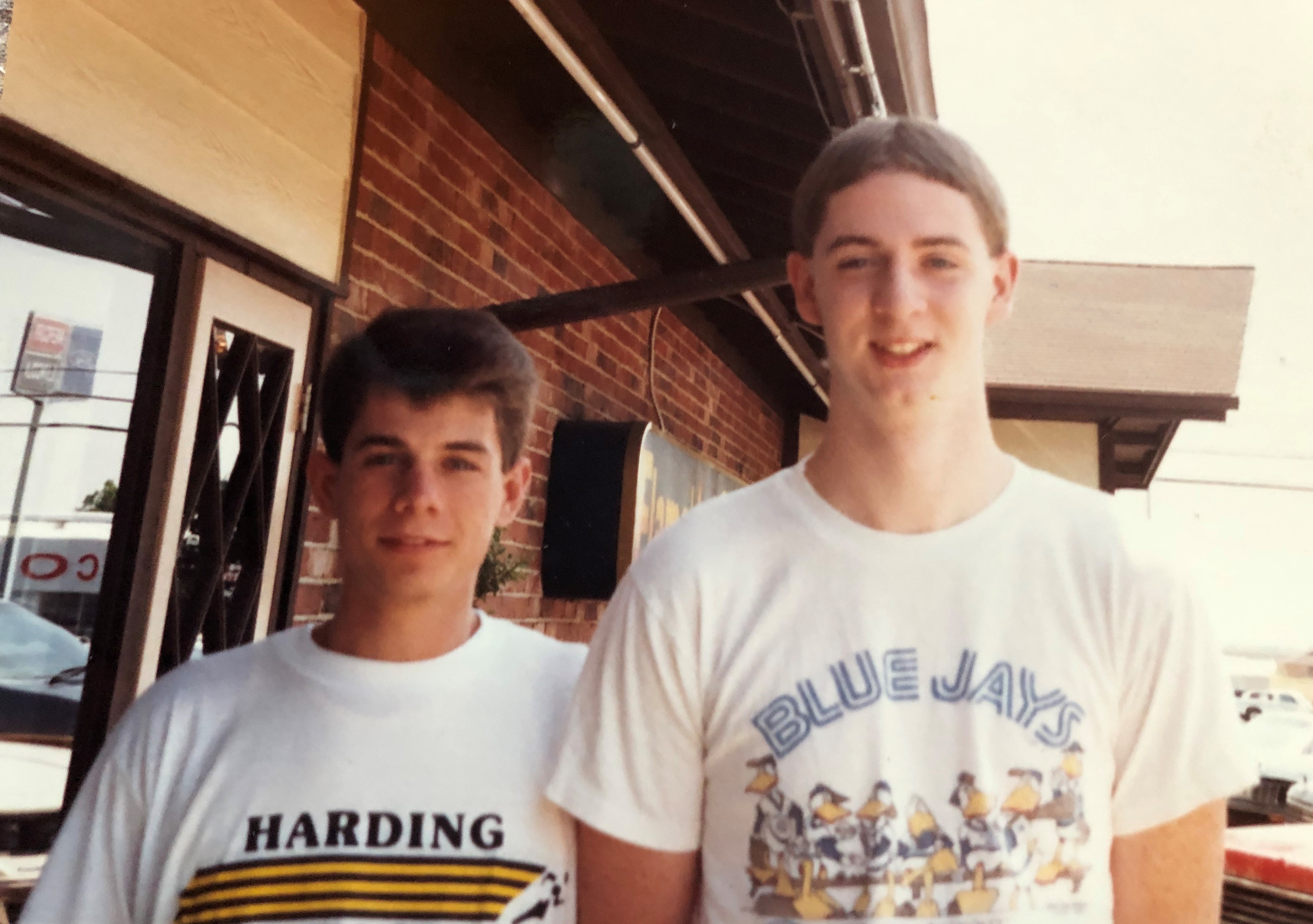
Although I did very well in high school and should have considered many options, I never went on a college visit and simply remember struggling with one question—do I “go away to college” at Harding University, or do I “stay home” to play basketball at Crowley’s Ridge College? I don’t remember the details of why, but I chose the former and traveled the daunting one-hundred miles to study physical education in Searcy, Arkansas.

It was a good year overall. Harding reminded me of my high school in many ways, which was positive. I knew several students already there and roomed with Christopher, a friend from high school and a track star.

When I try to remember those long ago days, an odd collection of scenes comes to mind: An unsuccessful attempt to walk on the basketball team. The terror of speech class. Daily chapel. Pledging a social club. Navigating a laundry room. Unlimited food in the cafeteria. New friends.

Although it was a fine year, it was only a year, and I transferred to the University of Arkansas for the rest of my undergraduate education. At this point of life my solitary year in Searcy seems like a blip on the radar screen, almost causing me to question if it even happened.

Today, I am back in Searcy for the first time in close to thirty years for a student affairs conference, and I am reminded that it did. In fact, that year and that place represents an extremely formative moment in my life—my first experience in actually being “away from home.”

I have subsequently lived in multiple zip codes and discovered quite a bit about the world and about myself. That all began with a mysterious decision to go away to college. That decision is not for everyone, but all in all, it was right for me.

Here. We. Go.

IMG_0802In a sense, it all begins today. Clown cars with sentimental parents, excited new students, and implausible piles of possessions arrive on campus in parade this morning for “move-in” day, unleashing a week-long whirlwind of orientation activities that includes ten speaking opportunities for yours truly. There is no option but to jump in and hang on.

It dawned on me recently that although we moved to Nashville five months ago, everything that has occurred to this point—and there has been a lot—won’t register in retrospect since we in higher education count in academic year. Years from now, I will look back on my time at Lipscomb University and recall it beginning in the 2019-2020 academic year.

In a sense, as I said, it all begins today.

My wife and I are settled in a new home, a new neighborhood, and a new church. Our daughters are settling into their new lives in California and Texas, respectively. I am in a new office and the entire office suite received a much-needed facelift this summer, and there are many new faces on a new team in a new organizational structure. Not everything is as settled as I prefer, but it is remarkable how many things have the new car smell in a matter of months.

Today, we truly begin.

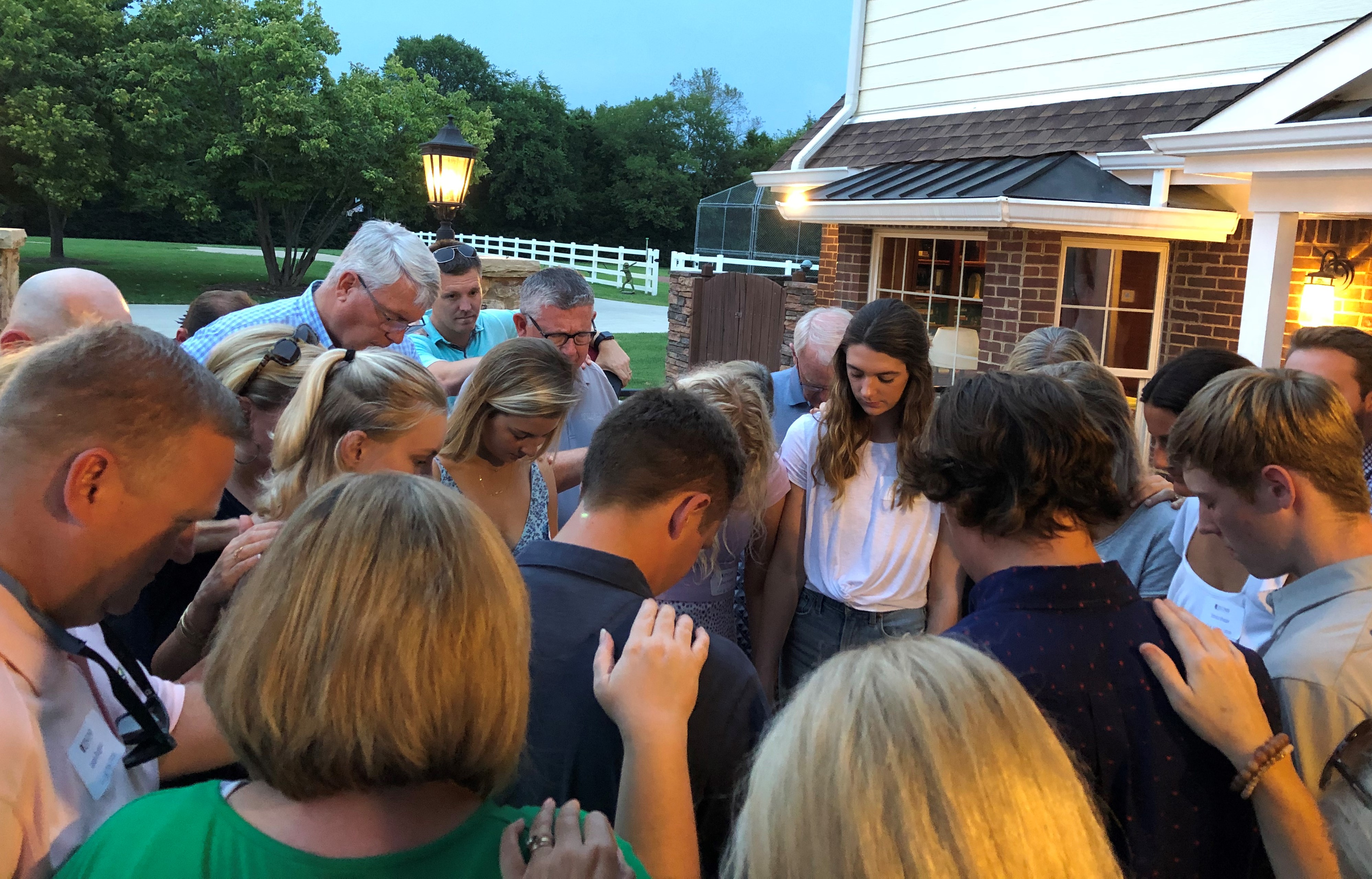
Last week I attended a “send-off party” in Murfreesboro, a sweet event that gathered incoming Lipscomb students from Rutherford County along with parents, friends, alumni, and staff to “send off” these young people on their college journey. At the end, we gathered around them and prayed for what is to come, and if they are anything like me, they do not have a clue.

But I hope they sensed the excitement of something unknown but good that is about to begin. That is what I sense today.