
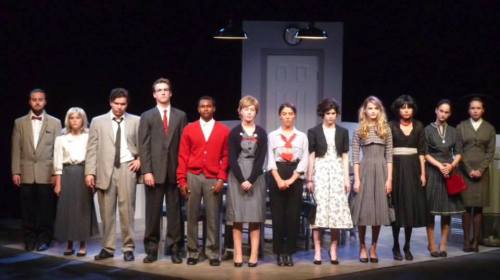
 My wife and I attended the opening night of Twelve Angry Americans at Malibu High School last Thursday. Nobody does high school theater quite like Malibu High. It was our first time back since our youngest daughter exited high school stage right a couple of years ago, and it was no surprise to discover that Jodi Plaia is still delivering terrific shows. The entire cast was fantastic, and we particularly enjoyed seeing two of our talented high school friends–Dominic (Juror 1) and Taylor (Juror 3)–in starring roles.
Twelve Angry Americans is Twelve Angry Men adjusted for gender equity, and if you are unfamiliar with the story, it is a moving drama of jury deliberations in the murder trial of an inner-city teen that carried a mandatory execution sentence. The play was written and set in the 1950s in the age of McCarthyism and the Civil Rights Movement and portrayed the fragile nature of democracy in a powerful way. Twelve Angry Men hit the big screen starring Henry Fonda before the decade ended in what is now considered an all-time classic film.
It was sobering to realize that around the time the play ended on Thursday evening my home state of Arkansas executed its fourth person in eight days after twelve years with zero executions. A law school classmate of mine represented the first to be killed and had shared a poignant description of the final hours just days before. Arkansas tried to execute eight people in eleven days because a drug it uses for executions that has been involved in several botched executions is now difficult to obtain and expires today. It is awful to believe that is true, but apparently that was the motivation behind the rush.
I have definite opinions about the death penalty and am bright enough to realize that not everyone agrees with me — or has to. But I would hope that we would engage in deeper conversations on such a grave issue that would at least prevent situations where a state government races the clock to kill citizens because its controversial prescription is running out.
The real message of Twelve Angry Americans is that we must overcome our individual desires, passions, and prejudices to work together for the good of all. As the play so powerfully shows, that is painful, difficult, courageous, and time-consuming work. It feels like the world is less and less interested in putting in that sort of effort.
I am grateful to the young actors and actresses for the important invitation.
 My new office is in the heart of Seaver College on the Pepperdine University campus, and after close to a decade in a law school setting it is interesting to be around undergraduate students on a daily basis.
 It was just a truck.
 Last week, my oldest daughter and I attended a concert of the Los Angeles Philharmonic, or as we sophisticated people call it, the LA Phil.
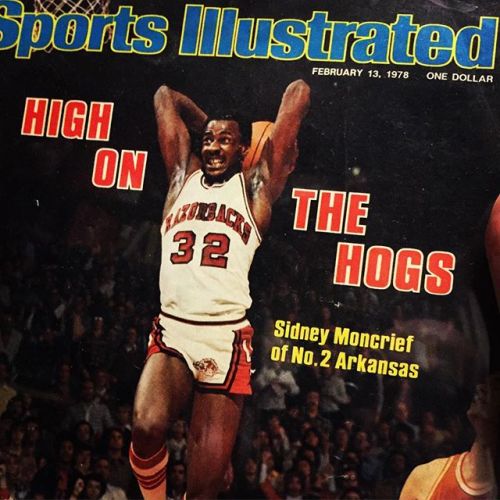 Basketball used to be my thing.
 My parents’ birthdays are two days apart in early December. Well, technically, sixteen years and two days apart. My dad turned down an appointment to the United States Naval Academy in the late 1930s but enlisted alongside thousands of other Americans when Pearl Harbor was attacked the day after his twenty-first birthday. Meanwhile, my mom celebrated her fifth birthday in the Arkansas hills the day after the attack. While my dad headed off to the Pacific Theater to defend America’s freedom, my mom was a little girl having her freedom defended.
 I’m not sure that I met the height requirement for this American roller coaster, but I am apparently strapped in and here we go.


 Starting to Look Up