Can You Imagine?

Graham Greene’s classic novel, The Power and the Glory, is set in an historical period when Christianity was outlawed in Mexico, and the main character, an alcoholic priest, lands in an inhuman, overcrowded jail as a result of his addiction. It is there, surrounded by hopelessness, that the priest reveals his identity only to be ridiculed by a fellow inmate for being a bad priest.

Greene writes:

He couldn’t see her in the darkness, but there were plenty of faces he could remember from the old days which fitted the voice. When you visualized a man or woman carefully, you could always begin to feel pity… that was a quality God’s image carried with it… when you saw the lines at the corners of the eyes, the shape of the mouth, how the hair grew, it was impossible to hate. Hate was just a failure of imagination.

That line: Hate was just a failure of imagination.

I would like to aim higher in life, and if I could be so bold, to learn even to love, but maybe the prerequisite is first to learn not to hate. And today, in our (politically and otherwise) polarized society, conquering hate would be refreshing progress.

I am convinced that the inner child in each of us recalls how to imagine. If true, then the crucial step is to notice hate, demonization, and condescension as these harmful sensations seek to harden into the dismissal of another as less than human and choose to replace the hate with a sincere desire to understand. For any progress to occur, we must understand one another, especially those we have a predisposition to despise.

I imagine this is possible.

Breaking Curses

The baseball playoffs arrive this week with a potential Cardinals-Cubs matchup. I will now reveal my important Steve Bartman theory even though it is not in my self-interest.

First, let me say that an objective fan would not place a bet on my much-beloved Redbirds this postseason. Although the Cardinals own the best record in the major leagues, the team limps into the playoffs both physically and in baseball play down the stretch. Still, I wouldn’t necessarily bet against the Cardinals for reasons that go straight to my Bartman theory.

For those who do not know, the Chicago Cubs are cursed. It is sad, but it is true. The Cubbies last won the World Series in 1908 and have not won the National League pennant since they were cursed by a goat in 1945. In 2003, twelve long years ago now (and the last time the Cubs won a playoff game), the Cubs were looking good and just five outs away from breaking the curse and going to the World Series when an unsuspecting fan named Steve Bartman tried to catch a foul ball and foiled the attempted catch of Cubs left fielder, Moises Alou. Alou threw a veritable fit, the Cubs lost the game (and ultimately the series), and Bartman became the bearer of the curse, sadly making him more (in)famous than that old goat.

So, my theory:

I am convinced that if Moises Alou would have simply smiled and ran back to left field that the Cubs would have gone to the World Series. I am serious. I believe that Alou’s fit fueled the crowd reaction, which led to Prior’s subsequent wild pitch, which led to Alex Gonzales’s error and the downfall of Western civilization.

I may be wrong, but as it stands now, the alternative theory is that a sports franchise was cursed by a goat.

My point is this: Life sure seems to be more cursed the more you believe you are cursed. Conversely, things start to look up the more you expect things will start to look up. Some call it self-fulfilling prophecy, and some call it the power of positive thinking. I just call ‘em as I see ‘em, and I’m calling this one as a strike right down the middle of the plate.

Last week, a Cubs fan started a GoFundMe page to raise money to send Steve Bartman to the wildcard game in Pittsburgh. A Cubs fan, not a Pirates fan. I love it. Bartman turned it down and gave the money to charity, but I love the campaign. It was touted as an act of forgiveness, but I think it was much more: That, my friends, is the way you break a curse.

Human Goodness

October is one of my twelve favorite months, but baseball might earn it top billing. It helps that I am a lifelong St. Louis Cardinal fan.

I missed most of the important Cardinals-Pirates game this past Monday due to my teaching schedule but made it home just in time to witness the scary and violent collision between two Cardinal outfielders, Peter Bourjos and Stephen Piscotty. Piscotty, a phenomenal rookie talent, was knocked out cold on the play. Players were visibly shaken as Piscotty lay motionless on the outfield grass, and players and fans alike prayed in the unusual silence of a pennant race baseball game between division rivals.

Eventually, the medical staff strapped the promising young athlete down and drove him along the warning track on the way to the hospital as the crowd silently watched and ESPN cameras followed. In a memorable moment, Piscotty weakly raised his left hand to wave to the visiting crowd.¹ The crowd erupted in applause as if their hometown hero had just delivered a key base hit.

I was moved simply by the ovation.

I have a master’s degree in cynicism that I’m not particularly proud of, but it allows me to create all sorts of scenarios. Maybe it was Cardinal fans that happened to scream their applause next to ESPN’s audio sensors. Maybe people from Pittsburgh are particularly kind. Maybe the Pirate fans coincidentally tried to start The Wave just as Piscotty gave a wave.

But I don’t think so.

I’m pretty sure there is some level of goodness in all human beings, and that is exactly what moved me. It was a brief moment when people who paid real money in hopes of watching their team destroy the hopes and dreams of the other team raised a hearty cheer for an enemy solider simply because they identified with him as a fellow human being.

A preacher once asked congregants to draw a line down the center of a piece of paper and write all the reasons they had to be happy on one side and all the reasons they had to be sad on the other and then asked which side they chose to live on. I suggest the same exercise but listing the reasons to believe in the goodness of humanity on one side and the reasons to believe otherwise on the opposite: Which side of that exercise will you choose to live on?

There are elements of both goodness and not-goodness in my life (e.g., with Piscotty hurt on the field, I am embarrassed to say that I had the actual thought that I was thankful that Bourjos made the spectacular catch) and am darn near positive that goes for everyone else, too, but what a difference it makes when we see the good in another before we see anything else.

I once read advice to live life as a reverse paranoid, i.e., walk around convinced that everyone is out to help you. That is a definite day-changer!

—————————————————————————————————

¹ Piscotty is okay. Thankfully, he only suffered a head contusion, but it was scary.

Responding to Criticism

My experiences as a coach and pastor and now administrator include public scrutiny and sharp critique of my words and actions. For my next trick, I think I will run for Pope. Pope Francis’s visit to the United States has rightfully garnered much attention, including strong banter about what he should or shouldn’t say (or now, what he should or should’ve said). I have a picture of how the private conversation between Pope Francis and President Obama might have gone last week:

Pope Francis: “I heard you aren’t really a Christian.”
President Obama: “I heard you aren’t really a Catholic.”

And then a belly laugh, followed by a conversation about the best recipe for macaroni salad or anything else as a relief from such intense scrutiny. I could be wrong.

Criticism comes with the job, but the responses are optional. For many, the choice is to avoid the job that receives heavy criticism. If I had a dollar for everyone who said they wouldn’t want to be president today because of the scrutiny, I could form a PAC. For others, the choice is a fretful attempt to please everyone, which is a recipe for long-term therapy. For still others, the choice is a condescending dismissal of critics as idiots, which makes for a dangerous leader.

Instead, I have four suggestions for responding to criticism:
1. Don’t avoid criticism or surround yourself with adoring fans. In fact, seek diverse feedback and hold loosely to your plans. Odds are that you will need to change every once in a while.
2. Maintain realistic expectations of your own abilities. You will fail and deserve criticism if you ever hope to accomplish anything worthwhile. That is (and has to be) okay.
3. Don’t let fear of criticism keep you from attempting to do something worthwhile. The only things worth doing in life are hard. (As Mellencamp sang, “No one said it’d be easy . . . . So suck it up and tough it out, and be the best you can.”)
4. Remember that your best is good enough. Because it is your best.

Stronger Backs

Dave+Dravecky+St+Louis+Cardinals+v+San+Francisco+1xL7IA71CKTl

As a lifelong baseball fan, the story of Dave Dravecky is firmly imprinted in my memory. It is hard to forget an all-star pitcher whose cancer led to the amputation of his pitching arm.

Dravecky was (and is) an outspoken Christian who speaks and writes openly about his experiences. In one of his books, he wrote the following about members of his faith tradition:

“In America, Christians pray for the burden of suffering to be lifted from their backs. In the rest of the world, Christians pray for stronger backs so they can bear their suffering.”

Although I question the validity of such a broad statement, I believe the allusion to a worldview that sees suffering as optional is worth contemplation. Because it isn’t optional.

The premise of this entire blog is that hope is possible regardless of circumstances. If I am not careful, “starting to look up” may sound like what happens once suffering leaves the building, and while I cannot blame anyone for wishing suffering would go away, research is pretty solid on the ubiquitous nature of suffering in this life we share.

Therefore, my personal goal is to develop the strength of character so that suffering will not win the war. It is that strength, i.e., a stronger back, that transforms any situation so that things begin to look up.

Reinvent Yourself

you-can-call-me-al

I join those who say Facebook is at least worthwhile on your birthday. I liked every nice message last week, although it took forever to “like” each message, but as I worked through the list, the number of names I have collected over the years was striking.

#1: LITTLE AL: That made me smile. I was named after my dad who was named after his dad, so I was Little Al to my dad’s Big Al for many years until I outgrew him by eight inches, which led to…

#2: BIG AL: That was high school and college, partly due to my height, but partly because Al is a name that just feels right with Big in front of it, like John, Dave, Bird, Brother, Trouble, Sur, Government…

#3: COACH AL: My first job was coaching my high school alma mater, and when the superintendent introduced me to the student body, he simply couldn’t bring himself to refer to someone he knew since Little Al as Coach Sturgeon; henceforth, Coach Al.

#4: MR. STURGEON: I moved to a non-coaching job at a new school. Good job, but boring name.

#5: BROTHER AL: My next career was preaching, and we remained in the South, so you get it.

#6: DEAN STURGEON: And then there is now. This one is slowly catching on.

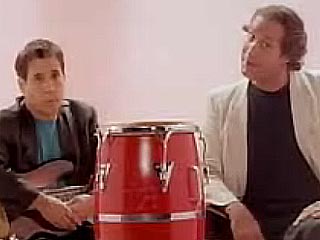
Which do I like best? All of them because each brings awesome memories of great people. Which do I prefer? I don’t, but if you have no reason to use one in particular, then Paul Simon’s song (and classic music video) sums up my advice: You Can Call Me Al.

What does this have to do with anything? Whatever you think about the scientific theory of human evolution, it is undeniable that we evolve as individual human beings, and our capacity to reinvent ourselves appears limitless. So are you happy with all of “you” right now? I suspect none of us are, so the question emerges: Which version of you comes next? You do get to choose.

Today, an elderly couple passed me on the 101 test driving a sparkling white Mercedes convertible with a handicap placard dangling from the rear view mirror in the breeze. That isn’t my personal style, but hey, Fred and Myrtle are making a choice!

It Is Better to Have Loved

I write this on a dark airplane late at night on my birthday.  It is at once the most consequential and inconsequential birthday of my life because who really cares about birthdays on the day you leave your youngest child a thousand miles away at college?

We began the college search process a long time ago, and it was a brilliant success.  All the lists, tutors, visits, tests, applications, and t-shirts produced the perfect outcome.  It was also a blast.  The parent-child memories extend from a Dairy Queen in Wisconsin to an anarchist bookstore in San Francisco to crab cakes in a Maryland bar to, in the end, Seattle.  As the credit card commercial says, priceless.  It turns out that the credit card statement is more specific.

It may be an act of will that I am happy tonight.  How can you already miss someone like crazy and still be touchdown-celebration happy for this person who held your heart from the moment you first held her when she was two seconds old?

I suspect it is love.  Pure, unselfish, father-daughter love.

Several friends want to know what today feels like so they can prepare.  For me, it feels great.  Well, great, with a touch of nausea.  Yes, I’d say three parts great and one part nausea.  After all these years, what a great and slightly nauseating day this turned out to be.

Freedom is Respect

As I reflect on last week’s inaugural (and wonderful) Diversity Week at Pepperdine Law, the following passage from my hero, Will D. Campbell, comes to mind.

“The civil rights gains we have made are largely cosmetic,” my old friend, Kelly Miller Smith, told me just before he died. One would have expected to hear those words in earlier times, when the gains of black people had been more modest than it seemed to me they had been during his lifetime and mine. He had been a pivotal figure in it all. Buses and taxicabs, schools, restaurants, theaters, parks, swimming pools, as well as participation in the political process had all been desegregated since he and I had come to Tennessee from Mississippi in the rigidly, segregated decade of the fifties. He from a black church in Vicksburg, I from a white university in Oxford. His little daughter had been one of the nine brave children who faced the violent mobs to begin the slow and painful process of integrated education. The church he pastored for thirty-four years was headquarters for the massive sit-in movement. Quietly or obstreperously, whatever the situation indicated, he negotiated with mayors, governors, merchants, and owners such issues as employment, housing, fairness, and decency in general.

All that he had been party to and more. Yet here he lay, a few weeks from death, saying that all his efforts had produced no more than a cosmetic coating over an inveterate malignancy as socially lethal as the one claiming his life. I protested with a roll call of the improvements he had presided over. He listened in his usual smiling, affable manner as I listed them one by one, beginning with public transportation in 1956 and concluding with his being a dean and teacher in one of the most prestigious universities in the South where he could not have been more than janitor not many years earlier.

“But they still don’t respect us,” he said sadly. After a long pause for needed oxygen, he continued. “Look at the television shows. Listen to the rhetoric on the streets. They still don’t respect us.”

His words were a startling awakening. How far I had missed the point of it all. How dissimilar the promised lands two Mississippi men had envisioned. To grant the truth of his words would be to acknowledge that the years of both of us had been wasted. He spoke with approval and gratefulness for the things I recited, but as he did it became clear to me that the one thing which was behind all else was never his. Respect.

Freedom is respect.

– Will D. Campbell, Forty Acres and a Goat 269-70 (2002).

That is what gave me great joy this past week—the giving and receiving of respect.

The Heroic Life

We have grown weary of recounting where we were on September 11, 2001. There may come a day when new generations ask us to remember, and we most assuredly will for the memories are too strong to fade. But the jury is still out on whether the lessons will endure.

There is one image-turned-lesson that I have pledged never to let fade: Firefighters racing up the stairwells of the World Trade Center as the buildings crumbled. They were simply doing what they were trained to do, which was to be heroic. I want to live like that, too—racing toward danger and not away from it—so it stands to reason that I also want to die that way. That is neither thrill-seeking nor pushing limits nor adrenaline addiction; instead, it is a compelling desire to make the world better for those in great need, which I remain convinced requires leaving safety and venturing toward danger.

Years ago, I read a couplet that captures this goal and have shared it often:

Some want to live within sound of church and steeple bell.
I want to run a rescue shop within a yard of hell.

That.

Looking back, the times in life when I felt most alive were those spent at the Hellside Rescue Shop. In that shop, there must be a portrait of a New York City firefighter racing up those steps. The firefighter is young and brave and determined and has so much to live for, which is exactly what you find in that image—someone living for so much. Today, I spend extra time looking at that inspiring image.

I invite others to consider such a life, one that acknowledges fear but meets it head on. Living for others is preferable to living for self-indulgence, self-preservation, and self-promotion, and the lines to get in are way shorter.

Best Seats

With Stephanie and Brian

This holiday weekend included the opportunity to officiate the beautiful wedding of two special friends.  Top that.

My wedding officiant experience is rather extensive, which now includes seven for law school folks with three more in the queue.  In the early (read: pre-law school) years, my primary role was to keep the terrified groom from puking on his tuxedo prior to the ceremony (note: puke prevention responsibility presumably extended throughout the ceremony), but I have found that grooms with law school experience are a different breed–the Socratic method, law school finals, and the bar exam seemingly combine to make repeating after me in public far less intimidating.

There is one wedding officiant moment that is hands down the best.  It isn’t perspiring in public, which of course is great.  It isn’t staying on task despite the best efforts of Wedding Screaming Baby, although who wouldn’t love that challenge?  No, the best moment is when the bride appears at the back of the venue prepared to be escorted down the flower-strewn aisle.  The crowd rises simply out of respect for the beauty of it all, and everyone turns and stretches to catch a glimpse of the bridal march.  Except me.  I watch the groom watch the bride.  That is the best moment, and I see it all from the best seat in the house.¹

Brian could hardly stand it yesterday.  Brian is typically a reserved sort of guy, the kind who holds his cards close to the chest, but when Stephanie appeared, illuminated by the Georgia late afternoon sunshine on the arm of her loving father, he almost had to sit down.  We were all perspiring, but I am nearly positive that wasn’t perspiration happening inside his eyelids.

If love really is all we need (and it is), and weddings are the most vivid expressions of love (and they just may be), then yesterday I had the best seat for the best moment in the best expression of the best thing in the entire universe.  Yes, I am gloating.

I am convinced that the best things in life are not for sale.  My advice for you is to figure out what those things are and jockey for the very best seats.  As per usual, I accidentally stumbled into this one, but I can promise you that it is better than anything available for purchase on StubHub.

—————————————————————————————————-

¹ For Bible fans: “…as a bridegroom rejoices over his bride, so will your God rejoice over you.” – Isaiah 62:5b