Reinvent Yourself

you-can-call-me-al

I join those who say Facebook is at least worthwhile on your birthday. I liked every nice message last week, although it took forever to “like” each message, but as I worked through the list, the number of names I have collected over the years was striking.

#1: LITTLE AL: That made me smile. I was named after my dad who was named after his dad, so I was Little Al to my dad’s Big Al for many years until I outgrew him by eight inches, which led to…

#2: BIG AL: That was high school and college, partly due to my height, but partly because Al is a name that just feels right with Big in front of it, like John, Dave, Bird, Brother, Trouble, Sur, Government…

#3: COACH AL: My first job was coaching my high school alma mater, and when the superintendent introduced me to the student body, he simply couldn’t bring himself to refer to someone he knew since Little Al as Coach Sturgeon; henceforth, Coach Al.

#4: MR. STURGEON: I moved to a non-coaching job at a new school. Good job, but boring name.

#5: BROTHER AL: My next career was preaching, and we remained in the South, so you get it.

#6: DEAN STURGEON: And then there is now. This one is slowly catching on.

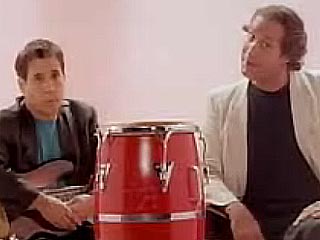
Which do I like best? All of them because each brings awesome memories of great people. Which do I prefer? I don’t, but if you have no reason to use one in particular, then Paul Simon’s song (and classic music video) sums up my advice: You Can Call Me Al.

What does this have to do with anything? Whatever you think about the scientific theory of human evolution, it is undeniable that we evolve as individual human beings, and our capacity to reinvent ourselves appears limitless. So are you happy with all of “you” right now? I suspect none of us are, so the question emerges: Which version of you comes next? You do get to choose.

Today, an elderly couple passed me on the 101 test driving a sparkling white Mercedes convertible with a handicap placard dangling from the rear view mirror in the breeze. That isn’t my personal style, but hey, Fred and Myrtle are making a choice!

It Is Better to Have Loved

I write this on a dark airplane late at night on my birthday.  It is at once the most consequential and inconsequential birthday of my life because who really cares about birthdays on the day you leave your youngest child a thousand miles away at college?

We began the college search process a long time ago, and it was a brilliant success.  All the lists, tutors, visits, tests, applications, and t-shirts produced the perfect outcome.  It was also a blast.  The parent-child memories extend from a Dairy Queen in Wisconsin to an anarchist bookstore in San Francisco to crab cakes in a Maryland bar to, in the end, Seattle.  As the credit card commercial says, priceless.  It turns out that the credit card statement is more specific.

It may be an act of will that I am happy tonight.  How can you already miss someone like crazy and still be touchdown-celebration happy for this person who held your heart from the moment you first held her when she was two seconds old?

I suspect it is love.  Pure, unselfish, father-daughter love.

Several friends want to know what today feels like so they can prepare.  For me, it feels great.  Well, great, with a touch of nausea.  Yes, I’d say three parts great and one part nausea.  After all these years, what a great and slightly nauseating day this turned out to be.

Freedom is Respect

As I reflect on last week’s inaugural (and wonderful) Diversity Week at Pepperdine Law, the following passage from my hero, Will D. Campbell, comes to mind.

“The civil rights gains we have made are largely cosmetic,” my old friend, Kelly Miller Smith, told me just before he died. One would have expected to hear those words in earlier times, when the gains of black people had been more modest than it seemed to me they had been during his lifetime and mine. He had been a pivotal figure in it all. Buses and taxicabs, schools, restaurants, theaters, parks, swimming pools, as well as participation in the political process had all been desegregated since he and I had come to Tennessee from Mississippi in the rigidly, segregated decade of the fifties. He from a black church in Vicksburg, I from a white university in Oxford. His little daughter had been one of the nine brave children who faced the violent mobs to begin the slow and painful process of integrated education. The church he pastored for thirty-four years was headquarters for the massive sit-in movement. Quietly or obstreperously, whatever the situation indicated, he negotiated with mayors, governors, merchants, and owners such issues as employment, housing, fairness, and decency in general.

All that he had been party to and more. Yet here he lay, a few weeks from death, saying that all his efforts had produced no more than a cosmetic coating over an inveterate malignancy as socially lethal as the one claiming his life. I protested with a roll call of the improvements he had presided over. He listened in his usual smiling, affable manner as I listed them one by one, beginning with public transportation in 1956 and concluding with his being a dean and teacher in one of the most prestigious universities in the South where he could not have been more than janitor not many years earlier.

“But they still don’t respect us,” he said sadly. After a long pause for needed oxygen, he continued. “Look at the television shows. Listen to the rhetoric on the streets. They still don’t respect us.”

His words were a startling awakening. How far I had missed the point of it all. How dissimilar the promised lands two Mississippi men had envisioned. To grant the truth of his words would be to acknowledge that the years of both of us had been wasted. He spoke with approval and gratefulness for the things I recited, but as he did it became clear to me that the one thing which was behind all else was never his. Respect.

Freedom is respect.

– Will D. Campbell, Forty Acres and a Goat 269-70 (2002).

That is what gave me great joy this past week—the giving and receiving of respect.

The Heroic Life

We have grown weary of recounting where we were on September 11, 2001. There may come a day when new generations ask us to remember, and we most assuredly will for the memories are too strong to fade. But the jury is still out on whether the lessons will endure.

There is one image-turned-lesson that I have pledged never to let fade: Firefighters racing up the stairwells of the World Trade Center as the buildings crumbled. They were simply doing what they were trained to do, which was to be heroic. I want to live like that, too—racing toward danger and not away from it—so it stands to reason that I also want to die that way. That is neither thrill-seeking nor pushing limits nor adrenaline addiction; instead, it is a compelling desire to make the world better for those in great need, which I remain convinced requires leaving safety and venturing toward danger.

Years ago, I read a couplet that captures this goal and have shared it often:

Some want to live within sound of church and steeple bell.
I want to run a rescue shop within a yard of hell.

That.

Looking back, the times in life when I felt most alive were those spent at the Hellside Rescue Shop. In that shop, there must be a portrait of a New York City firefighter racing up those steps. The firefighter is young and brave and determined and has so much to live for, which is exactly what you find in that image—someone living for so much. Today, I spend extra time looking at that inspiring image.

I invite others to consider such a life, one that acknowledges fear but meets it head on. Living for others is preferable to living for self-indulgence, self-preservation, and self-promotion, and the lines to get in are way shorter.

Best Seats

With Stephanie and Brian

This holiday weekend included the opportunity to officiate the beautiful wedding of two special friends.  Top that.

My wedding officiant experience is rather extensive, which now includes seven for law school folks with three more in the queue.  In the early (read: pre-law school) years, my primary role was to keep the terrified groom from puking on his tuxedo prior to the ceremony (note: puke prevention responsibility presumably extended throughout the ceremony), but I have found that grooms with law school experience are a different breed–the Socratic method, law school finals, and the bar exam seemingly combine to make repeating after me in public far less intimidating.

There is one wedding officiant moment that is hands down the best.  It isn’t perspiring in public, which of course is great.  It isn’t staying on task despite the best efforts of Wedding Screaming Baby, although who wouldn’t love that challenge?  No, the best moment is when the bride appears at the back of the venue prepared to be escorted down the flower-strewn aisle.  The crowd rises simply out of respect for the beauty of it all, and everyone turns and stretches to catch a glimpse of the bridal march.  Except me.  I watch the groom watch the bride.  That is the best moment, and I see it all from the best seat in the house.¹

Brian could hardly stand it yesterday.  Brian is typically a reserved sort of guy, the kind who holds his cards close to the chest, but when Stephanie appeared, illuminated by the Georgia late afternoon sunshine on the arm of her loving father, he almost had to sit down.  We were all perspiring, but I am nearly positive that wasn’t perspiration happening inside his eyelids.

If love really is all we need (and it is), and weddings are the most vivid expressions of love (and they just may be), then yesterday I had the best seat for the best moment in the best expression of the best thing in the entire universe.  Yes, I am gloating.

I am convinced that the best things in life are not for sale.  My advice for you is to figure out what those things are and jockey for the very best seats.  As per usual, I accidentally stumbled into this one, but I can promise you that it is better than anything available for purchase on StubHub.

—————————————————————————————————-

¹ For Bible fans: “…as a bridegroom rejoices over his bride, so will your God rejoice over you.” – Isaiah 62:5b

A Framework for Meaning

2

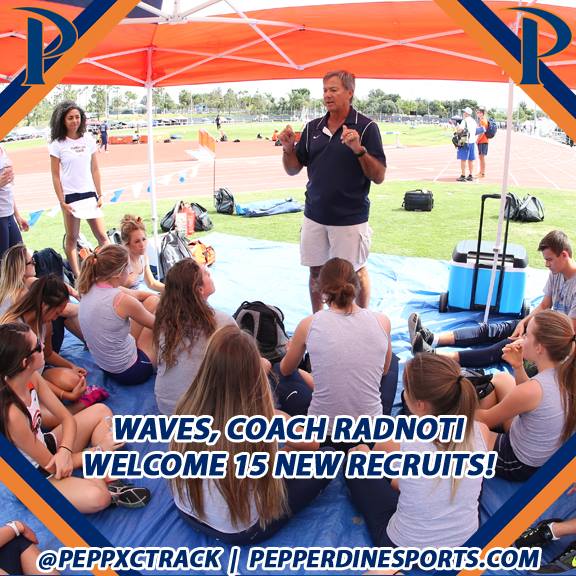
I have a new side gig as team chaplain for the Pepperdine Cross Country team. Go Waves! My friend, “Coach Rad,” graciously offered the opportunity to join the team at an early morning practice each week to share a five-minute devotional message. I like both running and talking, so I feel confident that my messages will live up to the compensation package (as a volunteer).

This week, I shared my suspicion that the team was an ordinary cross-section of humanity so that some of the athletes appreciated a devotional message at dawn while others were ambivalent but would kindly listen and still others wished that I would go to the wrong practice location.

Regardless, faith, religion, etc. is an historic attempt to develop a framework for meaning in life. From births to deaths and all the in-between major moments in our lives, we have an inherent need to make some sense of it all, so even if my morning devotionals fall flat as a running track, deep consideration of meaning in life is worth the trouble.

I then shared the foundational-yet-downright-disturbing Bible story of Cain and Abel. Geographers cite the domestication of plants and animals as the launch of civilization, and Cain and Abel represent this great beginning. In the story, one of the brothers (Abel) pleased God while the other brother (Cain) did not, so guess which one bled out in a field at the hands of his brother? Yeah, I guessed wrong the first time, too. The Bible’s editorial department could have used some marketing experts at least in the first few pages.

But here we are, trying to make sense of it all, realizing from an early age that sometimes the bad actors win while the good folks get the shaft. Welcome to life as we know it. Instead of filing a formal complaint with the Fairness in Life Committee that never seems to respond in a timely manner, the necessary question shifts from How do I always win? (which I voted for but apparently is not on the menu) to What is worth living for? (which is on the menu). Or, maybe better stated in the negative: What is worth dying for?

I have my answers.

You may remember from middle school the wonderful book by Lois Lowry, The Giver, a compelling science-fictiony story that challenges our assumption that a pain-free world is best after all. Nobody without a masochistic personality disorder prefers pain, but a well-formed framework for meaning in life allows one to endure it when it comes—and those meaning-full things are even worth the pain.

These cross country runners have a pretty good handle on enduring pain for a greater goal, so I think they have a pretty good shot at getting a handle on this old life, too.

Resurrection

My faith leads me to believe in resurrection, not just as a one-time event but as a truth that can provide hope to any circumstance. This entire blog—Starting to Look Up—is a direct reflection of that idea.

Saturday marked the tenth anniversary of Hurricane Katrina, which received varying levels of attention throughout the country.  Some of you know that my family experienced Katrina firsthand and have heard more than enough about it from me; however, many of our new friends in California had no idea and have kindly expressed interest.  To the latter, you may be interested to know that I wrote a little journal that described our experiences in the months that followed the storm, and recently, although a bit embarrassed, I published the journal through a print-on-demand outlet–embarrassed in part from not appreciating my grammatical deficiencies until law school made them apparent, but also because I did not clean it up at all, i.e., no editing, no page numbers, etc. But that may be appropriate since the entire Katrina experience was a tad messy.

For a flavor, here is an entry from the book that was published as a letter to the editor in the Sun Herald newspaper for Christmas 2005. Now, in retrospect a decade later, I believe even more strongly in resurrection and ever-present hope.

I’LL BE HOME FOR CHRISTMAS

In August 1943, over six decades before Hurricane Katrina, Kim Gannon and Walter Kent copyrighted a song titled, “I’ll Be Home For Christmas.” That same year Bing Crosby recorded their brand new song, and it became an instant holiday classic. For its first Christmas, it comforted thousands of American homes ripped apart at the hands of the Second World War, but this was only its big beginning. It has comforted many more every Christmas season since.

There is something both mournful and peaceful about the tune and lyrics:

I’ll be home for Christmas / You can count on me
Please have snow and mistletoe / and presents on the tree
Christmas Eve will find me / Where the love light gleams
I’ll be home for Christmas / If only in my dreams

It plays well in Mississippi this 2005 holiday season, too.

Long ago, I was taught the difference between a house and a home. A house (I learned) has a roof and walls, while a home consists of people. It was a clear distinction. Using these handy definitions of course, the tens of thousands of Gulf Coast residents facing the Christmas season displaced from their “houses” should just toughen up and be downright holiday-happy that they can be “home” for Christmas in a tent, or in a trailer courtesy of the Federal Emergency Management Agency, or even several states away from where their mailbox stood in August.

But I don’t like the definition. Not anymore.

I, for one, think ornaments lovingly handcrafted by sticky three-year-old hands from years gone by are an important part of a home. And I think pictures of Christmases past, with fresh looks of surprise at the sight of a newly-opened presents, are just a downright vital part of a home, too. You can disagree all you want. And I think rarely-seen homemade videos of the last Christmas together before the kids took off for college, and cookbooks with that special recipe for fudge, and that Bing Crosby CD we always listened to on Christmas morning, are all very important ingredients in this wonderful word called “home.”

And this Christmas, thousands upon thousands of these precious ingredients are piled in a landfill somewhere. This is why I think a lot of things about this particular Christmas season sucks. Pardon my French.

Oh, but we’ll make the best of it. There will be downright cute attempts at making a FEMA trailer (of all things) festive. There will be Christmas dinners in hotel rooms and readings of “The Night Before Christmas” with more family members in residence than normal, and important explanations that Santa Claus not only comes down chimneys, but he also comes right through the flap on the tent.

We’ll do our best. And Christmas, believe it or not, will still help us. After all, it revolves around the story of a displaced family living in a barn. And how that story is the birth of hope for the whole world. We need to hear that story most desperately this year.

But in spite of it all – even while considering the very source of hope – we will sing that old Bing Crosby song with extra meaning this year.

Yes, we residents of the Gulf Coast will be home for Christmas, but this year, it will only be in our dreams.
The Hard Work of Reconciliation

I live in a perpetual dilemma because reconciliation is possibly my most cherished value and it seems the whole world prefers to choose sides. And in the good news department, a recent study revealed that “unconscious biases are now at least as strong across political parties as they are across races.”¹ Oh goody. And just in time for a presidential race.

There is some comfort at my place of employment where we are emphasizing the celebration and engagement of diversity. Our entering class is the most racially diverse in school history, and we have great plans for the year ahead, including a celebration of the twenty-plus nationalities represented in the school, increased interfaith dialogue, and regular engagement of the most controversial national headlines.

It seems that some place should begin the difficult work of societal reconciliation, and the legal profession is as good a place as any. We have surely played a significant role in the fractures.

Before you unleash your lawyer jokes, consider the friendship of two lawyers-turned-Supreme-Court justices, Ruth Bader Ginsburg and Antonin Scalia. Read this L.A. Times article and tell me why the rest of us cannot get along if these two can be fast friends. There is even an opera that celebrates this unlikely friendship, and a recent review closed with the following line: “Could we please make it a constitutional requirement that no one can be sworn into office in the White House or Congress without having first seen ‘Scalia/Ginsburg’ [the opera]?”

There is a provocative article in the current issue of The Atlantic on the role of higher education in preparing students for life in this world. Form your own conclusions, but there is a passage near the end of the article that I love: “Teaching students to avoid giving unintentional offense is a worthy goal, especially when the students come from many different cultural backgrounds. But students should also be taught how to live in a world full of potential offenses.”

That should keep us busy for a little while.

—————————————————————————————————-

¹ Greg Lukianoff & Jonathan Haidt, The Coddling of the American Mind, THE ATLANTIC, Sept. 2015, at 45.

Job Satisfaction

Although today is technically our first full day of classes, last Monday felt the part since we make such a big deal out of welcoming new students. On that day, I arrived at work at 6:34am and noticed that I was the ninth car in the parking lot. How early do I have to be to be the first one here? When I got out of the car and donned a suit jacket, I noticed Professor Baker running around (literally running, and literally around) the law school complex. I yelled a morning greeting, and he responded, “I’m on a prayer run!”

(If you are unfamiliar, a prayer run (or walk) involves circling a place and praying for the big things that may occur there later on—as opposed to my version of a prayer run, which is praying while I run that I won’t end up in the hospital from said run.)

I then walked into the building and saw Abby and Connie at the front desk, already prepared to welcome our new students. Sure, it was possibly 6:37am by this point, but still. Music was playing over the speakers, and I looked down into the atrium to see our events manager, Suzanne, actually dancing. It may have been 6:38am by this point, so of course everyone should be dancing by then.

I write this to say that my colleagues have diagnosable problems and need professional help.

Well, not really. Instead, I was struck by the privilege to work with such amazing people.

Larry Krieger is a Clinical Professor at the Florida State University College of Law and is well known in legal education for his scholarship on “law student and lawyer health and satisfaction.” I had the honor of hosting a panel that featured Professor Krieger last January where he discussed his brand new article on lawyer happiness, but many law schools have featured his booklets on stress and career choices for years.

In his booklet on career choices, Professor Krieger argued that two things can lead to job satisfaction: (i) actually enjoying what you do; and/or (ii) work that is meaningful to you. If just one of those is true, you can be happy at work. If neither is true, no amount of money, perks, or benefits can produce job satisfaction.

If you have both, you are blessed.

I am blessed.

I recognize that much of the world lives (and much of world history lived) in conditions where “career choice” is oxymoronic, but if you live in a land and time where it is not, choose your target wisely.

Courage

Fear is humanity’s fountainhead of trouble. Courage is a virtue that celebrates triumph over fear. From personal experience, I believe that showing up for law school is in itself an act of courage. Today, as we come to end of the first week with our new students, I offer for all of us Anne Sexton’s fine poem appropriately titled, “Courage,” that describes our lifelong quest to find it.

It is in the small things we see it.
The child’s first step,
as awesome as an earthquake.
The first time you rode a bike,
wallowing up the sidewalk.
The first spanking when your heart
went on a journey all alone.
When they called you crybaby
or poor or fatty or crazy
and made you into an alien,
you drank their acid
and concealed it.

Later,
if you faced the death of bombs and bullets
you did not do it with a banner,
you did it with only a hat to
cover your heart.
You did not fondle the weakness inside you
though it was there.
Your courage was a small coal
that you kept swallowing.
If your buddy saved you
and died himself in so doing,
then his courage was not courage,
it was love; love as simple as shaving soap.

Later,
if you have endured a great despair,
then you did it alone,
getting a transfusion from the fire,
picking the scabs off your heart,
then wringing it out like a sock.
Next, my kinsman, you powdered your sorrow,
you gave it a back rub
and then you covered it with a blanket
and after it had slept a while
it woke to the wings of the roses
and was transformed.

Later,
when you face old age and its natural conclusion
your courage will still be shown in the little ways,
each spring will be a sword you’ll sharpen,
those you love will live in a fever of love,
and you’ll bargain with the calendar
and at the last moment
when death opens the back door
you’ll put on your carpet slippers
and stride out.