Helping Hands

people_watch_in_shock

It felt important to visit the 9/11 Museum while in New York City last week. My wife and I successfully navigated the famous subway system and arrived mid-morning, allowing a couple of hours for a visit based on the website’s recommendation, but it took us three, and honestly, we were so overwhelmed by the emotion (and sheer size) of the place that we could have stayed all day. It was breathtaking in multiple ways.

It would take an entire book to describe the visit, so I will simply share one surprising thing that stood out to me over and over while looking at countless images of those looking on in horror that fateful day: Hands.

We are taught as children to use our hands to cover our mouths when we cough. We are taught in baseball and golf and tennis, for example, how to hold a bat/club/racket. We are taught as university employees during mandatory sexual harassment training where we can and cannot place our hands on colleagues and students. But we aren’t taught what to do with our hands when unspeakable tragedy occurs, and yet we must have all received the same memo from what I observed in those haunting photographs from September 11, 2001, like the one above.

Hands over mouth. Hands on head. Hands covering eyes. Hands reaching empty toward the sky. Over and over and over I kept noticing hands doing the exact same things. One exhibit featured the shirt of a Navy SEAL who served on the team that killed Osama bin Laden, and just above the shirt there was a picture of President Obama and his team watching intently from D.C. while the raid occurred. President Obama literally sat on the edge of his seat with a terribly serious expression on his face, but nearby sat then Secretary of State Hillary Clinton with her hands over her mouth.

I’m writing with zero research so I suspect there are sophisticated studies that explain this phenomenon, but I’m shooting from the hip here and guess that this natural physiological response is a primitive biological/evolutionary attempt at self-defense. When faced with trauma, the hands unconsciously respond to stifle a scream or protect oneself or punch someone else’s self like the fun little game where the doctor hits the bulls-eye on the knee with that little rubber hammer.

This observation and a tiny bit of reflection led me to consider the role of hands in the moments and days and years after that immediate instinctive reaction. I also saw pictures where hands shared hugs with the grief-stricken. I saw touching handwritten letters. I saw and heard and read many accounts of the hands that rescued life and cleared away the rubble. I saw works of art produced to honor the victims—in fact, I was spending time in and now writing about a spectacular museum and memorial for remembrance and healing that was designed and built by many hands.

There is the corresponding dark side, of course, in that hands brought the death and destruction that led to the need for all of this in the first place, but I left the museum thinking about how hands can bring life—and how they seem to want to bring life in the face of death.

Won’t you lend a hand for life?

A Master’s Degree

If my ten years as a preacher count, and I vote that they should, education has been my day-to-day life for as long as I can remember. But education is familiar to us all, and I suspect that most of us have a similar picture when we hear words like “student” and “teacher” and “classroom”—and that picture is of learners arranged in neat little rows poised to have their brains filled by a knowledgeable instructor standing at the front of the room. Am I right?

When I was a preacher, I became particularly interested in the word “disciple” since the Christian Bible seemed to use it an awful lot. When I learned that the original word basically meant “student,” I thought I had a pretty good handle on that thought (see above), but it turns out that teacher/student/classroom in the Middle East a couple of thousand years ago didn’t look exactly like an American high school.

To grasp that picture, think “apprentice.” Instead of multiple teachers individually sharing various areas of expertise with a learner, picture a relationship where the student wants to become the teacher—to know what the teacher knows, to think like the teacher thinks, and see the world like the teacher sees.

Well, that’s a different show altogether.

Yesterday, I had the privilege of speaking to my friends and colleagues in the Student Services Section of the Association of American Law Schools at our national meeting in New York City. My topic was mentoring, and I shared the following quote from poet, Ruth Whitman:

“In every art beginners must start with models of those who have practiced the same art before them. And it is not only a matter of looking at the drawings, paintings, musical compositions, and poems that have been and are being created; it is a matter of being drawn into the individual work of art, of realizing that it has been made by a real human being, and trying to discover the secret of its creation.”

A mentor brings great value to someone who hopes to be an artist, or lawyer, or preacher, or teacher, or butcher or baker or candlestick maker—just about anyone. A mentor provides the opportunity for a learner to be drawn into the mind and heart of a person to discover the secret of what makes that person do what she does.

Mentor possibilities are endless (and potentially affordable, too!). You could choose a specific living, breathing person with oodles of time for you. Um, then again, that might prove impossible. You could choose someone who moved on from this life and learn from that mentor through her writings, biography, or documentary. You could choose a combination of folks for various reasons, a “personal board of directors” as I’ve heard it called.

I am not proposing a complete overhaul of the American educational system. My thought is that we shouldn’t limit our education to simply extracting information from people we call teachers. People do that from hostages! Crawl deeper into the day-to-day mind and heart of someone who lived (or is living) this life well. And learn.

Decide, Then Do

“Workouts are like brushing my teeth. I don’t think about them. I just do them. The decision has already been made.” – Patti Sue Plumer

I love resolutions and make them at any time of year, so yes, I have a new set for 2016. Three of them involve running:

#1: Set a half-marathon PR (under 1:37:10). I will go for it on Super Bowl Sunday alongside seventeen thousand new friends on a reportedly flat and spectacular course at Surf City in Huntington Beach.

#2: Enter the lottery for a chance to run the New York City Marathon. I have never entered a marathon, and if it is going to happen, it might as well be in the world’s largest marathon (fifty thousand runners!). (Running Resolution 2b: If I actually get in, complete the NYC Marathon without a corresponding hospital stay.)

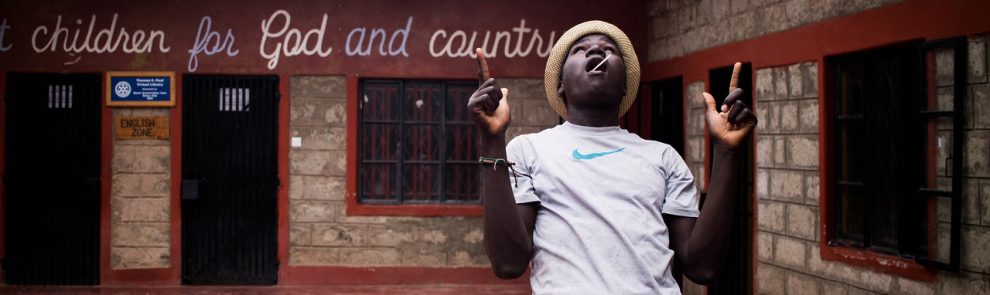
#3: Run in Kenya with Kenyans. This is so incredibly awesome. My wife and I are part of a team headed to Kenya in June to work alongside a beautiful ministry that rescues children from the slums, and the chance to run with Kenyans in Kenya will be the highlight of the year. And if we are chased by a lion, then my ultimate fantasy of actually outrunning a Kenyan will also come true.

Resolutions are famously easy to make—and even keep for the first three days of the year give or take. Resolutions are famously difficult to keep past January, which is why this essay’s epigraph from Olympic distance runner, Patti Sue Plumer, is so curious in its simplicity. You simply decide and then just do? If it was only that easy . . .

What if it is that easy?

We give ourselves far too little credit. Listen closely: You (yes, you) and I (yes, me, too) possess the power to have true resolve. We really do. That resolutions are standing jokes is scandalous.

Marianne Williamson (often mis-attributed to Nelson Mandela, but I know it better from the movie, Coach Carter) famously wrote:

“Our deepest fear is not that we are inadequate. Our deepest fear is that we are powerful beyond measure. It is our light, not our darkness that most frightens us. We ask ourselves, Who am I to be brilliant, gorgeous, talented, and fabulous? Actually, who are you not to be? You are a child of God. Your playing small does not serve the world. There is nothing enlightened about shrinking so that other people will not feel insecure around you. We are all meant to shine, as children do. We were born to make manifest the glory of God that is within us. It is not just in some of us; it is in everyone and as we let our own light shine, we unconsciously give others permission to do the same. As we are liberated from our own fear, our presence automatically liberates others.”

Do not miscalculate your strength: You are stronger than you think. Do not be afraid of failure: Your battle is the fear, not the failure.

Decide.

Then, do. Simply because the decision has already been made.

End of discussion.

Take a Look at Yourself

In November, my youngest daughter gave me a little book titled, “Experience Passport: 45 Ways to Broaden Your Horizons” because, in her words, it is my “kind of thing,” which is true. The back cover reads: “Where will today take you? This passport grants you access to life-enriching experiences. Break out of your routine, learn something new, and discover the world of inspiration around you.” Woo hoo! Let’s go!

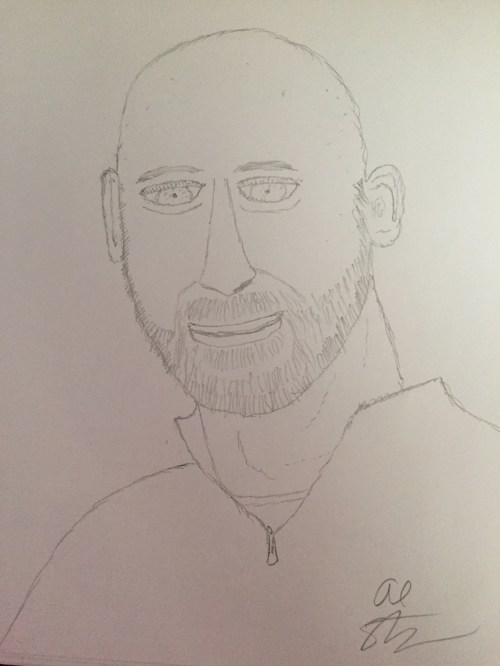
It was a bumpy start. I asked my daughter to pick a number between one and forty-five to get me going, and she went with thirty-two, which read, “Draw a self-portrait every day for thirty consecutive days. At the end of that time, describe how your portraits evolved.”

Well, I completed that task yesterday, and let’s just say that I discovered the answer to a longstanding question of mine as to whether I could be any uglier. It turns out: Yes.

Most of the self-portraits were tight-lipped because the few times I tried drawing teeth looked like I was conducting electrical experiments inside of my mouth. One night, while watching the local news, an artist rendering of a robbery suspect made me question my whereabouts on December 6, at least according to that day’s self-portrait. My Christmas Day attempt at drawing a Santa hat on my bald head looked a little too much like the Grinch.

So what is so “life-enriching” about drawing terrible pictures of myself for thirty days? Is it that my nose improved (the drawing, that is; the real one remains pretty massive)? Is it that in a mere thirty days my self-portraits are slightly less terrible?

Not too inspiring, eh?

On reflection, however, I think that the exercise is worthwhile simply for the metaphor: Spend thirty days closely scrutinizing yourself, blemishes and all, and if you can handle it, you can more accurately determine how to be a better version of you. You know, Michael Jackson, Man in the Mirror, and all that.

The end of one calendar year and the beginning of a new one is apparently a great time for self-reflection, so I encourage you to take a long, hard look at yourself, warts and all, and set out to produce the very best rendition of you. I just spent thirty days trying to do it with a #2 pencil and a sketch pad.

IMG_2325My Best Attempt

Indomitable Freedom

post1Christmas added several items to my sports movie collection, and the first new flick into the DVD player was The Hurricane, a 1999 movie featuring Denzel Washington as Rubin “Hurricane” Carter, a boxer and convict whose triple murder conviction was set aside after decades in prison due to the love and dedication of others. It was Rocky meets Shawshank Redemption meets To Kill a Mockingbird, which is quite the inspirational combination.

The most memorable scene occurs just prior to Carter’s exoneration when he and his young friend, Lesra, have a brief conversation through prison bars. Carter utters the most famous line in the movie: “Hate put me in prison; love’s gonna bust me out.” His young friend brazenly-yet-facetiously responds, “Just in case love doesn’t; I’m gonna bust you out of here.” Carter erupts in laughter, and then, tenderly, reaches through the prison bars to wipe tears from his young friend’s face, and says, softly, “You already have.”

Yes.

This entire blog is predicated on the idea that humanity can be liberated from any circumstance that aims to imprison us—that in our hearts, we can rise above anything. I believe that in the depths of my soul. Argue with me all you want.

But even those who buy the premise may want to argue with me on how we rise above our circumstances, but as we square off, know that my contention is that it is love that busts us out.

Hate imprisons. Love liberates.

————————————————————————————————–

• Click HERE to see Bob Dylan in 1975 singing his protest song, “The Hurricane,” while Carter sat in prison (and remained there for another decade).

Remembering that It Happened Once

By Wendell Berry

Remembering that it happened once,
We cannot turn away the thought,
As we go out, cold, to our barns
Toward the long night’s end, that we
Ourselves are living in the world
It happened in when it first happened,
That we ourselves, opening a stall
(A latch thrown open countless times
Before), might find them breathing there,
Foreknown: the Child bedded in straw,
The mother kneeling over Him,
The husband standing in belief
He scarcely can believe, in light
That lights them from no source we see,
An April morning’s light, the air
Around them joyful as a choir.
We stand with one hand on the door,
Looking into another world
That is this world, the pale daylight
Coming just as before, our chores
To do, the cattle all awake,
Our own frozen breath hanging
In front of us; and we are here
As we have never been before,
Sighted as not before, our place
Holy, although we knew it not.

Wendell Berry, A Timbered Choir: The Sabbath Poems 1979-1997 94 (1998).

Let There Be Light

You live in a prescientific world and notice the amount of sunlight decrease each day, which for you means less time to find food. You wonder if the sun will soon completely vanish and life will end for you in one long cold night. But it doesn’t. Suddenly, miraculously, the day grows longer. The gods have answered your prayers, and there is cause for celebration!

Which is why late December is the holiday season a zillion years later.

Today is the Winter Solstice in Los Angeles (8:49pm PST to be exact), that “shortest day of the year” that signals this darkness/daylight transition and explains why December 25 or so has historically been filled with celebration.

If you are interested, Christians began to co-opt the party about seventeen centuries ago to celebrate Jesus’s unknown birthday and the many pagan traditions that Christians carried into the holiday such as trees, reindeer, gift-giving, and mistletoe led subsequent Christian groups (including Puritans in the American colonies) to unsuccessful attempts to take the Christmas out of Christmas.¹ Those attempts aside, still today, ‘tis the season to be jolly.

Call me a pagan, but for the moment I’m skipping over the religious overtones and arguments to say that I love the astronomical metaphor at this time of year. The darkness has now reached its zenith, and light is about to take the reins.²

I of all people do not want to sound pessimistic, but I have sensed a growing darkness in both rhetoric and reality in this world of ours. It isn’t a stretch of the imagination to identify with those prescientific worriers in thinking that death, destruction, and division just might win and leave us alone in a long cold night. But here is my pledge: I promise to keep watch for more light, and when I see it, to shout the news and unleash the party.³

Let there be light.

——————————————————————————-
¹ My faith tradition used to be somewhat in that crowd, taking the ironic position of being Christians who were okay with celebrating the non-religious parts of Christmas but not the religious parts since December 25 was surely not Jesus’s birthday, i.e., we were the rare Christians attempting to take the Christ out of Christmas. Maybe it was the irony, but I don’t hear that much from our tribe anymore.

² Ha, unintended-yet-sneaky Santa metaphor!

³ And I will warn you now: When I shout the news, the religious reference will be unavoidable: “The light shines in the darkness, and the darkness has not overcome it.” John 1: 5 (New International).

Recurring Fluctuation

Rhythm: (noun) [ri-thəm] 3a: movement, fluctuation, or variation marked by the regular recurrence or natural flow of related elements.¹

You say routine, and I hear same. That’s boring. You say rhythm, and I hear flow. That’s magic. Routine is my middle name (or possibly Andrew), but I want to live with rhythm.

The end of the calendar year brings a holiday break to most people, and it arrived yesterday with much rejoicing for the students in my world. I like the rhythm of the academic calendar, the dependable circuit of fresh beginnings building toward grand crescendos and coveted breaks. Nothing lasts long enough for monotony to set in, but the variety is familiar. It is rhythm, that lovely idea with the oxymoronic definition of recurring fluctuation.

Our particular culture may be rhythm-impaired.

The American notion of work is hard to identify. From one angle it looks all workaholic with a capitalism-infused insatiable desire for more and a technological revolution that never really allows us to go home or on vacation, but from another it looks a little like laziness expecting two full days off a week and only eight hours of work the other days carefully divided by breaks and lunch hours and creative approaches to what counts as being on the clock (not to mention vacations, sick days, and other assorted flavors of leave).

So which is it? Do we work like crazy fifty weeks of the year and then take two weeks to run like crazy on vacation and never really rest? Or, do we never really get around to work?

Can it be both? I answer both because I think we lack rhythm.

The planner in me says that rhythm demands excellent time management skills, and it does, but the rhythmic life demands the creative side of the brain, too. Do not settle for a bland, routinized life. Do not settle for a rudderless, pinball life either.

Seek a life with beautiful recurring fluctuation, and then—and only then—go with the flow.

——————————————————————————————-

¹ Merriam-Webster.com. Merriam-Webster, n.d. Web. 14 Dec. 2015.

Choose a Place

3

The world is apparently falling apart, but don’t give up on it. This thought occurred to me last Saturday over a wonderful meal.

The best meal in Malibu last Saturday was served at the Malibu Community Labor Exchange Holiday Party. I know from firsthand eating. The buffet included tamales, ham, turkey, chicken, enchiladas, sweet potatoes, corn casserole, salads, muffins, and on and on and on. It was like Thanksgiving and Christmas dinners made sweet love one to another and out popped Heaven.

This is the fifth consecutive year that my wife led the party preparations—and she is awesome—but many people prepared, cooked, cleaned, gave, and otherwise pitched in to pull it off, which reminds me of the Labor Exchange itself.

Though not in the travel guides, the Labor Exchange is one cool place. It was created by the Malibu community over two decades ago as a safe and organized (and free) place to hire day laborers. It is a place where everyone is welcome, which attracts men and women from all over the world with impressive skills, interesting life stories, and colorful personalities. Oscar Mondragon is the legendary Center Director and one of my personal heroes. Oscar worked closely with Cesar Chavez prior to joining the Labor Exchange in 1993, and for twenty-two years, six days a week, he has served countless individuals by enforcing community standards, sharing wisdom, and simply caring for all who show up.

Author, Shane Claiborne, once was asked by several enamored college students to identify the greatest cause of their time. Claiborne told them not to choose a cause but to choose people and that the causes will choose themselves. I like that so much I have repeated it a hundred times, although it isn’t exactly how I discovered the Labor Exchange. There have been several “causes” in my life such as children’s issues and housing/homelessness, but instead of choosing a cause or people, I have typically been drawn toward what was happening in my backyard—“local justice” as my friend, Jeff, calls it.

Enter the Labor Exchange. It wasn’t the plight of day laborers that initially drew us in; instead, some folks were taking sack lunches each month and we just joined the crew. Before long, however, through getting to know Oscar and meeting the fascinating workers, we became part of the family.

What I like most about the Labor Exchange is that it is a place. There are lots of terrific causes in this world that deserve attention, but there are far too few places to go in a community where everyone is welcome regardless of, well, anything. See if you can find one where you live, and if you do, don’t be a stranger.

I guess that’s my humble modification to Claiborne’s good advice: Choose a place outside of your particular box, meet the people there, and the causes will choose themselves.

Your Very Best

It is final exam season at Pepperdine University School of Law, and you can cut the tension with a knife (except we are a weapons-free campus, so I suggest doing your best with a spork). I am almost embarrassed to admit that I kind of like the feeling of stress in the air because it reminds me of the fluttery feelings associated with the big game or big performance, but there is a particular weirdness to law school final exam stress brought on by a forced curve, a brilliant set of students, and a solitary grade for an entire course. Admittedly, that kind of stress feels more like an unexpected phone call from your doctor than a piano recital.

As a law student, I discovered that worrying about finals was not particularly helpful, although I sure gave it a good try. The better approach consists of a good strategy, discipline, and the many hours that follow.

My law school days came later than most and happened to coincide with my youngest daughter’s matriculation to middle school. It was nice to go school shopping for pencils together. I remember a day when my daughter received an uncharacteristic poor grade on a school assignment, and in my best attempt at being “dad,” I asked if she had truly done her best. When she said that she had, I told her not to worry about it: that her very best was all anyone could expect, and that’s all she has to give anyway. I was proud of my good advice—and then went back to sulking about my prospects of doing poorly in law school.

Thankfully, two seconds later, it occurred to me that I should heed my own advice: Give it my very best, and be satisfied. For the most part, I did, and I was.

Fear is the enemy of life, and fear of failure is troublesome because popular definitions of success are such that so much is out of our control. But what if success and failure were based on doing your very best with what you have been given?

I’m spreading that word in a law school, on social media, and in my own little brain: Reach for the stars. Take what you get. Learn from it. Reach for the stars again.