Holiday Travel

4am: The alarm sounds. We are going to California today to celebrate Christmas with daughters and friends.

5am: We leave the house. It’s dark, there are seven inches of snow on the ground, and black ice lurks on the neighborhood streets but clear sailing on the highways.

6am: We are first in line at the American Airlines counter at the super-convenient Appleton airport, and the customer at the desk in front of us cannot communicate in English. She is flying alone, and I imagine how frightened she must be.

7am: We are at our gate and learn there are thirty passengers on our small plane to Chicago. A passenger is asked to switch rows for proper weight distribution. This is not an encouraging announcement.

8:31am: We land safely and early at O’Hare, where I proceed to lead us the wrong direction for our connecting flight. Jody makes a remark that in certain cultures might be referred to as “snide.”

9:05am: While waiting to board, I notice a child screaming for a bagel, apparently unfazed by reports of Santa’s all-seeing eyes.

9:17am: I am on the jet bridge and notice Bagel Kid behind me! I start softly humming the “sees-you-when-you’re-sleeping-knows-when-you’re-awake” portion of the song as a subliminal ploy.

9:30am: We are seated and situated on the plane, and Bagel Kid thankfully migrates to the back of the plane. A different child directly behind us seems cute, not desperate for bagels. Her name is clearly Bianca, and she pronounces “tall building” as “taw bill-dwing.” Adorable.

9:40am: It is announced that an untagged black bag was left on the jet bridge. I suddenly wish that I hadn’t watched the terrifying movie “Carry On” recently.

9:41am: We are all asked to pay close attention to the safety demonstration. We completely fail this thoughtful and simple request. Grateful that the flight attendant does not appear to be insulted.

9:45am: Jody is prepared with snack options and ear buds and movies to watch on her phone. I, on the other hand, am unprepared and decide to observe everything for the next three hours and forty-nine minutes of flight time. I did bring one snack, and I start doing rationing math on when to eat it.

9:53am: I notice a dog two rows ahead on the opposite aisle. The dog has a strikingly similar hairstyle to its owner, albeit different colors.

10:01am: We are taxiing for takeoff. I suspect that Bianca learned to talk early, given the thirty-one minutes we’ve been together 

10:03am: We take off.

10:22am: I am already bored. I begin reading the flight information brochure. Under health information, it begins, “Before traveling, talk to your doctor about any concerns.” This seems a bit late to share such helpful advice. I also read about a terrifying blood clot that can kill you during flight.

10:24am: I put away the flight information brochure.

10:30am: A flight attendant uses tongs to serve and collect tiny washcloths to those seated in first class — the dog and I find this wildly entertaining.

11:01am: I eat my snack. Only two hours and fifty-one minutes to go!

11:03am: The snack and drink cart comes and goes, and I notice that the dog owner shares her water and Biscoff cookies with her dog. They are apparently very close.

11:09am: I have secretly been counting the number of people who have unwittingly placed their butt next to the dog’s face while standing in the aisle. We are up to four. The dog has repeatedly refused to sniff. On each occasion the dog has looked away, appearing demure. Impressive.

11:17am: A young father takes his baby to the lavatory to change a diaper. I don’t think I have that level of talent, to change a dirty diaper in an airplane lavatory. I also decide never to go into that particular lavatory.

11:21am: The dad emerges. I conclude that he must lead a NASCAR pit crew. I consider giving a high five but decline for sanitary reasons.

11:23am: Bianca starts saying “I need help” over and over again. She is a little less adorable now.

12:06pm: I must have dozed off for a while. That was helpful.

12:07pm: It occurs to me that I haven’t heard Bagel Kid scream once during the entire trip. I suspect drugs. Or possibly delicious bagels.

12:20pm: No butt-sniff number five! And this unsuspecting gentleman could be involved in the plumbing profession. The dog’s self-control is outstanding. I suspect this good dog would not have eaten its one snack so early on a long flight.

12:28pm: Unfortunately, I have now had a couple of butts stuck in my own face. Followed the dog’s lead: I looked away, unimpressed.

12:52pm: Jody lets me borrow a snack.

12:55pm: I could use a tiny washcloth.

12:59pm: Bianca has been strangely quiet for a very long time. More drug suspicions.

1:24pm: We begin our descent to the City of Angels.

1:52pm: We land safely at LAX, where it is actually 11:52am. I find myself truly hoping that Bagel Kid, Bianca, and the well-behaved dog each enjoy the merriest of Christmases.

12:45pm (PST): Erica greets us at the crazy busy airport. Our checked bag actually arrives. Breakfast in Wisconsin, lunch in Los Angeles. All things considered, a Christmas miracle.

Tomorrow, we take a road trip to Northern California. I wonder what adventures that will bring?!

Abstraction Kills

What can lead one person to kill someone they have never met?

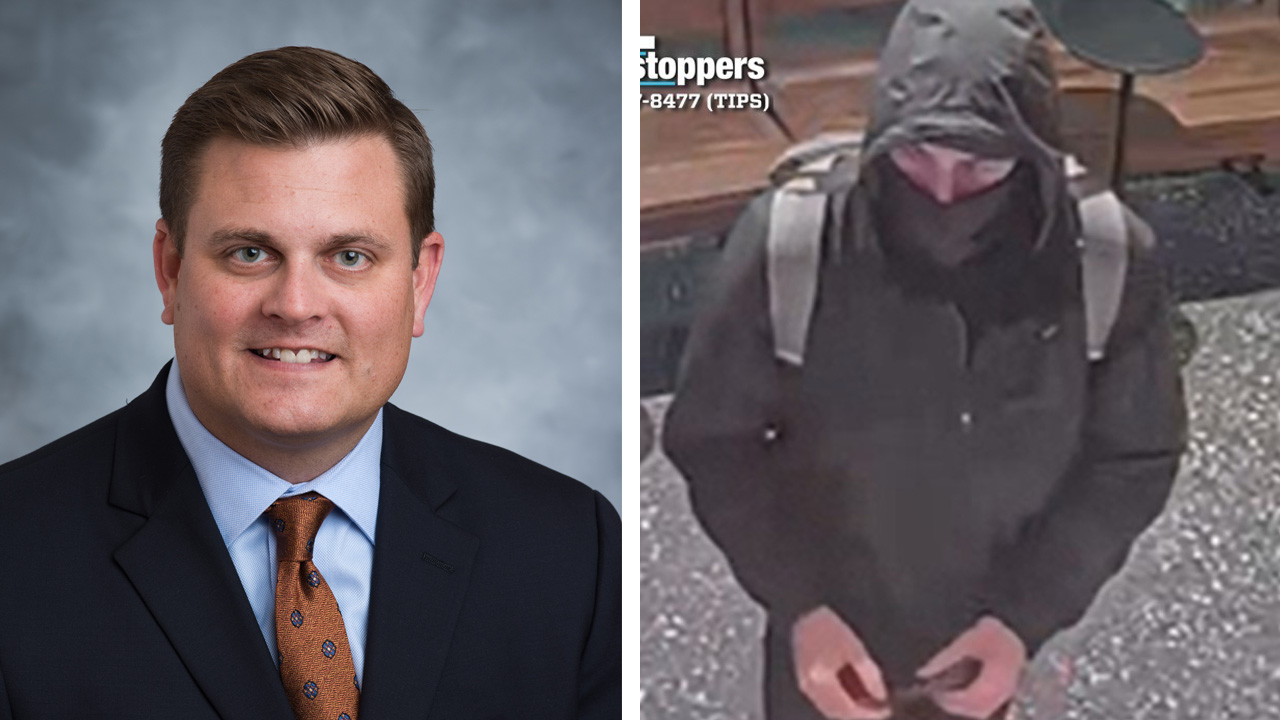
I suspect you saw the news. On December 4, a gunman in a hooded jacket shot and killed Brian Thompson, the 50-year-old CEO of UnitedHealthcare, as he left his hotel in New York City. The killer fled the scene, triggering a nationwide manhunt, and given the victim’s job, reports that the words deny, defend, and depose were on the shell casings furthered the suspicion that this was a targeted attack. And I suspect you saw the quick, troubling reactions to the murder afterward, like t-shirts for sale with the words deny, defend, and depose on them, and references to the shooter as a hero for murdering a health insurance company CEO. And you probably saw the subsequent arrest at a Pennsylvania McDonalds of 26-year-old Luigi Mangione, a prep school valedictorian and Ivy League grad from a prominent Baltimore family.

The entire story sounds more like a Grisham novel than real life, so the media attention is unsurprising.  

Murder is reprehensible. You might think that goes without saying, but it doesn’t; go without saying, that is. I strongly oppose all acts of violence and for both strategic and theological reasons promote creative nonviolent resistance as an alternative. I remain convinced that what theologian Walter Wink termed the “myth of redemptive violence” is descriptive not just of American history but all of human history, and I defy the claim that violence can be a source of good. So, I unequivocally condemn the murder of Brian Thompson.

As expected, the victim left behind heartbroken family and friends. I read the reactions of those who knew Brian Thompson the best and understand their bewilderment at the widespread popularity of the alleged killer. They described the victim as a small-town, blue-collar kid from Iowa who was a good student and then worked hard as he rose through the ranks to become the CEO of a major corporation. Thompson earned ten million dollars in salary and benefits last year and was in many ways the popularly-understood American success story. Rags to riches. How could anyone celebrate the cold-blooded murder of a Horatio Alger hero story?

If you find yourself so bewildered, there is another perspective that is helpful to understand. Consider, if you will, the perspective of countless human beings who have watched their loved ones suffer and die due to the cold denial of insurance coverage by a fabulously wealthy company whose chief executive was paid over ten million dollars last year. (To do the math, that’s well over $1,000/hour for every single hour of the year.) Some of you might not have to try very hard to imagine this alternative perspective, and to be honest, I didn’t have to try very hard either. To understand the anger and bitterness, that is.

When I consider the murder of an American rags-to-riches success story by someone who is representative of millions of wronged Americans using violent tactics characteristic of American history and popular culture, I ask myself how to make sense of it all, and it turns out that I do have a particular thought to share.

Ten years ago, Simon Sinek published a wonderful leadership book titled, Leaders Eat Last, and I was especially impressed by his chapter, The Abstract Challenge. [Note: I mentioned this book and chapter specifically in a recent and relevant post, Small but Mighty.] Sinek pictures the initial attempts of humans to live in groups and imagines a village deciding on a leader and granting the leader certain privileges but with an important understanding: When our village gets attacked by a lion or tiger, it’s your job to fight it for us! However, Sinek argues, as human civilization evolved over subsequent thousands of years, the leaders still received lots of privileges, but they also became further and further removed from the people they are there to protect. So, to the modern leader, those they are to protect often become more and more “abstract.” To illustrate, the CEO of a major corporation leads massive numbers of people whose names they will simply never know. And given this state of affairs, as Sinek concludes, in organizations—and he actually uses the following phrase as a chapter title—abstraction kills.

I was struck by how literal that may have become in this particular case.

What can lead a prep school valedictorian and Ivy League grad from a prominent Baltimore family to kill a hard-working rags-to-riches story from a blue-collar Iowa family when the two have never met?

Possibly, because abstraction kills.

There are many conversation topics that emerge from this popular true crime story, and I hope that on one hand we will remember to reaffirm the rule of law and condemn murder, and I hope that on the other hand we will at some point truly consider universal health care. But it seems to me that neither conversation will make a dent in The Abstract Challenge. We can hardly reverse millennia of sociological developments overnight to address such a fundamental reality.

But as I have argued before, I do think we can begin a grassroots effort toward that end and adopt a posture that consistently resists the powerful sociological inertia that constantly reduces actual human beings into invisible abstractions. To be candid, that is why I like living in a small town. And why I like working at a small college. And why I like being a part of a small church. In small towns, and small organizations, and small churches, it is exponentially more difficult for people—and their joys and their pains—to be invisible.

In a phrase, it is vital that we learn to truly see people.[1] All people. It’s a nearly impossible task in a modern world, but don’t let that stop us from trying. We are facing powerful forces that lead to violence and death, but I am convinced that life and love are worth the (creative, nonviolent) resistance.


[1] And I’ve also said this before, but I encourage you to read the latest book from David Brooks, How to Know a Person: The Art of Seeing Others Deeply, and Being Deeply Seen (2023).

Oh the Weather Outside Is Frightful

Ripon, Wisconsin

Wisconsin old-timers speak of harsher winters in days gone by, but I’m telling you that it’s colder than penguin snot here today. Wind chills are twenty below zero, which I recently learned is an actual number, and I believe that I am now permitted to use the phrase “frigid conditions.”

I was born in 1970 and grew up in the northeastern corner of Arkansas where we would get several inches of snow each winter, sometimes more, sometimes less. I remember my mother making delicious snow ice cream when it arrived, and I recall sledding adventures and snowball fights, building snow people and making snow angels, listening for school closures on the radio and learning to drive on icy roads. I also remember terrifying my parents in a pre-cellphone era by driving home from college in a driving snowstorm, and I recall college days in the mountainous northwestern tip of Arkansas where one October I walked across campus marveling at such an early snow. And best of all, back in my hometown in the early days of my post-college professional career, I remember an unusual winter ice storm in 1994 that provided a couple of uninterrupted weeks to get to know Jody, which undoubtedly accelerated our relationship—the best thing that ever happened to me.

So it makes sense that the winter season produces a sweet sentimentality in my mind.

But in early 1999, just before the turn of the millennium, we embarked on a twenty-year journey that led us to live on two separate, beautiful coasts with abundant sunshine and insignificant winter—and it was as glorious as it sounds. When prompted, I often repeated a new friend’s response to the question of whether he missed the beauty of a snow-filled winter: “If you miss what it looks like, buy a picture.” I joked that I was getting spoiled, not really suspecting that a joke might still be true. 

We moved to Nashville in 2019, a snazzy Southern city that expects a few inches of snow each year, which reminded me of my Arkansas home, and I was caught off guard by my happy heart when the snow fell from the sky, discovering that I owned a special smile that I had not realized was missing.

We then moved to rural Illinois in 2021, a step up in winter world for us, where a foot or so of snow is expected every winter, and I noticed that the special smile moved with me.

And here we are in Wisconsin in 2024, a winter wonderland that expects at least three feet of snow each year, and I am trying to explain to those of you scratching your heads why I am particularly happy.

Physically, I am not built for the winter. I’m not built for winter at all. I am skinny (no insulation). I am bald (no protection). To overshare, I have a thyroid condition that leaves me susceptible to cold weather and is better suited for a desert. But emotionally, I still smile each time it snows, and I noticed not long ago that cold weather triggers a set of previously forgotten memories that awaken a child that was ironically hibernating inside of me.

It is colder than a polar bear’s pajamas outside today. Sheesh, it is brutal and even dangerous. As Dean Martin might describe it, the weather outside is absolutely frightful, and I don’t suppose I will ever adjust to twenty below. But I’m telling you that somehow and somewhere in the mysterious interior of my mind and heart burns a magical little fire that is positively delightful.

America Raw

I am going to share a disturbing metaphor. It is unpleasant, so consider yourself warned, but I do hope you will read on and consider.

To begin, I confess that I have not followed the professional wrestling craze over the years. As a child, I spent Saturday mornings watching Mid-South Wrestling on a local Memphis television station and rooted for “Superstar” Bill Dundee over Jerry “The King” Lawler, but when professional wrestling later consolidated and exploded into a mammoth empire I was occupied with other things. It wasn’t a moral choice at the time; I was probably just too infatuated with traditional sports.

However, while channel surfing over the last couple of years, I stumbled on and appreciated several A&E documentaries featuring the biographies of famous wrestlers whose names I could not have escaped had I tried: “Macho Man” Randy Savage. Jake “The Snake” Roberts. “Stone Cold” Steve Austin. The Undertaker. And of course, I also watched a movie or two, so names like Hulk Hogan, Dwayne “The Rock” Johnson, and John Cena are more than familiar.

But it wasn’t wrestling fandom that led me recently to watch all six episodes of the current Netflix docuseries, Mr. McMahon, chronicling the life and times of the legendary promoter, Vince McMahon, who transformed wrestling into a national phenomenon and himself into a multibillionaire. Instead, as a higher education professional, I was interested in the McMahon story since Linda McMahon, Vince’s spouse of fifty-eight years (though very recently separated), has been nominated by President-elect Trump as the next leader of the federal department of education. I felt the need to learn more.

I did watch all six episodes, and many were very hard to watch.

Episode Five, titled, “Family Business,” was one of the hard ones and the first to really feature Linda. It shared when Vince’s evil (“heel”) character began to incorporate his wife and children into the storyline, which involved times when Linda would slap her children on camera and others when she would portray a drugged spouse whose husband would carry on affairs in front of her. This phase in the story of the World Wrestling Federation (at the time, later changed to World Wrestling Entertainment (“WWE”) due to a lawsuit) coincided with the rise of reality television, and the McMahon storyline blended reality and soap opera with a blurry line as to which parts were real. But it turns out that this post is not so much about Linda McMahon specifically.

The previous episode, Episode Four, titled “Attitude,” is another hard one and the centerpiece of the docuseries. It showcased the “Attitude Era” as announced on an episode of “Monday Night Raw” in 1997 when Vince McMahon (the business mogul) became “Mr. McMahon” (the heel/character, and docuseries title). The Attitude Era featured marked and intentional increases in hardcore, sadistic violence as well as sexually provocative content that objectified women—and the business exploded in popularity.

Episode Four reminded me that the Attitude Era was not a cultural anomaly in the late 1990s. It recalled the rise of “trash television” like The Jerry Springer Show and radio “shock jocks” like Howard Stern that were wildly popular, too. In an earlier episode of Mr. McMahon, famed bodybuilder and wrestler, Tony Atlas, described the era by saying, “We would have been looked upon in today’s society as some of the worst human beings walking the face of the Earth. I mean, we abused the hell out of women. All of us did. You know, they were like a toy for us.”

On a personal level, Episode Four led me to recall a particular prevailing [A]ttitude in the dark parts of my own childhood. I remembered when I learned terrible racist jokes (starting in elementary school). I remembered when shaming queer people was the standard. I remembered when offensive terms for disabled people were used to mock others. I remembered when the objectification of women was the societal norm.

I found it intriguing that Tony Atlas sensed a difference “in today’s society.” Times did change in certain important ways in the 21st century. The “#MeToo” movement created a major backlash against clergy sexual abuse and the Harvey Weinsteins and Larry Nassers in the United States. The creation of a “Pride Month” was a major national statement that queer shaming is unacceptable. The “Black Lives Matter” movement demanded recognition of the legacy of historic racial terror and the white supremacist foundations of the United States. “DEI” departments were established to work toward campus environments where everyone is included. The word “woke” entered the national vocabulary to say that we should no longer turn a blind eye to the terrible abuse that exists in our country. A “cancel culture” for offenders emerged.

As did accusations that these movements were going too far. Even though the movements used mild terms that reflected centuries of humiliation like the simple “me, too” (in response to being silenced) and “pride” (in response to being shamed) and “matter” (in response to being deemed insignificant) and “inclusion” (in response to being excluded) and “woke” (in response to being invisible), the accusations mounted that things were going too far. And following the 2024 presidential election, exit polls suggested that more than a few agreed with the accusations.

Given the perceived mandate, President-elect Trump then began to nominate unorthodox public figures to be his top leaders, including several accused of sexual assault; and including Linda McMahon to be the face of education.

As I watched the Netflix docuseries alongside the national news, here is the ominous metaphor that entered my mind: The current United States of America as a WWE crowd in the Attitude Era. In fact, while the thought first entered my mind in Episode Four of Mr. McMahon, the sixth and final episode begins by chronicling the rise of Donald Trump from business person to reality television star (including WWE) to popular politician and refers to “the wrestling-ification of America.”

No, I’m not claiming that all Trump supporters consciously and specifically voted for WWE values from the Attitude Era, although I am positive there are a disturbing number that did. What I am claiming is that whether enthusiastic or willing to compromise, whether reluctant or unaware, it seems clear that the nation—through the ballot box—purchased a ticket to the outrageous show. At the very least that is what the Cabinet nomination process displays so far.

In a sense, I guess the story of Vince McMahon’s astounding business success displayed that the United States already was a WWE crowd, but the pendulum swing toward a return to the Attitude Era on a national level is troubling, especially when you remember what that looked like. At some point in Episode Four, a wrestler asked a pertinent question: “Which is worse: the people who do it (i.e., sadistic violence; abuse women), or the people who love it?” I’m not sure of the answer, but it is a good question. And while I fear the cultural pendulum swing, I hope that it is less of a pendulum and more of a roller coaster drop with an ultimate upward trajectory toward progress. But I can’t say that with any confidence: It doesn’t bode well that, while we have seen this before, it is the first time that we have witnessed it with the massive power of the federal government.

If you haven’t tuned me out and still truly wonder why many are heartbroken and scared following the presidential election, consider this: While many hear the slogan, Make America Great Again, as an innocent return to a time when one income was sufficient for a family and students prayed in school, many others—especially given the actions and rhetoric of the politician that coined the slogan—hear “Again” as the time when racist jokes were commonplace, queer people were shamed and ostracized, disabled people were mocked, and women were abused and silenced. And for those facing such a recurrence, enthusiastic Christian approval is particularly painful.

It is possible that my voice is guilt-inspired. I am okay with that. Looking back at my life, I am surely not innocent. And speaking up for victims of centuries of racial, gender, and “other” abuse is literally the least I can do.

I encourage you to watch Mr. McMahon even though it is a painful experience, especially if you are willing to consider what makes it so painful. Doing so now seems timely as we fill the arena for a brand-new season of “America Raw.”

The Ghost of Vince Lombardi

“…I firmly believe that any man’s finest hours – his greatest fulfillment of all that he holds dear – is that moment when he has worked his heart out in good cause and lies exhausted on the field of battle – victorious.” – Vince Lombardi

A visit to Lambeau Field probably is (and should be) on every sports fan’s bucket list. It was mine, but I am glad to report that it now has a checkmark next to it. No, I did not wear a cheese head. And no, I did not freeze my tundra off, thanks to unseasonable temps in the low 40s. But if I had, it still would have been worth every shiver.

Packer Nation is simply built different. When you insist on an outdoor stadium in Wisconsin for a sport that culminates in the winter, you’re telling the world that you are built different.

Vince Lombardi remains the spirit animal of the Green Bay Packers. The story goes that Vince Lombardi snuggled up to his wife in bed one chilly night and she exclaimed, “God, your feet are cold!” The legendary Green Bay Packer coach replied, “Honey, when we’re alone, you can call me Vince.” It’s a pretty terrible joke, but it does communicate Lombardi’s status in this neck of the woods.

Lombardi famously said, “Winning isn’t everything, it’s the only thing.” And, “Show me a good loser, and I’ll show you a loser.” But his expansive repertoire of famous quotes incorporates more positive themes and emphasizes words like commitment, discipline, drive, effort, hard work, passion, sacrifice, and toughness. You sense those values simply by joining the Packer fans in the stands, i.e., we can endure anything, even the bone-chilling cold.

My first Lambeau Field experience was even better because my oldest daughter, Erica, flew in for Thanksgiving and came along for the ride. I started an annual daddy-daughter birthday trip tradition with her when she was fourteen, and after many years of beautiful adventures, the tradition faded due to our miles apart, but wow this was a great way to bring it back.

When the crowd gathered around us on the metal bleachers, a group of older men sat directly next to me. My new neighbor discovered that it was my first time and promised a great experience. When I asked if he had season tickets, he said: “No, my buddies brought me here to celebrate my fiftieth birthday.”

Sheesh. I thought he was an old man. I responded, “I think I can still remember my fiftieth birthday.”

Later in the game, an increasingly inebriated young man sitting directly behind me described in great detail to a grandmother sitting beside him the formation of his friend group. He shared that many became friends during COVID when he decided to go around his neighborhood and meet everyone under age fifty. The grandmother responded, “What’s wrong with people over fifty?” I turned around for a high five.

Becoming one of the old people snuck up on me. In all candor, it sort of has the tendency to make you want to give up a little bit. But just as the depression starts to creep in, I hear Coach Lombardi screaming at me from the sidelines that “[w]inners never quit and quitters never win.”

So, I guess, here I am, still kicking, convinced that Coach was on to something when he said that my finest hour, the greatest fulfillment of everything that means the most to me, won’t arrive until I am spent on the battlefield, victorious, having given my entire heart for a good cause.

With thanks for a trip to Lambeau Field and to the ghost of Vince Lombardi, pardon me, but I have work to do.

I Was Here

For years I was told that I would not recognize Northwest Arkansas should I visit again, and that was the truth. Funny, you take a thirty-year trip away from a place and things tend to change a bit. I felt sort of lost all the time. Well, not all the time. Definitely not all the time. 

My youngest had the idea to meet up in Fayetteville for a renewal of the old Southwest Conference football rivalry between the University of Arkansas, my college alma mater, and the University of Texas, her grad school alma mater, now conference foes again (but in the SEC). She and her boyfriend drove up from Austin, and I flew down from Wisconsin, and my heart is grateful for all the emotions and memories generated by the weekend together.

The actual football wasn’t the greatest, at least from my perspective, but the look on their faces the first time the entire stadium called the Hogs was worth the football. To be honest, it wasn’t the thumping I expected, so I was proud of that, and as I absorbed the loss I recalled that we beat Texas in Little Rock my senior year way back in 1992 just as we joined the SEC, so it isn’t like I have gone without. 

It was an early game, so we got to wander through campus a little on a sunny Saturday afternoon afterward, and I enjoyed the three of us being together on a quest to track down my name engraved on a campus sidewalk as part of the beautiful Senior Walk tradition at the University of Arkansas. Seeing my name meant more to me than I expected. After thirty years, my name is still etched on a sidewalk for generations of college students and campus visitors as if to say: You should be aware that I was here.

Yes, I really was here. I once spent three formative years of my life here, and it was good to remember.

It was extra special to visit with Hillary, whose life has been drastically different than mine from the start, and especially to consider that in very real ways her life experience is a direct result of my decision to go to the University of Arkansas in the first place. I have not forgotten walking across campus in awe as a first-generation college student, falling in love with the realization that the world contains wonders I had never imagined. It was there specifically that my horizons expanded, as well as my willingness to set sail from safe harbor on multiple occasions afterward. My wanderlust, which has characterized and now characterizes her life, emanated from that first act of curiosity and courage. I guess it even led her to the sworn enemy territory of the University of Texas!

It would be nice to go back for another visit someday, but it might not happen, and that is okay. This was enough for me. Yes, this was special enough for me. There is no need to be greedy.

Regardless, and forever, Go Hogs! 

An Historic Election: Looking Backward, Inward, and Forward

I confess a deep sadness following last week’s presidential election. It is a personal sadness, sure, but it is far more on behalf of those from historically-marginalized groups that feel especially vulnerable and afraid due to a resounding national stamp of approval for a candidate famous for hateful rhetoric offered in their specific direction. E.g., Stand back and stand by. Black jobs. Grab them by the ____. Too many direct quotes about specific women’s bodies to list. Mocking a reporter with arthrogryposis. Muslim bans. Shithole countries.

I felt especially sad for my two amazing daughters. Their professional lives and personal hearts are dedicated to teaching children who live in poverty in the urban core and who are now facing a promise of mass deportation that will rip immigrant families apart. It is hard to imagine a fear more fundamental than a powerful government separating you from your family. It was hard enough for me to communicate with my heartbroken daughters as they went to work the morning after the election and know that they love children by name who are facing those fundamental fears.

My sadness expands recognizing that my personal religion, Christianity, generally speaking, is openly and willingly associated with the national stamp of approval for the hateful rhetoric. Although I disagree with their conclusion, I can understand the thought processes of those who saw the election as a “lesser of two evils” vote, but there is never cause for celebration following a lesser-of-two-evils vote. And yet lots of Christians celebrated this one with euphoric joy; saw it as an answered prayer; used words like anointed. I unfortunately opened Facebook the day after the election.

I have been on a thirty-year journey with faith and politics, a journey that began in the early 1990s with me a young, questioning adult and the simultaneous rise of the Religious Right as a political movement. As Evangelical (for lack of a better term) churches gravitated toward the proselytization of a political strategy, I was saved from dismissing Christianity and moving on entirely, in part, by stumbling upon the writings of Will D. Campbell who demonstrated for me that there was a different way to be Christian, and I concluded that for me following Jesus meant that I must love everyone, regardless. Both sides. All humans. Even enemies. Learning to “live reconciled” became an important phrase to me, as did “indiscriminate love.”

But that really messed me up. Loving everyone is a recipe for loneliness in a culture insistent on choosing sides, winners and losers, us and them. On one hand, I could see the pain felt by those that experienced decades of cultural condescension and blindness to class inequality from the Political (and Religious) Left while on the other hand growing increasingly cognizant of the centuries of pain felt by those that experienced the terrible injustice and marginalization perpetuated by the Political (and Religious) Right. So, I eventually learned to bite my tongue a lot, choosing instead to plant seeds, attempting not to alienate either side in an attempt to love and maintain relationships with everyone. I chose to work within a lot, behind the scenes a lot. And I felt guilty a lot for not doing and/or saying more.

My interpretation of Christianity remains, but in time I sought a quiet freedom from a life where I am not allowed to be fully authentic, and I am grateful for the wonderful feeling of liberation that I now experience. But given my own emotional reaction this week, and given numerous private texts and conversations with friends from all over the country that we made on our long journey toward personal liberation, my personal freedom seems self-serving and wholly insufficient.

But what to do?

That question has dominated my thinking, and I am grateful for anything I have heard and read from Dr. Tressie McMillan Cottom in the aftermath of the election (like the full Daily Show interview). Dr. Tressie has helped me tremendously (and I thank my friend, Chalak, for telling me about her in the first place). And I have also benefitted from articles written by both David Brooks and David French after the election, white men from conservative backgrounds who through their columns have assured me that my visceral reactions to the election aren’t simply because I drank Kool-Aid at the Liberal Vacation Bible School.

Collectively, they pulled no punches in saying that chaos is coming but emphasized that despair cannot be allowed to be the mood for long. Dr. Tressie advised, “Don’t cry too long over a sinking ship,” and the subject of David French’s email read, “We don’t have time to waste time in despair.”

French wrote, “There’s a temptation to retreat. If you have a stable job, a good family and good friends, you can check out of politics. After all, politics can be painful. It’s not just the pain of loss, but also the pain of engagement itself. MAGA is extraordinarily cruel to its political opponents. But despair is an elite luxury that vulnerable communities cannot afford. If Trump was telling the truth about his intentions — and there is no good reason to think he wasn’t — then he will attempt a campaign of retribution and mass deportation that will fracture families, create chaos in American communities and potentially even result in active-duty troops being deployed to our cities.”

So, while sad and tempted to quit caring, even that, as depressing as it sounds, is “an elite [and selfish] luxury.” Here are my commitments instead:

#1: See. I choose not to give up on my faith commitment to see all people—i.e., to love neighbors, regardless of anything. David Brooks published an important book last year titled, “How to Know a Person,” and his post-election column explained something Will Campbell helped me see long ago, i.e., a “redistribution of respect” that led to a “vast segregation system” between the Political Left and those that now comprise the base of the MAGA movement. Brooks’s post-election column titled, “Voters to Elites: Do You See Me Now?,” reminds me that condescension creates problems and does not cure them, and I won’t abandon my desire to see all people as human beings equally worthy of sincere love and respect.

#2: Speak. This, I confess, feels like my greatest challenge. One change I must adopt moving forward is a willingness to speak up more, even though that will risk alienation from and dismissal by people that I love on every side. It is tempting to bite my tongue, especially when I want to remain in relationship with everyone, but I think David French is right when he says we are compelled to “speak the truth.” He explained it this way: “Telling the truth means combating deception and misinformation, but it also means publicly defending the dignity and humanity of the people and communities who are the object of Trump’s wrath. It means resisting malice when we encounter it in our churches and communities.” Remaining silent might appear to preserve relationships, but it forecloses all prospects for true justice and real harmony. This blog post is an initial and meager attempt to speak up more.

#3: Act. Finally, as hard as the first two are to do, they are insufficient without action. David French wrote that we must “protect the vulnerable,” but I like how Dr. Tressie said it best: “Don’t cry too long over a sinking ship. Build dinghies.” To continue the nautical metaphor, the Brooks column concluded this way: “[W]e are entering a period of white water. Trump is a sower of chaos, not fascism. Over the next few years, a plague of disorder will descend upon America, and maybe the world, shaking everything loose. If you hate polarization, just wait until we experience global disorder. But in chaos there’s opportunity for a new society and a new response to the Trumpian political, economic and psychological assault. These are the times that try people’s souls, and we’ll see what we are made of.”

I want my soul to pass this test, so with thanks to Dr. Tressie and the two Davids, and after much reflection, I have concluded that it takes all three: See. Speak. Act. Looking backward in despair, looking inward in contemplation, and now looking forward with resolve, that is what I commit to do.

On the Eve of an Historic Election

As my limited gambling history demonstrates, my best guesses are nowhere close to reliable. But on the eve of what promises to be an historic presidential election, I have what I can only describe as a sense of foreboding. Things could get ugly, as if the campaign wasn’t ugly enough.

If the election is as close as it appears, we may not know the outcome anytime soon, but that doesn’t prevent a little personal nostalgia. I recall a sense of foreboding the day before an unprecedented hurricane crashed through my community, and on that occasion I sent a mass email to let everyone know our plans in case things went badly. Apples and oranges, I know, but a similar feeling resurfaces today, as silly as that sounds.

I anticipate significant acts of violence should Donald Trump “not” be elected president again. I hope that such violence does not occur, but, you know, history. And I anticipate a very different but even greater set of dire consequences if he wins. That’s because, among other things, many of his former military commanders have spoken in no uncertain terms.

So again, pardon the PTSD, but I feel this strange desire to board up some windows and prepare for dangerous winds and waves.

While I have leaned Left for many years now, my concern regards Donald Trump the candidate and not the Political Right. I used to say that the winner of the presidential election didn’t matter nearly as much as we are expected to believe because winners tended to “govern toward the middle” in our clunky two-party system, but I don’t say that this time.

And my thoughts are further complicated because I understand a portion of the Trump appeal to those who for decades of their lives felt the sting of disdain from various types of “elite.” I don’t want to dismiss painful emotions and experiences.

But that we have come to the absurdity of yet another Donald Trump candidacy mostly makes me sad. As just one dramatic example, while Sean “Diddy” Combs understandably sits in prison as evidence of sexual assault mounts against him, Donald Trump expects to be the next president of the United States despite, well, everything. And if I had to bet a nickel, I’d bet that he wins.

I attended a panel discussion recently on the impending election, and one of the panelists said that the outcome of the election will say more about the American people than about the campaigns themselves. That seems about right, and I think that may do more to describe my sense of foreboding than anything else. 

Vote bravely and wisely, everyone, and then batten down the hatches. 

Midwest Nice

Door County was not on my radar until recently, but I’m making up for lost time.

When I told my L.A. friend, Stephanie, that we were moving to Wisconsin, she said that I should check out the latest season of the reality cooking show, Top Chef. So, I did, and learned about the famous Door County cherries and the zany Door County “fish boils” (that look both entertaining and terrifying). It took about two seconds to decide that I wanted to visit, and we did a week ago for ourselves and then again yesterday with visiting family because it is just too wonderful not to share.

A week ago we went to see the fall colors, which was a resounding success. We drove through Green Bay Packer gameday traffic with our sights set on Sturgeon Bay, of course, since we’re Sturgeons and all. We had to stop for a picture in Sturgeon Bay, but because we were hungry Sturgeons, we stopped for brunch, too.

At Scaturo’s Baking Company & Café, Jody, ever the Southerner, ordered biscuits and gravy, while I went with an omelet that featured famous Wisconsin cheese, and just as we started to eat a door opened and our new friend, Tom, poked his head in the door! We knew that Tom and Debbie were in Door County that weekend, too, but it was such a fun surprise to bump into them and share a lovely and unexpected brunch together.

We then drove up Highway 42 to Egg Harbor where we stopped to walk around a bit. I swear that we hadn’t walked ten yards when I heard my name, and it was Tom again! We joined him at an artisan bread shop where Jody purchased a butter cookie before heading up the road a bit to an artisan cheese factory to sample several of the twenty cheeses that they make onsite.

We continued our drive up Highway 42 to its famously winding end at Northport, taking in the sights in cool communities like Fish Creek, Ephraim (my personal favorite), Sister Bay, Ellison Bay (where I got a scrumptious gluten-free “cherry berry muffin” at Kick Ash, a fun coffee shop), and Gills Rock. On the return trip we took the Lake Michigan route and stopped for a stroll in Bailey’s Harbor. We finally stopped to eat (again) in Sturgeon Bay before heading home. No additional Tom sightings, but still, all in all, a perfect day.

Back at home a week ago Sunday, I posted my fall foliage pictures on my social media accounts, and then Rob, a friend from Nashville commented that he had just seen Door County featured on 60 Minutes! What are the odds?!

I immediately watched the segment, titled, “This Wisconsin county has backed the winning presidential candidate for the last 6 elections,” which opened by saying that of the 513 counties in the key swing states, Door County is the only one that has picked the winner in every election this century. So, 60 Minutes decided to take a closer look.

I suggest you take fifteen minutes of your life and watch the segment, but in case you do not, I’ll share why I am writing today: not simply to introduce you to “the Cape Cod of the Midwest,” but to share with you how the 60 Minutes segment ended. Here is the final exchange between Jon Wertheim (journalist for 60 Minutes), Emma Cox (Door County store owner voting on the left), and Austin Vandertie (Door County dairy farmer voting on the right):

But in our quest, maybe we stumbled across something even more rare, we found a place in America where family and community outrank party loyalty. In this divisive election season, we came to America’s ultimate battleground….except there was no battle … as they say here with pride, we live above the tension line. 

Jon Wertheim: What’s your sense of how the tone in Door County compares to the tone nationally?

Emma Cox: You don’t wanna alienate your neighbors. You don’t wanna alienate your fellow business owners. You all come together.

Jon Wertheim: Do you have family members that are gonna vote differently from you?

Austin Vandertie: Oh, absolutely.

Jon Wertheim: Everyone invited to Thanksgiving, regardless?

Austin Vandertie: Absolutely. Politics is, you know, if we can’t talk about it that means it’s gone way too far in the wrong direction.

Jon Wertheim: You recognize that’s not necessarily the, the vibe in the country at large?

Austin Vandertie: Hey. We’re a little different in Wisconsin, I guess. We got that Midwest nice going on. 

In keeping with the undulations of Highway 42, in Door County, Wisconsin, you swing back and forth and continue on down the road. 

Election Day is almost here. I have strong opinions and significant apprehension concerning what lies ahead. But in the wishful thinking department, let it be known that I wish the entire world would adopt a Door County “Midwest Nice” commitment so that I actually believed that we all would continue on down the road together.

Peak Color

Door County, Wisconsin

“I’m so glad I live in a world where there are Octobers.” – L.M. Montgomery

I intend to travel to New England in the fall someday to witness its famed fall foliage, but in the meantime I’m telling you that Wisconsin will do just fine.

The first time I visited Wisconsin was in October. It was years ago now, and while in Madison for a conference I went for an early morning run with a local, and my goodness I have traveled to spectacular locations around this world — an African safari, the Taj Mahal, a Brazilian rainforest, the Notre Dame Cathedral, even gazing at the Pacific Ocean for a dozen years while living in Malibu — but nothing I have ever seen has been more breathtaking than that morning run. As the crew from the University of Wisconsin rowed by on Lake Mendota (seemingly on cue), the sun rose on the horizon (also seemingly on cue), and we ran along trails through the blazing colors of the remarkable fall trees. That was my introduction to Wisconsin: spectacular, and unforgettable.

So it is more than a little cool to be living in Wisconsin this October, and as I walk around town and through campus at peak color, an unconscious smile appears.

How exactly does one use words to convey love to the colors of the fall? I wish I could do better.

We drove to Door County yesterday for a special immersion in the stunning display, and we turned down several unmarked side roads and found ourselves transported to new worlds. The reds and the yellows and the oranges against the bright blue sky above us unleashed a dazzling fireworks show specifically designed for the daytime. And the crunchy fallen leaves below us announced their sacrifice, beginning their transformation into shades of caramel and rust. It was a scene in nature like no other.

Maybe it’s the aging process, but I confess that I have come to fully appreciate all four seasons. And maybe it’s the specific season of life that I find myself in now, but the extraordinary autumn colors seem extra special.

I am fifty-four years old, and I cannot say that I love keeping a note on my iPhone to maintain a growing list of health conditions. And I retain enough math skills to realize that average life expectancy means that I am on the back side of this mountain called life. But I am particularly grateful and happy at this point of the journey. Can anyone else relate?

In the fall, one can look back to remember both the youthful exuberance of spring and the passionate heat of summer while looking ahead to the peaceful rest of winter. But in the fall proper, life also reveals its peak color. And it is magnificent.

“Life starts all over again when it gets crisp in the fall.” – F. Scott Fitzgerald