Category Archives: Uncategorized

Step Back In

I doubt many tune into my blog to read a cool poem and reflect on its deep meaning, but just in case anyone else in this station wagon has ever messed up, reflected on an irretrievable life, and decided that the opportunity to carry on is too precious to stay away, this Raymond Carver poem is worth it.

Locking Yourself Out,
Then Trying to Get Back In

By Raymond Carver

You simply go out and shut the door
without thinking. And when you look back
at what you’ve done
it’s too late. If this sounds
like the story of a life, okay.

It was raining. The neighbors who had
a key were away. I tried and tried
the lower windows. Stared
inside the sofa, plants, the table
and chairs, the stereo set-up.
My coffee cup and ashtrays waited for me
on the glass-topped table, and my heart
went out to them. I said, Hello, friends,
or something like that. After all,
this wasn’t so bad.
Worse things had happened. This
was even a little funny. I found the ladder.
Took that and leaned it against the house.
Then climbed in the rain to the deck,
swung myself over the railing
and tried the door. Which was locked,
of course. But I looked in just the same
at my desk, some papers, and my chair.
This was the window on the other side
of the desk where I’d raise my eyes
and stare out when I sat at that desk.
This is not like downstairs, I thought.
This is something else.

And it was something to look in like that, unseen,
from the deck. To be there, inside, and not be there.
I don’t even think I can talk about it.
I brought my face close to the glass
and imagined myself inside,
sitting at the desk. Looking up
from my work now and again.
Thinking about some other place
and some other time.
The people I had loved then.

I stood there for a minute in the rain.
Considering myself to be the luckiest of men.
Even though a wave of grief passed through me.
Even though I felt violently ashamed
of the injury I’d done back then.
I bashed that beautiful window.
And stepped back in.

“Locking Yourself Out, Then Trying to Get Back In,” by Raymond Carver, from Where Water Comes Together With Other Water (Vintage Books).

Shooting for Significance

After undoubtedly the most thrilling finish in the history of the NCAA basketball tournament, I remembered my personal stories of hoops heroics (i.e., coming off the bench to sink crucial free throws against Tyronza in 1986; converting a five-point play in OT to defeat Marmaduke in 1988) before ultimately concluding that nobody cares except me.  This is true because I have tried on multiple occasions to express the greatness of my shining moments to my sweet wife who loves me very much.  And she surely doesn’t care.

I, along with an inestimable number of fellow human beings, dreamed of doing what Kris Jenkins did in Houston on Monday night: deliver the game-winning shot in the biggest game in front of the entire world.  How many kids on sun-filled playgrounds, in sweltering gyms, in lonely backyards, in their wildest dreams, lusted for such a moment?  How many of us still do?

What makes a college student tossing an orange ball through a metal cylinder twice its size from ten yards away such an object of deep admiration?  What is it about the tournament itself that would cause a television network to invest $10.8 billion dollars for the rights to show it to the world for fourteen years?

It is madness.  To be specific, March Madness.

I am convinced that it runs far deeper than the human desire for entertainment; instead, it is an inherent longing for significance.  We all want (at the very least) one shining moment.  In Kris Jenkins, we find a representative of our desire to come through at just the right time for the force of good (sorry Tar Heel Nation, just a metaphor) and be a hero.  That way, the world will not soon forget us, we think.  Springsteen singing about glory days and all that.

Is it terrible of us to think this way?  Well, it obviously can be (we can start with, um, Hitler), but I do not think that the quest for significance is necessarily terrible at all.  At least I hope not, since we are all infected.  For just a personal sampler, it is surely that part of my brain that causes me to post on social media how far I run, or check the number of “likes” on a Facebook post, or look at how many people read my blog.  Surely I’m not alone in this.  We all want to do something worthwhile.

The real question is: What is the measure we use to gauge significance?  Since the answer to that question determines everything else, it deserves some pretty serious reflection.

Bird Brained

I returned from a difficult morning run and walked the neighborhood searching my brain for the department in charge of breathing.  Eventually, after the wheezing subsided, I heard a strange shuffle-pop sound on repeat, which turned out to be a little bird perched on the passenger side mirror of a neighbor’s car having a little showdown with itself.  It was a good fight, but my best estimate was that it was headed for a draw.

It cracked me up, the stupid little bird ignorant that the enemy in the stare-down was simply his/her/its own reflection.  I admired the courage, what with the sudden beak attacks that were magically matched beak-on-beak, but repeatedly charging face-first into a piece of glass was pretty funny.

Until, that is, it occurred to me that in a sense I am that stupid little bird.  The absolute biggest threat to my survival is that joker staring back at me in the mirror, and although (most days) I don’t slam my face repeatedly in the mirror, it is true that no one attacks me more than me.

An honest look in the mirror, sizing oneself up, noticing flaws and so on, seems not only healthy but also necessary to effect any real, lasting change.  Beating yourself up, on the other hand, makes about as much sense as that goofy bird repeatedly catapulting itself into a mirror.

Now or Later

[Note: After reading a recent post, my friend, Brittany, suggested that I watch “The Barkley Marathons” on Netflix.  I did, and wow!  For the Netflix aficionados among us, it is a good use of ninety minutes.  I’ll just leave this as a teaser for anyone interested.]

In “The Barkley Marathons” (Netflix, see note above), a graduate student named John shared that he was taught as a child to work hard, save, and plan for the future.  John was a good son who bought what his folks were selling.  However, his father, practicing what he preached, worked and saved throughout his adult life so that he and his wife could travel the world on retirement only to die one year before retirement.  This effected a change in John who decided that you should live life while you have it.

I’m with John.  I’m not signing up for The Barkley Marathons anytime soon, but I’m with John.

Now to be clear, I’m not advocating that anyone quit work, buy a sports car, and go all Thelma and Louise on the world.  Instead, I suggest that we spend some quality time determining what it means to really, truly live, and do that now instead of later.  Later does not come with a guarantee.

Is it possible that “living life while you have it” could look like hard work and saving to travel the world when you retire?  I think so.  If that’s what you discover.  I simply (and humbly) suggest that you make sure of it before placing all of the proverbial eggs in such a basket.

Dawn

I rise at dawn, lace up my running shoes, and step out into the cool pre-morning air.  There is no sign that anyone in the world is awake, other than the faint chirping of the early birds whom I presume are getting the worms.  For a moment, I feel privileged.

The sky is a bold shade of ambiguity.  It is neither dark night nor bright day, and if forced to decide I would declare it silver, although it is a bluish-grayish silver like the color of the Dallas Cowboys britches that I never have been able to properly identify.  The conservative moon shines brightly overhead to testify that night remains, but there is an unmistakable sense that night is transforming into a new day.  You can see the anticipation in the air.

On days like this, the day simply arrives without fanfare.  I like it that way.  The glorious sunrise is such a showoff, demanding adjectives like “glorious” and bursting on to the sky like Justin Bieber enters a party.  Sure, everyone wants to see a sunrise, but there is something comforting about the typical, understated way most days just seem to happen.  For those of us who struggle to keep it together, it is nice to know that you might just wake up and discover a new day.

I salute the dawn, nature’s way of saying that life and light are on the way.

Hope SPRINGs Eternal

“People ask me what I do in winter when there’s no baseball.  I’ll tell you what I do.  I stare out the window and wait for spring.” — Rogers Hornsby

Well, spring has sprung, or so I hear: it is hard to tell living in a land of perpetual spring, but the calendar seems rather confident about it.

There is an idyllic conception of spring where the frigid death of winter awakens to butterflies and chirping birds, colorful explosions of flowers, cottony clouds floating across a bright blue sky, and Julie Andrews twirling in musical exultation.  This has not always been my experience, at least on the first day or two.

But spring is real.  Nature is rhythm, and the very planet is predictably reincarnated each year in a birth-death-birth cycle that generates hope in all things if you let it.  In an increasingly insulated and distracted world, however, it takes effort to notice.

Anne Lamott wrote, “I am going to try to pay attention to the spring. I am going to look around at all the flowers, and look up at the hectic trees. I am going to close my eyes and listen.”

I’m with her.  I want to sense hope in every way—to see it, and hear it, and smell it, and taste it, and touch it—and even engage an ineffable (sixth) supernatural sense.¹  I will work at it.  Hope is imperative.

The woods and pastures are joyous
in their abundance now
in a season of warmth and much rain.
We walk amidst foliage, amidst
song. The sheep and cattle graze
like souls in bliss (except for flies)
and lie down satisfied. Who now
can believe in winter? In winter
who could have hoped for this?

– Wendell Berry, Given 58 (2005).

—————————————————————————————————-

¹ Inexplicable hope is the substance that undergirds Easter.


Crazy Dreams

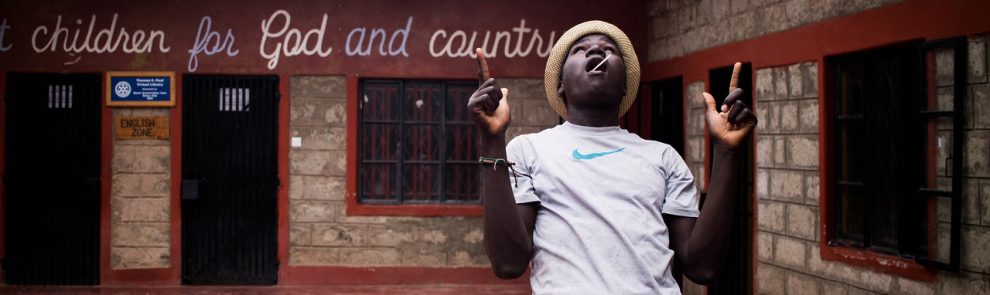
I almost did something insane. My wife and I are on a team headed to Kenya this summer (note: this is not the insane part) to live for a couple of weeks alongside an inspiring organization called Made in the Streets (“MITS”) that rescues street children from the Nairobi slums. Our youngest daughter is going, too, but she will spend her entire summer there as a photojournalism intern. Both my wife and daughter are in love with MITS from past trips, and I must go see for myself what has grabbed their hearts.

Still not the crazy part.

I’m a runner. Well, I’m a runner who is struggling to find motivation to keep being a runner, so I emailed Dusty, our fearless leader to Kenya, to ask what opportunities there might be to run with the Kenyans while there. Dusty had an idea or two and then suggested looking for a race in Nairobi. Well, I didn’t find a race in Nairobi, but I discovered that one of the toughest marathons in the world will occur about four hours north of Nairobi while we are there.

Now to the crazy:
1. The race is held a hundred miles from the equator, so 90+ degrees.
2. Add high humidity.
3. Add the dust from running on a dirt road.
4. Add the thin air of a 5500’ average elevation.
5. Add that I don’t have enough time to train for a normal marathon (and this would be my first).
6. Add actual lions.

Yep, actual lions. The race is held in a game preserve, and in addition to 140 armed rangers it is stated nicely under the “safety” tab on the marathon’s website, and I quote, “A helicopter and Supercub light aircraft monitor the movements of the large species during the race.”

In. Sane. Cray. Zee.

I actually came to terms with going for it—until I learned how much it would cost (and by cost, I mean financial; for some reason, the potential human cost did not deter me). Registration is $250 (steep, but okay) along with a $1,500 fundraising requirement (steep, but I would have bugged all of you for it anyway); however, it would cost $2,000+ more just to travel there and back and sleep in a tent. I’m crazy but not crazy rich.

Here’s the deal. Somewhere in the insanity I found motivation to run again. Okay, sure, the nightmares featuring lion attacks helped, but for the most part, I’m back at it again even though I am not going to run this amazing race.

I haven’t exactly identified the lesson here, but if you are in need of some motivation in some aspect of your life, you might ask someone for suggestions and be open to considering possibilities beyond your wildest dreams. It somehow got me out of bed this morning.

Just Mercy

My colleague, Jessie, said that I needed to read Just Mercy by Bryan Stevenson. I told her that I already had a sizable stack of books to read. She brought me a copy anyway. I read it. She was right.

Cue the Twilight Zone music because in the middle of the inspiring, troubling, quick read, I learned that Bryan Stevenson was scheduled to speak at Pepperdine this semester. I attended the lecture this past week and had the distinct honor of attending a dinner with Mr. Stevenson afterward. It turned out that I needed to hear him speak, too.

So you can quit reading and buy the book now and thank me later.

If you need further encouragement, how about Desmond Tutu?

“Bryan Stevenson is America’s young Nelson Mandela, a brilliant lawyer fighting with courage and conviction to guarantee justice for all.”

Wow, you still haven’t purchased the book? Let’s try John Grisham:

“Not since Atticus Finch has a fearless and committed lawyer made such a difference in the American South. Though larger than life, Atticus exists only in fiction. Bryan Stevenson, however, is very much alive and doing God’s work fighting for the poor, the oppressed, the voiceless, the vulnerable, the outcast, and those with no hope. Just Mercy is his inspiring and powerful story.”

Okay, I’m not playing around now. If justice and/or the American South and/or the United States of America and/or humanity means anything to you, read this book.

That’s all I need to write today, but as a bonus consider arguably the best line from Stevenson’s book: “Each of us is more than the worst thing we’ve ever done.” Think about it: What is the worst thing you have ever done, and does that define you? Are you really best described as: Cheater? Thief? Addict? Criminal? Liar?

Well, if you answered Yes, I join Stevenson in declaring that you are not. But for those of us who answer No, then what allows us to define anyone else by their worst moment?

I’d Like to Teach the World to Sing

Well, I did it. On Saturday night, I sang a solo in public for the very first time. This caught me up to most of the world, so no grand accomplishment, but it sure was for me. Our church hosted a low- and at times off-key talent show to raise money for those of us traveling to Kenya this summer and somewhere between the expansive definition of “talent” and guilt for not doing much for the trip so far I decided that this was a fine time to break my forty-five year silence. I chose “Forever and Ever Amen” by Randy Travis, partly because I will love my wife forever and ever (amen) and partly because I have a bass voice and thought this song choice reduced the risk of total humiliation. My kind friend, Shelby, graciously agreed to accompany on guitar, and had she not, I totally would have chickened out.

My problem began in church at age six. I was sitting by my mother and belting out the chorus of a favorite song when a couple in the pew in front of us turned and gave me a dirty look as if to say, “Let us put this nicely—you are annoying the hell out of us, so shut up.” Setting aside the fact that annoying the hell out of someone is arguably a net spiritual benefit to the annoyed, I shut up. I shut up for a decade.

Fast forward to sophomore year of high school. While sitting in “chapel” at my small, Christian high school, I accidentally broke my sincere vow never to let anyone hear me sing and my friend, John Mark, said, “You have a good voice: Why don’t you sing more?” That one comment changed my world. Okay, I didn’t start a band or anything, but that one comment returned my voice, just like a single criticism took it away, and I started singing again, allowing my voice to blend into the music of the world.

It took another thirty years (I may be a slow learner), but two days ago, John Mark’s encouragement even allowed me to offer the world a song on my own.

You should never underestimate the power of a single act of criticism or encouragement.

The More Things Change…

A fun video of contemporary kiddos attempting to use an old computer with the Windows 95 operating system made the Internet rounds recently, and by “fun” I mean it is now either time for me to die or move into the retirement village.

We bought our first home computer in 1995 just as the Windows 95 revolution launched, and when the gazillion black-and-white spotted boxes from Gateway 2000 (“Computers from Iowa?”) arrived and I successfully operated the crane to extract the computer from said boxes, it came with Windows 3.1 pre-loaded and a Windows 95 upgrade disk. We were cutting edge. We were also semi-stupid, having invested a full month’s pre-tax salary (my wife and I combined) on this contraption: three thousand bucks, which included three-hundred bucks for a (prepare yourself) “color” printer.

Windows 95 was supposedly the best thing ever for humanity although my lack of attention to computer technology pre-1995 made me less than an expert. Windows 95 (I was told) unveiled a revolutionary “Start” button in the lower left-hand corner of the screen, enabling morons like me to just point and click pretty things with advanced terms like “Start.” Sadly, it took me awhile to catch on.

But I did. And it was awesome watching Weezer perform “Buddy Holly” over and over again from the Windows 95 upgrade CD. Although the video quality was less impressive than the television across the room, it was glorious that Weezer performed “Buddy Holly” when I wanted and not at the unpredictable whim of MTV. And Encarta was SO cool. Who cares that I could have bought ten encyclopedia sets for that amount of money—Encarta offered zero paper cuts and (some) actual videos on interesting topics!

Watching today’s teenagers fumble around Windows 95 resurrected words like Netscape and Prodigy from my long-term memory and brought back the image of a telephone cord strung dangerously across our dining room so that we could count down our ten free hours on Compuserve (and not receive any phone calls, which was a service we were actually paying for).

The world has changed significantly in the past two decades, although I’m not entirely sure it has been for better or worse.

What I do know is that has changed, is changing, and will change, and in another couple of decades teenagers will still be laughing about it. So if it’s all the same to you, I suggest that we take ourselves a little less seriously.