Category Archives: Uncategorized

A Third Way

It was a disturbing week in these United States.  After celebrating her birthday, America apparently went batpoo crazy.  Thankfully, many people (sadly, not all) posted good statements that condemned all of the violence that destroyed lives in Louisiana, Minnesota, and Texas, so I should just keep my mouth shut, but since I am obviously on a quest to lose all of my friends, here goes.

To begin, although this is admittedly judgmental, I don’t believe people in general and Americans specifically are intellectually honest when condemning violence.  I think we are conditioned to celebrate and rely on violence albeit with sincere opinions on who-what-when-where-why and how much.  Watch a movie (Free State of Jones) or television show (Game of Thrones) or sporting event (UFC) and tell me we don’t appreciate a good guy’s use of violence to take down a bad guy.

Further, the United States makes up 4% of the world’s population and yet shells out 39% of the world’s military expenditures, and of approximately two-hundred nations in the world, twenty-one use capital punishment–and the United States is one of the top five in actually using it.  We hold a strong belief that there is a proper time-place-reason for violence.  Theologian, Walter Wink, called this the myth of redemptive violence—“the belief that violence saves, that war brings peace, that might makes right . . .” It is what we turn to when all else fails.

So when I heard the tragic news about Mr. Sterling, Mr, Castile, and the five Dallas police officers last week, I was deeply saddened but not surprised.  “When all else fails, turn to violence”—that thinking seemed to fuel a lot of the things we now lament happening in schools, nightclubs, police stops, and downtown Dallas, Texas.  Let’s be honest.  We are not outraged by violence per se.  Our outrage concerns who-what-when-where-why and how much.¹

Walter Wink, on the other hand, argues that the very idea of redemptive violence is problematic and that we need a different way.  He suggests creative, nonviolent resistance as the alternative.  Buy his book because I’m not smart enough to explain it well.  What I’ll simply say today is that such a way is based on love.  If you love someone too much to kill them and too much to let them carry on their madness, then creative, nonviolent² resistance is a third alternative.  That was the choice made by Gandhi and King—a true rejection of violence based on a true love of others.

And underneath all three of last week’s major news stories was an absence of love.


¹ I’m not writing any of this to shame anyone for believing that violence can be redemptive.  But don’t be surprised when someone determines that they need to start shooting people because they see no better alternative—that is based on the belief that violence can be redemptive.

² For the obvious questions about police, military force, et cetera, I make an important decision between “force” (the minimum amount of physical strength needed to stop a behavior) and “violence” (anything above the minimum).

 

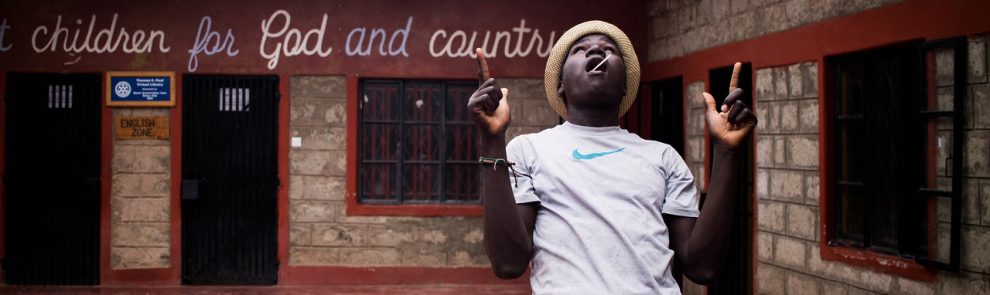
Kenya Believe It?

IMG_2941

I woke up in the East African village of Kamulu under a mosquito net listening to a rooster that apparently got something stuck in his throat while learning to yodel; in other words, not in Malibu.  Appropriately, a man named Moses led our team’s exodus from the Nairobi airport the night before, but when the morning light replaced the darkness, I was surprised by my surroundings despite multiple reports from previous church trips, including my own family.  It was simultaneously more primitive and wonderful than I had anticipated.

Why did I travel to Kenya?  It isn’t wrong to say that my wife insisted but probably more accurate to say that I needed to see for myself what had stolen her heart. Well, mission accomplished.

Because so many friends have been to Made in the Streets (“MITS”) before me, it would be silly to recount the same observations, like the yummy-ness of chapati, the joy-filled singing of liberated street children, the endless skies on the Maasai Mara, and the beautiful kids jumping streams of raw sewage in the Mathare Valley slums.  Instead, I’ll just share a few personally unforgettable moments:

  1. Meeting Vincent, an impressive seventeen-year-old young man, covered with mud, living in the mud, high as a kite to stave off hunger and cold and yet still able to carry on an intelligent, respectful conversation. I liked him immediately yet left him in such terrible circumstances with a fist bump and will never see him again in person.  But he will never leave my mind.
  2. A sunrise run through Kamulu on a crisp morning with Paul (pictured above), a MITS graduate who has become a part of our family since my wife practically adopted him, and for a moment, matching him stride for stride while imagining what it is like to “run like a Kenyan”—and then watching him effortlessly leave me in the dust down the home stretch.
  3. Traveling with Jackton and Millie to meet four MITS graduates now working in Nairobi: (i) listening to reggae music and enjoying a vanilla milkshake at the American-themed Java House with George; (ii) eating scrumptious mandazi prepared by Chef Brian in his apartment; and (iii) sharing in an impromptu Bible study with the two Marys. Four glowing successes.
  4. Standing with my wife in the darkness outside our safari tent and looking up at the African sky to discover more stars than I had ever imagined one sky could hold.
  5. Sitting under the ceiling fans at church in Kamulu and listening to rescued street kids sing Amazing Grace, particularly the verse that proclaims: Through many dangers, toils, and snares, I have already come / ‘Tis grace hath brought me safe thus far, and grace will lead me home.

If I’m honest, I think I went to Kenya to check it off my list.  Instead, it did a number on my heart, too.  Kenya believe it?


Born in the U.S.A.

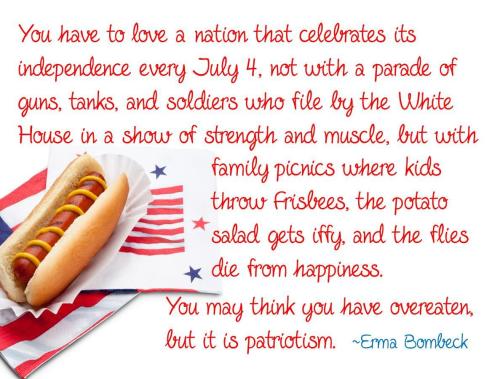
Bombeck

On this American birthday I salute jazz music, barbecue, college sports, the Internet, equal rights, airplanes, Coca-Cola, national parks, interstate highways, blue jeans, bacon cheeseburgers, free speech, pickup trucks, iced beverages, and after a couple of unhappy moments on recent international trips, let us also raise our glass of Pepto Bismol in honor of plentiful supplies of toilet paper.  Sweet land of liberty, of thee I sing!

There is a flip side to the U.S. of A., too, including massive waste, mass incarceration, persistent racism, indebtedness, overconsumption, and reality television, but c’mon, it’s her birthday.

My particular faith evolution has apparently left me less patriotic than many of my fellow Americans.  I choose to live reconciled to all people regardless of national identity and have a particular aversion to any version of an us versus them mentality, which most definitely includes the ugly definition of American exceptionalism.

But this is inescapably my country.  It is where I was born, and it has shaped me in unmistakable ways.  Today, I pause to celebrate the good in it and recommit to fight against the bad in it.

Happy Fourth of July.


Pictures. Or, How Instagram Might Unwittingly Save Our Collective Soul.

I blog, tweet, share, post, connect, friend, update, and everything else related to social media, so my occasional rant about how technology may be destroying the world comes with zero credibility.  If we’re all going down, at least I am on the train with everyone.  It is bad enough that for many of us “work” and “email” are now interchangeable concepts, but my greater concern is that “social media” and “life” might follow suit.

I immediately understood Facebook.  And LinkedIn.  And blogging (via my friend, John Dobbs).  And, with a little effort, Twitter.  But Instagram confounded me.  I found it Instaweird.  But like a sheep with a Smartphone, I signed up, and now, surprisingly, think Instagram might represent hope for the future—simply because it is all about pictures.

My interest in photography came late because, well, we were poor, and listen closely boys and girls, it used to cost actual money both to purchase film AND develop the pictures.  When digital cameras arrived on the scene, I joined the revolution.  After splurging on a clunky camera, sets of rechargeable batteries, and a bag large enough to carry small pets, I was free to take as many pictures as I wanted without the worry of paying for multiple reminders of my terrible skills.

In that glorious freedom, I started venturing to new places—just to take pictures.  There was no rule that said I couldn’t enjoy nature or a park or festival or sunrise without a camera, but there was something about capturing a place or moment in a photograph that led me out into the world on adventures that simply wouldn’t have happened otherwise.

This is why I have Instahope.

At least, given the terrible development of living our lives heads down staring at a screen, Instagram encourages us to venture into the world to see what there is to see.  Sure, after we take a picture, we stare at that silly screen to fret over filters and tags and the like, but at least we are there, occasionally looking up.  And that is something.

Reflections from a Matatu

In Kenya

[Photo credit: Lee Morgan]

Hip hop music blasted from the Kenwood and Pioneer speakers aimed at the passengers’ faces on the matatu (bus) ride from tiny Kamulu to the big city of Nairobi.  Including the three members of my family, there were exactly three mzungus (white people) on the bus, and if we weren’t conspicuous enough, I fell into a lady’s lap as I boarded when the matatu unexpectedly (to me) lurched forward.  It turns out that my ability to make an impression transcends national borders.

Jackton, our friend and guide, warned us that it would be noisy, but I was still unprepared.  As DJ Simple Simon dropped the beats featuring the best in East African hip hop, an even louder horn consistently announced our presence to potential passengers.  Either that, or there was a Kenyan soccer fan on the roof with a turbo-powered vuvuzela, which would not have surprised me.

I learned that the young man dangling off the side of the matatu was the “conductor” who was responsible for picking up and dropping off passengers by yelling and banging on the side of the bus with his free hand.  Our conductor wore black Nike flights, a navy blue trench coat, and a brown flat-billed cap with a bright yellow sticker on the bill.  In California, I would have guessed he was from South Central, but we were most definitely in Kenya.

The matatu was named “The Inspector,” and as the kids like to say, it was dope.  The interior walls surrounding the aforementioned speakers were decorated with PR shots of the popular artists, and the ceiling was royal blue with white stars and had colorful Converse sneakers glued to the ceiling upside down.  The best feature, however, was the countless numbers of passengers that came and went all along the route.  After my graceful entrance, we had seats for the hour or so journey, but at times there were so many people on board that I made it to second base with multiple Kenyans without having to move a muscle.

It was quite a ride.

At one point my wife noticed that DJ Simple Simon offered a remix of a Taylor Swift song, a jarringly strange occurrence, and when we heard that Mr. Simon would appear in a Labor Day showdown at a club in Pomona, California, I no longer knew which planet I was on.  While my first matatu ride powerfully engaged every one of my senses, I particularly sensed that the world is a fascinating place, at times vast beyond imagination, and at times so tiny that our connections are undeniable.

Two of the three mzungus on The Inspector that day are now back in California, but the third, our youngest daughter, remains in Kenya for a summer internship.  Tomorrow is her birthday, and she seems so far away right now.  But I know that in certain and important ways she isn’t far away at all— and that she is with Kenyan friends she considers members of her family.  I hope she has the best birthday ever.

#PrayForOrlando

[Note: I’m taking a blog vacation for a couple of weeks and anticipate returning to action at the first of July.]

I will travel to Kenya this week with family and friends to spend the last half of June with an inspiring organization called Made in the Streets.  The U.S. State Department issued a travel warning for those traveling to Kenya, potential violence, terrorism, and whatnot.  I very much take such warnings seriously, and yet, in Santa Monica, California, this morning, fifteen miles from my house, a man was caught with chemicals, assault weapons, and ammunition on his way to terrorize a gay pride parade—just hours after the deadliest mass shooting in American history occurred at a nightclub in Orlando, Florida.  Where exactly are the safe places in the world right now?

For reasons specific to my personal belief system, I am neither shocked by nor afraid of the violence that currently dominates the headlines, but I do find it terribly sad, and my heart goes out to the victims and those who love them.  I join the chorus that urges everyone to #PrayForOrlando.

There are things that should be done, and we (however defined) should do them, but there is no easy fix in this world for hatred and violence.  I continue to believe that the complicated solution is a revolution of indiscriminate love and maintain my commitment to such a revolutionary practice.

I really do believe that love, eventually, wins.

June Gloom

The cool temperature is what tourists find most surprising about Malibu weather.  I blame the Beach Boys: Good Vibrations did not imply that it would ever be your teeth chattering.  Now don’t get me wrong, the weather is heaven here—just heaven with a light jacket for the evenings.

Those who visit Malibu in June are surprised to hear locals describe the entire month as June Gloom, an unflattering name for a weather pattern that occurs when a marine layer produces overcast conditions that typically give way to sunny skies in the late afternoon.

Here is what cracks me up.  On, say, May 31, or, let’s say, July 1, we locals don’t know what to do with overcast skies.  Oh, the weather nerds will claim May Gray, but the rest of us say, What’s up with this weather?  We expect nothing but blue skies on our Memorial Day and Independence Day parties!  But if the calendar happens to say June, we all declare in definite tones: Of course, June Gloom.

June has developed such a negative reputation.

This makes me wonder about my own personal weather reputation, but if you want to play along, you can wonder about yours, too.  There are people in the world whose gloomy condition is to be expected, and there are others who are shockingly out of character when in a grumpy sort of mood.  What do people expect from me?

In Malibu, people anticipate gloom when June arrives.  I’d like folks to expect something better from me.

The Greatest

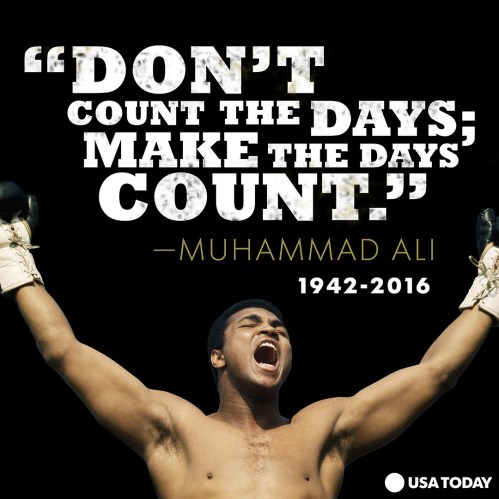
ALIDAYS1

My dad was a boxing fan, which made sense for a member of what Tom Brokaw termed “the greatest generation.”  Boxing was the American sport when he was a boy in the 1920s and 1930s, and I remember his tales of the great Jack Dempsey as we watched fights together a half century later.  I somehow failed to inherit his love for the sport, but the combination of his love and the golden age of heavyweight boxing that coincided with my childhood unleashed personal memories when Muhammad Ali’s passing was announced last Friday.  Elvis Presley, John Wayne, and Muhammad Ali—those were the names that seemed larger than life to this little boy in small-town Arkansas.  Now, all three are gone.

That Ali is a popular American hero is fascinating.  I doubt that his outspoken racial pride and conversion to Islam in the 1960s endeared him to all who now mourn his passing.  I doubt that his refusal to accept military service makes him a hero to all patriotic Americans.  And his brash, in your face, “I am the greatest” trash talking is not typically the personality that leads to universal love and admiration, the Donald Trump phenomenon notwithstanding.

Maybe America just likes a winner?  I don’t buy it.  Call me crazy, but I’m guessing that Barry Bonds, Bill Belichick, and Floyd Mayweather, Jr. will not be universally adored when they ultimately move on from this life.

So, why did Muhammad Ali die an American hero?  Some say it is his social activism, his willingness to stand up for what he believed in.  Maybe so.  That has to be a part of it.  But I suggest there is something more to Ali’s universal appeal.

Muhammad Ali embraced life.

He was fun and funny and full of joy.  He lived without fear.  Think about it: the religious conversion, the brash statements in an era of racial violence, the thumbing his nose at the government’s draft, and the claims of boxing greatness all displayed that he was not afraid of any threat.

More importantly, he lost in the boxing ring multiple times—but came back for more with a smile.  Over time, in what seemed to be the cruelty of fate, the powerful and eloquent athlete lost his famed strength and good health and bold voice—but he came out in public with a smile.

Check it out: Muhammad Ali was not afraid of any threat, but he was also not afraid of any consequence.

I believe that is why we loved him so.  We want to live without fear, too.  We want to face both the goods and bads of life with unshakable joy.

Wouldn’t that be the Greatest?

A Difficult Journey

Although less than flattering, I will tell the story.

Our business in India last week took us further away from the Delhi airport each day, culminating in a three-hour climb up a winding, dangerous, spectacular road in the Himalayas.  On this final climb, as we dodged death (and cattle) ahead of us and absorbed the awesome views on both sides of us, I developed a case of motion sickness.  Nothing too terrible, just enough to create a fuss for our hosts, which led to some rest, a nice visit from a young Indian doctor, and a bottle of Sprite.  By evening, I felt better and had the opportunity to enjoy the beautiful mountain village.

At 6:30am the following morning (warning: graphic material ahead), things went south.  Literally.  I will spare the terrible details, but suffice it to say that the next couple of hours were not pretty due to the onset of a malady common to travelers in the region.  But to somehow make things worse, we were scheduled to leave that morning with the following itinerary: a three-hour drive down the mountain, followed by a seven-hour drive to Delhi; followed by a six-hour wait in the airport; followed by an eight-hour flight to Amsterdam; followed by a one-hour race across the airport; followed by a ten-hour flight to Los Angeles.

And I felt like crap, pardon the ironic word choice.

One of my colleagues provided a miracle drug to stop the I’d-rather-not-say, and we were faced with a decision on what to do with me.  As my two colleagues considered donating me to India and our host offered to call an ambulance, I declared that I had four goals: (1) get down the mountain; (2) get to the airport in Delhi; (3) get to Amsterdam; and (4) get to Los Angeles.  And that I would take them one at a time.

Well, I strapped myself in, armed with a granola bar, drugs, a bottled water, prayer, and another Sprite, and off we went after goal number one.  It did not go so well.  At one point on the journey down the mountain, we stopped for my traveling mates to have lunch.  The smell of Indian food was not my friend, and I considered jumping off the mountain but did not have enough energy, so I strapped myself back in and continued on the journey.

I did survive the mountain and felt that there was hope—in fact, the lower elevation seemed to help.  On phase two of the journey—the seven-hour drive to Delhi—we stopped at a roadside convenience store where I discovered a can of plain Pringle’s and thought that God might like me again.  But alas, by the time night fell and we reached the airport, and possibly because we reached the crazy rush hour traffic of Delhi, I started to feel terrible again.  But hey, goal number two was accomplished.

The six-hour wait in the airport is not a fond memory.  On the plus side, I did eat most of a sandwich and then slept for a few hours sprawled across three plastic chairs, but by the time we boarded the flight to Amsterdam, I approached my lowest moment.  As the plane took off (thus ensuring I would reach goal number three), I longed for death once again.  I was certain that I would do ugly things in the airplane lavatory and even unfastened my seatbelt so that I could run for it—only you can’t run to the lavatory with drink carts in the aisle, and once you get there they are almost always occupied, and should a miracle occur and one be vacant I can’t fit in one anyway, much less if I am having convulsions.  And any change of clothes was packed in checked luggage.  I wished the plane would crash and somehow kill only me.

But somehow, after a few hours of misery, I improved enough for some fitful sleep, and by the time we completed my third goal I was in good enough shape to make it across the airport to board the plane to Los Angeles.

The final ten hours were not the happiest of my life, but I think you get the drift of the story by now.  I made it home after the terrible thirty-five hour journey and fully believe in miracles.

So why do I share such an embarrassing story?  I have faced a few significant challenges in my life, and there will be more for me and also for you.  When such challenges arise, and the journey ahead seems perilous and terrible with no guarantee of survival, sometimes you must set out on the journey anyway.

When such a journey is inevitable, fix your eyes on the road ahead, take it one step at a time, hope for some friends to journey with you, and just try to hold on.  You might not make it, but then again, you might.

Exotic India

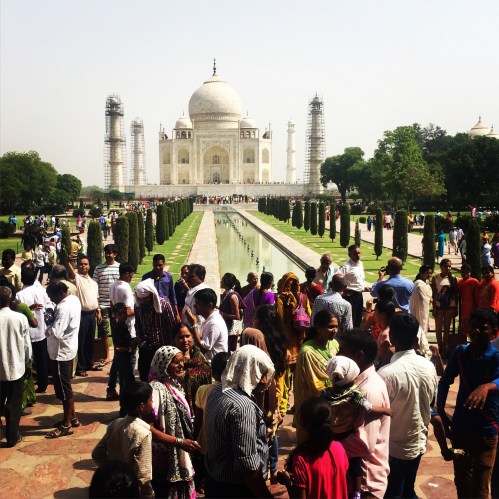
Taj Mahal.jpg

The fun folks at Merriam-Webster define exotic as “strikingly, excitingly, or mysteriously different or unusual.”  I now just picture India and call it a day.

I followed two colleagues to the other side of the world last week to cultivate relationships on behalf of the law school, and from a business perspective it was a successful trip.  From a personal perspective, I brought home extraordinary memories of…

  • Monkeys swinging over shoppers’ heads at a bazaar high in the Himalayas.
  • The snake charmer on his punji serenading us and his little, slithering friend.
  • Children playing cricket in the dirt in the searing heat.
  • Men paving a road by hand.
  • The “mad poetry” of Indian traffic (as my friend Jeff calls it), where cars, buses, scooters, bicycles, pedestrians, cows, dogs, auto rickshaws, motorcycles, and tractors dance to a symphony of horns.
  • The morning sun peeking through the haze on the road to Agra.
  • The stunning majesty of the Taj Mahal.
  • Being one of only two people not wearing a turban in a large business meeting.
  • The powerful aroma and flavors of rich Indian cuisine.
  • Camels on the roadside.
  • The unlimited potential of a scooter, from the wedging of toddlers between adults to beautiful women in colorful saris precariously riding sidesaddle to hauling more people and goods than a typical pickup truck.
  • Cows everywhere—and the jarring appearance of a McDonald’s.
  • A military man carrying a rifle grabbing breakfast in a convenience store.
  • Conspicuously arriving at a skills center in full business suit and the stares from the long line of poor people awaiting an exam that could change their lives.
  • The noble India Gate.
  • Going behind the gates of the President’s House and seeing the formal guard dressed in bright red uniform with a feathered hat standing at attention.
  • The magical city of Shimla at night.
  • Colors.  All of them.  Bright and vibrant blues, greens, yellows, reds, oranges, purples…

I don’t really know what to do with all of these memories just yet.  They are almost too much to process.  Sadly, I suspect that I have already forgotten images that in any other context would be unforgettable.

What I do know is that the world is filled with exotic places.  And that they are worth checking out.