Tag Archives: mlk

A House (Still) Divided Against Itself Cannot Stand (Forever)

“A house divided against itself, cannot stand.” – Abraham Lincoln on the campaign trail in Springfield, Illinois, June 16, 1858

Our friend, Flo, graciously gave me a signed copy of Erik Larson’s latest book, “The Demon of Unrest: A Saga of Hubris, Heartbreak, and Heroism at the Dawn of the Civil War,” as a Christmas gift, and I read it with great interest, especially at this particular moment in American history. The book chronicles the few short months between the unlikely election of President Abraham Lincoln in November of 1860 and the outbreak of the American Civil War at Fort Sumter in April of 1861 by venturing beneath the headlines and into the lives of some of the key players in the unfolding tragedy. The stories are captivating, to say the least.

I finished the hefty book amid the rapid-fire headlines currently firing from our nation’s capital, wondering if the combination provided anything for me to say. And I think that I do, have something to say that is.

For starters, to state the obvious, our current political polarization with its cyclical outrage is not new. The American Civil War was deep polarization by definition, in that case producing a macabre debate over exactly how many hundreds of thousands of deaths followed, but I began to wonder if today’s toxic political climate is an instance of history repeating itself—or, is it better understood as an ongoing history?  I suspect the latter.

I have had eleven special opportunities to teach a course built by a fantastic professor named Peter Robinson, titled, “Apology, Forgiveness, and Reconciliation,” and in so doing I stumbled across a December 2019 article in The Atlantic by Adam Serwer with the provocative title, “Civility Is Overrated.” The article’s premise is that the aftermath of the American Civil War—an era popularly called Reconstruction—was not, in fact, a time of healing and reconciliation, but a time that perpetuated the original division through its “false promise of civility” that then evolved into Jim Crow, and a century later, the American Civil Rights Movement of the 1960s. In the final paragraph, Serwer writes: “In the aftermath of a terrible war, Americans once purchased an illusion of reconciliation, peace, and civility through a restoration of white rule. They should never again make such a bargain.”

Well . . .

So I’m just thinking here: President Lincoln’s famous campaign speech in the important prelude to the American Civil War warned of what happens to divided houses, and a century later, Reverend King’s most famous speech continued to lament the maintenance of that divided house (read the first few paragraphs of his speech, at least) and dreamed an inspiring dream of a yet-to-be-realized undivided house. I think that today we’re on the next stanza of the same tragic song.

But if President Lincoln’s famous line (citing Jesus) from his famous speech is correct, the song does not have unlimited stanzas.

President Trump is a fascinating phenomenon. His now larger-than-life persona is venerated by many and reviled by many others—and his flurry of provocative executive actions during his first few weeks back in office naturally produces both reactions. But what I find disturbing is that even many of the Republicans that vehemently oppose President Trump—the RINO (“Republicans in name only” as he calls them)—although in opposition to most of his initial actions, seem to agree with his assault on one thing: DEI (Diversity, Equity, and Inclusion). Instead of multiple nuanced perspectives on the general concept of DEI, there seem to be only two: Good. Or, Bad.

Let me be clear: While money/power always lurks behind the curtain, the American Civil War was fought specifically over DEI. Make no mistake. And the Civil Rights Movement was without question a DEI movement. And amid the sweeping number of issues on the table today, I believe that DEI as a cause or concern, broadly speaking, remains at the center of it all.

One telling example is to recall the home stretch anti-DEI emphasis of the 2024 Trump campaign commercials that helped secure his clear victory at the polls.1 2 And as another specific but dramatic example, you may have seen recently that new Secretary of State Marco Rubio hired an undersecretary for public diplomacy that wrote the following less than four months ago: “Competent white men must be in charge if you want things to work. Unfortunately, our entire national ideology is predicated on coddling the feelings of women and minorities, and demoralizing competent white men.”

My friend, Dr. Richard T. Hughes, published “Myths America Lives By” in 2018, and in discussing various foundational myths identifies white supremacy as “the primal American myth.” One of the blurbs for his book was written by theologian, Dr. James H. Cone, who himself authored one of the most devastating books I have ever read, titled, “The Cross and the Lynching Tree.” For Dr. Hughes’s book, Dr. Cone wrote: “It takes a whole lot of courage for white theologians and scholars to speak the truth about race. If we had more white theologians and religion scholars like Hughes who would break their silence about white supremacy and face it for what it is, we–together–could make a better world.”

I, for one, wish to have more courage, for such a reason.

Now I should state my belief that our nation’s troubling supremacist foundations include more characteristics than simply white, although white is major, and that it is no coincidence that DEI work engages those very conversations. That a visceral response to such conversations comes from many otherwise thoughtful individuals simply reveals to me the depth of the foundations.

So did the Democrats lose the presidential election in large part because their diversity, equity, and inclusion arguments were unpopular? I think so. I know without a doubt that Reverend King and the Civil Rights Movement’s diversity, equity, and inclusion arguments were unpopular. And I know that President Lincoln and the Republicans of the 1860s’ diversity, equity, and inclusion arguments were unpopular, too.

I’m imagining a similar speech to that President Lincoln delivered long ago but in today’s divided land, not that our house/nation “cannot endure, permanently half slave and half free,”3 but that we cannot endure half engaging diversity, equity, and inclusion conversations and half silencing them.

I think there is something demonic in the political unrest today, and I do not think that it has much to do with the typical liberal and conservative approaches to domestic, economic, or foreign policy. Instead, I believe that there is a foundational aspect of American history that has always existed and continues to divide us today, a foundation that seeks to reserve power and privilege for certain “types” of people through misusing words like “meritocracy.” And while this divided house has persisted for a very long time now, I agree with Jesus and Reverend King and President Lincoln and many others who were quoted as saying that divided houses cannot survive forever. But if there truly is this fundamental design feature that continues to divide us, and if we truly “face it for what it is,” as Dr. Cone wrote, I share his hope that “we—together—could make a better world.”

—————————————————————————————————————–

  1. Poltico.com on Election Day: “The border and inflation have been GOP mainstays in advertising all year. But there was one other late entry into the Republican onslaught against Harris: More than a quarter of GOP spots that have aired in battleground states since Oct. 1 mentioned transgender issues in some way — most seeking to tie Harris to the concept of prison inmates, including immigrants, receiving gender-affirming surgery. It’s not a new playbook for Republicans, who leaned into transgender issues in key races in the 2022 midterms with little electoral success. It represented a shift in the presidential race: The first TV ad mentioning the issue did not air until mid-September. Still, it became one of the top issues in Republican presidential ads in the final stretch, though the economy and immigration still loomed larger. ↩︎
  2. See also, The Democrats Show Why They Lost. ↩︎
  3. https://www.nps.gov/liho/learn/historyculture/housedivided.htm ↩︎

Chaos or Community?

It seems to me that a debate over where a nation’s flags should be positioned today should be about the national holiday’s namesake rather than two others who are not, the national holiday’s namesake that is.

To be fair, one of the two obviously did not invite the debate. In fact, just over forty-six years ago (January 14, 1979) President Jimmy Carter became the first president to propose a national holiday honoring Reverend King even though thirty such bills had been proposed and defeated in Congress in the decade following the assassination, with the first proposal coming just a few days after the national tragedy in 1968.

President Carter’s proposal was unsuccessful, too. There were repeated financial arguments against the holiday over the years (e.g., President Ronald Reagan cited cost concerns; i.e., it will cost too much money to give federal workers another day off), and there were repeated personal attacks (e.g., Senator Jesse Helms called Reverend King a “Marxist” — and even President Reagan, again, who eventually signed the 1983 national holiday bill that finally made it through Congress into law, dodged a question about Senator Helms’s accusations with a thinly-veiled slap, “We’ll know in thirty-five years, won’t we,” referring to the scheduled release of FBI surveillance recordings). Today’s youth are presumably ignorant of the long road to the national celebration of the life of Martin Luther King, Jr.

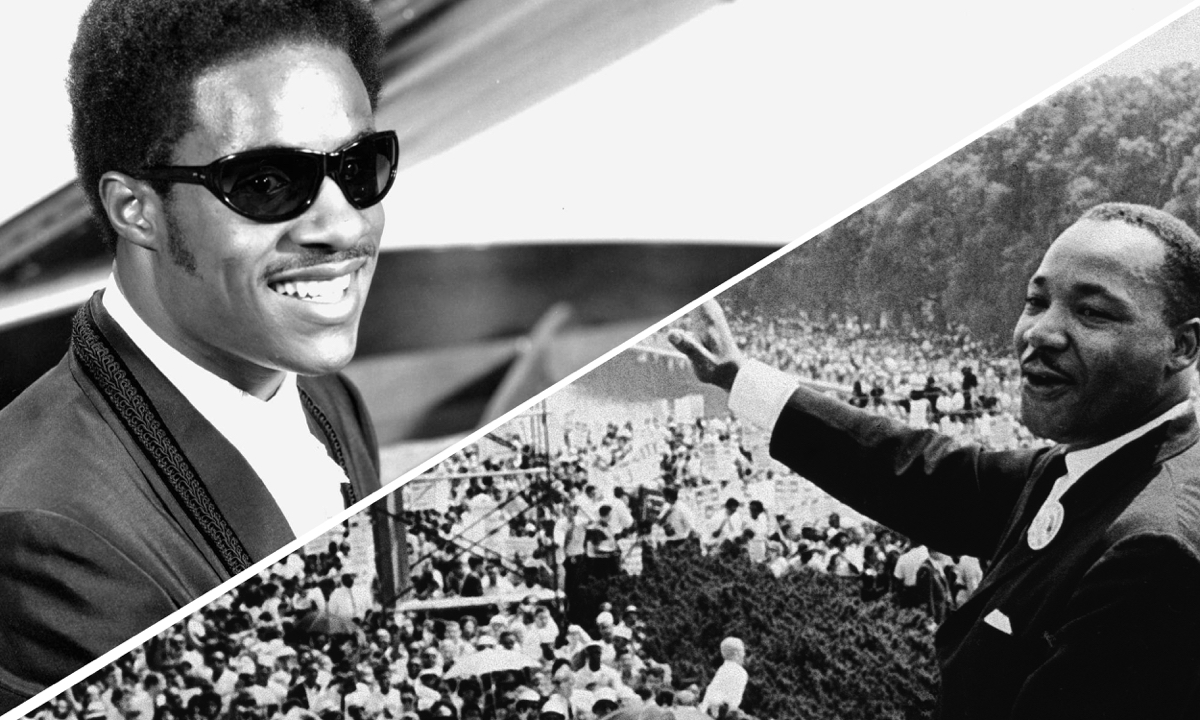
Key to generating the public pressure necessary to turn the tide on a national holiday, including a petition with an incredible six million signatures, was the extraordinary effort of musical legend, Stevie Wonder, who wrote and released his MLK-holiday-inspired version of the song, “Happy Birthday,” in 1981. “Happy Birthday” became one of his signature songs and has endured in beautiful ways. At the first official national MLK Day celebration in 1986, Stevie was the headline performer.

Still, even with the eventual declaration of a federal holiday, many states were reluctant to participate. It wasn’t until the year 2000 that every state officially came on board, although I am sad to report that both Alabama and Mississippi, in a breathtaking and ongoing insult, still combine the holiday to recognize both Martin Luther King, Jr. and Robert E. Lee, the Civil War general that led the fight to preserve Black slavery.

And if the fight for a day to recognize Reverend King wasn’t hard enough, we add a presidential inauguration today. Given the Twentieth Amendment to the United States Constitution’s specification for presidential inaugurations (January 20) and the designated date for MLK Day (third Monday in January, instead of his actual birthday, January 15), this will happen periodically. It happened with both President Bill Clinton’s second inauguration in 1997 and President Barack Obama’s second inauguration in 2013, and it won’t happen again until 2053, but it is happening today.

I listened to Stevie Wonder’s signature song, and given the persistent reluctance to fully celebrate the holiday and the bitter divisions in our nation, certain of his lyrics struck me with special force:

  • “the way to truth is love and unity to all God’s children”
  • “the whole day should be spent in full remembrance of those who lived and died for the oneness of all people”
  • “we know that love can win”
  • “the key to unity of all people is in the dream that you had so long ago that lives in all of the hearts of people that believe in unity”

I wish that those sentiments — sentiments that happen to reflect Reverend King’s understanding of Christian values — could be the full focus of a day like today.

Today, I do get to be a part of a lengthy reading to commemorate the holiday. We will gather in the “MLK Room” on the Ripon College campus and read aloud sections of the last book that Reverend King published prior to his assassination, titled, “Where Do We Go from Here: Chaos or Community?” That question — Reverend King’s question — reverberates today. Which will we choose?

Sometime between today’s presidential inauguration and tonight’s college football championship, I propose finding a few minutes to reflect on Stevie Wonder’s lyrical call to the world as set forth in his birthday song for Reverend King and truly consider the question: Where will we go from here — chaos, or the beloved community of which Reverend King so famously dreamed?

Mudbound

mudbound picWe were simply looking for a movie to watch on Netflix and Mudbound had rave reviews. Watch it. But fair warning: It is difficult to watch. It is difficult to watch because the storytellers do a masterful job of portraying the sort of lives that were difficult to live. The movie is a disturbing, compelling, haunting, yet beautiful work of art.

Mudbound features the intertwined stories of two rural Mississippi families, one black and one white, when one member from each family returned home following World War II. I will spare you the full movie review (especially preserving the memorable ending) and just state that systemic poverty, racism, and PTSD are terrible things and that all sorts of people—the beautiful, the complicated, and the perverse—are all mixed up in it.

I learned that the movie came from a novel of the same name by Hillary Jordan, and since we all know that books are better than their movies, I can only imagine how good it must be. The novel reportedly contains the line, “Death may be inevitable, but love is not. Love, you have to choose.”

This seems particularly important to consider on this special holiday that remembers Dr. King. On this day and every day, like Dr. King, may we choose love. “Hate is too great a burden to bear.”


Star Sightings

IMG_2604

One week after the terrible mass shooting during Shabbat services at the Tree of Life synagogue in Pittsburgh, interfaith gatherings appeared all over the nation like tender flowers sprouting from the bloody soil.

My new friend, Rabbi Michael Schwartz, who is new to Malibu, graciously invited me to take part in an interfaith service at the Malibu Jewish Center & Synagogue as Sabbath began last Friday evening. Rabbi Schwartz conducted a beautiful service filled with thoughtful songs, prayers, and reflections, and the musical gifts shared by Cantor Marcelo and his special guests were deeply moving.

At the outset of the service, we who represented local clergy from various faith backgrounds, along with important community leaders, were invited on stage to light eleven candles in honor of the lives that were tragically taken in Pittsburgh. We were then asked to share a short blessing. Without knowing exactly what to say at such a difficult moment, I chose to share a quote from Dr. King’s famous mountaintop speech, the last before he was assassinated: “Only when it’s dark enough can you see the stars.”

Looking at those flickering candles and out at the diverse audience in the synagogue, I can say with confidence that I saw stars shining in the darkness.

There is plenty of darkness to go around. May we see the stars. May we be the stars.

Telling the Truth in America

CV02b_1U4AEbWtj

“I think we do need truth and reconciliation in America. But truth and reconciliation are sequential. You can’t get to reconciliation until you first tell the truth.” – Bryan Stevenson

My dad was born and raised in Kennett, Missouri, the largest town in the Missouri Bootheel located just across the Arkansas border and not far from the Mississippi River. He was born in 1920, over four decades before singer-songwriter, Sheryl Crow, Kennett’s most famous native.

I don’t know much about my dad’s childhood years but have never forgotten a haunting story he told of witnessing the lynching of a black man on the courthouse lawn for allegedly raping a white woman. Children were not supposed to be there, but my dad wiggled his way to the front while the crowd was shamefully mesmerized by the spectacle of a human being with a noose around his neck being asked if he had any final words. The man answered, “Well, I didn’t do it, but I know that doesn’t make any difference to you all.” And then he was killed.

I don’t remember my dad telling the story with any particular emotion so I’m not sure why he shared it with his young son over fifty years after the fact, but it was obvious that it had made an impression. And here I am almost another fifty years later telling it again. If you wonder how far we have to go back to find race-motivated lynchings on a courthouse lawn, for me it is one generation.

I think Bryan Stevenson is a remarkable human being and encourage you to read/watch/listen to him in any way that you can. Stevenson is the founder and Executive Director of the Equal Justice Initiative (“EJI”) in Montgomery, Alabama, and among many wonderful projects had the idea of telling the truth about lynchings in the United States.  EJI published a report titled, Lynching in America: Confronting the Legacy of Racial Terror, which documented over 4,000 lynchings between 1877-1950—a period of time after, of course, the Civil War, the abolition of slavery, and the other Reconstruction Amendments to the Constitution. I looked at the map and noted zero lynchings identified in Dunklin County, Missouri, where Kennett is the county seat. I know a man who witnessed one, so I can only imagine how many race-motivated lynchings actually occurred.

Stevenson’s message is that we must tell the truth before we get anywhere on racial reconciliation, so on a day set aside to remember Dr. Martin Luther King, Jr., I will use my small platform to say that my personal heritage includes a history and ongoing legacy of things we can be proud of alongside things for which we should be deeply ashamed. We cannot honestly claim one without the other. And among those things that require deep shame is nothing less than domestic terrorism that targeted a particular race of people motivated by white supremacy.

May we tell the truth. May we lay markers so that we never forget. And may we recommit to the pursuit of Dr. King’s not-yet-realized dream.

“I have a dream that one day every valley shall be exalted and every hill and mountain shall be made low; the rough places will be made plain, and the crooked places will be made straight; and the glory of the Lord shall be revealed, and all flesh shall see it together.” – Dr. Martin Luther King, Jr. (Washington, D.C., August 28, 1963)

Be the Best of Whatever You Are

mlk2

Fifty years ago, and just one year before his assassination, Dr. Martin Luther King, Jr. preached a sermon at the New Covenant Baptist Church in Chicago titled, “The Three Dimensions of a Complete Life.”  Dr. King’s 3D sermon emphasized the height dimension of life (God) along with the length (self) and breadth dimensions (others).  Some of his thoughts about breadth made the entire sermon known as “the street sweeper speech.”  Today, on the holiday that remembers Dr. King, I ask you to remember this:

When I was in Montgomery, I went to a shoe shop quite often, known as the Gordon Shoe Shop. And there was a fellow in there that used to shine my shoes, and it was just an experience to witness this fellow shining my shoes. He would get that rag, you know, and he could bring music out of it. And I said to myself, “This fellow has a Ph.D. in shoe shining.” What I’m saying to you this morning, my friends, even if it falls your lot to be a street sweeper, go on out and sweep streets like Michelangelo painted pictures; sweep streets like Handel and Beethoven composed music; sweep streets like Shakespeare wrote poetry; sweep streets so well that all the host of heaven and earth will have to pause and say, “Here lived a great street sweeper who swept his job well.”

If you can’t be a pine on the top of a hill
be a scrub in the valley,
but be the best little scrub on the side of the hill,
be a bush if you can’t be a tree. 
If you can’t be a highway, just be a trail;
if you can’t be the sun be a star.
It isn’t by size that you win or fail— 
Be the best of whatever you are.

Brothers and Sisters

8

“Let us all hope that the dark clouds of racial prejudice will soon pass away and the deep fog of misunderstanding will be lifted from our fear-drenched communities, and in some not too distant tomorrow the radiant stars of love and brotherhood will shine over our great nation with all their scintillating beauty.” – Martin Luther King, Jr., Letter from a Birmingham Jail (April 16, 1963)

Three years ago, I wrote an essay for the Pepperdine Dispute Resolution Law Journal titled, “From Integration to Multiculturalism: Dr. King’s Dream Fifty Years Later.” The essay questioned whether the changes in race relations in the United States in half a century signified actual progress toward Dr. King’s dream. The skepticism I expressed in the essay has not improved while watching the news over the ensuing three years.

And what exactly was the Dream? Although the terms equality and freedom and justice, words with a legal flavor, were prominently featured in Dr. King’s speeches, it is the family metaphor of brotherhood (with apologies for the non-gender inclusive language of the time) that stands out in the speeches as a better characterization of the Dream. As King famously stated, “I want to be the white man’s brother, not his brother-in-law.”

Check out the epigraph to this essay that closed out the Letter from a Birmingham Jail to see what I mean. Check it out again and tell me that we are in shouting distance of such a dream. I think not.

So has this all been a waste of time? Are we simply left with a new holiday? Of course not, but although there has been much good, it is naïve to think that we are anywhere near a world where we see one another as brothers and sisters across the various social lines that divide us. Watch the news. Heck, join me in taking a good look at our own hearts.

So what now? Well, I say that we keep dreaming. And keep hoping. And keep working. For equality and freedom and justice, sure, but climb up on the mountaintop and see beyond those lofty words to an even loftier ideal where we all live together as brothers and sisters.

That is some dream, and it is worth remembering today.

4

Examine the End

2

French sociologist, Jacques Ellul, published “The Technological Society” in 1954, a book that predicted that although technology will be presented as a servant of humanity, it will overrun the world and become its master. My iPhone constantly reminds me that he was on to something (in the 1950s!). In the foreword to Ellul’s book, famed American sociologist, Robert K. Merton, wrote: “Ours is . . . a civilization committed to the quest for continually improved means to carelessly examined ends.”

I read that phrase years ago and cannot get it out of my mind. We are obsessed with bigger and faster and more—but for what purpose?

NBC News presidential historian, Michael Beschloss, spoke in March at the national meeting of the American Council on Education about the increased pressure on the president to respond quickly to national issues due to the social media phenomenon. As a stark example, he referred to the 1962 Cuban missile crisis and said that if President Kennedy had been forced to respond in the same timeframe that current presidents are expected to respond, he would have chosen to unleash heavy military action. It is estimated that forty million lives would have been lost. Forty million. Thankfully, there was time to reflect, and a different decision.

Charleston has dominated the news of late and rightfully so. It is an unspeakable tragedy—although there has been a lot of speaking anyway. I get it. Today, you have to speak quickly on important issues or you will miss the chance when the next story arrives.

I, too, have very strong feelings about the recognition of persistent racism in America and access to guns and gun control and the Confederate battle flag and am “committed to the quest for continually improved means” such as these (and more), but I would like some time and space for a deep and difficult examination of the true “ends” so that we might have shockingly productive conversations on how to get there.

My premise today is simple. For things to look up—and things can always look up—we need deep, measured, thoughtful conversations until we agree on where we are going, but it has grown more difficult to have such conversations because of our obsession with immediate actions.

————————————————————————————————–

* Click HERE if you are interested in an essay published in Pepperdine’s Dispute Resolution Law Journal a couple of years ago where I reflected on the fiftieth anniversary of Dr. King’s “I Have a Dream” speech. It concludes with an attempt to identify Dr. King’s “end” given his language.