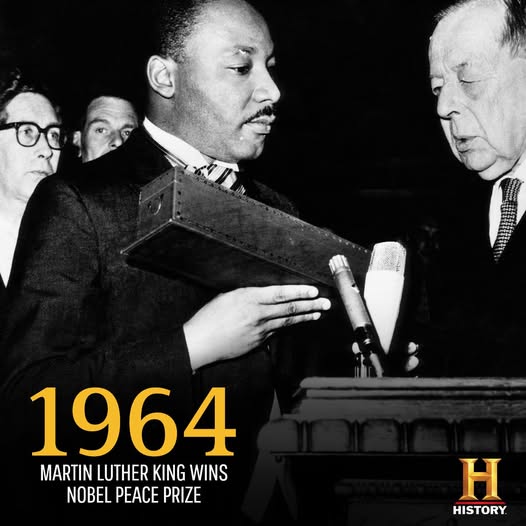
“Sooner or later all the people of the world will have to discover a way to live together in peace . . . If this is to be achieved, [humanity] must evolve for all human conflict a method which rejects revenge, aggression and retaliation. The foundation of such a method is love.” – Martin Luther King (Acceptance Speech, on the occasion of the award of the Nobel Peace Prize in Oslo, December 10, 1964)
On the eve of the 2024 presidential election, I referred to a comment stating that the outcome of the election would say more about the American people than the campaigns themselves, and I believe that turned out to be accurate. The year since the subsequent inauguration has exposed disturbing collective values. I do not in any way believe that this administration invented revenge, aggression, and retaliation, but it has unapologetically modeled those human inclinations (e.g., Comey; Greenland; flipping off an autoworker; respectively).
The strange recent peace prize headlines serve as a poignant case study on this eve of the holiday that honors Dr. King.
In late 1964, King traveled to Norway to accept the Nobel Peace Prize. He opened his speech by making it clear that he accepted the award on behalf of the Civil Rights Movement, not himself, and then wondered why the award was given “to a movement which is beleaguered and committed to unrelenting struggle; to a movement which has not won the very peace and brotherhood which is the essence of the Nobel Prize.”1 His conclusion was that the award was, in fact, “a profound recognition that nonviolence is the answer to the crucial political and moral question of our time – the need for man to overcome oppression and violence without resorting to violence and oppression.”
Later in King’s acceptance speech, in a passage that I feature at the beginning of this essay, he predicts that the world will eventually be forced to discover a way to live in peace, and that this elusive state will require a method of conflict resolution that “rejects revenge, aggression, and retaliation” — three popular methods that you spot easily simply by watching the daily news. Creative nonviolence is King’s answer, of course, and if you find that intriguing, don’t miss his next line: “The foundation of such a method is love.”
I know that peace and love is a tie-dyed t-shirt, but here is what I also know: Revenge has not proven to be a reliable pathway to true peace. Neither has aggression. Nor has retaliation. And I know it is a Beatles song, but I truly believe that not only is love our deepest need, but it is also the foundation for any desire we have for a world where peace and justice exist.
I always try and regularly fail to look at politics objectively. I began my professional life over thirty years ago teaching courses like history and civics, which then morphed into full-time ministry where I wrestled with theological approaches to complicated issues. My meandering life later wandered through law school, which added new layers to my way of thinking. Eventually I assembled my own framework for interpreting the world, and although that framework remains malleable, once assembled it has more or less hovered in the same general neighborhood.
All that to say, the annual Martin Luther King, Jr. holiday means more to me than a day off work (for some!) and a day to trot out one of his famous quotes. Instead, I identify with his fateful decision to adopt and promote creative nonviolence as the path to justice, and I arrived there through my admiration of Jesus, too.
It is incredibly difficult to love enemies. It is an outright radical concept, and it is practically impossible even to catch a glimpse of it on the national stage right now. And it does not surprise me that most find the concept ridiculous, if not repulsive. I just happen to believe, like Reverend King, that it is the secret sauce. More than a tie-dyed t-shirt, it is messy, painful, and can get a person killed. But, I believe, the secret sauce nonetheless.
So beyond the bizarre peace prize stories in recent headlines, for tomorrow’s holiday I look back to 1964 and say establish your own deeply-held interpretive framework for navigating this old world, but here’s a word for the framework espoused in Oslo by Reverend King that believes in the foundation of love for all people, even enemies. I have discovered that any love-inspired action that I achieve feels like a step in the right direction, and noticing even hints of that in our nation’s political discourse right now is a long shot.
This posture, of course, is antithetical to an American president that said earlier this month, “I can’t think of anybody in history that should get the Nobel Prize more than me.” ↩︎
Imagine stargazing alone on the darkest night and witnessing a glorious cluster of shooting stars hurtling across the sky with such beauty and brilliance that you are forever changed, and then imagine the sadness that comes later when you recognize that you experienced something both powerful and personal that can never be recaptured. That is the sadness and the void in the universe that I feel today.
I met Kimberly Hebert eight years ago by email – at 8:31pm PST on October 23, 2017, to be exact. It was a rough start for me. I had preached a sermon that morning at the University Church of Christ in Malibu, California, on the campus of Pepperdine University titled, “On Behalf of Another.” I opened with the YouTube video “Oh Freedom!” that featured powerful images from the Civil Rights Movement—marches, sit-ins, legislation, Reverend King, Rosa Parks—all set to the haunting lyrics, Before I’ll be a slave / I’ll be buried in my grave / And go home to my Lord / And be free.
I followed what I considered to be a powerful opening with my own story of growing up in a Southern sundown town, and with my preaching foot on the accelerator then told of Oscar Romero giving his life for those being raped and murdered in El Salvador. All that led to the sermon text in Exodus 33 where Moses stood up to God on behalf of his people, and my message was that being “the Church” means standing up on behalf of others. There was even a photo of a sign from a Civil Rights march in the opening video that read “Where is the Church?” that in many ways characterized my sermon’s thesis.
I was sort of proud of it, but Kimberly wasn’t buying it at all. I had no idea who Kimberly Hebert was at the time, but she was in the audience that morning and shared her impressions with me that night in an email that she titled, Where IS the Church? She said the sermon felt “emotionally manipulative.” She said “[t]he church is still silent on issues of race” and that in my sermon the “silence was deafening” and that such silence “is one of the many reasons that the church is impotent in this area and does not show up.” She challenged me to have the “courage to tell the whole story in truth and love” and characterized sermons like mine as “tepid” before closing with the hope that I could receive her message “with the love in which it is being shared.”
It was hard for me to read. It was hard for me to read in part because there was not a doubt in my mind that she was right, and because the message that I had delivered, which was strong for me, failed to address the present nature of American racial politics and had had its true measure revealed: Tepid. Weak.
I wrote back that night – at 10:16pm PST to be exact (I have kept and treasured much of our correspondence). I expressed both apologies and gratitude. I said that she was right and that I had much to learn. I shared my hope that we could visit so that I could learn and grow. I had no idea what I was asking for, but as I have often said, I do my very best work by accident, because from such an inauspicious start that initial email exchange in the space of two evening hours produced for me a brief and beautiful friendship that changed my life for good. Kimberly became my teacher, my consultant, my advisor, and my friend.
In the following months we exchanged emails where I asked ignorant questions and she shared brilliant answers Then we became book partners in a campus ministry effort that worked through the book, Welcoming Justice, by Charles Marsh and John Perkins. I found the book insightful and helpful. Kimberly didn’t care for it. We met for lunch at Le Pain Quotidien, a French bakery-restaurant in Calabasas, on multiple occasions in early 2018 where I slowly caught on to how Kimberly received the book from her lived experience. Each time we met someone would recognize her and sometimes ask for a picture.
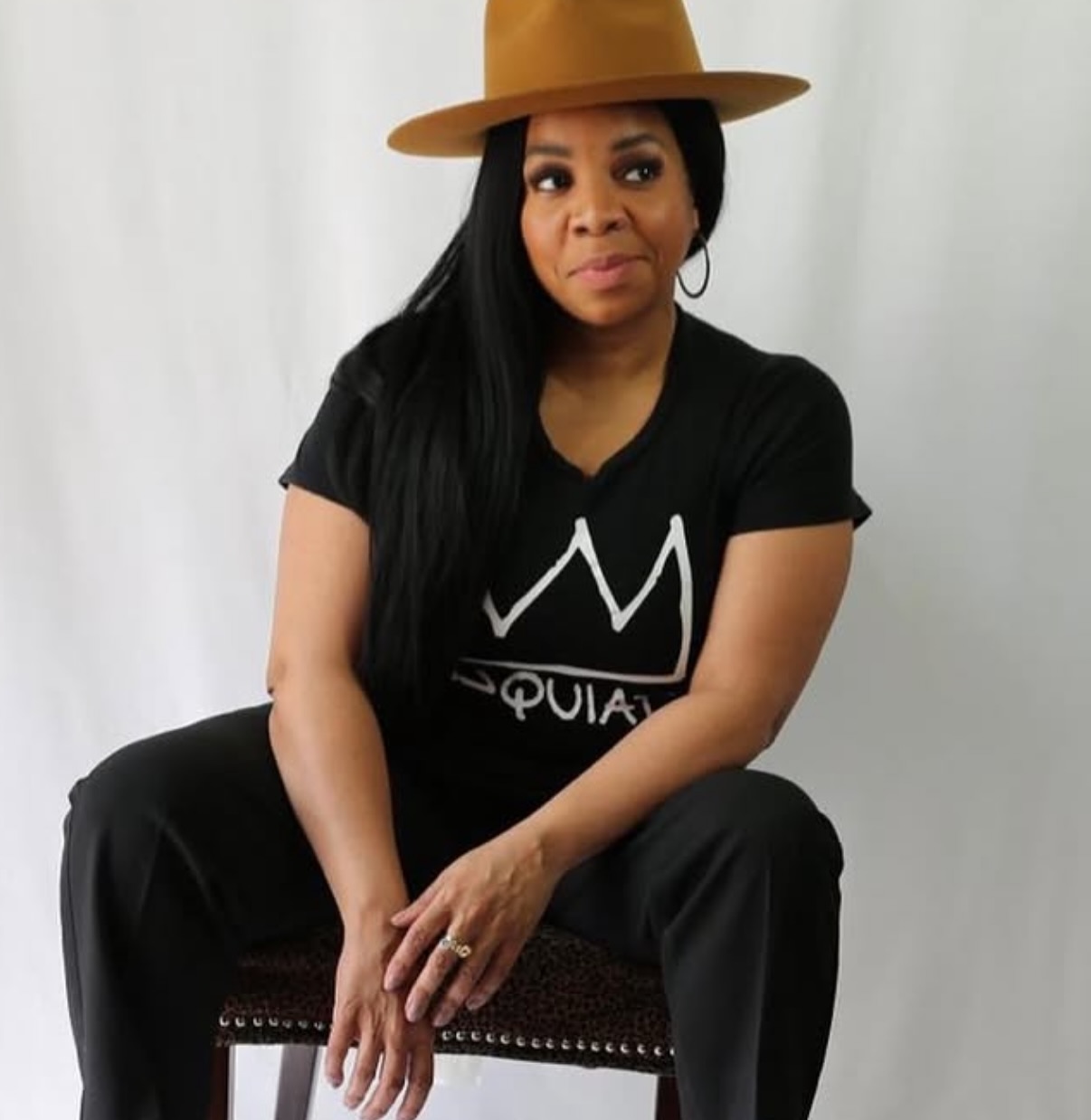
Did I mention that Kimberly was also a movie star? I had no idea when we first interacted, but this later discovery made this special human being even more fascinating.
I’m sure it was our good friend, Google, that shared the news with me when I first wondered about this person that called my sermon on the carpet. At our first Calabasas lunch she was so embarrassed when I told her that my wife was a major fan of her portrayal of Dr. Belinda Brown when she starred alongside Walton Goggins and Danny McBride on the somewhat (okay, more than somewhat) raunchy HBO comedy, Vice Principals. But she was so much more than a brilliant actor. There was a depth and a breadth to her life and an enormous intellect that I was privileged to access. Kimberly grew up in Houston and later received a bachelor’s degree in psychology from Mount Holyoke College in Massachusetts and then an MSW from the University of Chicago before launching a successful career on stage and screen. In my eyes she was larger than life.
I sense a mischievous smile when I remember that I eventually got to turn the mirror around and invite Kimberly to face challenges, too. I invited Kimberly to lead an adult Bible class in beautiful Stauffer Chapel in the summer of 2018 in a series on our personal “cloud of witnesses,” and the thought of bucking the restrictive male-only posture of our shared faith tradition forced her to reach for some courage of her own. But she did it, and the stories of those that shaped her life trajectory were incredible. I even convinced her to share her story in front of the whole church in a worship gathering that September, which just about blew her mind but gave me the greatest joy!
I learned that Kimberly died on Friday. I do not know the details, but I am heartbroken.
I will never forget the awkward nature of our initial contact, but more importantly, I will never forget the deep friendship that developed in such a short time. Kimberly welcomed me into her story and shared physical health challenges that she battled for decades. She invited me to sit with her mother at Cedars Sinai just one year after our initial emails during a concerning procedure that turned out well, just as we had prayed, which proved that we had traveled a long way from suffering through an emotionally manipulative and tepid sermon. Prior to the procedure, Kimberly wrote to me of her gratitude “that God knitted this relationship for such a time as this” and that, “I didn’t see it coming, but God knew I would need a community.” When I announced my move to Nashville a few months later in the spring of 2019, it is crazy to sift through our email correspondence to see how our awkward initial exchange had grown so that we felt such deep loss for miles to separate our friendship.
Just prior to our move to Nashville, Kimberly starred in a play at the Geffen Playhouse in Los Angeles titled, Black Super Hero Magic Mama. Appropriate, of course. Kimberly secured two premium tickets, and Jody and I felt so special to sit in the audience and watch our new friend, the star of the show. The movie premiere for Five Feet Apart, which Kimberly starred in as well, also occurred that night, and since she couldn’t be in two places at the same time, a limo was arranged to whisk her to the premiere afterparty at a Hollywood club after the play, and she invited us along for the experience. I hope you can picture my wife and I, a couple of actual Beverly Hillbillies, stepping out of the limo to the flashing cameras and entering the strobe-lit club where Kimberly introduced us to celebrities such as Cole Sprouse, a co-star, and Justin Baldoni, the director.
I think of that night in March of 2019, the last time I saw her in person and “hugged her neck” (as she would say), as I might think of an appropriately spectacular ending of a fireworks display. I knew that we were moving away from one another quite literally, but I had no hint of finality.
Our email correspondence soon became fewer and farther between, but a couple of years later we had one brief opportunity to reconnect. By that time we had all encountered the murder of George Floyd and the Covid pandemic, and I had moved from Nashville to work at a small college in Illinois. When our volleyball coach at the college planned a fundraiser for cystic fibrosis, I remembered Kimberly’s movie, Five Feet Apart, which was a beautiful love story of two young people with cystic fibrosis who were not allowed to be within five feet of one another (ironically, a movie released a couple of years before “six feet apart” became a part of our national experience), and I reached out to see if Kimberly would meet our students in rural Illinois via Zoom. To which, as you might guess, she graciously agreed. We not only invited our volleyball student-athletes to hear Kimberly share what she learned about cystic fibrosis from her movie role, but also our theater students to hear of her acting career, and also our Black students to learn of her thoughts in the aftermath of the murder of George Floyd and her experiences as a Black woman navigating a career in the United States. As expected, Kimberly was gracious with her time, and profound, and hilarious, and inspiring, and unforgettable.
Jody and I stayed afterward, and that post-Zoom conversation was the last time we spoke and shared the love of our friendship.
In the summer of 2023, Jody and I unexpectedly moved back to Malibu. We thought we might be back in California forever, and Kimberly was one of the first that I emailed. Not long after we arrived, she responded that “[y]ou know I’ll make some time to see you” and that she looked forward to reconnecting. I responded with my new cell number, and that turned out to be our final exchange. We both got busy, and California turned out to be just a bonus year for us that led to a move to our new home in Wisconsin, and my regrets are now deep. I knew that Kimberly’s life remained full without regular installations of our friendship, but it never occurred to me that she might move on from this life so soon. And I wish I had been there for her in the end.
I have been too rattled to think clearly, but I have been trying to think clearly so that I can do honor to the lessons I learned from Kimberly Hebert. I kept our correspondence, and I have been sifting through it since I learned such sad news this weekend, and one lesson I have remembered is found within these words that she shared when we were praying for her health seven years ago: “Again, despite what we are going through, God has not abandoned us. He is always right there with us, even unto the end of the ages.” There is comfort in those words, and my hope remains that her words are true.
Further, as I reread the challenges in her initial outreach to a preacher she did not know, I am emboldened to remember the challenge to my humanity and my personal courage in a culture that seems hell-bent on regressing instead of progressing. She wrote, “A revisionist approach to history is dangerous, particularly when inserted into our religious arena. If you want to challenge the body to be self-reflective in this area, there has to be courage to tell the whole story in truth and love.” Now, more than ever, I want to do better. I want to tell the whole story. I want to tell the truth. I want to tell it in love.
Kimberly’s salutations in our friendship correspondence were the words: Big Love, Kimberly. That is how I remember her today. A special person who loved big.
It was an incredible honor that she loved me in spite of everything that conspired against it, and it is intimidating as hell to remember the courage she challenged me to live with from the very start. May she rest in peace and power, and may I live with greater “courage to tell the whole story in truth and love.”
Farewell, my friend. As the curtain falls and the credits roll, know that I am moved to stand and applaud your extraordinary performance.
I find it especially important in dark and troubled times to closely monitor personal emotions, and we seem to live in dark and troubled times. This came to mind as I drove to the office before eight o’clock on this Sunday morning. My wife is out of town, so I felt justified putting in early Sunday work hours, but such behavior indicates that my emotions could get out of whack.
But it was sixty-three degrees on a lovely morning, and I lowered the window to feel the cool breeze while listening to a station that features soothing acoustic music. And as I drove past farmland I was surprised to see several normally-stationary horses galloping together on a gentle morning run. And then I rounded a curve and noticed that the self-serve produce stand is now decorated with pumpkins and flowers on this first day of autumn. And I sensed in a powerful form the intoxicating feeling of peace.
There was more.
A little farther along, I met an older woman riding her bike on the lonely back roads. We have passed one another on several mornings and now wave with smiles as if we are dear friends, which we did with even more enthusiasm this morning. I then turned toward the office and noticed my friend, Kelly, out walking her dog, which led to another wave and another smile. And as if the world was conspiring for my good, I then noticed a wonderful student, Emma, walking across campus on a Sunday morning, and I stuck my arm out the window with another wave and smile.
And for a moment, if I didn’t know better, I sensed every reason in the world to be happy.
David Brooks published a column in The New York Times three days ago titled, “The Era of Dark Passions.” I surely do not agree with David Brooks on many things, but I typically benefit from reading his thoughts, and I especially appreciated that particular opinion piece. Brooks shared his belief that “something awful has been unleashed” in our current times and that “[e]ven before the Charlie Kirk assassination it was obvious that the dark passions now pervade the American psyche, and thus American politics.” Brooks identified dark passions as Anger, Hatred, Resentment, Fear, and the Urge to Dominate, and he distributed blame for stirring dark passions for personal benefit to his own industry, the media, and to both sides of the political aisle. Brooks then posed the question:
Why does politics feel so different now than in times past? My short answer is that over these years, demagogues in politics, in the media and online have exploited common feelings of humiliation to arouse dark passions, and those dark passions are dehumanizing our culture and undermining liberal democracy. My intuition is that we’re only at the beginning of this spiral, and that it will only get worse.
With that cheery outlook, what is there to do? Well, for starters, Brooks begins:
First, let me tell you how not to reverse it. There is a tendency in these circumstances to think that the other side is so awful that we need a monster on our side to beat it. That’s the decision Republicans made in nominating Trump. Democrats are moving in that direction too. Back in 2016 Michelle Obama asserted that Democrats to go high when Republicans go low, but the vibe quickly shifted. As former Attorney General Eric Holder put it in 2018: “When they go low, we kick ’em. That’s what this new Democratic Party is about.” If Republicans soil our democracy with extreme gerrymandering in Texas, Gavin Newsom and the Democrats will soil our democracy in California. The problem with fighting fire with fire is that you’re throwing yourself into the cesspool of dark passions. Do we really think we won’t be corrupted by them? Do we really think the path to victory lies in becoming morally indistinguishable from Trump? Do we really think democracy will survive? Surveys consistently show that most Americans are exhausted by this moral race to the bottom and want an alternative; do we not trust the American people?
Brooks then advises as “the most effective way to fight dark passions”…
History provides clear examples of how to halt the dark passion doom loop. It starts when a leader, or a group of people, who have every right to feel humiliated, who have every right to resort to the dark motivations, decide to interrupt the process. They simply refuse to be swallowed by the bitterness, and they work — laboriously over years or decades — to cultivate the bright passions in themselves — to be motivated by hope, care and some brighter vision of the good, and to show those passions to others, especially their enemies.Vaclav Havel did this. Abraham Lincoln did this in his second Inaugural Address. Alfred Dreyfus did this after his false conviction and Viktor Frankl did this after the Holocaust. You may believe Jesus is the messiah or not, but what gives his life moral grandeur was his ability to meet hatred with love. These leaders displayed astounding forbearance. They did not seek payback and revenge.Obviously, Martin Luther King Jr. comes to mind: “To our most bitter opponents we say: We shall match your capacity to inflict suffering by our capacity to endure suffering. We shall meet your physical force with soul force. Do to us what you will, and we shall continue to love you. We cannot in all good conscience obey your unjust laws, because noncooperation with evil is as much a moral obligation as is cooperation with good. Throw us in jail, and we shall still love you.”
You might not be surprised that this resonates with me given my latest blog post published a few days prior to Brooks’s column. But it especially came to mind this morning on a lovely ride into work. I place no value on being unrealistic or ignoring the obvious, but I place great value on noticing the good and living with hope, for what is the future without hope?
I guess what I’m saying is that I unexpectedly caught a glimpse of the bright passions on a drive to work this morning, and I am now extra inspired to resist the forces that push the dark passions and choose to cultivate the bright passions more and more instead. As David Brooks concluded his recent column:
The dark passions look backward toward some wrong committed in the past and render people hardhearted. The bright passions look forward toward some better life and render people tough-minded but tenderhearted.
May we look forward toward some better life as tough-minded and tenderhearted people.
The word “hero” rarely fits those you actually spend time with up close, but I use it often to describe Gene Logan. I have told Gene Logan stories to people all around the world.
Gene was somehow both tender hearted and tough as nails, and I loved and respected him deeply. At many times in my life, I made intentional decisions because I thought it was what Gene would do. I think they call that sort of person a role model. When it comes to Gene, I prefer hero.
Gene died yesterday. Although separated by miles and years, I feel the loss deep in my soul.
There are many stories, but the most dramatic come from our shared leadership experience in response to Hurricane Katrina twenty years ago. To me, Gene’s leadership was legendary, and I suspect the historic element of that natural disaster is why I associate Gene with the heroic.
It was Gene who said “let’s go” just hours after the worst of the storm had passed, and I followed him in the dark with a flashlight, defying curfew, climbing over rubble, smelling and hearing the gas from the ruptured main, searching for one of our church widows who had chosen to ride out the storm at home.
But the story that I have told the most, and the one that will forever be my living definition of leadership is something that he did unannounced, which was his leadership style. So many of us in our church community lost our homes, but Gene did not. His home was not far from our church’s building, which was our relief headquarters, and for those first few weeks after the devastation those of us who were freshly homeless bedded down on the floor each night alongside incredible volunteers who continually came to our rescue. One night I noticed that Gene was sleeping on the floor with the rest of us, too, and it occurred to me that not only did Gene have a perfectly fine bed a few blocks away, but he also had a bad back. If you knew Gene you would know that this is not the sort of observation that you share directly with him, so I went to his wife, Eileen, and wondered what he was thinking. Eileen said, “Oh, he said that he would not sleep in his bed until everyone in the church had a bed to sleep on.”
I get emotional thinking about that every time, but especially today. If ever a single action defined a person — defined a leader — defined a hero — that is it for me. How wonderful to have someone in the world that will be with you in your worst moments and refuses to leave your side until your worst moments have passed.
And how sad that the someone who showed that to me isn’t with us anymore. It is his turn to rest, although I can’t see that making him happy, but I trust that somehow his extraordinary love will be rewarded on whatever is on the other side of this life.
It seems to me that a debate over where a nation’s flags should be positioned today should be about the national holiday’s namesake rather than two others who are not, the national holiday’s namesake that is.
To be fair, one of the two obviously did not invite the debate. In fact, just over forty-six years ago (January 14, 1979) President Jimmy Carter became the first president to propose a national holiday honoring Reverend King even though thirty such bills had been proposed and defeated in Congress in the decade following the assassination, with the first proposal coming just a few days after the national tragedy in 1968.
President Carter’s proposal was unsuccessful, too. There were repeated financial arguments against the holiday over the years (e.g., President Ronald Reagan cited cost concerns; i.e., it will cost too much money to give federal workers another day off), and there were repeated personal attacks (e.g., Senator Jesse Helms called Reverend King a “Marxist” — and even President Reagan, again, who eventually signed the 1983 national holiday bill that finally made it through Congress into law, dodged a question about Senator Helms’s accusations with a thinly-veiled slap, “We’ll know in thirty-five years, won’t we,” referring to the scheduled release of FBI surveillance recordings). Today’s youth are presumably ignorant of the long road to the national celebration of the life of Martin Luther King, Jr.
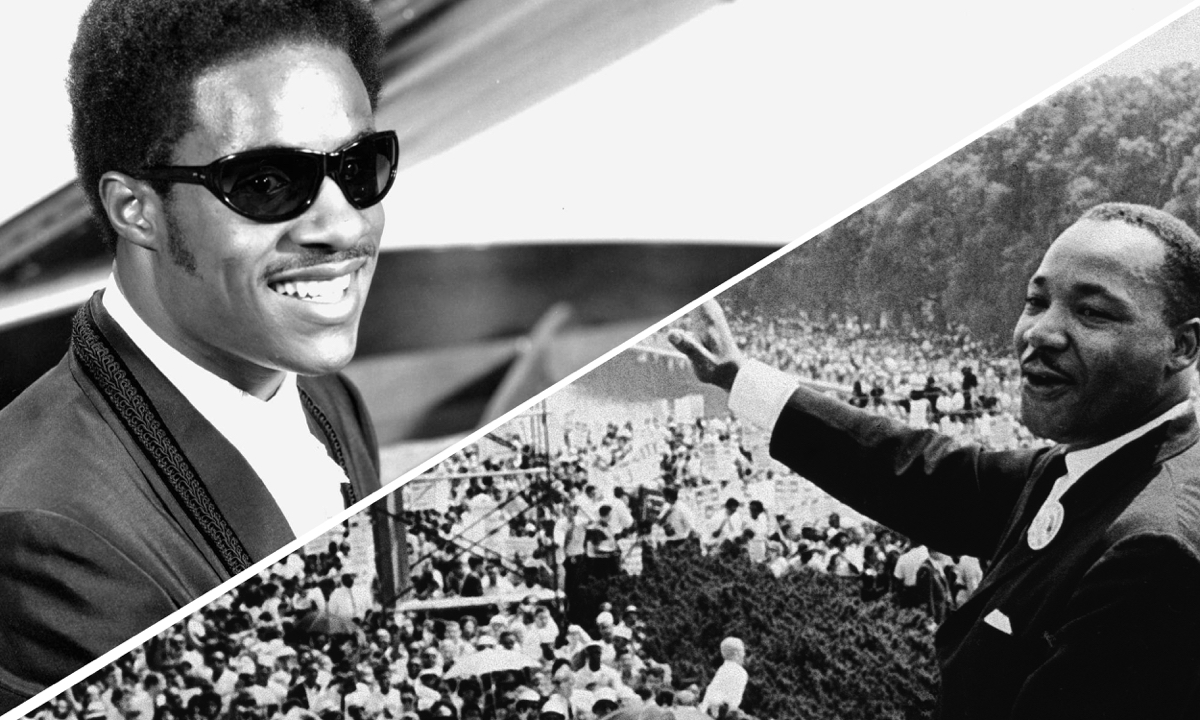
Key to generating the public pressure necessary to turn the tide on a national holiday, including a petition with an incredible six million signatures, was the extraordinary effort of musical legend, Stevie Wonder, who wrote and released his MLK-holiday-inspired version of the song, “Happy Birthday,” in 1981. “Happy Birthday” became one of his signature songs and has endured in beautiful ways. At the first official national MLK Day celebration in 1986, Stevie was the headline performer.
Still, even with the eventual declaration of a federal holiday, many states were reluctant to participate. It wasn’t until the year 2000 that every state officially came on board, although I am sad to report that both Alabama and Mississippi, in a breathtaking and ongoing insult, still combine the holiday to recognize both Martin Luther King, Jr. and Robert E. Lee, the Civil War general that led the fight to preserve Black slavery.
And if the fight for a day to recognize Reverend King wasn’t hard enough, we add a presidential inauguration today. Given the Twentieth Amendment to the United States Constitution’s specification for presidential inaugurations (January 20) and the designated date for MLK Day (third Monday in January, instead of his actual birthday, January 15), this will happen periodically. It happened with both President Bill Clinton’s second inauguration in 1997 and President Barack Obama’s second inauguration in 2013, and it won’t happen again until 2053, but it is happening today.
I listened to Stevie Wonder’s signature song, and given the persistent reluctance to fully celebrate the holiday and the bitter divisions in our nation, certain of his lyrics struck me with special force:
“the way to truth is love and unity to all God’s children”
“the whole day should be spent in full remembrance of those who lived and died for the oneness of all people”
“we know that love can win”
“the key to unity of all people is in the dream that you had so long ago that lives in all of the hearts of people that believe in unity”
I wish that those sentiments — sentiments that happen to reflect Reverend King’s understanding of Christian values — could be the full focus of a day like today.
Today, I do get to be a part of a lengthy reading to commemorate the holiday. We will gather in the “MLK Room” on the Ripon College campus and read aloud sections of the last book that Reverend King published prior to his assassination, titled, “Where Do We Go from Here: Chaos or Community?” That question — Reverend King’s question — reverberates today. Which will we choose?
Sometime between today’s presidential inauguration and tonight’s college football championship, I propose finding a few minutes to reflect on Stevie Wonder’s lyrical call to the world as set forth in his birthday song for Reverend King and truly consider the question: Where will we go from here — chaos, or the beloved community of which Reverend King so famously dreamed?
I confess a deep sadness following last week’s presidential election. It is a personal sadness, sure, but it is far more on behalf of those from historically-marginalized groups that feel especially vulnerable and afraid due to a resounding national stamp of approval for a candidate famous for hateful rhetoric offered in their specific direction. E.g., Stand back and stand by. Black jobs. Grab them by the ____. Too many direct quotes about specific women’s bodies to list. Mocking a reporter with arthrogryposis. Muslim bans. Shithole countries.
I felt especially sad for my two amazing daughters. Their professional lives and personal hearts are dedicated to teaching children who live in poverty in the urban core and who are now facing a promise of mass deportation that will rip immigrant families apart. It is hard to imagine a fear more fundamental than a powerful government separating you from your family. It was hard enough for me to communicate with my heartbroken daughters as they went to work the morning after the election and know that they love children by name who are facing those fundamental fears.
My sadness expands recognizing that my personal religion, Christianity, generally speaking, is openly and willingly associated with the national stamp of approval for the hateful rhetoric. Although I disagree with their conclusion, I can understand the thought processes of those who saw the election as a “lesser of two evils” vote, but there is never cause for celebration following a lesser-of-two-evils vote. And yet lots of Christians celebrated this one with euphoric joy; saw it as an answered prayer; used words like anointed. I unfortunately opened Facebook the day after the election.
I have been on a thirty-year journey with faith and politics, a journey that began in the early 1990s with me a young, questioning adult and the simultaneous rise of the Religious Right as a political movement. As Evangelical (for lack of a better term) churches gravitated toward the proselytization of a political strategy, I was saved from dismissing Christianity and moving on entirely, in part, by stumbling upon the writings of Will D. Campbell who demonstrated for me that there was a different way to be Christian, and I concluded that for me following Jesus meant that I must love everyone, regardless. Both sides. All humans. Even enemies. Learning to “live reconciled” became an important phrase to me, as did “indiscriminate love.”
But that really messed me up. Loving everyone is a recipe for loneliness in a culture insistent on choosing sides, winners and losers, us and them. On one hand, I could see the pain felt by those that experienced decades of cultural condescension and blindness to class inequality from the Political (and Religious) Left while on the other hand growing increasingly cognizant of the centuries of pain felt by those that experienced the terrible injustice and marginalization perpetuated by the Political (and Religious) Right. So, I eventually learned to bite my tongue a lot, choosing instead to plant seeds, attempting not to alienate either side in an attempt to love and maintain relationships with everyone. I chose to work within a lot, behind the scenes a lot. And I felt guilty a lot for not doing and/or saying more.
My interpretation of Christianity remains, but in time I sought a quiet freedom from a life where I am not allowed to be fully authentic, and I am grateful for the wonderful feeling of liberation that I now experience. But given my own emotional reaction this week, and given numerous private texts and conversations with friends from all over the country that we made on our long journey toward personal liberation, my personal freedom seems self-serving and wholly insufficient.
But what to do?
That question has dominated my thinking, and I am grateful for anything I have heard and read from Dr. Tressie McMillan Cottom in the aftermath of the election (like the full Daily Show interview). Dr. Tressie has helped me tremendously (and I thank my friend, Chalak, for telling me about her in the first place). And I have also benefitted from articles written by both David Brooks and David French after the election, white men from conservative backgrounds who through their columns have assured me that my visceral reactions to the election aren’t simply because I drank Kool-Aid at the Liberal Vacation Bible School.
Collectively, they pulled no punches in saying that chaos is coming but emphasized that despair cannot be allowed to be the mood for long. Dr. Tressie advised, “Don’t cry too long over a sinking ship,” and the subject of David French’s email read, “We don’t have time to waste time in despair.”
French wrote, “There’s a temptation to retreat. If you have a stable job, a good family and good friends, you can check out of politics. After all, politics can be painful. It’s not just the pain of loss, but also the pain of engagement itself. MAGA is extraordinarily cruel to its political opponents. But despair is an elite luxury that vulnerable communities cannot afford. If Trump was telling the truth about his intentions — and there is no good reason to think he wasn’t — then he will attempt a campaign of retribution and mass deportation that will fracture families, create chaos in American communities and potentially even result in active-duty troops being deployed to our cities.”
So, while sad and tempted to quit caring, even that, as depressing as it sounds, is “an elite [and selfish] luxury.” Here are my commitments instead:
#1: See. I choose not to give up on my faith commitment to see all people—i.e., to love neighbors, regardless of anything. David Brooks published an important book last year titled, “How to Know a Person,” and his post-election column explained something Will Campbell helped me see long ago, i.e., a “redistribution of respect” that led to a “vast segregation system” between the Political Left and those that now comprise the base of the MAGA movement. Brooks’s post-election column titled, “Voters to Elites: Do You See Me Now?,” reminds me that condescension creates problems and does not cure them, and I won’t abandon my desire to see all people as human beings equally worthy of sincere love and respect.
#2: Speak. This, I confess, feels like my greatest challenge. One change I must adopt moving forward is a willingness to speak up more, even though that will risk alienation from and dismissal by people that I love on every side. It is tempting to bite my tongue, especially when I want to remain in relationship with everyone, but I think David French is right when he says we are compelled to “speak the truth.” He explained it this way: “Telling the truth means combating deception and misinformation, but it also means publicly defending the dignity and humanity of the people and communities who are the object of Trump’s wrath. It means resisting malice when we encounter it in our churches and communities.” Remaining silent might appear to preserve relationships, but it forecloses all prospects for true justice and real harmony. This blog post is an initial and meager attempt to speak up more.
#3: Act. Finally, as hard as the first two are to do, they are insufficient without action. David French wrote that we must “protect the vulnerable,” but I like how Dr. Tressie said it best: “Don’t cry too long over a sinking ship. Build dinghies.” To continue the nautical metaphor, the Brooks column concluded this way: “[W]e are entering a period of white water. Trump is a sower of chaos, not fascism. Over the next few years, a plague of disorder will descend upon America, and maybe the world, shaking everything loose. If you hate polarization, just wait until we experience global disorder. But in chaos there’s opportunity for a new society and a new response to the Trumpian political, economic and psychological assault. These are the times that try people’s souls, and we’ll see what we are made of.”
I want my soul to pass this test, so with thanks to Dr. Tressie and the two Davids, and after much reflection, I have concluded that it takes all three: See. Speak. Act. Looking backward in despair, looking inward in contemplation, and now looking forward with resolve, that is what I commit to do.
I hear hurricanes a-blowin’ / I know the end is comin’ soon / I fear rivers overflowin’ / I hear the voice of rage and ruin / Don’t go around tonight / Well it’s bound to take your life / There’s a bad moon on the rise.
– John C. Fogerty
It’s guilt, I think. I get this odd feeling watching television coverage of hurricanes, you see, like the terrible destruction wrought by Helene yesterday. I’m guessing it’s guilt with maybe some weariness and empathy sprinkled in.
Empathy because although I dodged tornadoes in Arkansas, earthquakes and wildfires in California, a pandemic in Tennessee, and frigid winter temperatures in Illinois, a hurricane in Mississippi holds special status in the disaster-littered timeline of my life. I have absolutely been there.
And weary because thirty-four hurricanes made landfall in these United States since Katrina changed my life in 2005, including four just this year, and if climate change has shown its hand there are many more to come that will be more intense than ever. I feel weary when I see yet another video montage of roaring water, relentless wind, and devastated humans left behind. I know the exhaustion, and there will just be more and more.
But it must be mostly guilt because of the extraordinary response to Katrina. I don’t think there’s been anything like it before or since, and I had a front-row ticket to such incredible love and generosity. That is surely not everyone’s experience, including today. That Katrina turned out to be a highlight of my life is proof that my experience was abnormal.
But this reflection on my emotional salad is all for my personal therapy. I wonder what you think. How should you respond to these perennial tragedies on the evening news?
For starters, I’d say, give when you are so moved. Help the victims of Helene. I know exactly how they will feel when you do. Their hearts are broken. But I can also picture you giving away your piggy bank after one tragedy, then turn on the news the next day only to discover a new tragedy and one less piggy bank. I get not knowing how to respond to the never-ending trail of bad moons that we encounter through various media day after day after day.
I have a general thought.
I recall one of the amazing Katrina volunteers from somewhere in the world coming to tell me goodbye after his group spent several days working their tails off out of pure love. It was killing him to leave with so much undone, and it was my turn to play comforter to another’s tears. I fumbled for something helpful to say to someone so kind, and I mentioned that I suspected he could scratch that itch for helping others in great need back in his hometown, too. Sure, Katrina captured the attention and heart of the entire world, but there are people in great need all around us if we have the courage to look in the dark corners of our own communities. I truly believed that then, and I still do.
So I guess I don’t know how to cure all the problems in the world, including how one person can respond to all the problems in the world. I wish that I did. All I can offer is the idea of adopting a daily posture of keeping our eyes and hearts open to those all around us facing bad moons in their evening sky. Someone close by is in for nasty weather, and if we could imagine a world where we consistently love our neighbors, then maybe we can start to make a dent in the evening news, too.
Does “hopeless romantic” mean that you cannot help but be romantic? That’s my impression. Could it be instead that you have no shot at ever being very good at it? Asking for a friend.
My life posture is to invest in the community I find myself in, which is far less complicated if you do not move around the country every couple of years. It is difficult leaving people and places that you love, but fully investing in a new community means, for me at least, that I cannot devote too much attention to the rearview mirror. Being wistful for days gone by can be debilitating, but every once in a while, a thought will sneak in from the past that makes me wistful anyway.
Somewhere in our North American tour after leaving Los Angeles in 2019, I’m sure it was around Valentine’s Day, I got all wistful when remembering a tradition that I developed while here in the City of Angels when I would get up even earlier than normal on Valentine’s Day, beat the crazy traffic to Downtown L.A., and snag a parking spot near the Los Angeles Flower District. The Flower District advertises “a spectacular and unequaled array of the freshest flowers, greens and fillers available, many of them California grown, along with an impressive, overwhelming selection of floral supplies.” All I know is that they have a heck of a lot of flowers and that I felt the strong need to go there each year and buy my wife roses for Valentine’s Day.
I understand that you can order flowers in many ways that are far more convenient than driving to Downtown Los Angeles, but I found that I really missed the inconvenient approach. Getting up extra early was never a problem on those occasions. There was something about the experience itself that made it wonderfully worthwhile. Not the shopping or purchasing process so much (actually, I was always utterly confused while there), but the whole idea just felt special.
This year, on our first Valentine’s Day since moving back to L.A., I knew what I had to do.
I arrived at the Flower District at 5:52am on Valentine’s Eve, utilized what appeared to be a legal parking space, and stepped into the craziness. As expected, I was soon overwhelmed. It was dark and yet colorful, and I felt like I joined a swarm of ants attacking an unattended slice of red velvet cake but that I was the only ant unaware of where I was going. I noticed lots of duos carrying long, Christmas-tree-sized cardboard boxes, and they definitely knew where they were going. I’m not sure who all was represented in the swarm, but I assume wholesalers and vendors, small business owners and growers, and maybe even silly husbands like me, although I can’t be sure. I simply wandered in and out of shops, deflecting all the can-i-help-yous until I saw what I wanted, which was news to me, too.
Was I supposed to barter? Well, I didn’t. The price quoted was less than what I would have paid ordering those flowers from the comfort of anywhere other than in-person in Downtown Los Angeles, so I just handed over the cash. Thankfully, I am freakishly tall; otherwise, getting out of the chaos carrying a large vase of roses might have been even more eventful, but by 6:16am, I was back in my car and on the road, driving home one-handed to protect my floral purchase through the burgeoning automotive ant swarm.
I made it home an hour later and proudly presented the roses to my wife, who smiled and laughed the sort of laugh that says, “I am married to a certifiable idiot, but I think he must really love me.”
Which was the reaction I hoped for.
To be candid, I don’t think I am a hopeless romantic under either definition. I like to think of myself more as a hopeful romantic—hopeful that I will be better at it along the way.
Given such a goal, I am glad to be reunited with the Flower District.
I moved away from Nashville in early 2021, and this weekend was my first trip back, although a dizzying forty-eight hour round trip crisscrossing the country from L.A. hardly qualifies as a trip back. It was good, though, since I went to officiate a sweet wedding.
I have officiated a lot of weddings. It’s a guess, but maybe forty or fifty? That seems like a lot. I remember interpreting marriage licenses in at least seven separate states, from the redwood forest to the gulf stream waters, from sea to shining sea, et cetera. Beach weddings, church weddings, costume weddings, farm weddings, home weddings, resort weddings, restaurant weddings, and probably more. I have seen and done them all.
Without trying, I now know my way around a wedding. I secretly judge venues and wedding planners and DJs and photographers. I have my opinions on processionals and amplification systems and rehearsals and receptions. I can often predict which wedding guests will be the first on the dance floor (and probably shouldn’t be) and know that at some point in the evening classic Earth, Wind, and Fire will groove, and I will wish that I was cool enough to partake. (“Do you remember / the 21st night of September?”)
I have my job down, which includes a particular approach that personalizes the ceremony with a specific mix of fun and seriousness, and I will tell you my favorite part of the entire parade. At some point, and it varies with the occasion, but you can bet your open bar that at some point in the ceremony the bride or groom (or both) will lose it, emotionally that is. Maybe from the very first, or maybe when I share something personal, or maybe during the vows, but you can count on a moment when someone’s lips start to quiver, and the waterworks well up, and the dam starts to leak, and everyone is done for. I love that part the most.
No, I don’t think I am emotionally sadistic. Instead, I think that I just love seeing love in its pure form: there on a pedestal, looking absolutely fabulous, with family and friends smiling up, where it fully sets in that someone on this planet wants to be with you forever, regardless. That moment. Well, it is a sight to see, and I have the best seat in the house.
You don’t have to get married to experience the transcendent feeling of being loved, but my goodness serving as a wedding officiant provides an awesome opportunity to witness it up close.





 Starting to Look Up