Tag Archives: hope

Jeremiah’s Joy

My daughter, Hillary, is in the middle of a summer photojournalism internship in Kenya and recently published her first blog post and set of photographs.  First off, she didn’t have to show up her dad by out-blogging him on the very first post, but what can you do with these millennials?  And second, her photographs are simply stunning.

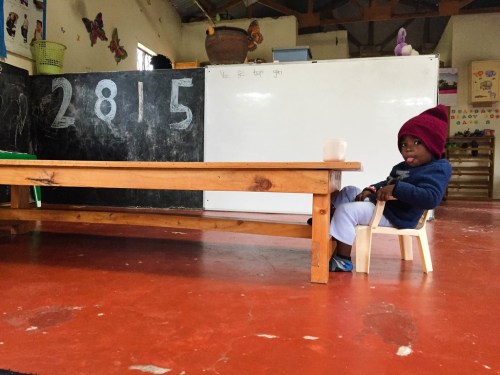
With no actual reason, I immediately set out to narrow the 150 pictures to my favorite one.  This proved impossible.  There are several that feature little kiddos that are just too awesome.  Like, for instance…
MITS 3

But my quest continued, and I succeeded in identifying two photographs that go together in my opinion to tell a powerful story.

As its website explains, “[t]he mission of Made in the Streets is rescuing children from the streets of Nairobi, Kenya, meeting their physical, emotional and spiritual needs, loving them fully, equipping them to earn a living and sending them out to a new life.”  It is a beautiful thing to observe firsthand, and what is full of beauty are the children.

Now don’t be mistaken.  This is not some make-believe world where staff members ride in on unicorns and pick up innocent children off puffy clouds and ride off on rainbows while angels sing.  No, it is messy work, and these children have seen and done and had done to them terrible things.  But what is striking when hanging out with these rescued kids are their good hearts in spite of such a painful past.  Their smiles are contagious.  Their basic human dignity is unmistakable.

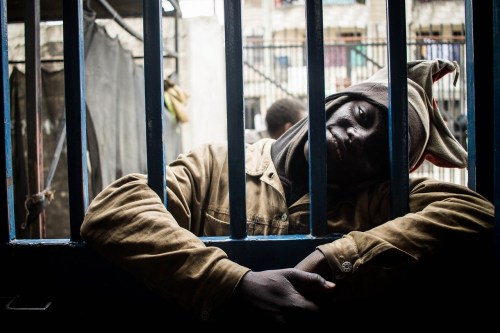
Which is why I narrowed down my daughter’s works of art to two particular photographs.  The first is of a young man still living on the streets, and I love this particular picture because his smile betrays that good heart although he remains in the frightful streets of Nairobi.
MITS 1

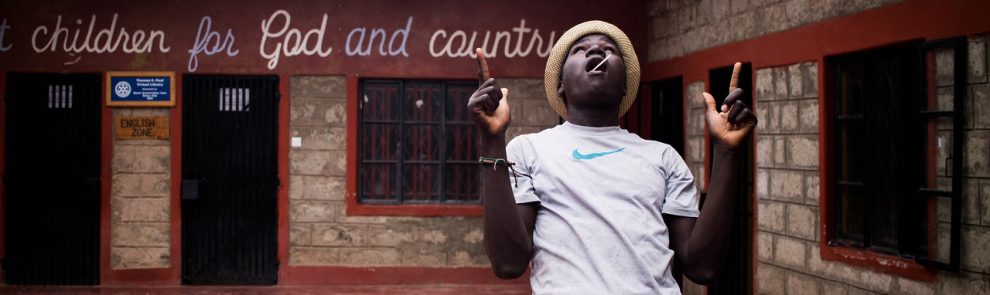
But there is a second picture that in my mind completes the story.  It is Jeremiah, the first student I met on my trip earlier this summer.  Jeremiah is a big boy, close to my height and twenty times stronger.  He could be intimidating, but he is just the opposite—a kind, thoughtful, funny, tender young man.  Jeremiah sits in the front row of his classes and is an eager learner.  He likes to act in drama productions.  He is a good friend to many.

Hillary took a picture of Jeremiah being silly, and I absolutely love it because at one point Jeremiah was that young man in the other photograph, living in abject poverty but with a smile that betrayed his good heart I’m sure.  And the “after” photograph powerfully shows Jeremiah’s joy.

MITS 2

(And, I can’t help but say it given the title of my entire blog, I love that he is looking up.)

On Exploiting Hopelessness

In addition to the steep learning curve associated with a new position at work, I have been preparing to teach a course titled, “Apology, Forgiveness, and Reconciliation,” for the Master of Dispute Resolution program at our West Los Angeles campus.  It is a fascinating and ever-timely topic in this world of ours with no shortage of moving literature, including the book I saved for last, The Sunflower: On the Possibilities and Limits of Forgiveness, by Simon Weisenthal.

Weisenthal survived the Holocaust and gained fame as a “Nazi hunter.”  The Sunflower tells of his being summoned to the bedside of a dying Nazi soldier while a prisoner in a concentration camp where the soldier confessed his deeds and asked for forgiveness.  Weisenthal offered only silence.  Soon afterward, he questioned his response, and in fact, ends his section of the book by placing the reader in his place and posing the heart-wrenching question, “What would I have done?”  The rest of the book shares answers to the penetrating question from fifty-three people around the world, from the Dalai Lama to Desmond Tutu.

Two days after finishing the book, I finally visited the Museum of Tolerance in L.A. and didn’t know whether to be amazed or embarrassed to notice that it was described as “A Simon Weisenthal Center Museum.”  Um, perfect timing?  Although it addresses a variety of topics, the heart of the Museum is the Holocaust Exhibit that guides visitors through the development of Nazi Germany and the terrible atrocities that followed.  It was sadly fascinating to learn that the Nazis began as a few guys sharing burgers in a beer joint, but what struck me most was the statement that this humble beginning grew to such perplexing power to influence fellow citizens to carry out unspeakable acts because they “exploited hopelessness.”

Well, my first inclination was far too easy: Write a blog lamenting how terrible it is to exploit hopelessness and title it, Exude Hopefulness.  But there’s a problem.  Exuding hopefulness is exactly how you exploit hopelessness.  Promise hopeless folks better days ahead.  That’s exactly what the Democrats, Republicans, Libertarians, Greens, and lots of other folks are doing at this very moment.

Hopeless people have to be wary, I guess, but I suspect that wariness is not high on the to-do list of hopeless people.

So, for the sake of the world, I have two thoughts to offer instead.

First, remain hopeful.  You.  Don’t tell others to be hopeful.  You remain hopeful yourself.  Losing hope is too dangerous, and we are susceptible to such terrible things.

Second, remove the reasons others are hopeless.  Actions over words.  Hopelessness is not to be used.  It is to be subverted.  Love people.  Seek justice.  Feed hungry folks.  Give someone a job.  Volunteer your time and your money.

Humanity is both capable of and susceptible to terrible things.  But wow, the possibilities for good are limitless.

Everyday People

I have often wondered what it would have been like to be an adult in the 1960s, what with the crazy headlines of war, protests, riots, assassinations, and struggles for civil rights.  Half a century later, my imagination doesn’t have to work very hard.

In 1968, Sly and the Family Stone released the song “Everyday People” as a call for peace.  Recently, the great organization, Playing for Change, released a timely rendition of the classic song featuring celebrities and school children.

Today, I share it with hope, and for hope.  Hope that I somehow correctly embedded the video so that it shows up on the blog and in the automatic emails, but more importantly, hope that we might learn to live together.  “And so on and so on and scooby dooby doo.”


Pictures. Or, How Instagram Might Unwittingly Save Our Collective Soul.

I blog, tweet, share, post, connect, friend, update, and everything else related to social media, so my occasional rant about how technology may be destroying the world comes with zero credibility.  If we’re all going down, at least I am on the train with everyone.  It is bad enough that for many of us “work” and “email” are now interchangeable concepts, but my greater concern is that “social media” and “life” might follow suit.

I immediately understood Facebook.  And LinkedIn.  And blogging (via my friend, John Dobbs).  And, with a little effort, Twitter.  But Instagram confounded me.  I found it Instaweird.  But like a sheep with a Smartphone, I signed up, and now, surprisingly, think Instagram might represent hope for the future—simply because it is all about pictures.

My interest in photography came late because, well, we were poor, and listen closely boys and girls, it used to cost actual money both to purchase film AND develop the pictures.  When digital cameras arrived on the scene, I joined the revolution.  After splurging on a clunky camera, sets of rechargeable batteries, and a bag large enough to carry small pets, I was free to take as many pictures as I wanted without the worry of paying for multiple reminders of my terrible skills.

In that glorious freedom, I started venturing to new places—just to take pictures.  There was no rule that said I couldn’t enjoy nature or a park or festival or sunrise without a camera, but there was something about capturing a place or moment in a photograph that led me out into the world on adventures that simply wouldn’t have happened otherwise.

This is why I have Instahope.

At least, given the terrible development of living our lives heads down staring at a screen, Instagram encourages us to venture into the world to see what there is to see.  Sure, after we take a picture, we stare at that silly screen to fret over filters and tags and the like, but at least we are there, occasionally looking up.  And that is something.

#PrayForOrlando

[Note: I’m taking a blog vacation for a couple of weeks and anticipate returning to action at the first of July.]

I will travel to Kenya this week with family and friends to spend the last half of June with an inspiring organization called Made in the Streets.  The U.S. State Department issued a travel warning for those traveling to Kenya, potential violence, terrorism, and whatnot.  I very much take such warnings seriously, and yet, in Santa Monica, California, this morning, fifteen miles from my house, a man was caught with chemicals, assault weapons, and ammunition on his way to terrorize a gay pride parade—just hours after the deadliest mass shooting in American history occurred at a nightclub in Orlando, Florida.  Where exactly are the safe places in the world right now?

For reasons specific to my personal belief system, I am neither shocked by nor afraid of the violence that currently dominates the headlines, but I do find it terribly sad, and my heart goes out to the victims and those who love them.  I join the chorus that urges everyone to #PrayForOrlando.

There are things that should be done, and we (however defined) should do them, but there is no easy fix in this world for hatred and violence.  I continue to believe that the complicated solution is a revolution of indiscriminate love and maintain my commitment to such a revolutionary practice.

I really do believe that love, eventually, wins.

A Difficult Journey

Although less than flattering, I will tell the story.

Our business in India last week took us further away from the Delhi airport each day, culminating in a three-hour climb up a winding, dangerous, spectacular road in the Himalayas.  On this final climb, as we dodged death (and cattle) ahead of us and absorbed the awesome views on both sides of us, I developed a case of motion sickness.  Nothing too terrible, just enough to create a fuss for our hosts, which led to some rest, a nice visit from a young Indian doctor, and a bottle of Sprite.  By evening, I felt better and had the opportunity to enjoy the beautiful mountain village.

At 6:30am the following morning (warning: graphic material ahead), things went south.  Literally.  I will spare the terrible details, but suffice it to say that the next couple of hours were not pretty due to the onset of a malady common to travelers in the region.  But to somehow make things worse, we were scheduled to leave that morning with the following itinerary: a three-hour drive down the mountain, followed by a seven-hour drive to Delhi; followed by a six-hour wait in the airport; followed by an eight-hour flight to Amsterdam; followed by a one-hour race across the airport; followed by a ten-hour flight to Los Angeles.

And I felt like crap, pardon the ironic word choice.

One of my colleagues provided a miracle drug to stop the I’d-rather-not-say, and we were faced with a decision on what to do with me.  As my two colleagues considered donating me to India and our host offered to call an ambulance, I declared that I had four goals: (1) get down the mountain; (2) get to the airport in Delhi; (3) get to Amsterdam; and (4) get to Los Angeles.  And that I would take them one at a time.

Well, I strapped myself in, armed with a granola bar, drugs, a bottled water, prayer, and another Sprite, and off we went after goal number one.  It did not go so well.  At one point on the journey down the mountain, we stopped for my traveling mates to have lunch.  The smell of Indian food was not my friend, and I considered jumping off the mountain but did not have enough energy, so I strapped myself back in and continued on the journey.

I did survive the mountain and felt that there was hope—in fact, the lower elevation seemed to help.  On phase two of the journey—the seven-hour drive to Delhi—we stopped at a roadside convenience store where I discovered a can of plain Pringle’s and thought that God might like me again.  But alas, by the time night fell and we reached the airport, and possibly because we reached the crazy rush hour traffic of Delhi, I started to feel terrible again.  But hey, goal number two was accomplished.

The six-hour wait in the airport is not a fond memory.  On the plus side, I did eat most of a sandwich and then slept for a few hours sprawled across three plastic chairs, but by the time we boarded the flight to Amsterdam, I approached my lowest moment.  As the plane took off (thus ensuring I would reach goal number three), I longed for death once again.  I was certain that I would do ugly things in the airplane lavatory and even unfastened my seatbelt so that I could run for it—only you can’t run to the lavatory with drink carts in the aisle, and once you get there they are almost always occupied, and should a miracle occur and one be vacant I can’t fit in one anyway, much less if I am having convulsions.  And any change of clothes was packed in checked luggage.  I wished the plane would crash and somehow kill only me.

But somehow, after a few hours of misery, I improved enough for some fitful sleep, and by the time we completed my third goal I was in good enough shape to make it across the airport to board the plane to Los Angeles.

The final ten hours were not the happiest of my life, but I think you get the drift of the story by now.  I made it home after the terrible thirty-five hour journey and fully believe in miracles.

So why do I share such an embarrassing story?  I have faced a few significant challenges in my life, and there will be more for me and also for you.  When such challenges arise, and the journey ahead seems perilous and terrible with no guarantee of survival, sometimes you must set out on the journey anyway.

When such a journey is inevitable, fix your eyes on the road ahead, take it one step at a time, hope for some friends to journey with you, and just try to hold on.  You might not make it, but then again, you might.

Your Time Will Come

A friend introduced me to the music of Johnny Clegg several years ago, and I am eternally grateful.  Clegg’s official website describes him as a “dancer, anthropologist, singer, songwriter, academic, activist and French knight” and that he “campaigned against the injustice of apartheid South Africa and been instrumental in putting the new South Africa on the map as a cultural ambassador.”  Pretty cool, right?

Clegg performed at Pepperdine last weekend, and one of my favorite moments in the concert came when Clegg referred to Nelson Mandela’s world-changing endurance to introduce the song “Your Time Will Come.”  Clegg said Mandela taught us that to live with such patience you must believe that everything will be alright in the end, and if it isn’t, then it isn’t the end.

The lyrics to “Your Time Will Come” are mostly in Zulu with an English ending.  Since my Zulu is a little rusty, here are the lyrics fully translated into English:

You were lying, do not tell lies.
You told lies, trying to mislead me,
so that I would give up my faith and hope.
That is what you said — you said that our future is hopeless,
our tomorrow is bleak, you were lying,
trying to mislead us.
No can do! We will never relinquish our faith.

Chorus:
Everything will be all right —
It’s just when this will be, we cannot know.
Everything will come right, I tell you friend.
Do not throw away your hope.
Me holding on one side, you holding on the other side
together we will pull through,
you and me, you and me.

My spirits are down,
I say to you child of my aunt, you have caused me great fear.
You told lies, trying to mislead me,
so that I would give up my faith and hope.
That is what you said — you said that our future is hopeless,
our tomorrow is bleak, you were lying,
trying to mislead us.
No can do! We will never relinquish our faith.

Chorus:

Everything will be all right —
It’s just when this will be, we cannot know.
Everything will come right, I tell you friend.

It will be all right my friend, I’m telling you.
Come true courage, for it is you who gives
life and takes it away,
me on this side, you on the other,
we will hold it together.
Don’t listen to the lies of my compatriot.
We will be victorious in the end, just you and me,
just you and me.

I saw the Berlin Wall fall
I saw Mandela walk free
I saw a dream whose time has come
Change my history — so keep on dreaming.

Dream on dreamer, dreamer.

In the best of times and in the worst of times
gotta keep looking at the skyline
not at a hole in the road
Your time will come, sister, your time will come
nobody’s gonna rush history, we have to ease it along
— just ease it along.

Discovering Diversity

I participated in a “privilege beads” exercise at a diversity conference a year ago that involved reading statements and taking applicable beads to create a privilege bracelet.  As a white, straight, Christian, highly-educated, American male who lives in Malibu, I made a privilege hula-hoop.  It was embarrassing.  It was particularly embarrassing because one of my primary self-identifiers has always been growing up poor (read: underprivileged).  I am all about sticking it to the Man, ironically, and standing up for the little guy, i.e., my people.  Imagine my surprise.

But discovering diversity has been, for me, a humiliating pathway to joy.  The world is a big and beautiful place, and leaving the startling homogeneity of my hometown, though filled with wonderful people, has been an indescribable blessing.  I have learned so much, mainly that I know so little, and what I don’t know is fascinating without fail.  More importantly, I now have relationships with people who represent ethnicity, identities, faiths, interests, and nationalities that I never even heard of as a child.  That is my real privilege.  I am better for knowing these good souls, sure, but more importantly, the world is better for knowing them, too.

I returned to the same conference this year hoping for no privilege beads but anticipating new and deeper relationships and was not disappointed on any count.  One of the many things I learned at this year’s conference is that the majority of the United States will be non-white by 2044 and that 2011 already marked the first year that more non-white babies were born in the United States than white babies.  Significant change is occurring as to several of my privileges, some far more quickly than others.  My Facebook feed reminds me that many find such changes to be frightening.  Since diversity has been a great blessing in my life, I see it with different eyes.  To co-opt the famous FDR quote, the only frightening thing I see is the fear itself.

Step Back In

I doubt many tune into my blog to read a cool poem and reflect on its deep meaning, but just in case anyone else in this station wagon has ever messed up, reflected on an irretrievable life, and decided that the opportunity to carry on is too precious to stay away, this Raymond Carver poem is worth it.

Locking Yourself Out,
Then Trying to Get Back In

By Raymond Carver

You simply go out and shut the door
without thinking. And when you look back
at what you’ve done
it’s too late. If this sounds
like the story of a life, okay.

It was raining. The neighbors who had
a key were away. I tried and tried
the lower windows. Stared
inside the sofa, plants, the table
and chairs, the stereo set-up.
My coffee cup and ashtrays waited for me
on the glass-topped table, and my heart
went out to them. I said, Hello, friends,
or something like that. After all,
this wasn’t so bad.
Worse things had happened. This
was even a little funny. I found the ladder.
Took that and leaned it against the house.
Then climbed in the rain to the deck,
swung myself over the railing
and tried the door. Which was locked,
of course. But I looked in just the same
at my desk, some papers, and my chair.
This was the window on the other side
of the desk where I’d raise my eyes
and stare out when I sat at that desk.
This is not like downstairs, I thought.
This is something else.

And it was something to look in like that, unseen,
from the deck. To be there, inside, and not be there.
I don’t even think I can talk about it.
I brought my face close to the glass
and imagined myself inside,
sitting at the desk. Looking up
from my work now and again.
Thinking about some other place
and some other time.
The people I had loved then.

I stood there for a minute in the rain.
Considering myself to be the luckiest of men.
Even though a wave of grief passed through me.
Even though I felt violently ashamed
of the injury I’d done back then.
I bashed that beautiful window.
And stepped back in.

“Locking Yourself Out, Then Trying to Get Back In,” by Raymond Carver, from Where Water Comes Together With Other Water (Vintage Books).

Bird Brained

I returned from a difficult morning run and walked the neighborhood searching my brain for the department in charge of breathing.  Eventually, after the wheezing subsided, I heard a strange shuffle-pop sound on repeat, which turned out to be a little bird perched on the passenger side mirror of a neighbor’s car having a little showdown with itself.  It was a good fight, but my best estimate was that it was headed for a draw.

It cracked me up, the stupid little bird ignorant that the enemy in the stare-down was simply his/her/its own reflection.  I admired the courage, what with the sudden beak attacks that were magically matched beak-on-beak, but repeatedly charging face-first into a piece of glass was pretty funny.

Until, that is, it occurred to me that in a sense I am that stupid little bird.  The absolute biggest threat to my survival is that joker staring back at me in the mirror, and although (most days) I don’t slam my face repeatedly in the mirror, it is true that no one attacks me more than me.

An honest look in the mirror, sizing oneself up, noticing flaws and so on, seems not only healthy but also necessary to effect any real, lasting change.  Beating yourself up, on the other hand, makes about as much sense as that goofy bird repeatedly catapulting itself into a mirror.