Tag Archives: hope

Cultivate the Bright Passions

I find it especially important in dark and troubled times to closely monitor personal emotions, and we seem to live in dark and troubled times. This came to mind as I drove to the office before eight o’clock on this Sunday morning. My wife is out of town, so I felt justified putting in early Sunday work hours, but such behavior indicates that my emotions could get out of whack.

But it was sixty-three degrees on a lovely morning, and I lowered the window to feel the cool breeze while listening to a station that features soothing acoustic music. And as I drove past farmland I was surprised to see several normally-stationary horses galloping together on a gentle morning run. And then I rounded a curve and noticed that the self-serve produce stand is now decorated with pumpkins and flowers on this first day of autumn. And I sensed in a powerful form the intoxicating feeling of peace.

There was more.

A little farther along, I met an older woman riding her bike on the lonely back roads. We have passed one another on several mornings and now wave with smiles as if we are dear friends, which we did with even more enthusiasm this morning. I then turned toward the office and noticed my friend, Kelly, out walking her dog, which led to another wave and another smile. And as if the world was conspiring for my good, I then noticed a wonderful student, Emma, walking across campus on a Sunday morning, and I stuck my arm out the window with another wave and smile.

And for a moment, if I didn’t know better, I sensed every reason in the world to be happy.

David Brooks published a column in The New York Times three days ago titled, “The Era of Dark Passions.” I surely do not agree with David Brooks on many things, but I typically benefit from reading his thoughts, and I especially appreciated that particular opinion piece. Brooks shared his belief that “something awful has been unleashed” in our current times and that “[e]ven before the Charlie Kirk assassination it was obvious that the dark passions now pervade the American psyche, and thus American politics.” Brooks identified dark passions as Anger, Hatred, Resentment, Fear, and the Urge to Dominate, and he distributed blame for stirring dark passions for personal benefit to his own industry, the media, and to both sides of the political aisle. Brooks then posed the question:

Why does politics feel so different now than in times past? My short answer is that over these years, demagogues in politics, in the media and online have exploited common feelings of humiliation to arouse dark passions, and those dark passions are dehumanizing our culture and undermining liberal democracy. My intuition is that we’re only at the beginning of this spiral, and that it will only get worse.

With that cheery outlook, what is there to do? Well, for starters, Brooks begins:

First, let me tell you how not to reverse it. There is a tendency in these circumstances to think that the other side is so awful that we need a monster on our side to beat it. That’s the decision Republicans made in nominating Trump. Democrats are moving in that direction too. Back in 2016 Michelle Obama asserted that Democrats to go high when Republicans go low, but the vibe quickly shifted. As former Attorney General Eric Holder put it in 2018: “When they go low, we kick ’em. That’s what this new Democratic Party is about.” If Republicans soil our democracy with extreme gerrymandering in Texas, Gavin Newsom and the Democrats will soil our democracy in California. The problem with fighting fire with fire is that you’re throwing yourself into the cesspool of dark passions. Do we really think we won’t be corrupted by them? Do we really think the path to victory lies in becoming morally indistinguishable from Trump? Do we really think democracy will survive? Surveys consistently show that most Americans are exhausted by this moral race to the bottom and want an alternative; do we not trust the American people?

Brooks then advises as “the most effective way to fight dark passions”…

History provides clear examples of how to halt the dark passion doom loop. It starts when a leader, or a group of people, who have every right to feel humiliated, who have every right to resort to the dark motivations, decide to interrupt the process. They simply refuse to be swallowed by the bitterness, and they work — laboriously over years or decades — to cultivate the bright passions in themselves — to be motivated by hope, care and some brighter vision of the good, and to show those passions to others, especially their enemies. Vaclav Havel did this. Abraham Lincoln did this in his second Inaugural Address. Alfred Dreyfus did this after his false conviction and Viktor Frankl did this after the Holocaust. You may believe Jesus is the messiah or not, but what gives his life moral grandeur was his ability to meet hatred with love. These leaders displayed astounding forbearance. They did not seek payback and revenge. Obviously, Martin Luther King Jr. comes to mind: “To our most bitter opponents we say: We shall match your capacity to inflict suffering by our capacity to endure suffering. We shall meet your physical force with soul force. Do to us what you will, and we shall continue to love you. We cannot in all good conscience obey your unjust laws, because noncooperation with evil is as much a moral obligation as is cooperation with good. Throw us in jail, and we shall still love you.”

You might not be surprised that this resonates with me given my latest blog post published a few days prior to Brooks’s column. But it especially came to mind this morning on a lovely ride into work. I place no value on being unrealistic or ignoring the obvious, but I place great value on noticing the good and living with hope, for what is the future without hope?

I guess what I’m saying is that I unexpectedly caught a glimpse of the bright passions on a drive to work this morning, and I am now extra inspired to resist the forces that push the dark passions and choose to cultivate the bright passions more and more instead. As David Brooks concluded his recent column:

The dark passions look backward toward some wrong committed in the past and render people hardhearted. The bright passions look forward toward some better life and render people tough-minded but tenderhearted.

May we look forward toward some better life as tough-minded and tenderhearted people.
Coming to Terms

1851074-Rick-Warren-Quote-Faith-is-facing-reality-without-being

“You’re likely to get the coronavirus.”

That was the headline of an article in The Atlantic that caught my eye way back in February before the world entered into an impressive barrel roll. The author, a physician who lectures at Yale School of Public Health, quoted a Harvard epidemiology professor who said, “I think the likely outcome is that it [COVID-19] will ultimately not be containable.” The Harvard prof guessed that “40 to 70 percent of people around the world will be infected with the virus that causes COVID-19.”

Sobering, to say the least. But then there was this:

The emerging consensus among epidemiologists is that the most likely outcome of this outbreak is a new seasonal disease—a fifth “endemic” coronavirus. With the other four, people are not known to develop long-lasting immunity. If this one follows suit, and if the disease continues to be as severe as it is now, “cold and flu season” could become “cold and flu and COVID-19 season.”

I haven’t been able to shake that early prediction.

Of course a couple of weeks later we all learned phrases like “flatten the curve” and “social distancing” and then there was Carole Baskin and Joe Exotic and now a few months later American Idol is broadcasting from living rooms while ESPN featured the 46th Annual Cherry Pit Spitting Championship. So we’re all a little dizzy.

But I keep thinking back to that article from February and wonder if we should consider that COVID-19 might be here to stay.

Another headline recently caught my attention: “Scientists fear the hunt for a coronavirus vaccine will fail and we will all have to live with the ‘constant threat’ of COVID-19.” Consistent with my nagging thoughts, David Nabarro, a professor of global health at Imperial College in London, was quoted as saying, “…for the foreseeable future, we are going to have to find ways to go about our lives with this virus as a constant threat.”

So, how is your day going so far?

I may be unconvincing when I say this, but I’m not writing to depress anyone. Quite the opposite. Instead, I deeply believe that the greatest psychological danger is to ignore reality and that coming to terms with the journey ahead is the healthy approach to life.

In my humble opinion, while continuing to focus unprecedented attention on protecting the vulnerable, we must also determine how to rearrange our lives to carry on with COVID-19 in the neighborhood because, like the common cold, it is possible that it is not going away anytime soon.

When Times Are Hard…

IMG_2062

I confess that it felt good to get in the car with my wife and drive away for a little while.  2020 has had an inauspicious start.  Last week’s tornadoes devastated our community and garnered national attention (and a presidential visit), but the tornadic metaphor—a swirling disruptive force—has characterized the past couple of months at work and in our community.

We weren’t running away, although I can sympathize with an urge to do so. Instead, we drove to Virginia to cheer on our men’s basketball team in their championship game against heavily-favored Liberty with an NCAA tournament berth on the line.

As we drove from Nashville heading east we saw what the storm left behind. We traveled through Putnam County and Cookeville, which took the brunt of the storm, and silently ached with that grieving community. But eventually, thoughts of the storm began to fade as we ventured into new territory.

We skirted the Smokies and entered southwestern Virginia, an area of the country that I had never visited. Although not spectacular, the meandering countryside and hills were charming, and I thought that they just might be spectacular when the denuded winter trees are explosions of color in autumn. We drove through Roanoke, where I tried unsuccessfully to remember why everyone has heard of Roanoke, before arriving in Lynchburg to spend the night.

Early Sunday morning I drove downtown for a run. It was 28 degrees, a fact I share just for a little sympathy, and I did a five-miler along the river and through the cobblestone streets of an historic downtown. At one point I ran up a steep downtown street, drawn toward an impressive building I later learned was called Monument Terrace. When I arrived, I continued huffing and puffing up what seemed like a million stairs, and as I climbed the name of the building became clear as I passed multiple monuments to the city’s citizens who died in wars throughout American history. At the top, I looked back on the hill I had climbed, the river, and the early morning sun.

I got to thinking.

2020 has been a hard year so far. But there have been a lot of hard years for a lot of people. Climbing that hill, climbing those stairs, seeing those monuments of lives lost reminded me of the reality of life and the universality of struggle. The lesson that occurred to me: Don’t stop climbing.

On Friday night, before leaving Nashville, we went to see talented Lipscomb students in a dance concert titled, Elevate: A Heavenly View. That’s what I thought about at the top of those crazy stairs on a frigid morning in what has been a challenging year: When times are hard—Elevate.

#NashvilleStrong

Christmas Candles

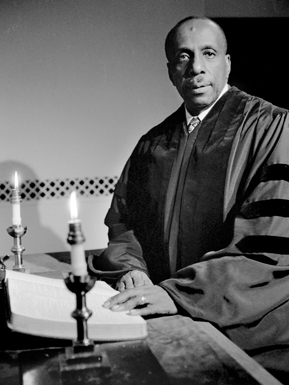
thurman

Howard Thurman at Marsh Chapel March 6, 1959

I Will Light Candles This Christmas — by Howard Thurman

Candles of joy, despite all sadness,
Candles of hope where despair keeps watch.
Candles of courage for fears ever present,
Candles of peace for tempest-tossed days,
Candles of grace to ease heavy burdens,
Candles of love to inspire all my living,
Candles that will burn all the year long.

‘Tis the Season

IMG_1518

I love this time of year but am also the sort of person who sees the glass as half empty and half full all at the same time—a realist, if you will. So I realize that this time of year is all mixed up with positives and negatives. Merry Christmas to all, with some Bah, Humbug, too.

I love the giving. We share gifts at this time of year with family and friends, colleagues and strangers, even faceless people whose names we learn from angel trees.  We give a lot, and as we do we celebrate words like Believe. Hope. Joy. Peace.

And then we go and buy more and more stuff like it’s going out of style, which it is, but we can’t seem to help ourselves. I hate that part. The commercialism, the consumerism, and lots of other –isms that are better described as Greed. We crave More and can’t find Enough.

All that jumbled together in one season.

And then there are the people. Those merrily singing that it’s the hap-happiest time of the year, and those mired in depression. Those lavishly decorating cozy houses, and those sleeping outside in the dark and cold.

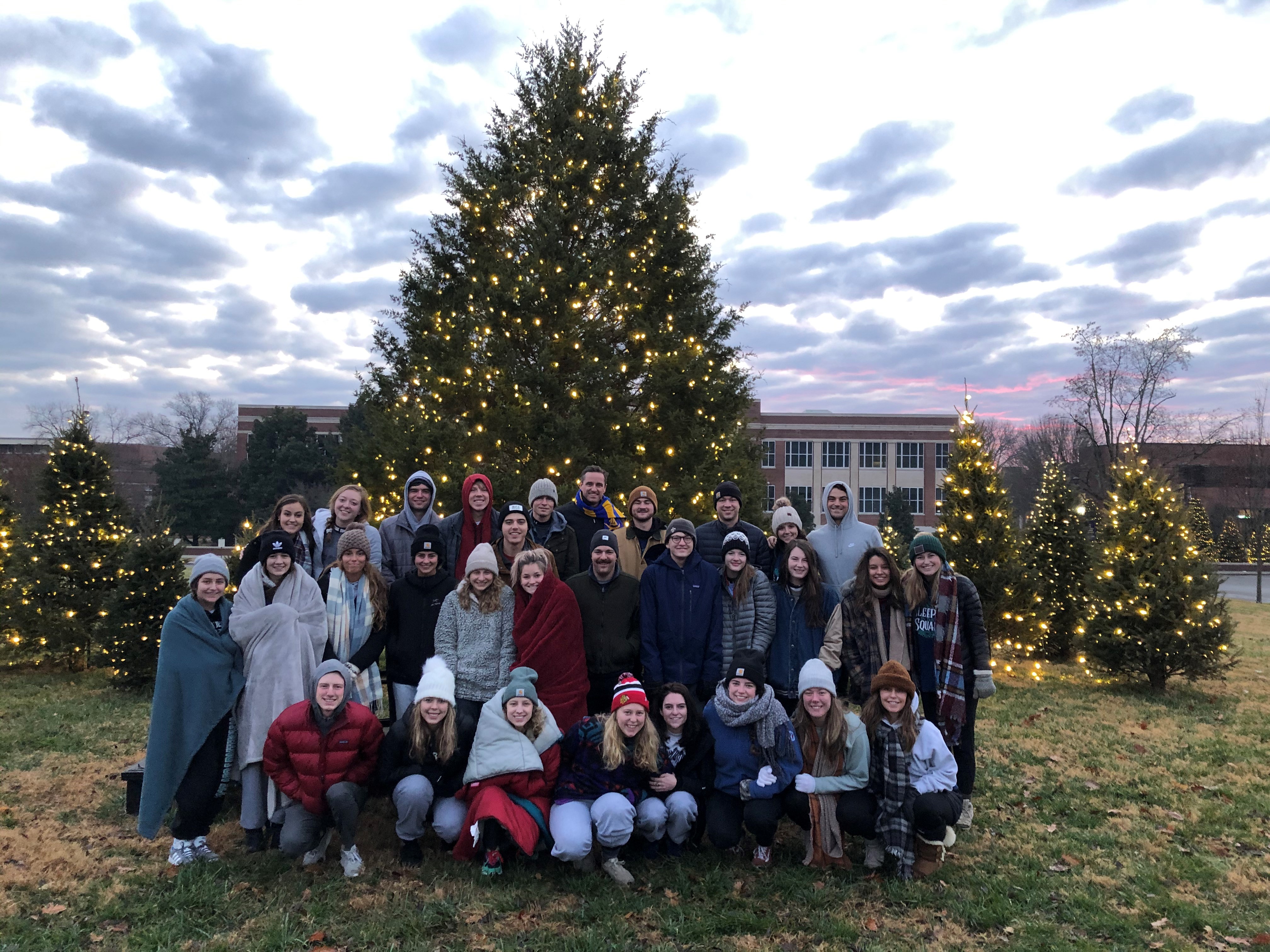
This entire semester, one of our amazing students planned an event she called, Sleep in the Square, that occurred this past weekend. The entire point was to raise awareness regarding homelessness in our local community. As she so eloquently put it, “A night for friends and strangers alike to gather and hear stories of those who have experienced homelessness, attempt to sleep while exposed to the elements of the outdoors, and encounter an evening filled with transparent cross-cultural conversations.”

We did all of that—we gathered, heard, attempted, and encountered. I was amazed by our students and their friends who slept out in the cold (pictured above the next morning), although I went home and slept in a warm bed for a few hours before returning for the closing liturgy of repentance and joy (there’s that dichotomy again!). The experience left me mixed-up just like the season, filled with love and hope, right alongside a sobering realization of my undeserved privileges and weakness.

Sometimes I feel that I should apologize for pointing out the dueling natures at this time of year—until I remember that the Christ-ian story underlying Christ-mas is exactly that kind of story.

‘Tis a mixed up season, one that reminds us that It’s a Wonderful-but-Messy Life.

Star Searching

Xmas Pic

“Christmas comes during a season when the Earth is in its darkest time.”
– Melissa Etheridge

We have three Christmas parties on the calendar this week and three more next. I used to make fun of such things, but not this year. This past season has been rough, and we are more than ready for a season that is merry and bright.

So do what you will, but I suggest: Decorate the tree. Play the music. Bake the cookies. String the lights. Wrap the presents. Wear the sweater. Watch the movie. Mail the cards. Hang the wreath. Dream the dreams.

Does this make everything magically wonderful?  No, I’m afraid not. Is it simply an act of denial? Well, not necessarily. What I’m suggesting is to look despair in its face and proclaim hope. We will not live in the darkness forever. There will be light. We expect it. In fact, we are counting on it.

I am reminded each year that the story behind the Christmas season does not actually feature Jimmy Stewart. Instead, it is of a displaced family in a barn delivering a baby in a feed trough—and against all odds that turned out to be the hope of the world.

There were a few wise dudes back then with enough hope in their hearts to scan the night sky for a star. They spotted it right away, and I suspect it’s because they were looking for it.

So join me in some star searching this year. Because this year I’m going to look up so that I can see it, too.

Keep Climbing

Pic 1

On a trail last Thursday morning in a neighboring canyon I found myself running alone. I had started with others but when I faced a steep, narrow trail straight up an imposing mountain, unplanned, there seemed to be no one in the whole world but me and the trail to the heavens.

I attacked the hill with every ounce of my strength, arms pumping, calves burning, lungs fighting, and heart firing to conquer the challenge in front of me. I was strong—for a while—and then it was too much. I had to walk, but I refused to give up entirely and kept climbing the mountain step by step. In a few moments it seemed that I could sort of breathe again, so I challenged my legs to run the rest of the way. I thought I could do it, and I did.

At the top, seemingly on cue, I looked out at the crazy view across the morning sky and just at that moment the sun exploded over the mountains and above the clouds that lay across the hills like a cotton blanket. It was spectacular. The picture above is okay but doesn’t do it justice.

I’m not sure I want to run that hill again, and in retrospect, not sure that I really wanted to run it in the first place. But there was a feeling in my soul when I made it to the top and the sun broke through that felt like it was a special gift just for me, just for running, just for not stopping and finishing the climb. Pardon me, but it felt like a holy moment, and I was thankful. I felt a deep gratitude standing there on top of that mountain. The warmth of the sun. The beauty from above. The fullness in my lungs. The unplanned smile on my face.

I have friends on steep mountains today. I will have others. And it will be me again, too. My hope is that we all keep climbing, keep trusting, and keep believing that at the top of the mountain we will discover a spectacular gift. And smile.

We travelers, walking to the sun, can’t see
Ahead, but looking back the very light
That blinded us shows us the way we came,
Along which blessings now appear, risen
As if from sightlessness to sight, and we,
By blessing brightly lit, keep going toward
That blessed light that yet to us is dark.
Wendell Berry

Pic 2

Manzanar

ManzanarI elbowed my way through afternoon L.A. traffic to begin a four-hour mountain drive that ended in a surprising thunderstorm and finally some peace and quiet. Early the next morning I drove the few remaining miles to my destination: Manzanar.

I forget exactly when I learned about Manzanar, but it should have been sooner.

Asian-Americans endured prejudicial treatment prior to Pearl Harbor in 1941 but that terrible attack brought specific ethnic hostility to those of Japanese ancestry. In early 1942, FDR signed Executive Order 9066 that authorized the military to remove “any or all persons” from the West Coast and ultimately over 110,000 people of Japanese ancestry were incarcerated in ten American concentration camps simply because of their ethnicity. Ten thousand of those Japanese-Americans and Japanese immigrants were incarcerated in California at Manzanar.

My interest in visiting Manzanar intensified a few years ago when I learned that two of the ten wartime camps were located in Arkansas—I grew up in Arkansas and taught history in Arkansas and had never been told that Arkansas incarcerated 17,000 people of Japanese descent from California, half at Camp Jerome and half at Camp Rohwer. I knew then that I needed to visit Manzanar to feel the pain of a camp and ponder this terrible connection between my two “home” states—and my native country.

Manzanar is easy to visit on one hand: It is free, uncrowded, and only takes an hour or two to see everything there is to see. But it is difficult to visit as well. For what it represents, and what it proclaims.

Out of the 110,000+ imprisoned out of fear of espionage or sabotage, exactly zero were convicted of espionage or sabotage. That unwarranted fear destroyed many lives and families and even flirted with destroying a culture. In Hawaii where 158,000 Japanese-Americans faced less prejudice and enjoyed more freedom than those on the mainland, they were still discouraged from speaking the Japanese language and practicing the Buddhist religion. Hawaii’s military governor explained why: “We must remember that this is America and we must do things the American Way.”

And what, pray tell, did this chapter of American history communicate about the American Way?

The barbed wire at Manzanar stands as a reminder of how fear and power work together. But Manzanar also reminds us of the potential resilience of oppressed people and that even when fear and power lace up on the same team that victims can band together and rise above their circumstances. Possibly my favorite poster in the visitor’s center hung outside the theater and featured a quote from Hank Umemoto: “We were screwed, but then we made the most out of it and we turned Manzanar into a community.”

May there be no more Manzanars. But in the meanwhile, may all such peoples find that kind of courage and hope.

The Homeless Count

FB_Shared_1I set my alarm at 4:15am last Thursday and predictably objected on multiple counts when the time arrived to rise and shine. But it wasn’t just the oppressive hour. My head pounded and my body ached after a terrible night of sleep, and the day ahead was scheduled to end seventeen work hours later. That I should stay in bed was obvious, but I slowly eased up and out of bed anyway and arrived at Our Lady of Malibu Catholic Church by 5am per my commitment.

I wasn’t alone. There were 25-30 volunteers there, including my friends David, Reese, and Steve from church, along with an impressive spread of coffee and pastries. I don’t do coffee, and I should not do pastries according to gastrointestinal feedback, so I declined the goodies, which surprisingly included the option of chocolate pie for breakfast. Or whatever the 5am meal is called.

After registration and a training video and a couple of speeches from law enforcement personnel, we were divided into groups and sent out into the morning darkness to conduct our portion of the Greater Los Angeles Homeless Count. We church buddies found our way into a group all our own and armed with a flashlight, clipboard, map, tally sheet, and bottled water we drove to Point Dume and Zuma Beach to do our part to provide accurate numbers so that much-needed services may be distributed appropriately.

David drove, Steve navigated, Reese tallied, and I contributed insightful and entertaining conversation (or at least that’s what I told myself). We noted some homeless individuals, automotive “homes,” and located one encampment in our designated area. We were four of over eight thousand volunteers that turned out across Los Angeles to serve in this capacity this year.

I wish I could say that I got out of bed on Thursday out of the goodness of my heart, but it was undoubtedly an awful lot of guilt instead. How do you really convince yourself that you can’t get out of your warm bed in your spacious house to count homeless individuals because you feel sick and had a rough night’s sleep? I couldn’t figure it out on short notice at least.

And I wish I could say that this small bout of volunteerism revitalized my health and produced a day full of rainbows and cotton candy, but I felt pretty terrible all day long. Seventeen hours later I made it home and went straight to bed. And as I crawled into bed feeling achy and chilled and generally crappy, my first thought was of those folks who were homeless again that night. And how they probably felt.

So I’m writing a blog about it for no particular good reason.  A blog entry surely doesn’t make a difference. It would take a national commitment to collectively end homelessness, and don’t hold your breath. There is no national conversation, much less commitment; instead, there are mostly local conversations across the nation as to how to push homelessness into the next community.

But there are individuals who are engaged and trying anyway. I am impressed by those doing something to make a real difference one person at a time despite the odds. Maybe someday, I, too, will have that sort of courage that reflects the counsel of Mother Teresa who said, “Never worry about numbers. Help one person at a time and always start with the person nearest you.”

Yesterday. Today. Tomorrow.

Christmas PictureThere is much on my mind this Christmas Day, including the great joy to have my little family together and the deep sorrow for friends experiencing great loss, and my best response is to share three short poems from Howard Thurman’s “The Mood of Christmas” — a unity in trinity:

Christmas Is Yesterday:
The memories of childhood,
The miracle of Santa Claus,
The singing of carols —
The glow of being remembered.

Christmas Is Today:
The presence of absent ones,
The reminder of the generous act,
The need to love —
The need to be loved.

Christmas Is Tomorrow:
The miracle of faith,
The fulfillment of ancient hopes,
The reign of God —
The dying of Death in the land.

Christmas is yesterday, today, and tomorrow.