Tag Archives: history

Big Love

Imagine stargazing alone on the darkest night and witnessing a glorious cluster of shooting stars hurtling across the sky with such beauty and brilliance that you are forever changed, and then imagine the sadness that comes later when you recognize that you experienced something both powerful and personal that can never be recaptured. That is the sadness and the void in the universe that I feel today.

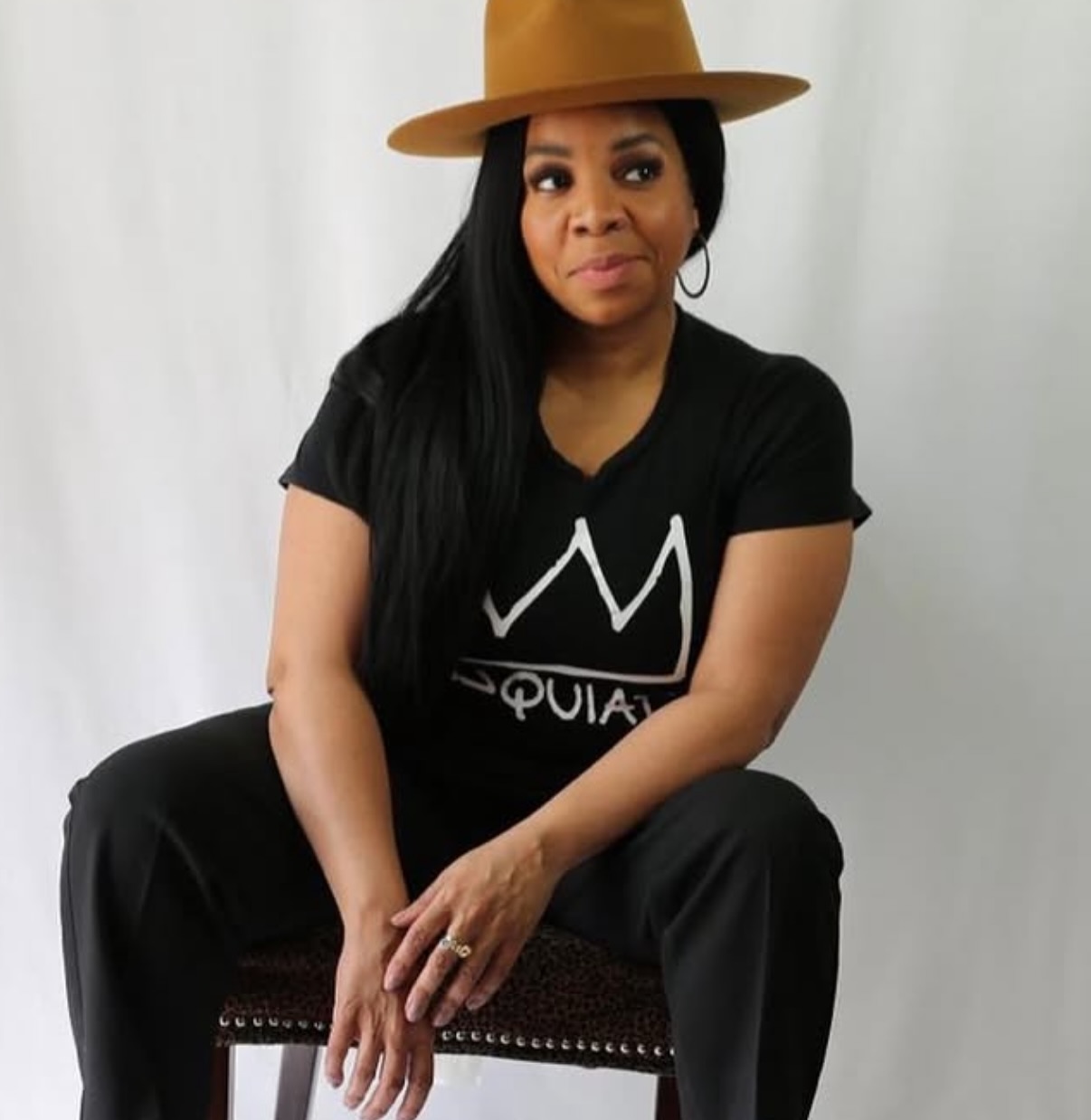
I met Kimberly Hebert eight years ago by email – at 8:31pm PST on October 23, 2017, to be exact. It was a rough start for me. I had preached a sermon that morning at the University Church of Christ in Malibu, California, on the campus of Pepperdine University titled, “On Behalf of Another.” I opened with the YouTube video “Oh Freedom!” that featured powerful images from the Civil Rights Movement—marches, sit-ins, legislation, Reverend King, Rosa Parks—all set to the haunting lyrics, Before I’ll be a slave / I’ll be buried in my grave / And go home to my Lord / And be free.

I followed what I considered to be a powerful opening with my own story of growing up in a Southern sundown town, and with my preaching foot on the accelerator then told of Oscar Romero giving his life for those being raped and murdered in El Salvador. All that led to the sermon text in Exodus 33 where Moses stood up to God on behalf of his people, and my message was that being “the Church” means standing up on behalf of others. There was even a photo of a sign from a Civil Rights march in the opening video that read “Where is the Church?” that in many ways characterized my sermon’s thesis.

I was sort of proud of it, but Kimberly wasn’t buying it at all. I had no idea who Kimberly Hebert was at the time, but she was in the audience that morning and shared her impressions with me that night in an email that she titled, Where IS the Church? She said the sermon felt “emotionally manipulative.” She said “[t]he church is still silent on issues of race” and that in my sermon the “silence was deafening” and that such silence “is one of the many reasons that the church is impotent in this area and does not show up.” She challenged me to have the “courage to tell the whole story in truth and love” and characterized sermons like mine as “tepid” before closing with the hope that I could receive her message “with the love in which it is being shared.”

It was hard for me to read. It was hard for me to read in part because there was not a doubt in my mind that she was right, and because the message that I had delivered, which was strong for me, failed to address the present nature of American racial politics and had had its true measure revealed: Tepid. Weak.

I wrote back that night – at 10:16pm PST to be exact (I have kept and treasured much of our correspondence). I expressed both apologies and gratitude. I said that she was right and that I had much to learn. I shared my hope that we could visit so that I could learn and grow. I had no idea what I was asking for, but as I have often said, I do my very best work by accident, because from such an inauspicious start that initial email exchange in the space of two evening hours produced for me a brief and beautiful friendship that changed my life for good. Kimberly became my teacher, my consultant, my advisor, and my friend.

In the following months we exchanged emails where I asked ignorant questions and she shared brilliant answers Then we became book partners in a campus ministry effort that worked through the book, Welcoming Justice, by Charles Marsh and John Perkins. I found the book insightful and helpful. Kimberly didn’t care for it. We met for lunch at Le Pain Quotidien, a French bakery-restaurant in Calabasas, on multiple occasions in early 2018 where I slowly caught on to how Kimberly received the book from her lived experience. Each time we met someone would recognize her and sometimes ask for a picture.

Did I mention that Kimberly was also a movie star? I had no idea when we first interacted, but this later discovery made this special human being even more fascinating. 

I’m sure it was our good friend, Google, that shared the news with me when I first wondered about this person that called my sermon on the carpet. At our first Calabasas lunch she was so embarrassed when I told her that my wife was a major fan of her portrayal of Dr. Belinda Brown when she starred alongside Walton Goggins and Danny McBride on the somewhat (okay, more than somewhat) raunchy HBO comedy, Vice Principals. But she was so much more than a brilliant actor. There was a depth and a breadth to her life and an enormous intellect that I was privileged to access. Kimberly grew up in Houston and later received a bachelor’s degree in psychology from Mount Holyoke College in Massachusetts and then an MSW from the University of Chicago before launching a successful career on stage and screen. In my eyes she was larger than life.

I sense a mischievous smile when I remember that I eventually got to turn the mirror around and invite Kimberly to face challenges, too. I invited Kimberly to lead an adult Bible class in beautiful Stauffer Chapel in the summer of 2018 in a series on our personal “cloud of witnesses,” and the thought of bucking the restrictive male-only posture of our shared faith tradition forced her to reach for some courage of her own. But she did it, and the stories of those that shaped her life trajectory were incredible. I even convinced her to share her story in front of the whole church in a worship gathering that September, which just about blew her mind but gave me the greatest joy!

I learned that Kimberly died on Friday. I do not know the details, but I am heartbroken.

I will never forget the awkward nature of our initial contact, but more importantly, I will never forget the deep friendship that developed in such a short time. Kimberly welcomed me into her story and shared physical health challenges that she battled for decades. She invited me to sit with her mother at Cedars Sinai just one year after our initial emails during a concerning procedure that turned out well, just as we had prayed, which proved that we had traveled a long way from suffering through an emotionally manipulative and tepid sermon. Prior to the procedure, Kimberly wrote to me of her gratitude “that God knitted this relationship for such a time as this” and that, “I didn’t see it coming, but God knew I would need a community.” When I announced my move to Nashville a few months later in the spring of 2019, it is crazy to sift through our email correspondence to see how our awkward initial exchange had grown so that we felt such deep loss for miles to separate our friendship.

Just prior to our move to Nashville, Kimberly starred in a play at the Geffen Playhouse in Los Angeles titled, Black Super Hero Magic Mama. Appropriate, of course. Kimberly secured two premium tickets, and Jody and I felt so special to sit in the audience and watch our new friend, the star of the show. The movie premiere for Five Feet Apart, which Kimberly starred in as well, also occurred that night, and since she couldn’t be in two places at the same time, a limo was arranged to whisk her to the premiere afterparty at a Hollywood club after the play, and she invited us along for the experience. I hope you can picture my wife and I, a couple of actual Beverly Hillbillies, stepping out of the limo to the flashing cameras and entering the strobe-lit club where Kimberly introduced us to celebrities such as Cole Sprouse, a co-star, and Justin Baldoni, the director.

I think of that night in March of 2019, the last time I saw her in person and “hugged her neck” (as she would say), as I might think of an appropriately spectacular ending of a fireworks display. I knew that we were moving away from one another quite literally, but I had no hint of finality.

Our email correspondence soon became fewer and farther between, but a couple of years later we had one brief opportunity to reconnect. By that time we had all encountered the murder of George Floyd and the Covid pandemic, and I had moved from Nashville to work at a small college in Illinois. When our volleyball coach at the college planned a fundraiser for cystic fibrosis, I remembered Kimberly’s movie, Five Feet Apart, which was a beautiful love story of two young people with cystic fibrosis who were not allowed to be within five feet of one another (ironically, a movie released a couple of years before “six feet apart” became a part of our national experience), and I reached out to see if Kimberly would meet our students in rural Illinois via Zoom. To which, as you might guess, she graciously agreed. We not only invited our volleyball student-athletes to hear Kimberly share what she learned about cystic fibrosis from her movie role, but also our theater students to hear of her acting career, and also our Black students to learn of her thoughts in the aftermath of the murder of George Floyd and her experiences as a Black woman navigating a career in the United States. As expected, Kimberly was gracious with her time, and profound, and hilarious, and inspiring, and unforgettable.

Jody and I stayed afterward, and that post-Zoom conversation was the last time we spoke and shared the love of our friendship.

In the summer of 2023, Jody and I unexpectedly moved back to Malibu. We thought we might be back in California forever, and Kimberly was one of the first that I emailed. Not long after we arrived, she responded that “[y]ou know I’ll make some time to see you” and that she looked forward to reconnecting. I responded with my new cell number, and that turned out to be our final exchange. We both got busy, and California turned out to be just a bonus year for us that led to a move to our new home in Wisconsin, and my regrets are now deep. I knew that Kimberly’s life remained full without regular installations of our friendship, but it never occurred to me that she might move on from this life so soon. And I wish I had been there for her in the end.

I have been too rattled to think clearly, but I have been trying to think clearly so that I can do honor to the lessons I learned from Kimberly Hebert. I kept our correspondence, and I have been sifting through it since I learned such sad news this weekend, and one lesson I have remembered is found within these words that she shared when we were praying for her health seven years ago: “Again, despite what we are going through, God has not abandoned us. He is always right there with us, even unto the end of the ages.” There is comfort in those words, and my hope remains that her words are true. 

Further, as I reread the challenges in her initial outreach to a preacher she did not know, I am emboldened to remember the challenge to my humanity and my personal courage in a culture that seems hell-bent on regressing instead of progressing. She wrote, “A revisionist approach to history is dangerous, particularly when inserted into our religious arena. If you want to challenge the body to be self-reflective in this area, there has to be courage to tell the whole story in truth and love.” Now, more than ever, I want to do better. I want to tell the whole story. I want to tell the truth. I want to tell it in love.

Kimberly’s salutations in our friendship correspondence were the words: Big Love, Kimberly. That is how I remember her today. A special person who loved big.

It was an incredible honor that she loved me in spite of everything that conspired against it, and it is intimidating as hell to remember the courage she challenged me to live with from the very start. May she rest in peace and power, and may I live with greater “courage to tell the whole story in truth and love.”

Farewell, my friend. As the curtain falls and the credits roll, know that I am moved to stand and applaud your extraordinary performance.

Days of Reckoning

With so many statements vying for limited headline space, it seems that President Trump’s audacious assertions about Canada, Greenland, Gulf of Mexico, and the Panama Canal have been characterized by many as mostly “Trump being Trump,” which may very well be true. And I probably would not have given it much more thought had I not at the same time been reading my favorite college professor’s sweeping history of the American West titled, Continental Reckoning. 

For future reference, when you hear that someone has written a “sweeping history,” you can safely assume that it is a big ass book, which this one is. But it is a worthwhile read, especially for Americans to “be closer to understanding ourselves and how we have come to be.” (Prelude, page xxx — that’s Roman numeral thirty, not something dirty!)

I confess an added personal interest in the American West having lived in California for a dozen years in the past, and as I dove into the sweeping history in early January, it seemed all the more relevant when historic wildfires devastated the large numbers of people that have been drawn westward to what has become extremely valuable properties there. But it was reading of historic American expansion (and its consequences) alongside President Trump’s bold expansionist rhetoric that really began to capture my attention. 

A book review is not my intention, but I will explain that the mid-1800s witnessed incredible American expansion and transformation, and while historians typically focus on the violent and fateful American Civil War from that era, Dr. West encourages us to “broaden our view in space and time.” He writes, “The Civil War and the birth of the West . . . should be given something like equal billing in this crucial transition in national life. Each event has its own story and deserves its own narrative, but each was often in conversation with the other, and when each is properly considered in its broadest context, neither can be understood without the other.” (Prelude, page xx)

The extraordinary experience of the American West erupted from the discovery of California gold just as the territory became an American possession in 1848, something Dr. West calls, “The Great Coincidence.” (i.e., “Within two hundred hours of its becoming part of the republic . . . California began to be revealed as the most valuable real estate on the continent.” – page 5) 

It is no surprise that significant expansion is often an economic flex, but the consequences often extend much further.

For example, in the story of the American West, in addition to the vast increase in power, opportunity, and affluence, there were incredible advances in communication, science, technology, and transportation — but the costs were enormous: “hundreds of thousands dead or dispossessed” (454), “land stolen and turned into poisoned grotesqueries” (454), and an appalling racial ordering with devastating effects for Native communities, Black Americans, Hispanic Americans, and Chinese immigrants — Dr. West even shared another historian’s observation that the architects of Nazi Germany admired the United States and “believed they were ‘not so much inventing a race-obsessed state as catching up with one’” based on the U.S. treatment of those considered non-“white.” (453)

I recognize that this is the 2020s and not the 1850s, and that talk of expansion might be the bluster of a negotiator, but my thought for those of us used to a flag with fifty stars is this: Don’t take expansion rhetoric lightly. Be aware. Expansion produces consequences, often significant, and we should not allow our unfamiliarity with it and the possible allure of new acquisitions to prevent us from careful consideration of past experiences in our own days of reckoning, particularly if the proposed expansion is broad and, well, sweeping.

Faulkner’s famous line, “The past is never dead. It’s not even past,” seems apropos. Or, as Dr. West suggests near the end of this volume that he subtitled, The American West in the Age of Expansion: “The consequences remain; yesterday makes today. As for tomorrow and how best to use it, the stories and their voices offer up hints and provocations.” (454)

West on “the West”

My friend, Lane, sends occasional texts with links to cool things, and the latest was an episode of the Joe Rogan podcast. Lane shared his caveat on Rogan himself but called this particular interviewee “fascinating,” so you can imagine my surprise when discovering that it was my favorite professor way back in 1990 at the University of Arkansas!

Dr. Elliott West is a retired history professor and is 78 years old now, which meant that he must have been around 45 when I sat mesmerized by his lectures in a course titled, History of the American Indian. I have told three Dr. West stories many times since: First, he would interject ridiculous things in his lectures to make sure we were paying attention but said that he stopped doing that with freshmen the day he was going on about how President Lincoln would wear a negligee in public, waiting for someone to interrupt, when one freshman finally raised his hand and asked, “How do you spell negligee?” Second, the day he brought the wrong lecture notes to class, shrugged his shoulders, then proceeded to deliver a seamless, fascinating lecture without missing a beat, which had quite an impact on a future educator. And, finally, and most memorably, the time I arrived to class to discover a note on the door that class was canceled that day—and was disappointed—which immediately signaled that to disappoint a 20-year-old by canceling a history lecture is the sign of an uncommon professor.

I spent two hours last Thursday evening listening to Joe Rogan interview Dr. West, and it was a beautiful trip down memory lane. Dr. West is known as one of the greatest historians of the American West and has recently published a 700+ page book titled, Continental Reckoning (that I will be purchasing and devouring), so you can imagine that there was plenty of interview material. I’ll just touch on one part toward the end—the movies known as “the Westerns.”

Dr. West explained to Rogan that Westerns aren’t really about the West: instead, much like what you see on the movie screen is actually something that is projected from a contraption behind you, the Westerns as we came to know them are projections, too—much more an idea than a reality. When you think in simple North-South-East-West terms from the perspective of the United States as it existed at the time of westward expansion, North-South were areas engaged in terrible conflict, the East represented where the young nation had been, so the West became a unifying and romanticized idea as to where the nation might could go. It became both an exciting, dramatic, hope-filled idea and, tragically, an opportunity to create a shared villain in the native inhabitants. The Western on the big screen projected all that and more.

On Saturday morning, Jody and I spent a few hours hiking in Wildwood Regional Park in Thousand Oaks, where many classic movies and television shows were filmed, including a crazy number of Westerns such as The Rifleman, Gunsmoke, Bonanza, and The Man Who Shot Liberty Valance, just to name a few. Well, maybe I’ll name one more just for the name: the epic movie titled, How the West Was Won. As we hiked the hills, picturing stagecoach robbery scenes, I kept hearing Dr. West’s voice explaining what the West was really like, and “how the West was (really) won,” and remembering how fortunate I was to have had the chance to learn directly from him. I’m glad that he is still teaching, and I’m glad that others have the opportunity to listen.

Me at Wildwood Regional Park in Thousand Oaks (PC: My sweet wife)

A Package Deal

23 and me

Like many other sane individuals, I paid a company $79 for the privilege of spitting in a tube to await an email with secrets about my heritage. Well, the results are in, and I was surprised to learn that I am, in fact, white.

Yet another sound financial decision on my part.

Well, it didn’t say that I was white, but the analysis did conclude that I am 99.4% European (and over 95% Northwestern European). Zero surprise there. My freckles and love for potatoes betrayed me years ago. But the mysterious remaining 0.6%, which isn’t much from a statistical perspective, was interesting in that 0.5% was identified as Native American and the remaining 0.1% West African. That surely hasn’t shown up in the mirror before.

The explanation shared that I most likely have a great (unknown number of great) grandparent born in the 18th century that was 100% Native American and another possibly even farther removed that was 100% West African. This explanation combined with a little reflection led me to suspect that such relationships may not have been consensual. Who knows, maybe theirs was a beautiful story of forbidden love, but the odds argue for something more sinister. This was not a happy thought.

I understand the basic logic behind the refusal to accept responsibility for the sordid history of one’s family, ethnicity, nation, gender, religion, or any other identity, but I simply cannot accept an arrangement where one can take pride in the past accomplishments of one’s particular heritage without owning the bad parts, too. It seems to me to be a package deal.

I didn’t have to pay good money to spit in a tube to be reminded that I think such a thing.  But I did. And I do.


Come Together

1853

“A few found what they came for, filling their pockets easily and heading home convinced that California was God’s apology for ousting Adam and Eve from the Garden. But the many more toiled in a decidedly post-Edenic state, with uncertain and often diminishing success.”

– H.W. Brands, The Age of Gold (Anchor Books, 2002) 194.

I’ve been reading a lot more since my latest career switcheroo, which has been a welcome change. One of the books in the feeding frenzy was a history book by H.W. Brands titled, The Age of Gold: The California Gold Rush and the New American Dream. For a transplanted Californian and former history teacher, it was a natural choice.

It was fascinating to read selected accounts of those intrepid souls who set off on terrifying journeys from all over the nation and all over the planet, all with their sights set on the part of the world that I now call home. Reading about the experiences on those seemingly interminable voyages and dangerous journeys…  I really can’t imagine, but Dr. Brands’s book helped me try. And certain facts about California that should have been obvious before—like the reason San Francisco is such a diverse city—make so much sense to me now.

But of course one of the transformative events in the history of this nation and one of the most astonishing accomplishments in American history emerged from these dangerous pilgrimages, and that was the completion of the transcontinental railroad.

On my recent travels I drove out to the historic location where the golden spike was driven that completed the grand project. Almost unbelievably, that epic dream began in 1863 when the nation was right in the middle of trying to kill itself by self-war. Two companies, the Central Pacific led by Leland Stanford and the Union Pacific led by Dr. Thomas Durant set out from Sacramento and Omaha respectively building track in the general direction of the other in a race for economic victory. The Central Pacific effort had to traverse the treacherous and snowy Sierra Madres—at time digging through solid granite at a pace of eight inches of progress a day—while the Union Pacific had its own challenges crossing the Great Plains while encountering the desperate Sioux and Cheyenne only to run into the Rocky Mountains.

Somehow, almost miraculously, these two companies met up north of Ogden, Utah, in just six years and had a little ceremony that rocked the world.

It was a lonely weekday morning at the Golden Spike National Historic Site when I visited, and it was quite surreal to be the only person standing at such an historic spot.

And, of course, I was filled with conflicting emotions about it all, given the materialistic fervor that produced the initial desire and drove the work along with the terrible treatment of particular peoples, including the very destruction of the ways of life of nations that were here first.  Still, it was impossible not to find some measure of respect in the simple fact that it was dreamed and accomplished.

But I think my favorite part is the metaphor of the very project that seems so foreign to our world today.  Imagine a world where competitors are positioned so that their very task is to see how fast they can come together as one.

That’s worth celebrating.


Save the Critical Thinkers!

UAFMy new office is in the heart of Seaver College on the Pepperdine University campus, and after close to a decade in a law school setting it is interesting to be around undergraduate students on a daily basis.  This has led me down memory lane.

I earned my undergraduate degree a full quarter century ago at the University of Arkansas at Fayetteville.  My specific bachelor’s degree was in secondary education, but I took more history classes than any other subject, and my favorite was an upper-division course titled “History of the American Indian” with Dr. Elliott West.  I never carried on a personal conversation with Dr. West but have often declared him as my favorite professor of all time.  As proof, I recall showing up to class one day to discover a sign on the door informing us that class had been canceled — and feeling disappointment.  Even then I realized that any professor who was good enough to cause a college student to be disappointed when class was canceled was something special.

Dr. West was a brilliant scholar who knew his stuff, but he was also an engaging and entertaining lecturer who kept us on the edge of our seats eager to hear what he had to say.  One of his unique approaches was to flat out lie.  That’s right, lie.  Dr. West would intersperse his lectures with outlandish statements that sometimes took us a second to realize were outlandish statements, which had the beautiful effect of keeping our slippery attention.

He told us that he had formerly used that technique with freshmen but abandoned it after one occasion when he was explaining how President Lincoln used to wander around Washington wearing a negligee when a freshman finally raised his hand at the back of the room.  Relieved, Dr. West called on the student who then asked, “How do you spell negligee?”

Given today’s never-ending avalanche of information via social media and news outlets more interested in viewers than objectivity, it makes my brain hurt to wonder how many lies we believe each day without batting an eye.

Critical thinking is an endangered species.  I may not have time to verify everything I hear in this Information Age, but I can sure commit to not believing everything.  I learned that in college.