Imagine stargazing alone on the darkest night and witnessing a glorious cluster of shooting stars hurtling across the sky with such beauty and brilliance that you are forever changed, and then imagine the sadness that comes later when you recognize that you experienced something both powerful and personal that can never be recaptured. That is the sadness and the void in the universe that I feel today.
I met Kimberly Hebert eight years ago by email – at 8:31pm PST on October 23, 2017, to be exact. It was a rough start for me. I had preached a sermon that morning at the University Church of Christ in Malibu, California, on the campus of Pepperdine University titled, “On Behalf of Another.” I opened with the YouTube video “Oh Freedom!” that featured powerful images from the Civil Rights Movement—marches, sit-ins, legislation, Reverend King, Rosa Parks—all set to the haunting lyrics, Before I’ll be a slave / I’ll be buried in my grave / And go home to my Lord / And be free.
I followed what I considered to be a powerful opening with my own story of growing up in a Southern sundown town, and with my preaching foot on the accelerator then told of Oscar Romero giving his life for those being raped and murdered in El Salvador. All that led to the sermon text in Exodus 33 where Moses stood up to God on behalf of his people, and my message was that being “the Church” means standing up on behalf of others. There was even a photo of a sign from a Civil Rights march in the opening video that read “Where is the Church?” that in many ways characterized my sermon’s thesis.
I was sort of proud of it, but Kimberly wasn’t buying it at all. I had no idea who Kimberly Hebert was at the time, but she was in the audience that morning and shared her impressions with me that night in an email that she titled, Where IS the Church? She said the sermon felt “emotionally manipulative.” She said “[t]he church is still silent on issues of race” and that in my sermon the “silence was deafening” and that such silence “is one of the many reasons that the church is impotent in this area and does not show up.” She challenged me to have the “courage to tell the whole story in truth and love” and characterized sermons like mine as “tepid” before closing with the hope that I could receive her message “with the love in which it is being shared.”
It was hard for me to read. It was hard for me to read in part because there was not a doubt in my mind that she was right, and because the message that I had delivered, which was strong for me, failed to address the present nature of American racial politics and had had its true measure revealed: Tepid. Weak.
I wrote back that night – at 10:16pm PST to be exact (I have kept and treasured much of our correspondence). I expressed both apologies and gratitude. I said that she was right and that I had much to learn. I shared my hope that we could visit so that I could learn and grow. I had no idea what I was asking for, but as I have often said, I do my very best work by accident, because from such an inauspicious start that initial email exchange in the space of two evening hours produced for me a brief and beautiful friendship that changed my life for good. Kimberly became my teacher, my consultant, my advisor, and my friend.
In the following months we exchanged emails where I asked ignorant questions and she shared brilliant answers Then we became book partners in a campus ministry effort that worked through the book, Welcoming Justice, by Charles Marsh and John Perkins. I found the book insightful and helpful. Kimberly didn’t care for it. We met for lunch at Le Pain Quotidien, a French bakery-restaurant in Calabasas, on multiple occasions in early 2018 where I slowly caught on to how Kimberly received the book from her lived experience. Each time we met someone would recognize her and sometimes ask for a picture.
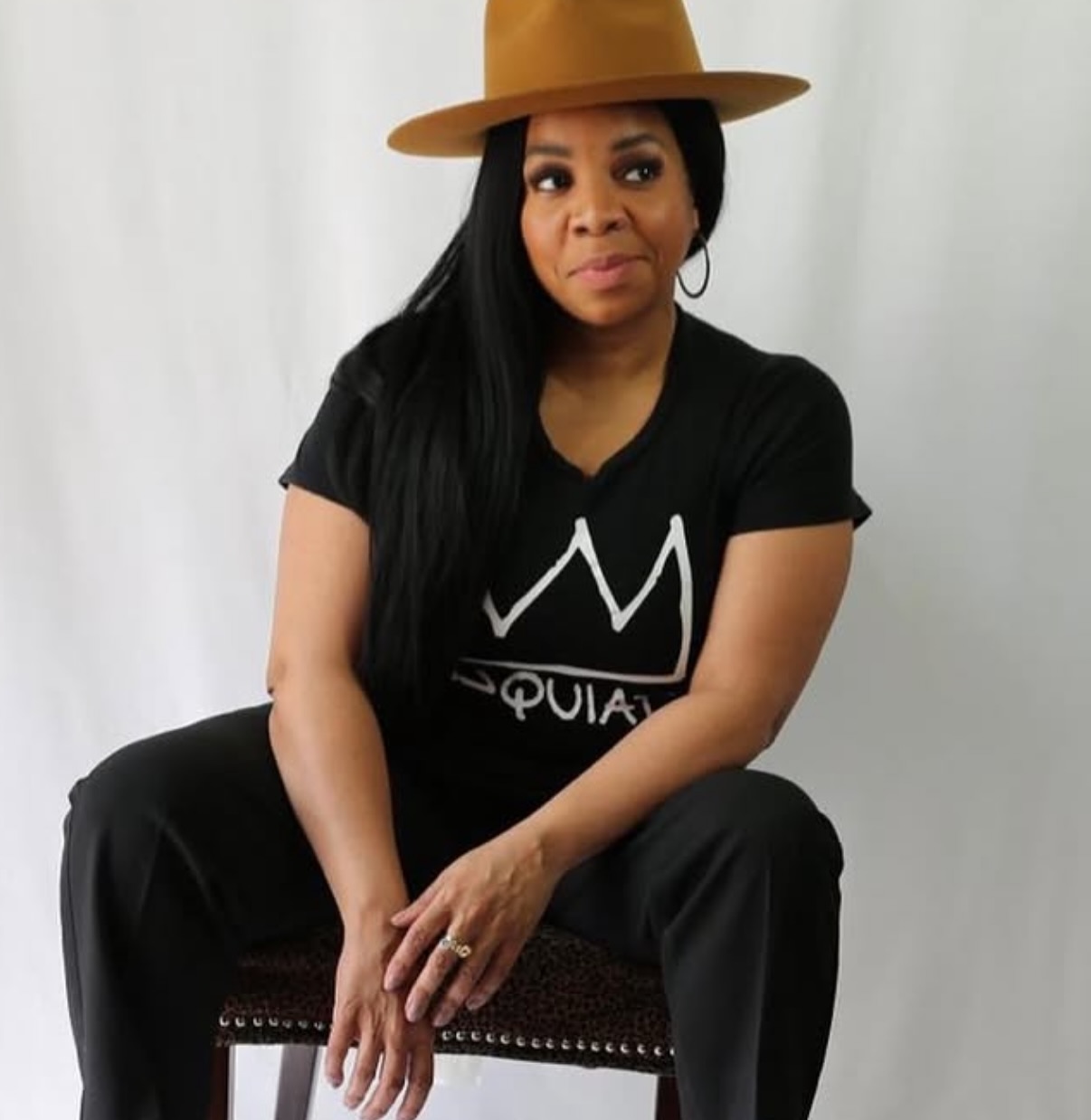
Did I mention that Kimberly was also a movie star? I had no idea when we first interacted, but this later discovery made this special human being even more fascinating.
I’m sure it was our good friend, Google, that shared the news with me when I first wondered about this person that called my sermon on the carpet. At our first Calabasas lunch she was so embarrassed when I told her that my wife was a major fan of her portrayal of Dr. Belinda Brown when she starred alongside Walton Goggins and Danny McBride on the somewhat (okay, more than somewhat) raunchy HBO comedy, Vice Principals. But she was so much more than a brilliant actor. There was a depth and a breadth to her life and an enormous intellect that I was privileged to access. Kimberly grew up in Houston and later received a bachelor’s degree in psychology from Mount Holyoke College in Massachusetts and then an MSW from the University of Chicago before launching a successful career on stage and screen. In my eyes she was larger than life.
I sense a mischievous smile when I remember that I eventually got to turn the mirror around and invite Kimberly to face challenges, too. I invited Kimberly to lead an adult Bible class in beautiful Stauffer Chapel in the summer of 2018 in a series on our personal “cloud of witnesses,” and the thought of bucking the restrictive male-only posture of our shared faith tradition forced her to reach for some courage of her own. But she did it, and the stories of those that shaped her life trajectory were incredible. I even convinced her to share her story in front of the whole church in a worship gathering that September, which just about blew her mind but gave me the greatest joy!
I learned that Kimberly died on Friday. I do not know the details, but I am heartbroken.
I will never forget the awkward nature of our initial contact, but more importantly, I will never forget the deep friendship that developed in such a short time. Kimberly welcomed me into her story and shared physical health challenges that she battled for decades. She invited me to sit with her mother at Cedars Sinai just one year after our initial emails during a concerning procedure that turned out well, just as we had prayed, which proved that we had traveled a long way from suffering through an emotionally manipulative and tepid sermon. Prior to the procedure, Kimberly wrote to me of her gratitude “that God knitted this relationship for such a time as this” and that, “I didn’t see it coming, but God knew I would need a community.” When I announced my move to Nashville a few months later in the spring of 2019, it is crazy to sift through our email correspondence to see how our awkward initial exchange had grown so that we felt such deep loss for miles to separate our friendship.
Just prior to our move to Nashville, Kimberly starred in a play at the Geffen Playhouse in Los Angeles titled, Black Super Hero Magic Mama. Appropriate, of course. Kimberly secured two premium tickets, and Jody and I felt so special to sit in the audience and watch our new friend, the star of the show. The movie premiere for Five Feet Apart, which Kimberly starred in as well, also occurred that night, and since she couldn’t be in two places at the same time, a limo was arranged to whisk her to the premiere afterparty at a Hollywood club after the play, and she invited us along for the experience. I hope you can picture my wife and I, a couple of actual Beverly Hillbillies, stepping out of the limo to the flashing cameras and entering the strobe-lit club where Kimberly introduced us to celebrities such as Cole Sprouse, a co-star, and Justin Baldoni, the director.
I think of that night in March of 2019, the last time I saw her in person and “hugged her neck” (as she would say), as I might think of an appropriately spectacular ending of a fireworks display. I knew that we were moving away from one another quite literally, but I had no hint of finality.
Our email correspondence soon became fewer and farther between, but a couple of years later we had one brief opportunity to reconnect. By that time we had all encountered the murder of George Floyd and the Covid pandemic, and I had moved from Nashville to work at a small college in Illinois. When our volleyball coach at the college planned a fundraiser for cystic fibrosis, I remembered Kimberly’s movie, Five Feet Apart, which was a beautiful love story of two young people with cystic fibrosis who were not allowed to be within five feet of one another (ironically, a movie released a couple of years before “six feet apart” became a part of our national experience), and I reached out to see if Kimberly would meet our students in rural Illinois via Zoom. To which, as you might guess, she graciously agreed. We not only invited our volleyball student-athletes to hear Kimberly share what she learned about cystic fibrosis from her movie role, but also our theater students to hear of her acting career, and also our Black students to learn of her thoughts in the aftermath of the murder of George Floyd and her experiences as a Black woman navigating a career in the United States. As expected, Kimberly was gracious with her time, and profound, and hilarious, and inspiring, and unforgettable.
Jody and I stayed afterward, and that post-Zoom conversation was the last time we spoke and shared the love of our friendship.
In the summer of 2023, Jody and I unexpectedly moved back to Malibu. We thought we might be back in California forever, and Kimberly was one of the first that I emailed. Not long after we arrived, she responded that “[y]ou know I’ll make some time to see you” and that she looked forward to reconnecting. I responded with my new cell number, and that turned out to be our final exchange. We both got busy, and California turned out to be just a bonus year for us that led to a move to our new home in Wisconsin, and my regrets are now deep. I knew that Kimberly’s life remained full without regular installations of our friendship, but it never occurred to me that she might move on from this life so soon. And I wish I had been there for her in the end.
I have been too rattled to think clearly, but I have been trying to think clearly so that I can do honor to the lessons I learned from Kimberly Hebert. I kept our correspondence, and I have been sifting through it since I learned such sad news this weekend, and one lesson I have remembered is found within these words that she shared when we were praying for her health seven years ago: “Again, despite what we are going through, God has not abandoned us. He is always right there with us, even unto the end of the ages.” There is comfort in those words, and my hope remains that her words are true.
Further, as I reread the challenges in her initial outreach to a preacher she did not know, I am emboldened to remember the challenge to my humanity and my personal courage in a culture that seems hell-bent on regressing instead of progressing. She wrote, “A revisionist approach to history is dangerous, particularly when inserted into our religious arena. If you want to challenge the body to be self-reflective in this area, there has to be courage to tell the whole story in truth and love.” Now, more than ever, I want to do better. I want to tell the whole story. I want to tell the truth. I want to tell it in love.
Kimberly’s salutations in our friendship correspondence were the words: Big Love, Kimberly. That is how I remember her today. A special person who loved big.
It was an incredible honor that she loved me in spite of everything that conspired against it, and it is intimidating as hell to remember the courage she challenged me to live with from the very start. May she rest in peace and power, and may I live with greater “courage to tell the whole story in truth and love.”
Farewell, my friend. As the curtain falls and the credits roll, know that I am moved to stand and applaud your extraordinary performance.

 Starting to Look Up