A House (Still) Divided Against Itself Cannot Stand (Forever)

“A house divided against itself, cannot stand.” – Abraham Lincoln on the campaign trail in Springfield, Illinois, June 16, 1858

Our friend, Flo, graciously gave me a signed copy of Erik Larson’s latest book, “The Demon of Unrest: A Saga of Hubris, Heartbreak, and Heroism at the Dawn of the Civil War,” as a Christmas gift, and I read it with great interest, especially at this particular moment in American history. The book chronicles the few short months between the unlikely election of President Abraham Lincoln in November of 1860 and the outbreak of the American Civil War at Fort Sumter in April of 1861 by venturing beneath the headlines and into the lives of some of the key players in the unfolding tragedy. The stories are captivating, to say the least.

I finished the hefty book amid the rapid-fire headlines currently firing from our nation’s capital, wondering if the combination provided anything for me to say. And I think that I do, have something to say that is.

For starters, to state the obvious, our current political polarization with its cyclical outrage is not new. The American Civil War was deep polarization by definition, in that case producing a macabre debate over exactly how many hundreds of thousands of deaths followed, but I began to wonder if today’s toxic political climate is an instance of history repeating itself—or, is it better understood as an ongoing history?  I suspect the latter.

I have had eleven special opportunities to teach a course built by a fantastic professor named Peter Robinson, titled, “Apology, Forgiveness, and Reconciliation,” and in so doing I stumbled across a December 2019 article in The Atlantic by Adam Serwer with the provocative title, “Civility Is Overrated.” The article’s premise is that the aftermath of the American Civil War—an era popularly called Reconstruction—was not, in fact, a time of healing and reconciliation, but a time that perpetuated the original division through its “false promise of civility” that then evolved into Jim Crow, and a century later, the American Civil Rights Movement of the 1960s. In the final paragraph, Serwer writes: “In the aftermath of a terrible war, Americans once purchased an illusion of reconciliation, peace, and civility through a restoration of white rule. They should never again make such a bargain.”

Well . . .

So I’m just thinking here: President Lincoln’s famous campaign speech in the important prelude to the American Civil War warned of what happens to divided houses, and a century later, Reverend King’s most famous speech continued to lament the maintenance of that divided house (read the first few paragraphs of his speech, at least) and dreamed an inspiring dream of a yet-to-be-realized undivided house. I think that today we’re on the next stanza of the same tragic song.

But if President Lincoln’s famous line (citing Jesus) from his famous speech is correct, the song does not have unlimited stanzas.

President Trump is a fascinating phenomenon. His now larger-than-life persona is venerated by many and reviled by many others—and his flurry of provocative executive actions during his first few weeks back in office naturally produces both reactions. But what I find disturbing is that even many of the Republicans that vehemently oppose President Trump—the RINO (“Republicans in name only” as he calls them)—although in opposition to most of his initial actions, seem to agree with his assault on one thing: DEI (Diversity, Equity, and Inclusion). Instead of multiple nuanced perspectives on the general concept of DEI, there seem to be only two: Good. Or, Bad.

Let me be clear: While money/power always lurks behind the curtain, the American Civil War was fought specifically over DEI. Make no mistake. And the Civil Rights Movement was without question a DEI movement. And amid the sweeping number of issues on the table today, I believe that DEI as a cause or concern, broadly speaking, remains at the center of it all.

One telling example is to recall the home stretch anti-DEI emphasis of the 2024 Trump campaign commercials that helped secure his clear victory at the polls.1 2 And as another specific but dramatic example, you may have seen recently that new Secretary of State Marco Rubio hired an undersecretary for public diplomacy that wrote the following less than four months ago: “Competent white men must be in charge if you want things to work. Unfortunately, our entire national ideology is predicated on coddling the feelings of women and minorities, and demoralizing competent white men.”

My friend, Dr. Richard T. Hughes, published “Myths America Lives By” in 2018, and in discussing various foundational myths identifies white supremacy as “the primal American myth.” One of the blurbs for his book was written by theologian, Dr. James H. Cone, who himself authored one of the most devastating books I have ever read, titled, “The Cross and the Lynching Tree.” For Dr. Hughes’s book, Dr. Cone wrote: “It takes a whole lot of courage for white theologians and scholars to speak the truth about race. If we had more white theologians and religion scholars like Hughes who would break their silence about white supremacy and face it for what it is, we–together–could make a better world.”

I, for one, wish to have more courage, for such a reason.

Now I should state my belief that our nation’s troubling supremacist foundations include more characteristics than simply white, although white is major, and that it is no coincidence that DEI work engages those very conversations. That a visceral response to such conversations comes from many otherwise thoughtful individuals simply reveals to me the depth of the foundations.

So did the Democrats lose the presidential election in large part because their diversity, equity, and inclusion arguments were unpopular? I think so. I know without a doubt that Reverend King and the Civil Rights Movement’s diversity, equity, and inclusion arguments were unpopular. And I know that President Lincoln and the Republicans of the 1860s’ diversity, equity, and inclusion arguments were unpopular, too.

I’m imagining a similar speech to that President Lincoln delivered long ago but in today’s divided land, not that our house/nation “cannot endure, permanently half slave and half free,”3 but that we cannot endure half engaging diversity, equity, and inclusion conversations and half silencing them.

I think there is something demonic in the political unrest today, and I do not think that it has much to do with the typical liberal and conservative approaches to domestic, economic, or foreign policy. Instead, I believe that there is a foundational aspect of American history that has always existed and continues to divide us today, a foundation that seeks to reserve power and privilege for certain “types” of people through misusing words like “meritocracy.” And while this divided house has persisted for a very long time now, I agree with Jesus and Reverend King and President Lincoln and many others who were quoted as saying that divided houses cannot survive forever. But if there truly is this fundamental design feature that continues to divide us, and if we truly “face it for what it is,” as Dr. Cone wrote, I share his hope that “we—together—could make a better world.”

—————————————————————————————————————–

  1. Poltico.com on Election Day: “The border and inflation have been GOP mainstays in advertising all year. But there was one other late entry into the Republican onslaught against Harris: More than a quarter of GOP spots that have aired in battleground states since Oct. 1 mentioned transgender issues in some way — most seeking to tie Harris to the concept of prison inmates, including immigrants, receiving gender-affirming surgery. It’s not a new playbook for Republicans, who leaned into transgender issues in key races in the 2022 midterms with little electoral success. It represented a shift in the presidential race: The first TV ad mentioning the issue did not air until mid-September. Still, it became one of the top issues in Republican presidential ads in the final stretch, though the economy and immigration still loomed larger. ↩︎
  2. See also, The Democrats Show Why They Lost. ↩︎
  3. https://www.nps.gov/liho/learn/historyculture/housedivided.htm ↩︎

Days of Reckoning

With so many statements vying for limited headline space, it seems that President Trump’s audacious assertions about Canada, Greenland, Gulf of Mexico, and the Panama Canal have been characterized by many as mostly “Trump being Trump,” which may very well be true. And I probably would not have given it much more thought had I not at the same time been reading my favorite college professor’s sweeping history of the American West titled, Continental Reckoning. 

For future reference, when you hear that someone has written a “sweeping history,” you can safely assume that it is a big ass book, which this one is. But it is a worthwhile read, especially for Americans to “be closer to understanding ourselves and how we have come to be.” (Prelude, page xxx — that’s Roman numeral thirty, not something dirty!)

I confess an added personal interest in the American West having lived in California for a dozen years in the past, and as I dove into the sweeping history in early January, it seemed all the more relevant when historic wildfires devastated the large numbers of people that have been drawn westward to what has become extremely valuable properties there. But it was reading of historic American expansion (and its consequences) alongside President Trump’s bold expansionist rhetoric that really began to capture my attention. 

A book review is not my intention, but I will explain that the mid-1800s witnessed incredible American expansion and transformation, and while historians typically focus on the violent and fateful American Civil War from that era, Dr. West encourages us to “broaden our view in space and time.” He writes, “The Civil War and the birth of the West . . . should be given something like equal billing in this crucial transition in national life. Each event has its own story and deserves its own narrative, but each was often in conversation with the other, and when each is properly considered in its broadest context, neither can be understood without the other.” (Prelude, page xx)

The extraordinary experience of the American West erupted from the discovery of California gold just as the territory became an American possession in 1848, something Dr. West calls, “The Great Coincidence.” (i.e., “Within two hundred hours of its becoming part of the republic . . . California began to be revealed as the most valuable real estate on the continent.” – page 5) 

It is no surprise that significant expansion is often an economic flex, but the consequences often extend much further.

For example, in the story of the American West, in addition to the vast increase in power, opportunity, and affluence, there were incredible advances in communication, science, technology, and transportation — but the costs were enormous: “hundreds of thousands dead or dispossessed” (454), “land stolen and turned into poisoned grotesqueries” (454), and an appalling racial ordering with devastating effects for Native communities, Black Americans, Hispanic Americans, and Chinese immigrants — Dr. West even shared another historian’s observation that the architects of Nazi Germany admired the United States and “believed they were ‘not so much inventing a race-obsessed state as catching up with one’” based on the U.S. treatment of those considered non-“white.” (453)

I recognize that this is the 2020s and not the 1850s, and that talk of expansion might be the bluster of a negotiator, but my thought for those of us used to a flag with fifty stars is this: Don’t take expansion rhetoric lightly. Be aware. Expansion produces consequences, often significant, and we should not allow our unfamiliarity with it and the possible allure of new acquisitions to prevent us from careful consideration of past experiences in our own days of reckoning, particularly if the proposed expansion is broad and, well, sweeping.

Faulkner’s famous line, “The past is never dead. It’s not even past,” seems apropos. Or, as Dr. West suggests near the end of this volume that he subtitled, The American West in the Age of Expansion: “The consequences remain; yesterday makes today. As for tomorrow and how best to use it, the stories and their voices offer up hints and provocations.” (454)

Well… (Or, Facing Reality)

I fancy myself an early riser and enjoy getting to the office before the campus comes to life, but I often encounter a wonderful member of our custodial staff who has been at work long before my arrival. Recently, we struck up a conversation about the bitterly cold temperatures in the forecast for today, and as our conversation concluded, my colleague said with a smile and as a matter of fact, “Well, we are in Wisconsin.”

I love it. I’m going to use that phrase a lot.

Later, it occurred to me that the sentiment that undergirds that statement reflects a deeply held value of mine regarding life in general.

I am a Christian, but being raised in a specific Christian tradition that encouraged me to think deeply and arrive at my own conclusions, my personal journey has led me to become a different kind of Christian than expected, possibly different than you picture when you hear the term, and probably much to the dismay of several teachers along the way. But I have found great sustenance in the writings of unique thinkers from days gone by, and one of those is William Stringfellow (1928-1985). Near the end of his 1966 book, Dissenter in a Great Society, the lawyer and lay theologian wrote:

“[T]he Christian knows . . . that this world is a fallen world, not an evil world but the place in which death is militant and aggressive and at work in all things. . . . Of all people, Christians are the most blunt and relentless realists. They are free to face the world as it is without flinching, without shock, without fear, without surprise, without embarrassment, without sentimentality, without guile or disguise. They are free to live in the world as it is.” (page 161, updated with gender neutral terms)

Now that has not been my natural experience as a Christian or with Christians, so I apologize for cutting to the chase with that reading because there is much to be understood from Stringfellow prior to such a conclusory passage, but trust me when I say that once I got the full impact of Stringfellow’s theological framework, that passage made a deep impression on me. One way to put it is that it led to a desire to say to myself when life seems unhinged, “Well, we are on Planet Earth.”

I sincerely aspire not to be shocked by what happens in this world, and although a work in progress, I do make progress. And while the limits are often tested, I am less and less surprised by elections, politicians, business tycoons, crimes, illnesses, and disasters. I still feel the deep disappointment, pain, and sadness that acts of injustice produce, but importantly, I am less likely to despair and less likely to live in fear.

As Stringfellow put it, I strive to accept the world we live in for what it is. That’s accept, not approve; in fact, as Stringfellow writes later, I am in perpetual protest. But as a “blunt and relentless realist” who is less likely to be debilitated by current events, I can protest with a steady resolve and with inexplicable hope.

It is bitterly cold outside today in my new home state, but saying “Well, we are in Wisconsin” reminds me that cold weather is to be expected and allows me to bundle up and face the hard reality.

That general idea gets me through life, too.

Chaos or Community?

It seems to me that a debate over where a nation’s flags should be positioned today should be about the national holiday’s namesake rather than two others who are not, the national holiday’s namesake that is.

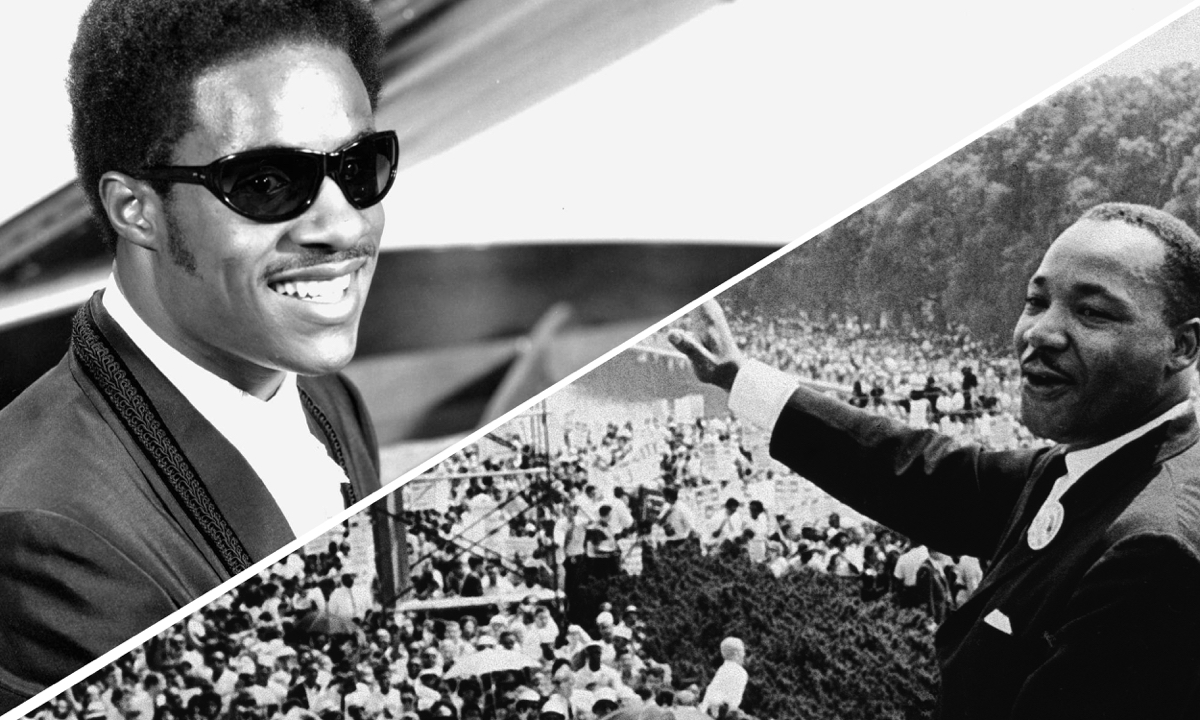
To be fair, one of the two obviously did not invite the debate. In fact, just over forty-six years ago (January 14, 1979) President Jimmy Carter became the first president to propose a national holiday honoring Reverend King even though thirty such bills had been proposed and defeated in Congress in the decade following the assassination, with the first proposal coming just a few days after the national tragedy in 1968.

President Carter’s proposal was unsuccessful, too. There were repeated financial arguments against the holiday over the years (e.g., President Ronald Reagan cited cost concerns; i.e., it will cost too much money to give federal workers another day off), and there were repeated personal attacks (e.g., Senator Jesse Helms called Reverend King a “Marxist” — and even President Reagan, again, who eventually signed the 1983 national holiday bill that finally made it through Congress into law, dodged a question about Senator Helms’s accusations with a thinly-veiled slap, “We’ll know in thirty-five years, won’t we,” referring to the scheduled release of FBI surveillance recordings). Today’s youth are presumably ignorant of the long road to the national celebration of the life of Martin Luther King, Jr.

Key to generating the public pressure necessary to turn the tide on a national holiday, including a petition with an incredible six million signatures, was the extraordinary effort of musical legend, Stevie Wonder, who wrote and released his MLK-holiday-inspired version of the song, “Happy Birthday,” in 1981. “Happy Birthday” became one of his signature songs and has endured in beautiful ways. At the first official national MLK Day celebration in 1986, Stevie was the headline performer.

Still, even with the eventual declaration of a federal holiday, many states were reluctant to participate. It wasn’t until the year 2000 that every state officially came on board, although I am sad to report that both Alabama and Mississippi, in a breathtaking and ongoing insult, still combine the holiday to recognize both Martin Luther King, Jr. and Robert E. Lee, the Civil War general that led the fight to preserve Black slavery.

And if the fight for a day to recognize Reverend King wasn’t hard enough, we add a presidential inauguration today. Given the Twentieth Amendment to the United States Constitution’s specification for presidential inaugurations (January 20) and the designated date for MLK Day (third Monday in January, instead of his actual birthday, January 15), this will happen periodically. It happened with both President Bill Clinton’s second inauguration in 1997 and President Barack Obama’s second inauguration in 2013, and it won’t happen again until 2053, but it is happening today.

I listened to Stevie Wonder’s signature song, and given the persistent reluctance to fully celebrate the holiday and the bitter divisions in our nation, certain of his lyrics struck me with special force:

  • “the way to truth is love and unity to all God’s children”
  • “the whole day should be spent in full remembrance of those who lived and died for the oneness of all people”
  • “we know that love can win”
  • “the key to unity of all people is in the dream that you had so long ago that lives in all of the hearts of people that believe in unity”

I wish that those sentiments — sentiments that happen to reflect Reverend King’s understanding of Christian values — could be the full focus of a day like today.

Today, I do get to be a part of a lengthy reading to commemorate the holiday. We will gather in the “MLK Room” on the Ripon College campus and read aloud sections of the last book that Reverend King published prior to his assassination, titled, “Where Do We Go from Here: Chaos or Community?” That question — Reverend King’s question — reverberates today. Which will we choose?

Sometime between today’s presidential inauguration and tonight’s college football championship, I propose finding a few minutes to reflect on Stevie Wonder’s lyrical call to the world as set forth in his birthday song for Reverend King and truly consider the question: Where will we go from here — chaos, or the beloved community of which Reverend King so famously dreamed?

How President Jimmy Carter Changed My Life for Good

Biloxi, Mississippi (2008)

After a hundred years of life and a week’s worth of funeral activities, President Jimmy Carter’s remains will finally be laid to rest in his Georgia hometown this evening. Many memories have been shared by many people, so I might as well add mine, too.

I was six years old when Governor Carter was elected President Carter in 1976, marking the first presidential election that I remember, but my childhood memories related to him are few and scattered, including peanut jokes, gas no longer thirty cents a gallon, and wearing yellow ribbons for the hostages. Twenty years later, however, he changed my life for good.

As a young adult wrestling with my Christian faith in the early 1990s, I became convinced that Jesus’s primary news was that all people matter to God and that God’s business is setting right what has gone wrong in the world for all people, particularly the poor and marginalized. And as I wrestled to reconcile that belief with what appeared to be a different primary business of organized churches, my new wife and I soon found personal meaning by moving into a home serving children who were abused, neglected, or troubled.

While there, sometime in 1996, I read a U.S. News & World Report interview with President Carter about his new book, “Living Faith.” In the interview, President Carter shared that his home church once wanted to do something nice for a poor family at Thanksgiving, but they had one problem: Nobody knew a poor family. So, undeterred, they approached the local social services office to get the name of a poor family that they could approach. It occurred to President Carter that something was very wrong with that picture, i.e., a church having to go to the government to find the poor families.

That observation cut straight to my heart.

I must have spoken about that article in the weeks that followed because my mother bought “Living Faith” for me that Christmas, which turned out to be one of the most important gifts of my life. As I devoured the book, I read the chapter titled, “Faith in Action,” and discovered Habitat for Humanity. As I read about the organization’s mission to alleviate poverty housing, it struck me that my hometown, Paragould, Arkansas, an all-white sundown town with railroad tracks that segregated the community even further along socioeconomic lines, could really use Habitat for Humanity.

This changed my life forever.

I set out to establish a Habitat for Humanity affiliate in my hometown in early 1997, only to discover that the national organization required new affiliates to be diverse and a representation of the entire community, which challenged my heretofore wholly homogenous life. And as a result, I soon learned that so many people representing labels that I had been taught were bad or lost or wrong were in reality good and found and right, at least as much as my folks were, and often more so.

This has been the great lesson of my life, and I have been joyfully benefiting from its reality for the past three decades as we have lived all over these United States, traveled all over this planet, and befriended so many people that I can no longer even imagine that labels are dependable.

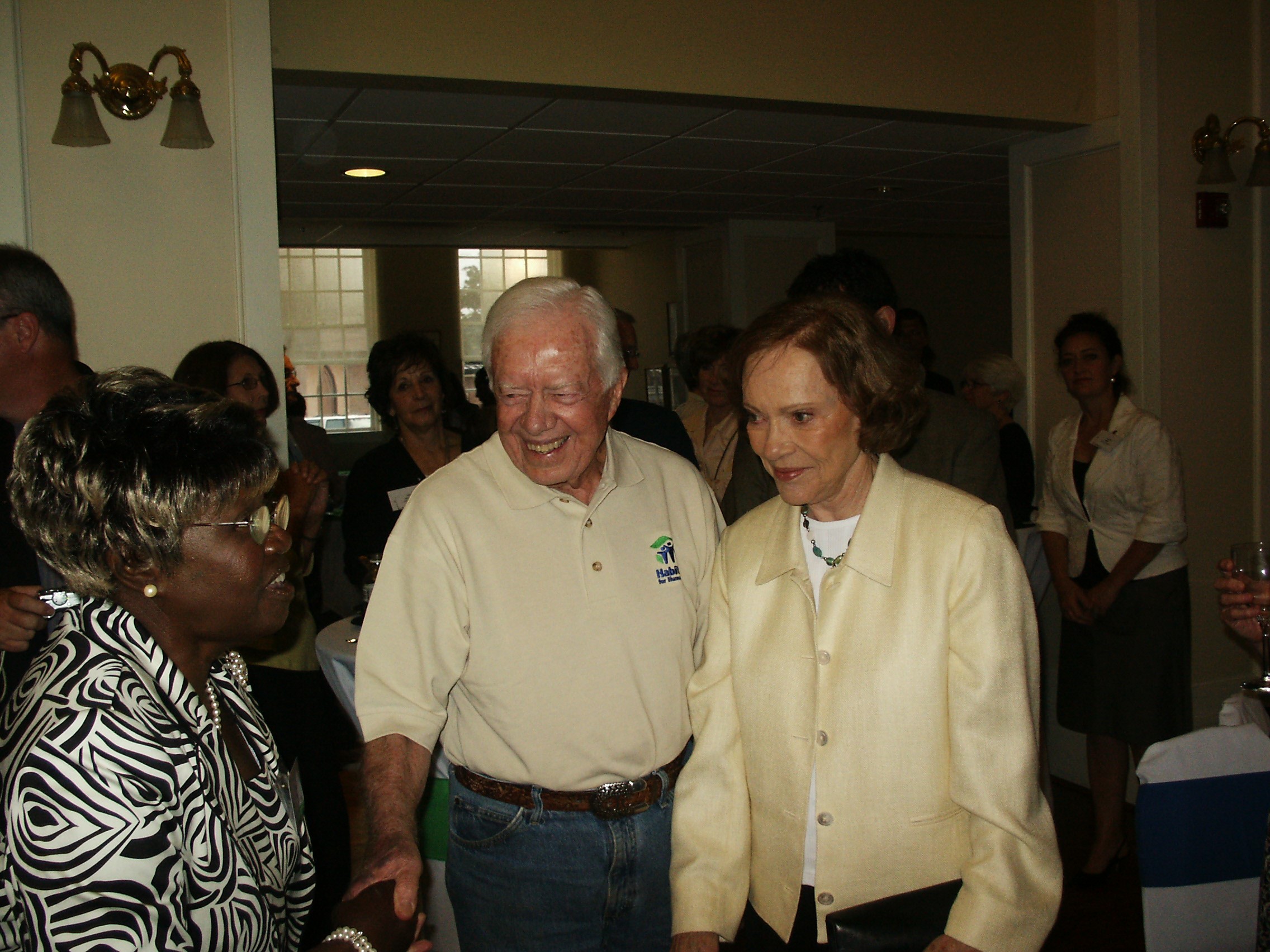
I never introduced myself to President Carter, although the picture above shows how close I came when another Habitat for Humanity affiliate that I helped establish hosted the Jimmy & Rosalynn Carter Work Project in 2008 to address the devastation wrought by Hurricane Katrina. As a board member, I was honored to attend a VIP event that evening and see the Carters up close, but it never worked out to shake his hand and say thank you.

That’s okay. But I will say it today on the day that President Carter’s remains are finally laid to rest in his Georgia hometown after a hundred years and a week’s worth of funeral activities.

Thank you, Mr. President. You changed my life for good, and I am forever grateful.

2024: My Year in Books

I started tracking the books that I read in 2017 and have maintained that habit ever since. I typically read twenty-to-thirty each year, although that jumped to forty during the crazy COVID year of 2020. This year will end at thirty; however, I must say that as a whole the quality of this year’s list was remarkable, which is really saying something given what I have read in the past.

I made it a point several years ago to read just as much fiction as nonfiction, and I am proud that has become a habit, too. I tended to veer toward nonfiction, but I equally love and benefit from works of fiction, so I am glad to have achieved a balanced reading diet.

I don’t like to rank the books and declare favorites for multiple reasons. Well, actually, I do like to rank books and declare favorites, but for multiple reasons I try to avoid that tendency. Instead, I think I will just share the list below — divided by fiction/nonfiction in the order I read them — and share a note about each one. If anyone has follow-up questions, please feel free to ask publicly or privately.

Nonfiction:

  1. Spirit Run by Noe Alvarez (a gift from my daughter, Hillary, and a gift for runners who want to go on a crazy cool travel journey)                                       
  2. How to Know a Person by David Brooks (a gift from a former coworker, Shelley, and to risk sounding overly dramatic, should possibly be required reading for U.S. citizens in the 21st Century)                             
  3. Why We Sleep by Matthew Walker (fascinating insight into an underrated health crisis)                          
  4. Boys in the Boat by Daniel James Brown (a gift from my daughter, Erica, and a wonderful story of endurance and triumph through sport)                  
  5. Why We Love Baseball by Joe Posnanski (a gift from my daughter’s boyfriend, Quentin, and a perfect illustration of how a book’s title can capture its essence)                            
  6. The Servant Lawyer by Robert Cochran, Jr. (written by a friend and colleague that I deeply admire and helpful for any Christian in the legal profession)             
  7. Amusing Ourselves to Death by Neil Postman (recommended by my friend, Sandi, and it blew my mind that Postman’s remarkable insights predated the computer revolution — another on my required reading list for present-day Americans)                                 
  8. Somehow by Anne Lamott (another gift from my former coworker, Shelley, who is a fellow Anne Lamott fan; saying that this wasn’t my favorite Anne Lamott book would be like saying a sunset was slightly less spectacular than another)
  9. Eight Keys to Forgiveness by Robert Enright (Enright is a pioneer in examining forgiveness, which is a conflict resolution course I have taught for years, and I finally got around to reading one of his books, which was well worth it)                       
  10. Sapiens by Yuval Noah Harari (my friend/student, Laura, gave me Sapiens as a special gift, and both the gift and the book meant so much to me: it challenges everything, which is right up my alley, and I will be thinking on it forever)                                             
  11. The Universal Christ by Richard Rohr (Rohr is a gift to so many of us disillusioned by conservative Christianity, and while this book wasn’t the book I expected it to be for me personally, I found his thesis both compelling and helpful)                                              
  12. The Warmth of Other Suns by Isabel Wilkerson (a gift from my daughter, Erica, and while I said I wasn’t going to rank the books, this extraordinary telling of the Great Migration is probably the most impactful book that I read this year — yet another on the required reading list for all Americans)           
  13. Academic Coaching by Marc Howlett & Kristen Rademacher (recommended by two separate friends/colleagues, Tim and Brenda, and I was more than impressed that a book can be simultaneously well-researched, succinct, and practical)            
  14. Never Givin’ Up by Kurt Dietrich (an outstanding book from a new friend in Wisconsin chronicling the life of the sensational entertainer (and Ripon College alum), Al Jarreau)                             
  15. Introduction to Sport Law by Spengler, Anderson, Connaughton, and Baker (a textbook in preparation for a course that I get to teach this semester!)

Fiction:

  1. Clock Dance by Anne Tyler (I have long loved Anne Tyler novels)
  2. Elevation by Stephen King (King is a writing hero, and this novella was entertaining as expected, but not one of my favorites)
  3. The Midnight Library by Matt Haig (not what I expected, but a good read)
  4. Memphis by Tara Stringfellow (really good, probably especially if you are from near Memphis like me)
  5. Heaven and Earth Grocery Store by James McBride (a truly outstanding book, and possibly my favorite novel of all time, except that I kept reading more novels this year)
  6. Malibu Rising by Taylor Jenkins Reid (well, guilty pleasure reading maybe (?), but I enjoyed it since I knew all the Malibu references)
  7. The Lonely Hearts Book Club by Lucy Gilmore (stumbled on this book, characterized as a “feel-good” novel, which must be my kind of book since I like feeling good)
  8. Tom Lake by Ann Patchett (so, so good — Nashville author writing of an older couple living on a cherry farm in rural Michigan and recalling experiences of the glitz and glamor of Hollywood in younger years — that we moved from Malibu to rural Wisconsin later this year might suggest that this book is personally special)
  9. Our Town by Thornton Wilder (Tom Lake was based on Our Town, so I had to get around to finally reading it)
  10. Hula by Jasmin Iolani Hakes (picked this up during Asian American and Pacific Islander Heritage Month, and glad that I did — a challenging story that spans three generations of women)
  11. The Poisonwood Bible by Barbara Kingsolver (a recommendation from my daughter, Hillary, and I wondered how I had missed Kingsolver all of these years — so much that I wondered if it was better than Heaven and Earth Grocery Store)
  12. Demon Copperhead by Barbara Kingsolver (now all into Kingsolver, and based on a recommendation from my wife, I decided that Demon Copperhead is the best novel I have ever read)
  13. The Beginner’s Goodbye by Anne Tyler (did I say that I love Anne Tyler novels?)
  14. James by Percival Everett (my goodness, what a year of reading novels — this one won the National Book Award for fiction this year for good reason, and I absolutely loved it — a retelling of Adventures of Huckleberry Finn from Jim’s perspective, which is just brilliant)
  15. Atonement by Ian McEwan (I ended the year with a re-reading of Atonement, which I had said prior to 2024 was my favorite novel of all time — not sure I can still say that, but reading it again reminded me of why I loved it so much)

Holiday Travel

4am: The alarm sounds. We are going to California today to celebrate Christmas with daughters and friends.

5am: We leave the house. It’s dark, there are seven inches of snow on the ground, and black ice lurks on the neighborhood streets but clear sailing on the highways.

6am: We are first in line at the American Airlines counter at the super-convenient Appleton airport, and the customer at the desk in front of us cannot communicate in English. She is flying alone, and I imagine how frightened she must be.

7am: We are at our gate and learn there are thirty passengers on our small plane to Chicago. A passenger is asked to switch rows for proper weight distribution. This is not an encouraging announcement.

8:31am: We land safely and early at O’Hare, where I proceed to lead us the wrong direction for our connecting flight. Jody makes a remark that in certain cultures might be referred to as “snide.”

9:05am: While waiting to board, I notice a child screaming for a bagel, apparently unfazed by reports of Santa’s all-seeing eyes.

9:17am: I am on the jet bridge and notice Bagel Kid behind me! I start softly humming the “sees-you-when-you’re-sleeping-knows-when-you’re-awake” portion of the song as a subliminal ploy.

9:30am: We are seated and situated on the plane, and Bagel Kid thankfully migrates to the back of the plane. A different child directly behind us seems cute, not desperate for bagels. Her name is clearly Bianca, and she pronounces “tall building” as “taw bill-dwing.” Adorable.

9:40am: It is announced that an untagged black bag was left on the jet bridge. I suddenly wish that I hadn’t watched the terrifying movie “Carry On” recently.

9:41am: We are all asked to pay close attention to the safety demonstration. We completely fail this thoughtful and simple request. Grateful that the flight attendant does not appear to be insulted.

9:45am: Jody is prepared with snack options and ear buds and movies to watch on her phone. I, on the other hand, am unprepared and decide to observe everything for the next three hours and forty-nine minutes of flight time. I did bring one snack, and I start doing rationing math on when to eat it.

9:53am: I notice a dog two rows ahead on the opposite aisle. The dog has a strikingly similar hairstyle to its owner, albeit different colors.

10:01am: We are taxiing for takeoff. I suspect that Bianca learned to talk early, given the thirty-one minutes we’ve been together 

10:03am: We take off.

10:22am: I am already bored. I begin reading the flight information brochure. Under health information, it begins, “Before traveling, talk to your doctor about any concerns.” This seems a bit late to share such helpful advice. I also read about a terrifying blood clot that can kill you during flight.

10:24am: I put away the flight information brochure.

10:30am: A flight attendant uses tongs to serve and collect tiny washcloths to those seated in first class — the dog and I find this wildly entertaining.

11:01am: I eat my snack. Only two hours and fifty-one minutes to go!

11:03am: The snack and drink cart comes and goes, and I notice that the dog owner shares her water and Biscoff cookies with her dog. They are apparently very close.

11:09am: I have secretly been counting the number of people who have unwittingly placed their butt next to the dog’s face while standing in the aisle. We are up to four. The dog has repeatedly refused to sniff. On each occasion the dog has looked away, appearing demure. Impressive.

11:17am: A young father takes his baby to the lavatory to change a diaper. I don’t think I have that level of talent, to change a dirty diaper in an airplane lavatory. I also decide never to go into that particular lavatory.

11:21am: The dad emerges. I conclude that he must lead a NASCAR pit crew. I consider giving a high five but decline for sanitary reasons.

11:23am: Bianca starts saying “I need help” over and over again. She is a little less adorable now.

12:06pm: I must have dozed off for a while. That was helpful.

12:07pm: It occurs to me that I haven’t heard Bagel Kid scream once during the entire trip. I suspect drugs. Or possibly delicious bagels.

12:20pm: No butt-sniff number five! And this unsuspecting gentleman could be involved in the plumbing profession. The dog’s self-control is outstanding. I suspect this good dog would not have eaten its one snack so early on a long flight.

12:28pm: Unfortunately, I have now had a couple of butts stuck in my own face. Followed the dog’s lead: I looked away, unimpressed.

12:52pm: Jody lets me borrow a snack.

12:55pm: I could use a tiny washcloth.

12:59pm: Bianca has been strangely quiet for a very long time. More drug suspicions.

1:24pm: We begin our descent to the City of Angels.

1:52pm: We land safely at LAX, where it is actually 11:52am. I find myself truly hoping that Bagel Kid, Bianca, and the well-behaved dog each enjoy the merriest of Christmases.

12:45pm (PST): Erica greets us at the crazy busy airport. Our checked bag actually arrives. Breakfast in Wisconsin, lunch in Los Angeles. All things considered, a Christmas miracle.

Tomorrow, we take a road trip to Northern California. I wonder what adventures that will bring?!

Abstraction Kills

What can lead one person to kill someone they have never met?

I suspect you saw the news. On December 4, a gunman in a hooded jacket shot and killed Brian Thompson, the 50-year-old CEO of UnitedHealthcare, as he left his hotel in New York City. The killer fled the scene, triggering a nationwide manhunt, and given the victim’s job, reports that the words deny, defend, and depose were on the shell casings furthered the suspicion that this was a targeted attack. And I suspect you saw the quick, troubling reactions to the murder afterward, like t-shirts for sale with the words deny, defend, and depose on them, and references to the shooter as a hero for murdering a health insurance company CEO. And you probably saw the subsequent arrest at a Pennsylvania McDonalds of 26-year-old Luigi Mangione, a prep school valedictorian and Ivy League grad from a prominent Baltimore family.

The entire story sounds more like a Grisham novel than real life, so the media attention is unsurprising.  

Murder is reprehensible. You might think that goes without saying, but it doesn’t; go without saying, that is. I strongly oppose all acts of violence and for both strategic and theological reasons promote creative nonviolent resistance as an alternative. I remain convinced that what theologian Walter Wink termed the “myth of redemptive violence” is descriptive not just of American history but all of human history, and I defy the claim that violence can be a source of good. So, I unequivocally condemn the murder of Brian Thompson.

As expected, the victim left behind heartbroken family and friends. I read the reactions of those who knew Brian Thompson the best and understand their bewilderment at the widespread popularity of the alleged killer. They described the victim as a small-town, blue-collar kid from Iowa who was a good student and then worked hard as he rose through the ranks to become the CEO of a major corporation. Thompson earned ten million dollars in salary and benefits last year and was in many ways the popularly-understood American success story. Rags to riches. How could anyone celebrate the cold-blooded murder of a Horatio Alger hero story?

If you find yourself so bewildered, there is another perspective that is helpful to understand. Consider, if you will, the perspective of countless human beings who have watched their loved ones suffer and die due to the cold denial of insurance coverage by a fabulously wealthy company whose chief executive was paid over ten million dollars last year. (To do the math, that’s well over $1,000/hour for every single hour of the year.) Some of you might not have to try very hard to imagine this alternative perspective, and to be honest, I didn’t have to try very hard either. To understand the anger and bitterness, that is.

When I consider the murder of an American rags-to-riches success story by someone who is representative of millions of wronged Americans using violent tactics characteristic of American history and popular culture, I ask myself how to make sense of it all, and it turns out that I do have a particular thought to share.

Ten years ago, Simon Sinek published a wonderful leadership book titled, Leaders Eat Last, and I was especially impressed by his chapter, The Abstract Challenge. [Note: I mentioned this book and chapter specifically in a recent and relevant post, Small but Mighty.] Sinek pictures the initial attempts of humans to live in groups and imagines a village deciding on a leader and granting the leader certain privileges but with an important understanding: When our village gets attacked by a lion or tiger, it’s your job to fight it for us! However, Sinek argues, as human civilization evolved over subsequent thousands of years, the leaders still received lots of privileges, but they also became further and further removed from the people they are there to protect. So, to the modern leader, those they are to protect often become more and more “abstract.” To illustrate, the CEO of a major corporation leads massive numbers of people whose names they will simply never know. And given this state of affairs, as Sinek concludes, in organizations—and he actually uses the following phrase as a chapter title—abstraction kills.

I was struck by how literal that may have become in this particular case.

What can lead a prep school valedictorian and Ivy League grad from a prominent Baltimore family to kill a hard-working rags-to-riches story from a blue-collar Iowa family when the two have never met?

Possibly, because abstraction kills.

There are many conversation topics that emerge from this popular true crime story, and I hope that on one hand we will remember to reaffirm the rule of law and condemn murder, and I hope that on the other hand we will at some point truly consider universal health care. But it seems to me that neither conversation will make a dent in The Abstract Challenge. We can hardly reverse millennia of sociological developments overnight to address such a fundamental reality.

But as I have argued before, I do think we can begin a grassroots effort toward that end and adopt a posture that consistently resists the powerful sociological inertia that constantly reduces actual human beings into invisible abstractions. To be candid, that is why I like living in a small town. And why I like working at a small college. And why I like being a part of a small church. In small towns, and small organizations, and small churches, it is exponentially more difficult for people—and their joys and their pains—to be invisible.

In a phrase, it is vital that we learn to truly see people.[1] All people. It’s a nearly impossible task in a modern world, but don’t let that stop us from trying. We are facing powerful forces that lead to violence and death, but I am convinced that life and love are worth the (creative, nonviolent) resistance.


[1] And I’ve also said this before, but I encourage you to read the latest book from David Brooks, How to Know a Person: The Art of Seeing Others Deeply, and Being Deeply Seen (2023).

Oh the Weather Outside Is Frightful

Ripon, Wisconsin

Wisconsin old-timers speak of harsher winters in days gone by, but I’m telling you that it’s colder than penguin snot here today. Wind chills are twenty below zero, which I recently learned is an actual number, and I believe that I am now permitted to use the phrase “frigid conditions.”

I was born in 1970 and grew up in the northeastern corner of Arkansas where we would get several inches of snow each winter, sometimes more, sometimes less. I remember my mother making delicious snow ice cream when it arrived, and I recall sledding adventures and snowball fights, building snow people and making snow angels, listening for school closures on the radio and learning to drive on icy roads. I also remember terrifying my parents in a pre-cellphone era by driving home from college in a driving snowstorm, and I recall college days in the mountainous northwestern tip of Arkansas where one October I walked across campus marveling at such an early snow. And best of all, back in my hometown in the early days of my post-college professional career, I remember an unusual winter ice storm in 1994 that provided a couple of uninterrupted weeks to get to know Jody, which undoubtedly accelerated our relationship—the best thing that ever happened to me.

So it makes sense that the winter season produces a sweet sentimentality in my mind.

But in early 1999, just before the turn of the millennium, we embarked on a twenty-year journey that led us to live on two separate, beautiful coasts with abundant sunshine and insignificant winter—and it was as glorious as it sounds. When prompted, I often repeated a new friend’s response to the question of whether he missed the beauty of a snow-filled winter: “If you miss what it looks like, buy a picture.” I joked that I was getting spoiled, not really suspecting that a joke might still be true. 

We moved to Nashville in 2019, a snazzy Southern city that expects a few inches of snow each year, which reminded me of my Arkansas home, and I was caught off guard by my happy heart when the snow fell from the sky, discovering that I owned a special smile that I had not realized was missing.

We then moved to rural Illinois in 2021, a step up in winter world for us, where a foot or so of snow is expected every winter, and I noticed that the special smile moved with me.

And here we are in Wisconsin in 2024, a winter wonderland that expects at least three feet of snow each year, and I am trying to explain to those of you scratching your heads why I am particularly happy.

Physically, I am not built for the winter. I’m not built for winter at all. I am skinny (no insulation). I am bald (no protection). To overshare, I have a thyroid condition that leaves me susceptible to cold weather and is better suited for a desert. But emotionally, I still smile each time it snows, and I noticed not long ago that cold weather triggers a set of previously forgotten memories that awaken a child that was ironically hibernating inside of me.

It is colder than a polar bear’s pajamas outside today. Sheesh, it is brutal and even dangerous. As Dean Martin might describe it, the weather outside is absolutely frightful, and I don’t suppose I will ever adjust to twenty below. But I’m telling you that somehow and somewhere in the mysterious interior of my mind and heart burns a magical little fire that is positively delightful.

America Raw

I am going to share a disturbing metaphor. It is unpleasant, so consider yourself warned, but I do hope you will read on and consider.

To begin, I confess that I have not followed the professional wrestling craze over the years. As a child, I spent Saturday mornings watching Mid-South Wrestling on a local Memphis television station and rooted for “Superstar” Bill Dundee over Jerry “The King” Lawler, but when professional wrestling later consolidated and exploded into a mammoth empire I was occupied with other things. It wasn’t a moral choice at the time; I was probably just too infatuated with traditional sports.

However, while channel surfing over the last couple of years, I stumbled on and appreciated several A&E documentaries featuring the biographies of famous wrestlers whose names I could not have escaped had I tried: “Macho Man” Randy Savage. Jake “The Snake” Roberts. “Stone Cold” Steve Austin. The Undertaker. And of course, I also watched a movie or two, so names like Hulk Hogan, Dwayne “The Rock” Johnson, and John Cena are more than familiar.

But it wasn’t wrestling fandom that led me recently to watch all six episodes of the current Netflix docuseries, Mr. McMahon, chronicling the life and times of the legendary promoter, Vince McMahon, who transformed wrestling into a national phenomenon and himself into a multibillionaire. Instead, as a higher education professional, I was interested in the McMahon story since Linda McMahon, Vince’s spouse of fifty-eight years (though very recently separated), has been nominated by President-elect Trump as the next leader of the federal department of education. I felt the need to learn more.

I did watch all six episodes, and many were very hard to watch.

Episode Five, titled, “Family Business,” was one of the hard ones and the first to really feature Linda. It shared when Vince’s evil (“heel”) character began to incorporate his wife and children into the storyline, which involved times when Linda would slap her children on camera and others when she would portray a drugged spouse whose husband would carry on affairs in front of her. This phase in the story of the World Wrestling Federation (at the time, later changed to World Wrestling Entertainment (“WWE”) due to a lawsuit) coincided with the rise of reality television, and the McMahon storyline blended reality and soap opera with a blurry line as to which parts were real. But it turns out that this post is not so much about Linda McMahon specifically.

The previous episode, Episode Four, titled “Attitude,” is another hard one and the centerpiece of the docuseries. It showcased the “Attitude Era” as announced on an episode of “Monday Night Raw” in 1997 when Vince McMahon (the business mogul) became “Mr. McMahon” (the heel/character, and docuseries title). The Attitude Era featured marked and intentional increases in hardcore, sadistic violence as well as sexually provocative content that objectified women—and the business exploded in popularity.

Episode Four reminded me that the Attitude Era was not a cultural anomaly in the late 1990s. It recalled the rise of “trash television” like The Jerry Springer Show and radio “shock jocks” like Howard Stern that were wildly popular, too. In an earlier episode of Mr. McMahon, famed bodybuilder and wrestler, Tony Atlas, described the era by saying, “We would have been looked upon in today’s society as some of the worst human beings walking the face of the Earth. I mean, we abused the hell out of women. All of us did. You know, they were like a toy for us.”

On a personal level, Episode Four led me to recall a particular prevailing [A]ttitude in the dark parts of my own childhood. I remembered when I learned terrible racist jokes (starting in elementary school). I remembered when shaming queer people was the standard. I remembered when offensive terms for disabled people were used to mock others. I remembered when the objectification of women was the societal norm.

I found it intriguing that Tony Atlas sensed a difference “in today’s society.” Times did change in certain important ways in the 21st century. The “#MeToo” movement created a major backlash against clergy sexual abuse and the Harvey Weinsteins and Larry Nassers in the United States. The creation of a “Pride Month” was a major national statement that queer shaming is unacceptable. The “Black Lives Matter” movement demanded recognition of the legacy of historic racial terror and the white supremacist foundations of the United States. “DEI” departments were established to work toward campus environments where everyone is included. The word “woke” entered the national vocabulary to say that we should no longer turn a blind eye to the terrible abuse that exists in our country. A “cancel culture” for offenders emerged.

As did accusations that these movements were going too far. Even though the movements used mild terms that reflected centuries of humiliation like the simple “me, too” (in response to being silenced) and “pride” (in response to being shamed) and “matter” (in response to being deemed insignificant) and “inclusion” (in response to being excluded) and “woke” (in response to being invisible), the accusations mounted that things were going too far. And following the 2024 presidential election, exit polls suggested that more than a few agreed with the accusations.

Given the perceived mandate, President-elect Trump then began to nominate unorthodox public figures to be his top leaders, including several accused of sexual assault; and including Linda McMahon to be the face of education.

As I watched the Netflix docuseries alongside the national news, here is the ominous metaphor that entered my mind: The current United States of America as a WWE crowd in the Attitude Era. In fact, while the thought first entered my mind in Episode Four of Mr. McMahon, the sixth and final episode begins by chronicling the rise of Donald Trump from business person to reality television star (including WWE) to popular politician and refers to “the wrestling-ification of America.”

No, I’m not claiming that all Trump supporters consciously and specifically voted for WWE values from the Attitude Era, although I am positive there are a disturbing number that did. What I am claiming is that whether enthusiastic or willing to compromise, whether reluctant or unaware, it seems clear that the nation—through the ballot box—purchased a ticket to the outrageous show. At the very least that is what the Cabinet nomination process displays so far.

In a sense, I guess the story of Vince McMahon’s astounding business success displayed that the United States already was a WWE crowd, but the pendulum swing toward a return to the Attitude Era on a national level is troubling, especially when you remember what that looked like. At some point in Episode Four, a wrestler asked a pertinent question: “Which is worse: the people who do it (i.e., sadistic violence; abuse women), or the people who love it?” I’m not sure of the answer, but it is a good question. And while I fear the cultural pendulum swing, I hope that it is less of a pendulum and more of a roller coaster drop with an ultimate upward trajectory toward progress. But I can’t say that with any confidence: It doesn’t bode well that, while we have seen this before, it is the first time that we have witnessed it with the massive power of the federal government.

If you haven’t tuned me out and still truly wonder why many are heartbroken and scared following the presidential election, consider this: While many hear the slogan, Make America Great Again, as an innocent return to a time when one income was sufficient for a family and students prayed in school, many others—especially given the actions and rhetoric of the politician that coined the slogan—hear “Again” as the time when racist jokes were commonplace, queer people were shamed and ostracized, disabled people were mocked, and women were abused and silenced. And for those facing such a recurrence, enthusiastic Christian approval is particularly painful.

It is possible that my voice is guilt-inspired. I am okay with that. Looking back at my life, I am surely not innocent. And speaking up for victims of centuries of racial, gender, and “other” abuse is literally the least I can do.

I encourage you to watch Mr. McMahon even though it is a painful experience, especially if you are willing to consider what makes it so painful. Doing so now seems timely as we fill the arena for a brand-new season of “America Raw.”