Tag Archives: religion

Big Love

Imagine stargazing alone on the darkest night and witnessing a glorious cluster of shooting stars hurtling across the sky with such beauty and brilliance that you are forever changed, and then imagine the sadness that comes later when you recognize that you experienced something both powerful and personal that can never be recaptured. That is the sadness and the void in the universe that I feel today.

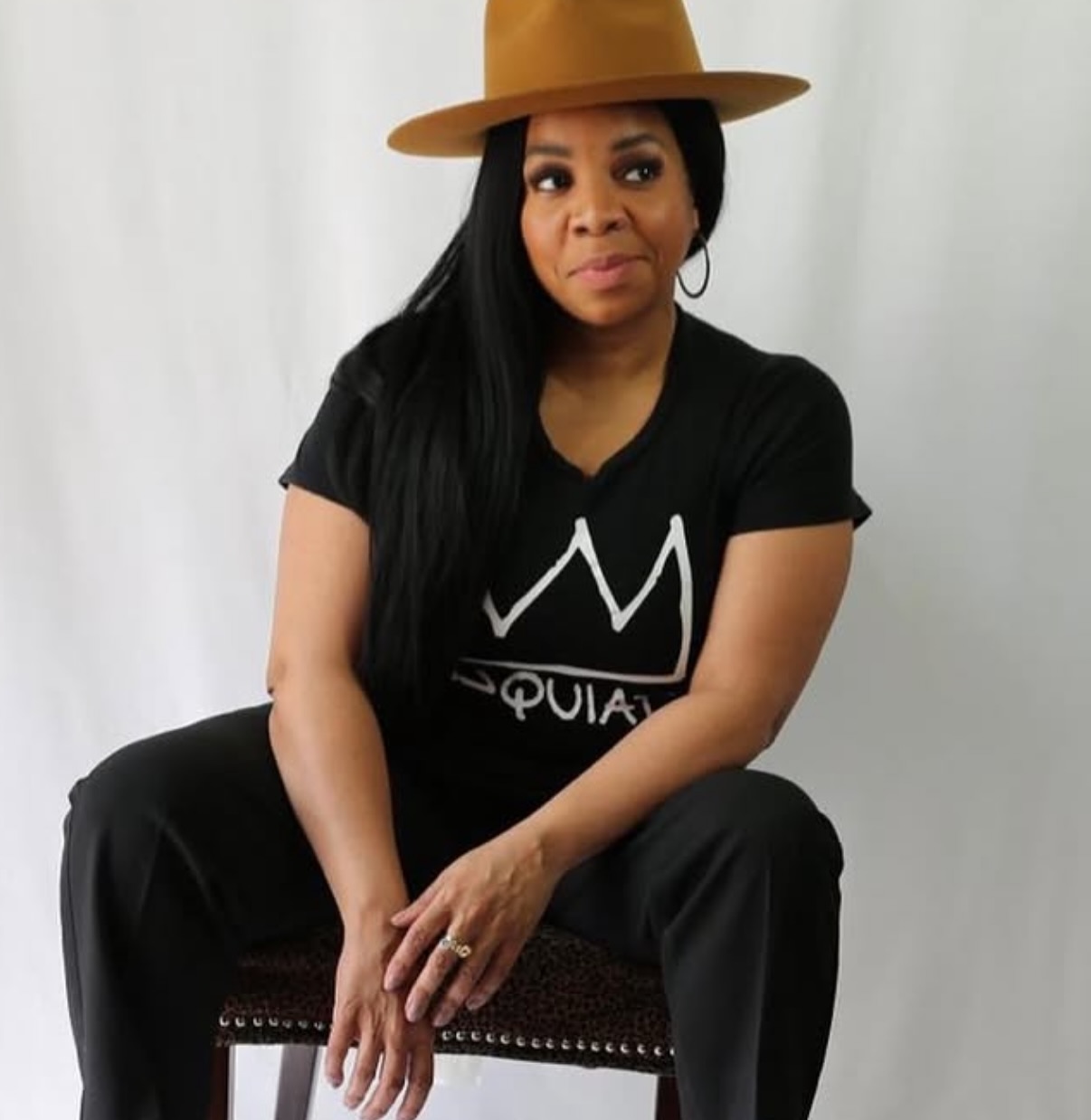
I met Kimberly Hebert eight years ago by email – at 8:31pm PST on October 23, 2017, to be exact. It was a rough start for me. I had preached a sermon that morning at the University Church of Christ in Malibu, California, on the campus of Pepperdine University titled, “On Behalf of Another.” I opened with the YouTube video “Oh Freedom!” that featured powerful images from the Civil Rights Movement—marches, sit-ins, legislation, Reverend King, Rosa Parks—all set to the haunting lyrics, Before I’ll be a slave / I’ll be buried in my grave / And go home to my Lord / And be free.

I followed what I considered to be a powerful opening with my own story of growing up in a Southern sundown town, and with my preaching foot on the accelerator then told of Oscar Romero giving his life for those being raped and murdered in El Salvador. All that led to the sermon text in Exodus 33 where Moses stood up to God on behalf of his people, and my message was that being “the Church” means standing up on behalf of others. There was even a photo of a sign from a Civil Rights march in the opening video that read “Where is the Church?” that in many ways characterized my sermon’s thesis.

I was sort of proud of it, but Kimberly wasn’t buying it at all. I had no idea who Kimberly Hebert was at the time, but she was in the audience that morning and shared her impressions with me that night in an email that she titled, Where IS the Church? She said the sermon felt “emotionally manipulative.” She said “[t]he church is still silent on issues of race” and that in my sermon the “silence was deafening” and that such silence “is one of the many reasons that the church is impotent in this area and does not show up.” She challenged me to have the “courage to tell the whole story in truth and love” and characterized sermons like mine as “tepid” before closing with the hope that I could receive her message “with the love in which it is being shared.”

It was hard for me to read. It was hard for me to read in part because there was not a doubt in my mind that she was right, and because the message that I had delivered, which was strong for me, failed to address the present nature of American racial politics and had had its true measure revealed: Tepid. Weak.

I wrote back that night – at 10:16pm PST to be exact (I have kept and treasured much of our correspondence). I expressed both apologies and gratitude. I said that she was right and that I had much to learn. I shared my hope that we could visit so that I could learn and grow. I had no idea what I was asking for, but as I have often said, I do my very best work by accident, because from such an inauspicious start that initial email exchange in the space of two evening hours produced for me a brief and beautiful friendship that changed my life for good. Kimberly became my teacher, my consultant, my advisor, and my friend.

In the following months we exchanged emails where I asked ignorant questions and she shared brilliant answers Then we became book partners in a campus ministry effort that worked through the book, Welcoming Justice, by Charles Marsh and John Perkins. I found the book insightful and helpful. Kimberly didn’t care for it. We met for lunch at Le Pain Quotidien, a French bakery-restaurant in Calabasas, on multiple occasions in early 2018 where I slowly caught on to how Kimberly received the book from her lived experience. Each time we met someone would recognize her and sometimes ask for a picture.

Did I mention that Kimberly was also a movie star? I had no idea when we first interacted, but this later discovery made this special human being even more fascinating. 

I’m sure it was our good friend, Google, that shared the news with me when I first wondered about this person that called my sermon on the carpet. At our first Calabasas lunch she was so embarrassed when I told her that my wife was a major fan of her portrayal of Dr. Belinda Brown when she starred alongside Walton Goggins and Danny McBride on the somewhat (okay, more than somewhat) raunchy HBO comedy, Vice Principals. But she was so much more than a brilliant actor. There was a depth and a breadth to her life and an enormous intellect that I was privileged to access. Kimberly grew up in Houston and later received a bachelor’s degree in psychology from Mount Holyoke College in Massachusetts and then an MSW from the University of Chicago before launching a successful career on stage and screen. In my eyes she was larger than life.

I sense a mischievous smile when I remember that I eventually got to turn the mirror around and invite Kimberly to face challenges, too. I invited Kimberly to lead an adult Bible class in beautiful Stauffer Chapel in the summer of 2018 in a series on our personal “cloud of witnesses,” and the thought of bucking the restrictive male-only posture of our shared faith tradition forced her to reach for some courage of her own. But she did it, and the stories of those that shaped her life trajectory were incredible. I even convinced her to share her story in front of the whole church in a worship gathering that September, which just about blew her mind but gave me the greatest joy!

I learned that Kimberly died on Friday. I do not know the details, but I am heartbroken.

I will never forget the awkward nature of our initial contact, but more importantly, I will never forget the deep friendship that developed in such a short time. Kimberly welcomed me into her story and shared physical health challenges that she battled for decades. She invited me to sit with her mother at Cedars Sinai just one year after our initial emails during a concerning procedure that turned out well, just as we had prayed, which proved that we had traveled a long way from suffering through an emotionally manipulative and tepid sermon. Prior to the procedure, Kimberly wrote to me of her gratitude “that God knitted this relationship for such a time as this” and that, “I didn’t see it coming, but God knew I would need a community.” When I announced my move to Nashville a few months later in the spring of 2019, it is crazy to sift through our email correspondence to see how our awkward initial exchange had grown so that we felt such deep loss for miles to separate our friendship.

Just prior to our move to Nashville, Kimberly starred in a play at the Geffen Playhouse in Los Angeles titled, Black Super Hero Magic Mama. Appropriate, of course. Kimberly secured two premium tickets, and Jody and I felt so special to sit in the audience and watch our new friend, the star of the show. The movie premiere for Five Feet Apart, which Kimberly starred in as well, also occurred that night, and since she couldn’t be in two places at the same time, a limo was arranged to whisk her to the premiere afterparty at a Hollywood club after the play, and she invited us along for the experience. I hope you can picture my wife and I, a couple of actual Beverly Hillbillies, stepping out of the limo to the flashing cameras and entering the strobe-lit club where Kimberly introduced us to celebrities such as Cole Sprouse, a co-star, and Justin Baldoni, the director.

I think of that night in March of 2019, the last time I saw her in person and “hugged her neck” (as she would say), as I might think of an appropriately spectacular ending of a fireworks display. I knew that we were moving away from one another quite literally, but I had no hint of finality.

Our email correspondence soon became fewer and farther between, but a couple of years later we had one brief opportunity to reconnect. By that time we had all encountered the murder of George Floyd and the Covid pandemic, and I had moved from Nashville to work at a small college in Illinois. When our volleyball coach at the college planned a fundraiser for cystic fibrosis, I remembered Kimberly’s movie, Five Feet Apart, which was a beautiful love story of two young people with cystic fibrosis who were not allowed to be within five feet of one another (ironically, a movie released a couple of years before “six feet apart” became a part of our national experience), and I reached out to see if Kimberly would meet our students in rural Illinois via Zoom. To which, as you might guess, she graciously agreed. We not only invited our volleyball student-athletes to hear Kimberly share what she learned about cystic fibrosis from her movie role, but also our theater students to hear of her acting career, and also our Black students to learn of her thoughts in the aftermath of the murder of George Floyd and her experiences as a Black woman navigating a career in the United States. As expected, Kimberly was gracious with her time, and profound, and hilarious, and inspiring, and unforgettable.

Jody and I stayed afterward, and that post-Zoom conversation was the last time we spoke and shared the love of our friendship.

In the summer of 2023, Jody and I unexpectedly moved back to Malibu. We thought we might be back in California forever, and Kimberly was one of the first that I emailed. Not long after we arrived, she responded that “[y]ou know I’ll make some time to see you” and that she looked forward to reconnecting. I responded with my new cell number, and that turned out to be our final exchange. We both got busy, and California turned out to be just a bonus year for us that led to a move to our new home in Wisconsin, and my regrets are now deep. I knew that Kimberly’s life remained full without regular installations of our friendship, but it never occurred to me that she might move on from this life so soon. And I wish I had been there for her in the end.

I have been too rattled to think clearly, but I have been trying to think clearly so that I can do honor to the lessons I learned from Kimberly Hebert. I kept our correspondence, and I have been sifting through it since I learned such sad news this weekend, and one lesson I have remembered is found within these words that she shared when we were praying for her health seven years ago: “Again, despite what we are going through, God has not abandoned us. He is always right there with us, even unto the end of the ages.” There is comfort in those words, and my hope remains that her words are true. 

Further, as I reread the challenges in her initial outreach to a preacher she did not know, I am emboldened to remember the challenge to my humanity and my personal courage in a culture that seems hell-bent on regressing instead of progressing. She wrote, “A revisionist approach to history is dangerous, particularly when inserted into our religious arena. If you want to challenge the body to be self-reflective in this area, there has to be courage to tell the whole story in truth and love.” Now, more than ever, I want to do better. I want to tell the whole story. I want to tell the truth. I want to tell it in love.

Kimberly’s salutations in our friendship correspondence were the words: Big Love, Kimberly. That is how I remember her today. A special person who loved big.

It was an incredible honor that she loved me in spite of everything that conspired against it, and it is intimidating as hell to remember the courage she challenged me to live with from the very start. May she rest in peace and power, and may I live with greater “courage to tell the whole story in truth and love.”

Farewell, my friend. As the curtain falls and the credits roll, know that I am moved to stand and applaud your extraordinary performance.

Swimming in a Culture of Violence

At the beginning of David Foster Wallace’s famed commencement speech at Kenyon College in 2005, two young fish encounter an older fish as they are swimming along, and the older fish says to them in passing, “Morning, boys, how’s the water?” As they swim on, one of the young fish eventually looks at the other and asks, “What the hell is water?”

The profundity of Wallace’s illustration has many applications, but I’m thinking today of how we swim in a culture of violence.

At almost the exact same time on Wednesday and hundreds of miles apart, two acts of violence occurred in school settings: a 16-year-old with reportedly anti-Semitic and white supremacist views murdered two high school students before taking his own life, and a 22-year-old with reportedly anti-fascist views murdered an enormously popular politically-conservative speaker on a college campus. And both happened on the day before the anniversary of the terrorist attacks on September 11, 2001. The confluence of these terrible tragedies produced a flood of emotion, naturally, and many in their grief offered expressions like “this is not who we are” and “how did we get here” and “who have we become.” Sadly, my thoughts turned to Wallace’s little parable.

I am (always saddened but) no longer surprised by acts of violence, although I am often surprised when others are surprised by acts of violence. We live in a culture of violence, and I’m not talking about the United States of America (only), and I’m not talking about something that has occurred in the past few years, or even in our lifetimes. I believe that humanity itself, at least human civilization as we understand it, has historically and continually believed at its core that violence can make things better, that violence solves problems, that violence produces justice. We condemn certain acts of violence and condone (sometimes celebrate) others as good, and as a result, violence is as ubiquitous to our lives as water is to a fish.

Governments seek the death penalty under the banner of justice. Nations go to war under the banner of justice. Cartoons and movies and television series create heroes who beat the hell out of villains and in so doing make the world a better place. Logically, while we (can and should and do) condemn the actions of abusers and assassins and terrorists, it should not surprise us when others perform terrible, violent acts that they believe will somehow make something better, too. This is water, as Wallace might say.

Theologian Walter Wink called this “the myth of redemptive violence” and claims that this really is who we are, at least in the sense that this concept is the water in which we swim unaware.

I was a pastor in my early thirties when the 9/11 attacks shocked our nation. At the time, my job was to think deeply about Christianity and translate that into the life of a church. I recall that I quickly became troubled by the natural (and national) response to the tragedy. To be specific, I had understood that my faith tradition looked at war as a terrible event, although for many the just war theory stood as a reluctant option that was developed in an attempt to wrestle with the moral challenges with classic pacifism. All that went out the window quickly when our nation was attacked, and shortly, even preemptive attacks on nations unaffiliated with the attacks seemed justified by large swaths of Christians regardless of the wisdom of centuries of church teachings.

Wink clarified for me at the time that a belief that “violence is both necessary and effective for resolving conflict and achieving justice” may be a far deeper value for many who claim Christianity than Jesus’s call to “love your enemies.” Wink went so far as to claim that “[i]t, and not Judaism or Christianity or Islam, is the dominant religion in our society today.” I recommend his book “The Powers That Be” if you truly want to wrestle with his thoughts and address the “what-ifs” that probably come to mind first (i.e., What if someone breaks into your house to threaten your family? What if nobody stands up to Hitler?). Those are valid questions, and Wink takes them on, but that is not my point today. Instead, I simply point toward the ocean that we swim in together. Violence is an ugly word that we condemn in times of tragedy, yet violence undergirds and defines our culture, and we should at least be aware.

The diagnosis runs deep, and the prognosis is not encouraging, but after decades of wrestling I have adopted an approach to life that does not include despair. While I personally support pathways leading to fewer dangerous weapons instead of more, and while I long for vast improvements in mental health care, neither strike at the root of the redemptive violence mindset. So, what to do?

My choice is simply to reject violence in all its forms, including those popularly conceived of as redemptive. I choose, if you will pardon the metaphor, to attempt to live as a fish out of water.

How to do that is ridiculously complicated, but at least the why is not. Why I choose to pursue a path that rejects all forms of violence is because the ocean I would like to swim in is one where every human being is imbued with dignity and respect and worthy of love. With that perspective, violence is no longer an option because violence is inconceivable toward someone that you truly love.

I know. When someone told me I live in fantasy land, I nearly fell off my unicorn. But I’m not talking love in the silly sentimental sense. I’m talking love in all its messiness. The sort of love that will do the hard work of creative resistance, but never attack or demean or destroy. How can you attack someone you love?

This is how I still claim to be a Christian, despite myriad reasons to disassociate based on popular conceptions of what that means. I believe that indiscriminate love, which includes your worst enemies, is the heart of Jesus’s message, and I am bought in. I cannot imagine that such a radical thought would ever be popular, but I can imagine what it would be like if it were, and that is enough for me.

An Historic Election: Looking Backward, Inward, and Forward

I confess a deep sadness following last week’s presidential election. It is a personal sadness, sure, but it is far more on behalf of those from historically-marginalized groups that feel especially vulnerable and afraid due to a resounding national stamp of approval for a candidate famous for hateful rhetoric offered in their specific direction. E.g., Stand back and stand by. Black jobs. Grab them by the ____. Too many direct quotes about specific women’s bodies to list. Mocking a reporter with arthrogryposis. Muslim bans. Shithole countries.

I felt especially sad for my two amazing daughters. Their professional lives and personal hearts are dedicated to teaching children who live in poverty in the urban core and who are now facing a promise of mass deportation that will rip immigrant families apart. It is hard to imagine a fear more fundamental than a powerful government separating you from your family. It was hard enough for me to communicate with my heartbroken daughters as they went to work the morning after the election and know that they love children by name who are facing those fundamental fears.

My sadness expands recognizing that my personal religion, Christianity, generally speaking, is openly and willingly associated with the national stamp of approval for the hateful rhetoric. Although I disagree with their conclusion, I can understand the thought processes of those who saw the election as a “lesser of two evils” vote, but there is never cause for celebration following a lesser-of-two-evils vote. And yet lots of Christians celebrated this one with euphoric joy; saw it as an answered prayer; used words like anointed. I unfortunately opened Facebook the day after the election.

I have been on a thirty-year journey with faith and politics, a journey that began in the early 1990s with me a young, questioning adult and the simultaneous rise of the Religious Right as a political movement. As Evangelical (for lack of a better term) churches gravitated toward the proselytization of a political strategy, I was saved from dismissing Christianity and moving on entirely, in part, by stumbling upon the writings of Will D. Campbell who demonstrated for me that there was a different way to be Christian, and I concluded that for me following Jesus meant that I must love everyone, regardless. Both sides. All humans. Even enemies. Learning to “live reconciled” became an important phrase to me, as did “indiscriminate love.”

But that really messed me up. Loving everyone is a recipe for loneliness in a culture insistent on choosing sides, winners and losers, us and them. On one hand, I could see the pain felt by those that experienced decades of cultural condescension and blindness to class inequality from the Political (and Religious) Left while on the other hand growing increasingly cognizant of the centuries of pain felt by those that experienced the terrible injustice and marginalization perpetuated by the Political (and Religious) Right. So, I eventually learned to bite my tongue a lot, choosing instead to plant seeds, attempting not to alienate either side in an attempt to love and maintain relationships with everyone. I chose to work within a lot, behind the scenes a lot. And I felt guilty a lot for not doing and/or saying more.

My interpretation of Christianity remains, but in time I sought a quiet freedom from a life where I am not allowed to be fully authentic, and I am grateful for the wonderful feeling of liberation that I now experience. But given my own emotional reaction this week, and given numerous private texts and conversations with friends from all over the country that we made on our long journey toward personal liberation, my personal freedom seems self-serving and wholly insufficient.

But what to do?

That question has dominated my thinking, and I am grateful for anything I have heard and read from Dr. Tressie McMillan Cottom in the aftermath of the election (like the full Daily Show interview). Dr. Tressie has helped me tremendously (and I thank my friend, Chalak, for telling me about her in the first place). And I have also benefitted from articles written by both David Brooks and David French after the election, white men from conservative backgrounds who through their columns have assured me that my visceral reactions to the election aren’t simply because I drank Kool-Aid at the Liberal Vacation Bible School.

Collectively, they pulled no punches in saying that chaos is coming but emphasized that despair cannot be allowed to be the mood for long. Dr. Tressie advised, “Don’t cry too long over a sinking ship,” and the subject of David French’s email read, “We don’t have time to waste time in despair.”

French wrote, “There’s a temptation to retreat. If you have a stable job, a good family and good friends, you can check out of politics. After all, politics can be painful. It’s not just the pain of loss, but also the pain of engagement itself. MAGA is extraordinarily cruel to its political opponents. But despair is an elite luxury that vulnerable communities cannot afford. If Trump was telling the truth about his intentions — and there is no good reason to think he wasn’t — then he will attempt a campaign of retribution and mass deportation that will fracture families, create chaos in American communities and potentially even result in active-duty troops being deployed to our cities.”

So, while sad and tempted to quit caring, even that, as depressing as it sounds, is “an elite [and selfish] luxury.” Here are my commitments instead:

#1: See. I choose not to give up on my faith commitment to see all people—i.e., to love neighbors, regardless of anything. David Brooks published an important book last year titled, “How to Know a Person,” and his post-election column explained something Will Campbell helped me see long ago, i.e., a “redistribution of respect” that led to a “vast segregation system” between the Political Left and those that now comprise the base of the MAGA movement. Brooks’s post-election column titled, “Voters to Elites: Do You See Me Now?,” reminds me that condescension creates problems and does not cure them, and I won’t abandon my desire to see all people as human beings equally worthy of sincere love and respect.

#2: Speak. This, I confess, feels like my greatest challenge. One change I must adopt moving forward is a willingness to speak up more, even though that will risk alienation from and dismissal by people that I love on every side. It is tempting to bite my tongue, especially when I want to remain in relationship with everyone, but I think David French is right when he says we are compelled to “speak the truth.” He explained it this way: “Telling the truth means combating deception and misinformation, but it also means publicly defending the dignity and humanity of the people and communities who are the object of Trump’s wrath. It means resisting malice when we encounter it in our churches and communities.” Remaining silent might appear to preserve relationships, but it forecloses all prospects for true justice and real harmony. This blog post is an initial and meager attempt to speak up more.

#3: Act. Finally, as hard as the first two are to do, they are insufficient without action. David French wrote that we must “protect the vulnerable,” but I like how Dr. Tressie said it best: “Don’t cry too long over a sinking ship. Build dinghies.” To continue the nautical metaphor, the Brooks column concluded this way: “[W]e are entering a period of white water. Trump is a sower of chaos, not fascism. Over the next few years, a plague of disorder will descend upon America, and maybe the world, shaking everything loose. If you hate polarization, just wait until we experience global disorder. But in chaos there’s opportunity for a new society and a new response to the Trumpian political, economic and psychological assault. These are the times that try people’s souls, and we’ll see what we are made of.”

I want my soul to pass this test, so with thanks to Dr. Tressie and the two Davids, and after much reflection, I have concluded that it takes all three: See. Speak. Act. Looking backward in despair, looking inward in contemplation, and now looking forward with resolve, that is what I commit to do.

Peace on Earth

img_4126Thanks to our friend, John, and the Pacifica Institute, we recently hosted Muslim families for a Christmas dinner at our house.  That’s right, Muslim families for a Christmas dinner.  It was wonderful.  The stated purpose of the dinner was to build bridges of respect, understanding, and friendship between Muslims and Christians—and it sure worked.  We instantly have new friends and were honored to accept a return offer to visit their homes in the new year.

All of our guests came to the United States from Turkey, and as we talked over dinner it was sobering to sense the sadness in their hearts when they spoke of conditions related to terrorism in their home country.  And it was even more sobering to sense the fears they live with in this country when the actions of religious extremists lead others to associate such terrible violence with the religion they practice and love.

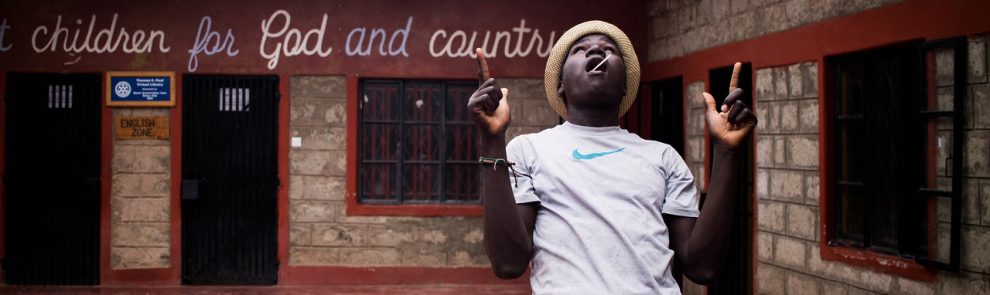
Possibly my favorite moment of the evening came when one of our guests slipped money to our youngest daughter when she shared about her work in Kenya last summer with street kids from Nairobi slums.  It seems that our guest has a soft spot in his heart for poor African children, and he couldn’t help but give money to support the Christian organization when he heard about the good work it is doing.

I shared with our guests the story from Kenya at this time last year when the terrorist group, Al-Shabaab, commandeered a bus that held Christian and Muslim passengers.  The terrorists demanded that the passengers separate by religion so they could execute the Christians, and the Muslim passengers, mostly women, led the refusal to answer by saying that if they would execute one they would have to execute all.  They were neighbors after all.  Miraculously, no one was killed.

Our guests had not heard the story and were visibly encouraged by it.  One of our new friends said that such reactions should be the standard response.

I sense that many are wary of the concept of interfaith dialogue, thinking that it means a dilution of religious conviction—a sort of “I’m-okay-you’re okay” approach to religious belief.  If you spend much time with any religious belief system you’ll realize that would be sort of silly.  Instead, I have to wonder what is terribly wrong with moving toward a world where we have “join us for dinner” relationships across all sorts of lines that purport to divide us.

Sharing dinner in our homes with new friends would sure go a long way toward a world where the scene that occurred on that Kenyan bus will be the standard response to those who deal in violence.  Not uniformity or watered-down beliefs, but neighborliness and solidarity for peace on earth and good will toward all.  I am a Christian, and at this time of year we remember an angelic proclamation to a group of shepherds about such things.  This particular dinner sure felt like a step in that direction.

A Framework for Meaning

2

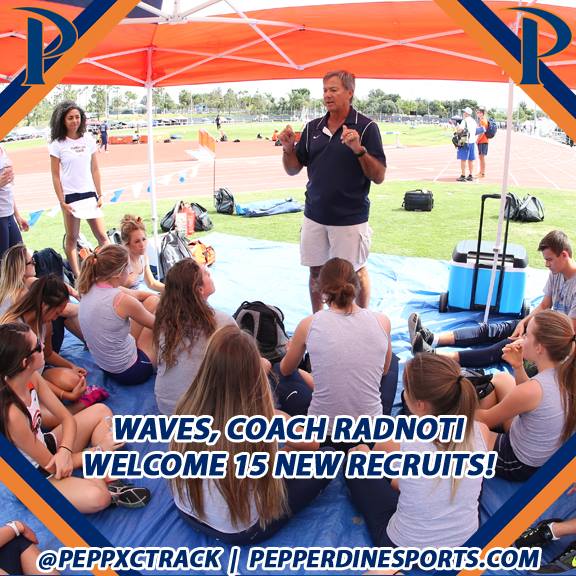
I have a new side gig as team chaplain for the Pepperdine Cross Country team. Go Waves! My friend, “Coach Rad,” graciously offered the opportunity to join the team at an early morning practice each week to share a five-minute devotional message. I like both running and talking, so I feel confident that my messages will live up to the compensation package (as a volunteer).

This week, I shared my suspicion that the team was an ordinary cross-section of humanity so that some of the athletes appreciated a devotional message at dawn while others were ambivalent but would kindly listen and still others wished that I would go to the wrong practice location.

Regardless, faith, religion, etc. is an historic attempt to develop a framework for meaning in life. From births to deaths and all the in-between major moments in our lives, we have an inherent need to make some sense of it all, so even if my morning devotionals fall flat as a running track, deep consideration of meaning in life is worth the trouble.

I then shared the foundational-yet-downright-disturbing Bible story of Cain and Abel. Geographers cite the domestication of plants and animals as the launch of civilization, and Cain and Abel represent this great beginning. In the story, one of the brothers (Abel) pleased God while the other brother (Cain) did not, so guess which one bled out in a field at the hands of his brother? Yeah, I guessed wrong the first time, too. The Bible’s editorial department could have used some marketing experts at least in the first few pages.

But here we are, trying to make sense of it all, realizing from an early age that sometimes the bad actors win while the good folks get the shaft. Welcome to life as we know it. Instead of filing a formal complaint with the Fairness in Life Committee that never seems to respond in a timely manner, the necessary question shifts from How do I always win? (which I voted for but apparently is not on the menu) to What is worth living for? (which is on the menu). Or, maybe better stated in the negative: What is worth dying for?

I have my answers.

You may remember from middle school the wonderful book by Lois Lowry, The Giver, a compelling science-fictiony story that challenges our assumption that a pain-free world is best after all. Nobody without a masochistic personality disorder prefers pain, but a well-formed framework for meaning in life allows one to endure it when it comes—and those meaning-full things are even worth the pain.

These cross country runners have a pretty good handle on enduring pain for a greater goal, so I think they have a pretty good shot at getting a handle on this old life, too.