Tag Archives: jimmy carter

Chaos or Community?

It seems to me that a debate over where a nation’s flags should be positioned today should be about the national holiday’s namesake rather than two others who are not, the national holiday’s namesake that is.

To be fair, one of the two obviously did not invite the debate. In fact, just over forty-six years ago (January 14, 1979) President Jimmy Carter became the first president to propose a national holiday honoring Reverend King even though thirty such bills had been proposed and defeated in Congress in the decade following the assassination, with the first proposal coming just a few days after the national tragedy in 1968.

President Carter’s proposal was unsuccessful, too. There were repeated financial arguments against the holiday over the years (e.g., President Ronald Reagan cited cost concerns; i.e., it will cost too much money to give federal workers another day off), and there were repeated personal attacks (e.g., Senator Jesse Helms called Reverend King a “Marxist” — and even President Reagan, again, who eventually signed the 1983 national holiday bill that finally made it through Congress into law, dodged a question about Senator Helms’s accusations with a thinly-veiled slap, “We’ll know in thirty-five years, won’t we,” referring to the scheduled release of FBI surveillance recordings). Today’s youth are presumably ignorant of the long road to the national celebration of the life of Martin Luther King, Jr.

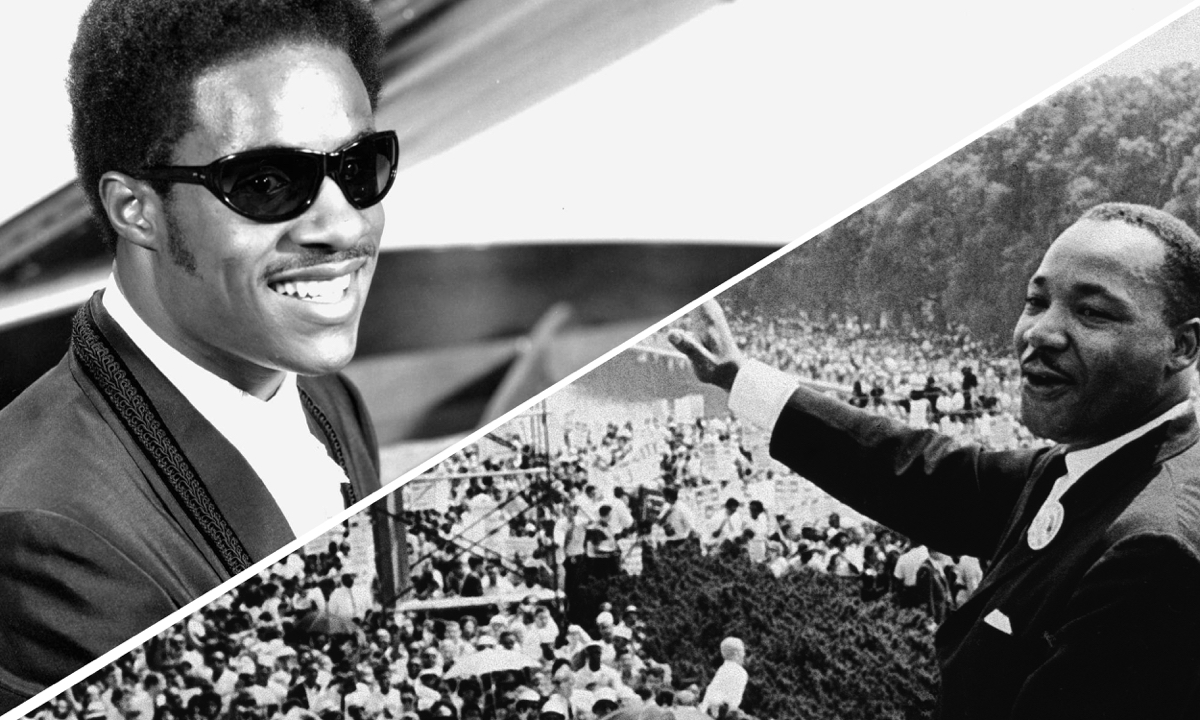
Key to generating the public pressure necessary to turn the tide on a national holiday, including a petition with an incredible six million signatures, was the extraordinary effort of musical legend, Stevie Wonder, who wrote and released his MLK-holiday-inspired version of the song, “Happy Birthday,” in 1981. “Happy Birthday” became one of his signature songs and has endured in beautiful ways. At the first official national MLK Day celebration in 1986, Stevie was the headline performer.

Still, even with the eventual declaration of a federal holiday, many states were reluctant to participate. It wasn’t until the year 2000 that every state officially came on board, although I am sad to report that both Alabama and Mississippi, in a breathtaking and ongoing insult, still combine the holiday to recognize both Martin Luther King, Jr. and Robert E. Lee, the Civil War general that led the fight to preserve Black slavery.

And if the fight for a day to recognize Reverend King wasn’t hard enough, we add a presidential inauguration today. Given the Twentieth Amendment to the United States Constitution’s specification for presidential inaugurations (January 20) and the designated date for MLK Day (third Monday in January, instead of his actual birthday, January 15), this will happen periodically. It happened with both President Bill Clinton’s second inauguration in 1997 and President Barack Obama’s second inauguration in 2013, and it won’t happen again until 2053, but it is happening today.

I listened to Stevie Wonder’s signature song, and given the persistent reluctance to fully celebrate the holiday and the bitter divisions in our nation, certain of his lyrics struck me with special force:

  • “the way to truth is love and unity to all God’s children”
  • “the whole day should be spent in full remembrance of those who lived and died for the oneness of all people”
  • “we know that love can win”
  • “the key to unity of all people is in the dream that you had so long ago that lives in all of the hearts of people that believe in unity”

I wish that those sentiments — sentiments that happen to reflect Reverend King’s understanding of Christian values — could be the full focus of a day like today.

Today, I do get to be a part of a lengthy reading to commemorate the holiday. We will gather in the “MLK Room” on the Ripon College campus and read aloud sections of the last book that Reverend King published prior to his assassination, titled, “Where Do We Go from Here: Chaos or Community?” That question — Reverend King’s question — reverberates today. Which will we choose?

Sometime between today’s presidential inauguration and tonight’s college football championship, I propose finding a few minutes to reflect on Stevie Wonder’s lyrical call to the world as set forth in his birthday song for Reverend King and truly consider the question: Where will we go from here — chaos, or the beloved community of which Reverend King so famously dreamed?
How President Jimmy Carter Changed My Life for Good

Biloxi, Mississippi (2008)

After a hundred years of life and a week’s worth of funeral activities, President Jimmy Carter’s remains will finally be laid to rest in his Georgia hometown this evening. Many memories have been shared by many people, so I might as well add mine, too.

I was six years old when Governor Carter was elected President Carter in 1976, marking the first presidential election that I remember, but my childhood memories related to him are few and scattered, including peanut jokes, gas no longer thirty cents a gallon, and wearing yellow ribbons for the hostages. Twenty years later, however, he changed my life for good.

As a young adult wrestling with my Christian faith in the early 1990s, I became convinced that Jesus’s primary news was that all people matter to God and that God’s business is setting right what has gone wrong in the world for all people, particularly the poor and marginalized. And as I wrestled to reconcile that belief with what appeared to be a different primary business of organized churches, my new wife and I soon found personal meaning by moving into a home serving children who were abused, neglected, or troubled.

While there, sometime in 1996, I read a U.S. News & World Report interview with President Carter about his new book, “Living Faith.” In the interview, President Carter shared that his home church once wanted to do something nice for a poor family at Thanksgiving, but they had one problem: Nobody knew a poor family. So, undeterred, they approached the local social services office to get the name of a poor family that they could approach. It occurred to President Carter that something was very wrong with that picture, i.e., a church having to go to the government to find the poor families.

That observation cut straight to my heart.

I must have spoken about that article in the weeks that followed because my mother bought “Living Faith” for me that Christmas, which turned out to be one of the most important gifts of my life. As I devoured the book, I read the chapter titled, “Faith in Action,” and discovered Habitat for Humanity. As I read about the organization’s mission to alleviate poverty housing, it struck me that my hometown, Paragould, Arkansas, an all-white sundown town with railroad tracks that segregated the community even further along socioeconomic lines, could really use Habitat for Humanity.

This changed my life forever.

I set out to establish a Habitat for Humanity affiliate in my hometown in early 1997, only to discover that the national organization required new affiliates to be diverse and a representation of the entire community, which challenged my heretofore wholly homogenous life. And as a result, I soon learned that so many people representing labels that I had been taught were bad or lost or wrong were in reality good and found and right, at least as much as my folks were, and often more so.

This has been the great lesson of my life, and I have been joyfully benefiting from its reality for the past three decades as we have lived all over these United States, traveled all over this planet, and befriended so many people that I can no longer even imagine that labels are dependable.

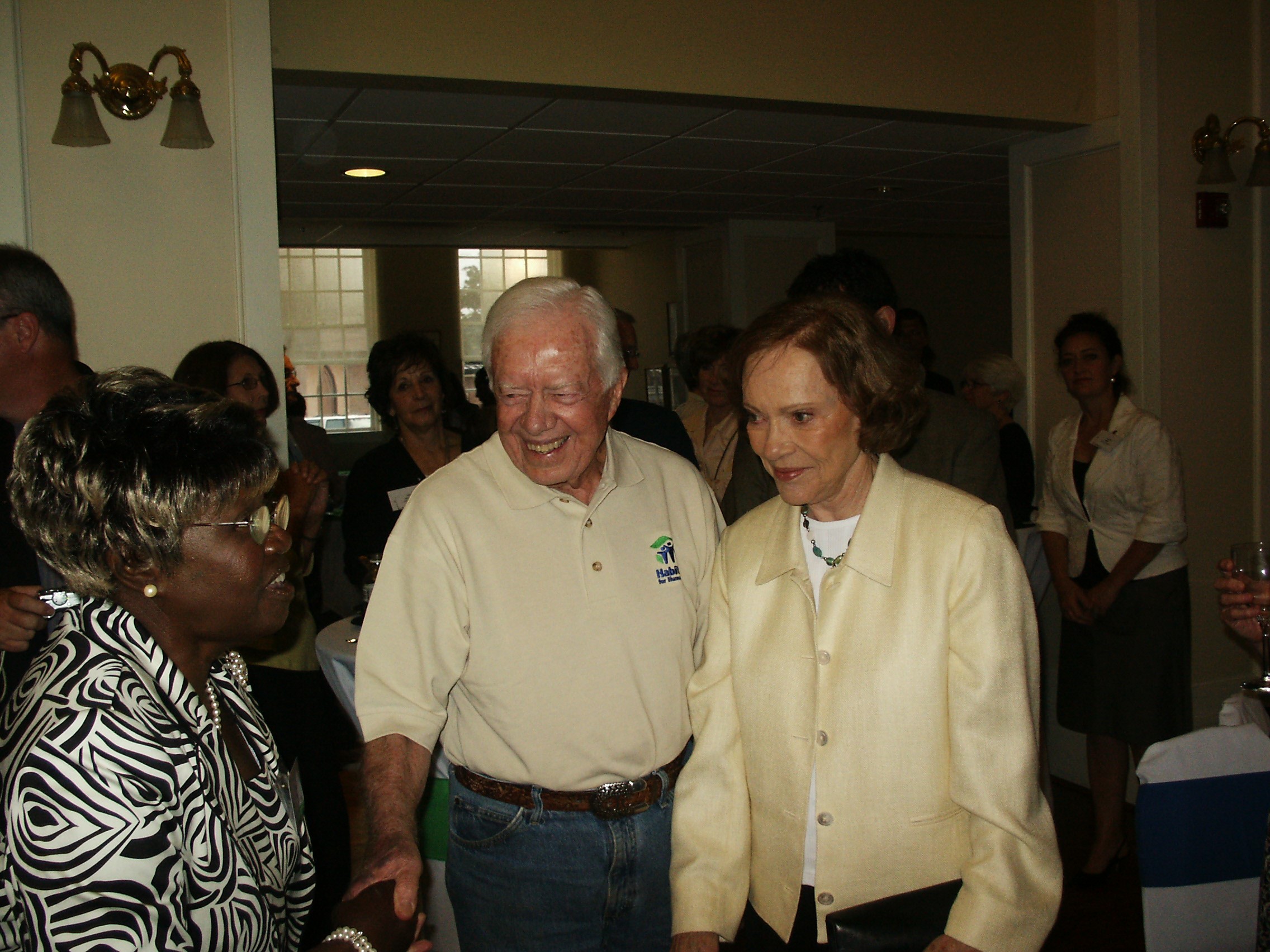
I never introduced myself to President Carter, although the picture above shows how close I came when another Habitat for Humanity affiliate that I helped establish hosted the Jimmy & Rosalynn Carter Work Project in 2008 to address the devastation wrought by Hurricane Katrina. As a board member, I was honored to attend a VIP event that evening and see the Carters up close, but it never worked out to shake his hand and say thank you.

That’s okay. But I will say it today on the day that President Carter’s remains are finally laid to rest in his Georgia hometown after a hundred years and a week’s worth of funeral activities.

Thank you, Mr. President. You changed my life for good, and I am forever grateful.

The Opposite of Violence

PC: Jolene Schatzinger

Vice President Kamala Harris’s visit to Ripon with former Rep. Liz Cheney this week was an incredibly cool experience, shining a bright light on this wonderful small college and town. The visit came together rather quickly, which made it feel extra special. As you might imagine, it created quite a buzz in this small community.

It did cross my mind prior to the event that there was an assassination attempt at another small town event during this presidential campaign season, but it wasn’t until I was looking up at snipers in position on the rooftops of several campus buildings that the gravity started to settle in.

Years ago, while on the board of directors for Habitat for Humanity of the Mississippi Gulf Coast, our affiliate hosted the Jimmy and Rosalynn Carter Work Project in Biloxi. President Carter (who turned 100 years old a few days ago and is a personal hero of mine) was someone I truly wanted to see in person, so I was happy to see that his reserved seat was on the row behind me at the opening ceremony event. For security reasons, the former president and first lady were escorted in to a standing ovation after the program was underway. As they took their seats, I snapped a photo just as a guest from across the aisle reached over for a handshake. In the photo you can see a plain clothes Secret Service agent sitting directly behind President Carter making a life-or-death split-second decision. Luckily for the man wanting a handshake, the agent chose not to neutralize him!

The Secret Service has faced intense scrutiny recently for very good reasons, but while sitting on campus a couple of days ago looking in person at the human beings wearing suits and dark sunglasses standing between a presidential candidate and potential violence, it got me to thinking.

Of all the things I find attractive in this world, violence is not one of them. But as much as I am attracted to principles of nonviolence, I have wrestled with so many ethical dilemmas that make the use of force seemingly inevitable, at least in some situations. And while I struggle to determine an exact list of those specific situations, what I cannot help but admire are those that are willing to sacrifice their personal safety to protect others; to stand in harm’s way, not for themselves, but for others.

Violence is defined as behavior that intends to hurt, damage, or kill someone or something. The more I think of it, I guess what I truly admire is the opposite of violence: those behaviors that intend to heal, repair, and save.